Gold Market Weekly Update: What Happened This Week? (July 6 – 10, 2026)
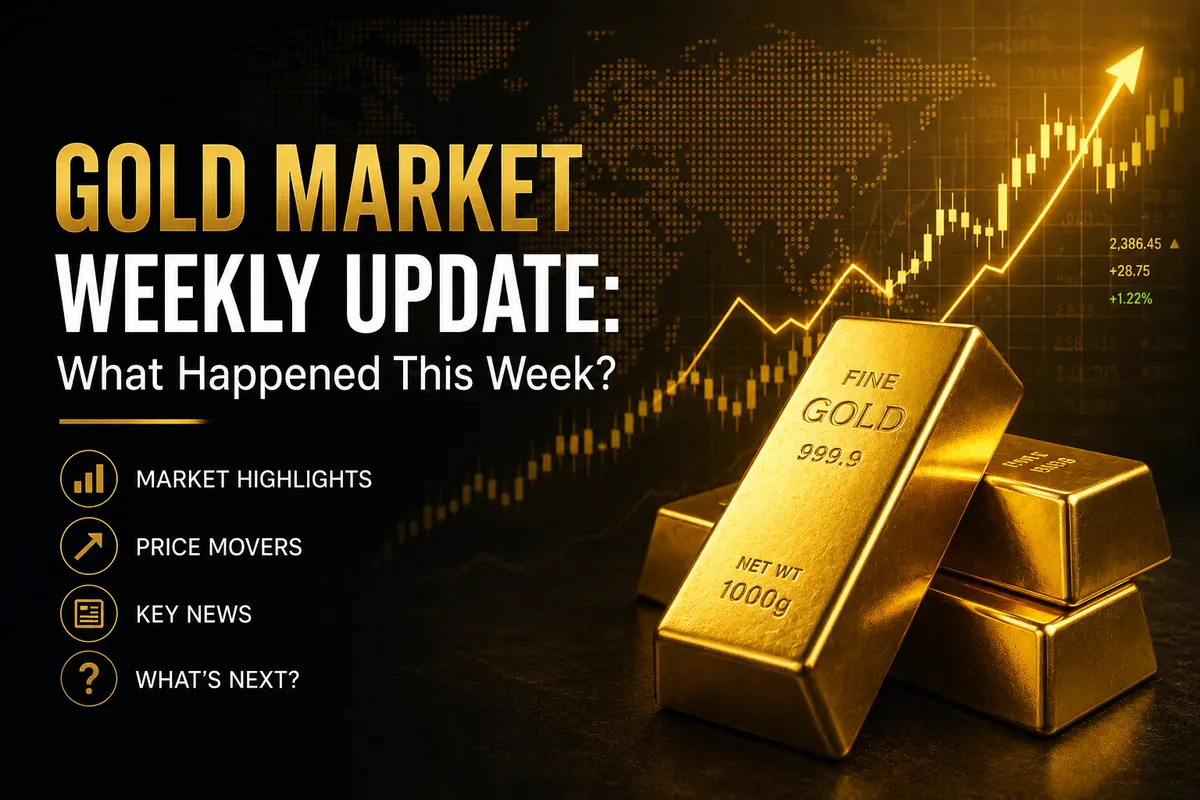
Gold Market Weekly Update: Key Highlights
The gold market had a mixed but challenging week from July 6 to July 10, 2026, as investors balanced geopolitical uncertainty, inflation concerns, US dollar movements, and expectations about future Federal Reserve interest rate decisions.
Gold started the week near recent highs as investors looked for safety during uncertain global conditions. However, the precious metal later faced pressure as a stronger US dollar and expectations of tighter monetary policy reduced demand.
Gold is one of the most watched assets in the world. Investors often follow gold because it is considered a store of value during periods of economic uncertainty.
For beginners, understanding gold prices is not only about whether the price goes up or down. The important part is learning what factors influence gold and why investors react to those changes.
This weekly update explains what happened in the gold market, why prices moved, and what investors should watch next.
Gold Market Snapshot: July 6 – 10, 2026
| Market | Weekly Performance |
| Spot Gold (XAU/USD) | Decreased around 1.6% |
| Friday Closing Price | Around $4,105.97 per ounce |
| August Gold Futures | Around $4,114.80 per ounce |
During the week, gold prices moved lower despite continued global uncertainty.
Spot gold ended Friday around $4,105.97 per ounce, after falling about 1.6% during the week. Gold futures also declined as investors adjusted their expectations about future interest rates.
Key Takeaways From This Week
- Gold declined around 1.6% during the week.
- A stronger US dollar created pressure on gold prices.
- Interest rate expectations became a major market driver.
- Geopolitical uncertainty continued supporting demand for safe-haven assets.
- Investors watched inflation risks and Federal Reserve policy closely.
How Did Gold Perform This Week?
Gold started the week with strong attention from investors.
On Monday, July 6, gold prices pulled back from a two-week high as the US dollar strengthened. However, expectations of a softer labor market limited some of the pressure on gold.
As the week continued, investors focused on rising inflation concerns caused by higher energy prices and geopolitical tensions.
Normally, gold can benefit from uncertainty because many investors consider it a safe-haven asset.
However, gold does not pay interest. Therefore, when investors expect higher interest rates, some may prefer assets that provide returns through interest payments.
This created pressure on gold prices during the week.
By Friday, spot gold had fallen to around $4,105.97 per ounce, ending the week lower.
Why Did Gold Prices Move Lower This Week?
1. Stronger US Dollar Pressured Gold
One of the biggest factors affecting gold prices was movement in the US dollar.
Gold is priced in US dollars globally.
When the dollar becomes stronger, gold can become more expensive for buyers using other currencies.
This can reduce demand and put pressure on gold prices.
A simple example:
Imagine a product sold internationally.
If the price of the currency used to buy that product increases, some buyers may reduce their purchases.
Gold works in a similar way.
2. Interest Rate Expectations Changed
Interest rates remained one of the biggest factors for gold investors.
When interest rates are expected to rise, gold can face pressure because investors may choose interest-paying assets instead.
During this week, markets increased expectations that the Federal Reserve could maintain a tighter monetary policy because of inflation concerns.
This reduced some demand for gold.
3. Geopolitical Uncertainty Supported Gold Demand
Although gold prices declined during the week, global uncertainty continued supporting some investor demand for gold.
Gold is often considered a “safe haven” asset.
This means investors may buy gold when they are worried about:
- Global conflicts
- Economic uncertainty
- Inflation risks
- Financial market instability
During this week, geopolitical tensions remained one of the factors investors monitored.
However, safe haven demand was not strong enough to overcome the pressure created by the stronger US dollar and changing interest rate expectations.
This shows an important lesson about gold:
Gold prices do not move because of only one factor.
Several forces can push prices higher or lower at the same time.
How Does Gold Affect Everyday Life?
Many people think gold is only important for jewelry or investing.
However, gold plays a much bigger role in the global economy.
Gold is used in:
- Jewelry
- Technology products
- Electronics
- Central bank reserves
- Investment products
For example, many countries’ central banks hold gold as part of their reserves because gold has maintained value over long periods.
For everyday investors, gold is often considered a way to diversify a portfolio.
A simple example:
Imagine someone owns only one type of investment.
If that investment performs badly, the entire portfolio can suffer.
But if they have different types of assets, the impact of one market decline may be smaller.
This is one reason some investors include gold in their long term strategy.
What Does This Mean for Beginner Gold Investors?
Gold can be an attractive asset, but beginners should understand that gold prices can also move down
A common mistake is assuming gold always rises during uncertain times.
In reality, gold is affected by many factors, including:
- US dollar strength
- Interest rates
- Inflation expectations
- Global demand
- Investor sentiment
Before investing in gold, beginners should understand their goals.
Some investors use gold as a long term store of value.
Others trade gold based on short-term price movements.
These are very different approaches.
Understanding the difference can help investors make better decisions.
Important Factors to Watch Next Week
Gold investors will continue watching several important areas.
Federal Reserve Policy Expectations
Changes in interest rate expectations can strongly influence gold prices.
Investors will watch comments from Federal Reserve officials and new economic data.
1.US Dollar Movement
Because gold is priced in US dollars, currency movements will remain important.
A stronger dollar can create pressure on gold, while a weaker dollar can support prices.
2.Inflation Data
Inflation remains a key factor for gold investors.
Higher inflation concerns can increase demand for gold as a store of value.
3.Geopolitical Developments
Unexpected global events can quickly affect gold demand.
Investors often move toward safe-haven assets during periods of uncertainty.
4.Gold Market Outlook
The gold market continues balancing between two major forces.
Positive Factors for Gold
- Global uncertainty
- Inflation concerns
- Central bank demand
- Safe haven interest
Challenges for Gold
- Strong US dollar
- Higher interest rate expectations
- Reduced demand for non interest paying assets
The future direction of gold prices will likely depend on how these factors develop.
For investors, understanding the reasons behind gold movements is more important than focusing only on weekly price changes.
Final Thoughts
The gold market had a challenging week from July 6 – 10, 2026.
Spot gold declined around 1.6%, ending the week near $4,105.97 per ounce.
Although geopolitical uncertainty continued supporting gold demand, a stronger US dollar and changing interest rate expectations created pressure on prices.
The biggest lesson for beginner investors is simple:
Gold can provide protection during uncertain times, but it is not guaranteed to rise every week.
Successful investors focus on understanding market conditions, managing risk and making decisions based on long term goals.
Frequently Asked Questions
1.Why did gold prices fall this week?
Gold prices declined mainly because of a stronger US dollar and changing expectations about future interest rates.
2.Is gold still considered a safe-haven asset?
Yes. Many investors consider gold a safe-haven asset because it has historically maintained value during periods of uncertainty.
3.What affects gold prices the most?
Gold prices are influenced by the US dollar, interest rates, inflation expectations, global demand, and geopolitical events.
4.Is investing in gold good for beginners?
Gold can be useful as part of a diversified investment strategy, but beginners should understand the risks and their personal financial goals.
5.Does gold always increase during economic uncertainty?
Not always. Although uncertainty can support gold demand, other factors such as interest rates and currency movements can also affect prices.
Author Note: This article is crafted by “The Economic Reader editorial team”, dedicated to analyzing the latest market trends, financial updates, and global economic shifts to keep you informed with accurate and comprehensive insights.
Disclaimer: The information provided on this website is for educational and informational purposes only and should not be construed as professional financial, investment, or legal advice. Always consult with a certified financial advisor or professional before making any financial decisions based on this content.
If you want to learn stock market investing please click here
If you want to know Crypto Market Weekly Updates please click here