Retirement Planning for Beginners: How to Prepare for a Secure Future

Retirement Planning for Beginners: Introduction
Retirement is a stage of life that many people look forward to.
After years of working, people want to enjoy more freedom, spend time with family, travel, or focus on personal interests.
However, a comfortable retirement usually does not happen by accident.
It requires planning.
Many people delay retirement planning because they think it is something they can do later.
But starting early can make a big difference.
Retirement planning is not only for older people.
Young adults can also benefit from understanding how retirement savings and investments work.
The earlier you start, the more time your money may have to grow.
For example:
Someone who starts saving in their 20s may have more time to build retirement savings compared to someone who starts in their 50s.
However, it is never too late to begin planning.
Even small steps can improve your financial future.
In this guide, we will explain retirement planning in a simple way.
You will learn:
- What retirement planning means
- Why it is important
- How to start planning
- Common retirement accounts
- Mistakes to avoid
What Is Retirement Planning?
Retirement planning is the process of preparing your money and finances for the time when you stop working.
In simple words, it means creating a plan for how you will support yourself in the future.
During your working years, you usually earn income from:
- A job
- A business
- Other activities
After retirement, your regular income may decrease or stop.
Retirement planning helps you prepare for expenses such as:
- Housing
- Food
- Healthcare
- Transportation
- Daily living costs
A good retirement plan focuses on building financial resources that can support your lifestyle later in life.
Why Is Retirement Planning Important?
Retirement planning is important because the future is uncertain.
Having a plan can help you feel more prepared.
Here are some reasons why retirement planning matters.
1. It Helps You Maintain Your Lifestyle
Many people want to maintain a comfortable lifestyle after retirement.
They may want to:
- Travel
- Enjoy hobbies
- Spend time with family
- Live independently
Without proper planning, it may become difficult to afford these activities.
Saving and investing during your working years can help prepare for future needs.
2. It Reduces Financial Stress
Money problems can create stress at any age.
During retirement, having enough savings can provide more confidence.
A retirement plan can help you prepare for:
- Regular expenses
- Unexpected costs
- Healthcare needs
3. It Gives You More Control
Retirement planning allows you to make decisions based on your goals.
Instead of depending only on future income, you can build your own financial foundation.
This can give you more choices about how you spend your retirement years.
The Difference Between Saving and Retirement Planning
Many people think saving money is the same as retirement planning.
Saving is important, but retirement planning is a bigger process.
Saving Money
Saving means putting money aside for future use.
Examples:
- Emergency savings
- Short-term goals
- Unexpected expenses
- Retirement Planning
Retirement planning includes:
- Saving money
- Investing
- Choosing retirement accounts
- Planning future expenses
- Understanding your income needs
A complete retirement plan looks at your entire financial future.
When Should You Start Retirement Planning?
One of the most common questions people ask is:
“When should I start planning for retirement?”
The simple answer is:
The earlier, the better.
Starting early gives your money more time to grow.
This is because of a concept called compound growth.
Compound growth means your money can potentially earn returns, and those returns can also create additional growth over time.
For example:
A person who starts saving and investing at a young age may have more years for their money to grow compared to someone who starts much later.
However, starting late does not mean you cannot prepare.
Many people improve their retirement situation by:
- Saving more
- Reducing unnecessary expenses
- Increasing income
- Creating a better financial plan
The best time to start is when you are ready.
How Much Money Do You Need for Retirement?
There is no single retirement amount that works for everyone.
The amount you need depends on your personal situation.
Important factors include:
- Your lifestyle
- Your expected expenses
- Your retirement age
- Your healthcare needs
- Your location
- Your income sources
For example:
A person who wants a simple lifestyle may need less money than someone who wants frequent travel and luxury expenses.
The goal is not to copy someone else’s retirement plan.
The goal is creating a plan that fits your own future needs.
Simple Steps to Start Retirement Planning
Retirement planning may seem complicated, but beginners can start with simple steps.
Step 1: Understand Your Current Financial Situation
Before creating a retirement plan, understand where you are today.
Look at:
- Your income
- Your expenses
- Your savings
- Your debts
- Your investments
Knowing your current position helps you create a realistic plan.
Step 2: Set Retirement Goals
Ask yourself:
“What kind of retirement do I want?”
Think about:
- When you want to retire
- Where you want to live
- What activities you want to enjoy
- How much money you may need
Clear goals make planning easier.
Step 3: Start Saving Regularly
Consistency is one of the most important parts of retirement planning.
You do not need to start with a huge amount.
Small contributions made regularly can build strong habits.
For example:
A person who saves a small amount every month is building a foundation for the future.
The important thing is creating the habit.
Step 4: Use Retirement Accounts
Many people use retirement accounts to save and invest for the future.
In the United States, common retirement accounts include:
These accounts have different rules and tax benefits.
Understanding how each account works can help you make better decisions.
What Is a 401(k)?
A 401(k) is a retirement savings plan offered by many employers in the United States.
Employees can contribute money from their paycheck into the account.
Some employers may also offer matching contributions.
A company match means the employer adds money to your retirement savings based on certain rules.
A 401(k) can be a useful tool for building retirement savings.
However, contribution limits, tax rules, and withdrawal rules can change, so it is important to understand the current regulations.
What Is an IRA?
An IRA (Individual Retirement Account) is another type of retirement account.
Unlike a 401(k), an IRA is usually opened by an individual instead of through an employer.
Common types include:
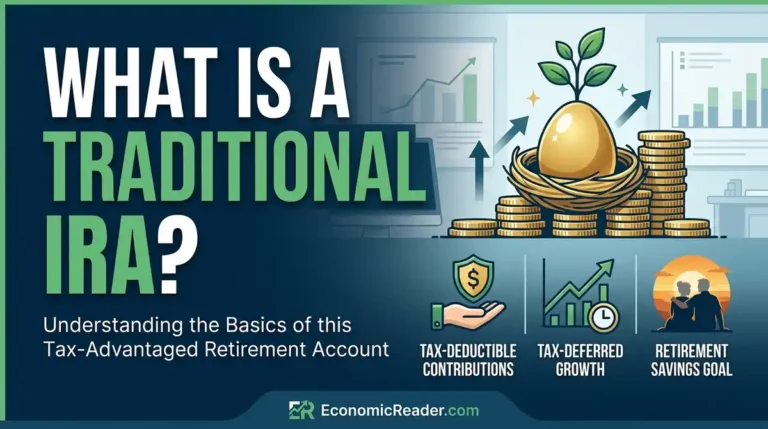
1.Traditional IRA
A Traditional IRA may provide tax advantages depending on your situation.
Taxes are generally paid when money is withdrawn according to applicable rules.
2.Roth IRA
A Roth IRA uses after-tax contributions.
Qualified withdrawals may be tax-free under IRS rules.
However, eligibility requirements and contribution limits apply.
Step 5: Consider Investing for Long-Term Growth
Many retirement plans include investments.
Investing can help retirement savings grow over a long period.
Common investment options may include:
- Stocks
- Index funds
- ETFs
- Bonds
However, investments involve risk.
The right investment approach depends on factors such as:
- Age
- Goals
- Risk tolerance
- Financial situation
Understanding Retirement Investments
For many people, investing is an important part of retirement planning.
The reason is simple:
Money saved today may have the opportunity to grow over many years.
However, investing is not about making quick money.
Retirement investing is usually focused on long-term growth.
The goal is to build financial support for your future.
Common Investment Options for Retirement
There are different types of investments people may use for retirement planning.
Let’s look at some common options.
1. Stocks
Stocks represent ownership in a company.
When you buy a stock, you own a small part of that company.
If the company grows, the value of the stock may increase.
Some companies may also pay dividends to shareholders.
However, stock prices can change frequently.
Because of this, stocks usually involve more risk compared to some other investments.
2. Index Funds
Index funds are popular among many long-term investors.
An index fund contains many different companies in one investment.
For example:
Instead of investing in only one company, an index fund may allow you to invest in hundreds of companies.
Benefits can include:
- Diversification
- Simple investing approach
- Long-term growth potential
However, all investments involve risk, and there are no guaranteed returns.
3. Bonds
Bonds are another type of investment.
When you buy a bond, you are generally lending money to a government or organization.
In return, you may receive interest payments.
Bonds are often considered less risky than stocks, but they may also provide lower growth potential.
4. Target Date Funds
Some retirement plans offer target-date funds.
These funds are designed around a specific retirement year.
For example:
A person planning to retire around 2055 may choose a fund designed for that time period.
These funds usually adjust their investment mix over time.
The Importance of Diversification in Retirement Planning
Diversification means spreading your money across different investments.
The idea is simple:
Do not depend on only one investment.
For example:
If all your money is invested in one company and that company performs poorly, your retirement savings could be affected significantly.
A diversified approach can help manage risk.
However, diversification does not guarantee profits or completely remove investment losses.
Common Retirement Planning Mistakes
Planning for retirement requires patience and good decisions.
Here are some common mistakes beginners should avoid.
Mistake 1: Waiting Too Long to Start
Many people think:
“I will start saving later.”
The problem is that time is one of the biggest advantages in investing.
Starting earlier gives you more time to build savings.
Even small steps can be valuable when started early.
Mistake 2: Not Saving Enough
Another common mistake is saving too little.
Some people only save whatever money is left at the end of the month.
A better approach is to make retirement savings part of your financial plan.
Treat it as an important future goal.
Mistake 3: Ignoring Healthcare Costs
Healthcare can become an important expense during retirement.
A retirement plan should consider possible healthcare needs.
Planning ahead can help you prepare for future costs.
Mistake 4: Taking Too Much Risk
Some people try to increase their retirement savings quickly by taking very high risks.
This can create problems.
Retirement planning is usually about balance.
Your investment choices should match:
- Your goals
- Your timeline
- Your comfort with risk
Mistake 5: Not Adjusting the Plan
Life changes.
Your retirement plan may need updates when things change.
Examples:
- New job
- Marriage
- Family changes
- Income changes
- Different financial goals
Reviewing your plan regularly can help you stay prepared.
Real-Life Example: A Simple Retirement Planning Journey
Let’s imagine a person named John.
John is 30 years old and wants to prepare for retirement.
At first:
John does not have a retirement plan.
He saves only occasionally.
He does not understand investments.
John decides to improve his financial future.
Step 1: Learning
John learns basic personal finance concepts.
He understands:
- Why retirement planning matters
- How retirement accounts work
- How investing can support long-term goals
Step 2: Creating a Plan
John reviews his income and expenses.
He creates a monthly savings plan.
He starts putting money toward retirement regularly.
Step 3: Staying Consistent
John does not focus on becoming wealthy quickly.
Instead, he focuses on:
- Regular contributions
- Learning more
- Making better financial decisions
Over time, John builds stronger retirement habits.
The lesson:
A successful retirement plan is usually built through consistent actions over many years.
How to Create a Simple Retirement Plan
Retirement planning does not have to be complicated.
A good plan starts with understanding your goals and taking consistent steps.
Here is a simple approach beginners can follow.
Step 1: Decide Your Retirement Goals
Start by thinking about the future you want.
Ask yourself:
When do I want to retire?
Where do I want to live?
What lifestyle do I want?
What activities are important to me?
Your goals will help you decide how much preparation you may need.
Step 2: Understand Your Income Sources
After retirement, people may receive money from different sources.
Examples can include:
- Retirement accounts
- Investments
- Social Security benefits (for eligible individuals in the United States)
- Business income
- Other savings
Understanding your possible income sources can help you create a clearer plan.
Step 3: Estimate Future Expenses
Think about the costs you may have during retirement.
Common expenses include:
- Housing
- Food
- Healthcare
- Transportation
- Insurance
- Entertainment
Remember that expenses can change over time.
A good retirement plan should consider both regular costs and unexpected expenses.
Step 4: Build Strong Money Habits
Retirement planning is not only about accounts and investments.
Your daily money habits also matter.
Good habits include:
- Spending wisely
- Saving regularly
- Avoiding unnecessary debt
- Learning about personal finance
- Reviewing your financial goals
Small habits repeated over many years can create meaningful results.
Step 5: Review Your Retirement Plan Regularly
A retirement plan is not something you create once and forget forever.
Your situation can change.
You may experience:
- A new job
- Higher income
- Family changes
- Different goals
Reviewing your plan can help you make adjustments when needed.
Building the Right Retirement Mindset
Successful retirement planning requires the right mindset.
It is not only about numbers.
It is also about patience and discipline.
1.Think Long Term
Retirement planning is a long journey.
There will be times when financial markets change or unexpected events happen.
A long-term mindset can help you stay focused on your goals.
2.Focus on Progress, Not Perfection
Many people avoid retirement planning because they think they need a perfect plan.
That is not necessary.
Starting with a simple plan is better than doing nothing.
You can improve your strategy as you learn more.
3.Keep Learning About Money
Financial knowledge is a valuable skill.
Learning about:
- Saving
- Investing
- Retirement accounts
- Taxes
- Budgeting
can help you make better financial decisions.
Frequently Asked Questions (FAQ)
1. What is retirement planning?
Retirement planning is the process of preparing your finances for the time when you stop working.
It includes:
- Saving money
- Investing
- Choosing retirement accounts
- Planning future expenses
- Creating income sources for retirement
A good retirement plan helps you prepare for your future financial needs.
2. When should I start retirement planning?
The best time to start retirement planning is as early as possible.
Starting early gives your money more time to potentially grow.
However, it is never too late to begin.
Even small steps can improve your retirement preparation.
3. How much money do I need for retirement?
There is no fixed amount that works for everyone.
The amount you need depends on:
- Your lifestyle
- Your expected expenses
- Your retirement goals
- Your income sources
- Your retirement age
Creating a personal plan based on your situation is important.
4. What are the most common retirement accounts in the US?
Common retirement accounts in the United States include:
- 401(k)
- Traditional IRA
- Roth IRA
Each account has different rules, tax features, contribution limits, and withdrawal requirements.
Understanding these differences can help you make informed decisions.
5. Is investing necessary for retirement planning?
Many people use investing as part of their retirement strategy because it may help their money grow over a long period.
However, investments involve risks.
It is important to understand investment options and choose an approach that matches your goals and risk tolerance.
6. Can I start retirement planning with a small amount of money?
Yes.
Many people start with small contributions and increase them over time.
The most important part is building a consistent saving and investing habit.
7. What is the biggest retirement planning mistake?
One common mistake is waiting too long to start.
Other mistakes include:
- Not saving regularly
- Ignoring healthcare costs
- Taking unnecessary risks
- Not reviewing the plan
Learning and making gradual improvements can help avoid these problems.
8. Should I pay debt or save for retirement first?
The answer depends on your personal financial situation.
Some people focus on reducing high-interest debt while also building retirement savings.
A balanced approach may help you work toward multiple financial goals.
9. Can retirement planning change over time?
Yes.
Your retirement plan should change as your life changes.
Factors such as income, family situation, goals, and expenses may affect your plan.
Regular reviews can help keep your plan aligned with your needs.
10. What is the first step in retirement planning?
The first step is understanding your current financial situation.
Look at:
- Your income
- Your expenses
- Your savings
- Your goals
Then create a simple plan and improve it over time.
Final Thoughts
Retirement planning is about preparing for the future you want.
You do not need to be wealthy to begin.
The most important step is starting.
Remember these key points:
- Start as early as possible
- Create clear retirement goals
- Save consistently
- Learn about retirement accounts
- Understand investment risks
- Review your plan regularly
A comfortable retirement is usually built through many small decisions made over time.
The choices you make today can help create more financial security in the future.
If you want to learn What Is a Retirement Account, click here.
Author Note: This article is crafted by “The Economic Reader editorial team”, dedicated to analyzing the latest market trends, financial updates, and global economic shifts to keep you informed with accurate and comprehensive insights.
Disclaimer: The information provided on this website is for educational and informational purposes only and should not be construed as professional financial, investment, or legal advice. Always consult with a certified financial advisor or professional before making any financial decisions based on this content.