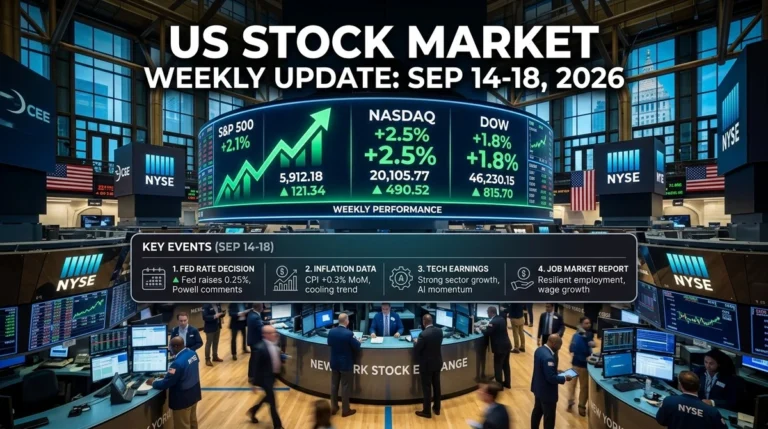

US Stock Market Weekly Update: What Happened This Week? (July 6 – 10, 2026)

US Stock Market Weekly Update: Key Highlights
The US stock market had a positive week from July 6 – 10, 2026, as investors focused on technology growth, economic conditions, interest rate expectations, and future company earnings.
Major US indexes ended the week with mixed but mostly positive results. Technology stocks helped support market gains, while investors continued watching inflation trends and Federal Reserve policy expectations.
The stock market is one of the most followed financial markets in the world. Millions of investors use it to build long-term wealth, but short-term movements can happen every week because of changing economic conditions and investor sentiment.
For beginners, understanding why the market moves is more important than simply watching whether prices go up or down.
This weekly update explains what happened in the US stock market, why it moved, and what investors should watch next.
US Stock Market Snapshot: July 6 – 10, 2026
| Market Index | Weekly Performance |
| S&P 500 | Increased about 1.17% |
| Nasdaq Composite | Increased about 1.79% |
| Dow Jones Industrial Average | Decreased about 0.41% |
Friday Closing Levels
The overall market finished the week stronger, mainly supported by technology stocks and improved investor confidence.
However, not every sector moved in the same direction. Some traditional industries faced pressure as investors continued evaluating economic conditions.
Key Takeaways From This Week
- US stocks finished mostly higher during the week.
- Nasdaq outperformed other major indexes because of technology strength.
- AI-related companies remained a major market focus.
- Investors continued watching Federal Reserve interest rate expectations.
- Future earnings reports remained important for market direction.
How Did the US Stock Market Perform This Week?
The US stock market started the week with investors returning their attention to economic conditions and company growth expectations.
The biggest gains came from technology-focused companies, especially businesses connected to artificial intelligence, semiconductors, and digital services.
The Nasdaq Composite, which includes many technology companies, gained about 1.79% during the week and became the strongest performer among the major indexes.
The S&P 500 also moved higher, gaining around 1.17%, showing continued investor interest across many large US companies.
Meanwhile, the Dow Jones Industrial Average declined slightly by about 0.41% as some traditional companies faced more pressure.
This difference between indexes shows an important lesson for beginners:
The stock market is not one single thing.
Different companies and industries can perform differently at the same time.
For example, if technology companies perform strongly, the Nasdaq may rise even if some other industries are struggling.
Why Did Stock Prices Move This Week?
1. Technology Stocks Supported Market Growth
Technology remained one of the biggest drivers of the market this week.
Investors continued following companies involved in:
- Artificial intelligence
- Semiconductor technology
- Cloud computing
- Software development
AI has become one of the biggest investment themes in recent years.
Many investors believe AI technology could improve productivity and create new business opportunities.
However, technology stocks can also experience larger price movements because expectations are often very high.
A simple example:
Imagine a small company creates a new product that could become very popular in the future.
Investors may buy shares because they believe the company could grow.
The stock price may increase based on future expectations, not only current profits.
This is similar to how investors think about many technology companies.
2. Interest Rate Expectations Remained Important
Interest rates continued to be one of the most important factors affecting the stock market.
Investors closely watch the Federal Reserve because interest rate decisions influence borrowing costs, business growth, and investment decisions.
When interest rates are high, companies may face higher costs when borrowing money.
When investors expect lower rates in the future, they may become more positive about growth companies.
This is especially important for technology companies because many investors value them based on future growth potential.
3. Investors Watched Economic Conditions
Economic data continued influencing market sentiment.
Investors looked at signs showing whether the US economy remains strong.
Important areas include:
- Inflation trends
- Employment conditions
- Consumer spending
- Business activity
Strong economic conditions can support company earnings.
However, investors also watch whether strong economic growth could keep interest rates higher for longer.
This balance continues to influence market decisions.
How Did Different Market Sectors Perform?
The overall stock market can move differently depending on which industries investors are buying or selling.
Understanding sectors can help beginners understand why some companies perform better than others during the same week.
1.Technology Sector
Technology remained one of the strongest areas of the market.
Companies connected to artificial intelligence, semiconductors, and cloud computing continued attracting investor attention.
The strong performance of technology companies helped support the Nasdaq Composite during the week.
However, investors should remember that high-growth companies can also experience larger price changes because expectations are often high.
2.Financial Sector
Financial companies continued watching interest rate expectations and economic conditions.
Banks and financial institutions can be affected by changes in borrowing activity, loan demand, and interest rate policies.
Investors continued evaluating how future economic conditions could influence financial company profits.
3.Healthcare Sector
Healthcare remained an important sector for investors looking for stability.
Many healthcare companies are considered defensive businesses because people need healthcare products and services regardless of economic conditions.
This can make the sector attractive during periods of uncertainty.
4.Energy Sector
Energy stocks continued reacting to changes in oil prices and global energy conditions.
Since energy companies are closely connected to commodity prices, movements in crude oil can influence their performance.
What Does This Mean for Beginner Investors?
For beginners, weekly stock market movements can sometimes feel confusing.
One day the market rises.
Another day it falls.
This is normal.
Stock prices change because millions of investors are constantly buying and selling based on their expectations about the future.
A common beginner mistake is focusing too much on short-term movements.
For example, imagine planting a tree.
You do not expect the tree to grow several feet overnight. Growth happens slowly through consistent progress.
Long-term investing works in a similar way.
Many successful investors focus on:
- Strong companies
- Diversification
- Long-term goals
- Risk management
Instead of asking only:
“Did the market go up this week?”
A better question is:
“Are the companies I own becoming stronger over time?”
Important Factors to Watch Next Week
Investors will continue watching several important areas.
1.Inflation Reports
Inflation data can influence expectations about future Federal Reserve decisions.
If inflation continues improving, investors may become more optimistic about future monetary policy.
2.Federal Reserve Updates
Comments from Federal Reserve officials can influence investor confidence.
Markets often react to changes in expectations about interest rates.
3.Corporate Earnings
Company earnings reports will remain a major market focus.
Investors want to understand:
- Revenue growth
- Profit trends
- Future business outlook
Strong earnings can support stock prices, while weaker results can create pressure.
4.Artificial Intelligence Developments
AI-related companies will likely remain an important market theme.
Investors will continue watching whether AI investments create real business growth and long-term value.
US Stock Market Outlook
The US stock market continues balancing two major forces:
Positive Factors
- Strong technology growth
- AI innovation
- Business investment
- Investor confidence
Challenges
- Interest rate uncertainty
- Inflation concerns
- Economic slowdown risks
- High expectations for some companies
The market may continue experiencing short-term movements as investors react to new information.
For long-term investors, understanding the bigger picture is usually more important than reacting to every daily change.
Final Thoughts
The US stock market had a positive week from July 6 – 10, 2026.
The S&P 500 gained about 1.17%, while the Nasdaq Composite increased about 1.79%, supported by strength in technology stocks.
The Dow Jones Industrial Average declined slightly by about 0.41%, showing that different parts of the market can move in different directions.
The biggest lesson for beginner investors is simple:
Market movements happen for many reasons.
Interest rates, company earnings, technology trends, and economic conditions all influence stock prices.
Instead of focusing only on weekly gains or losses, investors should learn why markets move and how different factors connect together.
Frequently Asked Questions
1.Why did the US stock market rise this week?
The market gained mainly because of strength in technology stocks, improving investor confidence and continued interest in AI-related companies.
2.Which US stock index performed best this week?
The Nasdaq Composite performed best among the major indexes, gaining about 1.79% during the week.
3.Why is the Nasdaq important?
The Nasdaq includes many technology companies, making it an important index for tracking technology sector performance.
4.Should beginners worry about weekly market changes?
Short-term movements are normal. Beginners should focus on long-term goals rather than reacting emotionally to every market change.
5.What affects US stock prices the most?
Stock prices are influenced by company earnings, interest rates, economic conditions, investor sentiment and global events.
Author Note: This article is crafted by “The Economic Reader editorial team”, dedicated to analyzing the latest market trends, financial updates, and global economic shifts to keep you informed with accurate and comprehensive insights.
Disclaimer: The information provided on this website is for educational and informational purposes only and should not be construed as professional financial, investment, or legal advice. Always consult with a certified financial advisor or professional before making any financial decisions based on this content.
If you want to know last week stock market Update please click here
If you want to learn stock market investing please click here
If you want to know weekly gold, oil, crypto & stock market insights please click here