
What Are Imports? A Complete Beginner’s Guide to Understanding Imports in Global Trade
Introduction
In global trade, what are imports and how do they affect the economy? Every day, people use products that come from different countries.
Examples:
- Smartphones manufactured overseas
- Cars built with foreign parts
- Imported food products
- Oil purchased from international suppliers
- Machinery used by businesses
These products enter a country through a process called importing.
Imports are an important part of the global economy because they allow countries, businesses, and consumers to access products and resources that may not be available or affordable locally.
The simple explanation is:
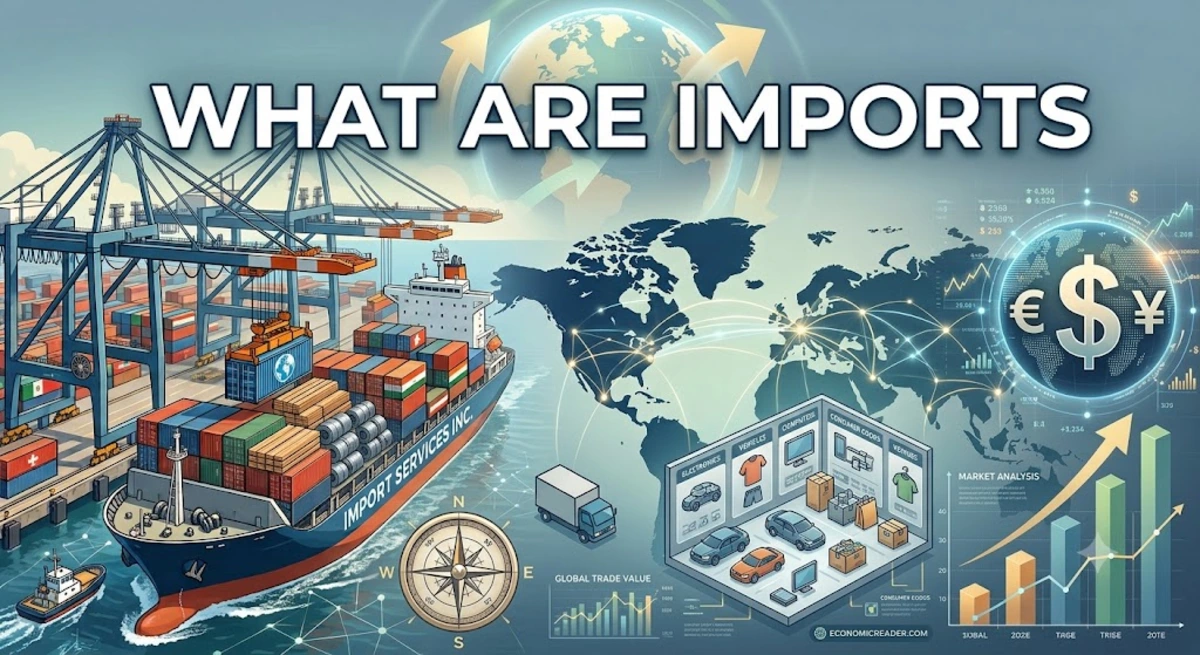
Imports are goods and services purchased from another country and brought into a country for use, sale, or production.
What Is an Import?
An import is a product or service that a country buys from another country.
When a business or government purchases something from a foreign supplier, that product becomes an import.
Examples:
- A US company buying electronics from South Korea
- A country importing oil from another nation
- A restaurant importing coffee beans from another region
Imports can include both physical products and services.
How Do Imports Work Step-by-Step?
To understand what are imports in practice, we must look at the importing process step-by-step.
1. Finding Foreign Suppliers
Businesses or governments first identify suppliers in other countries.
They consider factors such as:
- Price
- Quality
- Reliability
- Production capacity
Example:
A clothing company may find a manufacturer in another country that can produce garments at a competitive cost.
2. Purchasing Goods or Services
The importer agrees to buy products from the foreign supplier.
This involves:
- Contracts
- Payments
- Trade agreements
- Shipping arrangements
3. International Transportation
Imported products must travel across borders.
Common transportation methods include:
- Ships
- Air freight
- Trucks
- Railways
Large international shipping networks make global trade possible.
4. Customs Process
When products arrive in a country, they go through customs.
Customs authorities check:
- Documentation
- Product regulations
- Import taxes
- Safety requirements
5. Distribution to Consumers
After approval, imported products move through:
- Warehouses
- Wholesalers
- Retail stores
- Online platforms
Finally, products reach consumers.
Imports vs Exports Explained
Imports and exports are opposite sides of international trade.
| Imports | Exports |
| Products bought from foreign countries | Products sold to foreign countries |
| Money leaves the country. | Money enters the country. |
| Increase access to foreign products. | Increase foreign sales |
Example:
A country importing computers buys products from another country.
A country exporting computers sells products internationally.
Why Do Countries Import Products?
Countries import products for several reasons.
1. Products Are Not Available Locally
Some countries cannot produce certain goods because of:
- Climate limitations
- Lack of resources
- Geographic conditions
Example:
Countries without oil reserves may import petroleum products.
2. Lower Production Costs
Sometimes foreign producers can create products at lower costs.
Reasons include:
- Lower manufacturing costs
- More efficient production
- Specialized industries
Businesses may import products to reduce expenses.
3. Access to Advanced Technology
Imports allow countries to access technology and equipment.
Examples:
- Industrial machinery
- Medical equipment
- Computer components
These imports can improve productivity.
4. More Consumer Choices
Imports give consumers access to more products.
Examples:
- International brands
- Foreign foods
- Different technology products
Competition between local and foreign companies can improve quality.
Types of Imports
Imports can be divided into several categories.
1. Consumer Goods
These are products purchased by individuals.
Examples:
- Electronics
- Clothing
- Food products
- Vehicles
2. Capital Goods
Capital goods are used by businesses to produce other products.
Examples:
- Factory equipment
- Industrial machines
- Technology systems
3. Raw Materials
Businesses import resources needed for production.
Examples:
- Metals
- Oil
- Agricultural materials
4. Services
Countries also import services.
Examples:
- Software services
- Consulting
- Financial services
- Tourism services
Common Examples of Imports
Many countries import essential products.
Oil and Energy Products
Countries often import oil because energy demand is higher than domestic production.
Oil imports support:
- Transportation
- Manufacturing
- Electricity production
Electronics
Many electronic products depend on international supply chains.
Examples:
- Smartphones
- Computers
- Semiconductors
Machinery
Businesses import machines to improve production.
Examples:
- Factory equipment
- Agricultural machinery
Food Products
Countries import food because of:
- Climate differences
- Seasonal shortages
- Consumer demand
Examples:
- Coffee
- Fruits
- Grains
Benefits of Imports
Imports provide several economic benefits.
1. Lower Prices
Imports can reduce costs through global competition.
When businesses have access to cheaper suppliers, consumers may benefit from lower prices.
2. More Product Choices
Imports increase the variety of products available.
Consumers can access:
- Different brands
- New technologies
- International products
3. Business Growth
Companies often depend on imports for:
- Materials
- Equipment
- Components
These imports help businesses expand.
4. Economic Efficiency
Imports allow countries to focus on industries where they have advantages.
Instead of producing everything domestically, countries can specialize and trade.
How Imports Affect Businesses
Imports can help businesses in many ways.
Lower Production Costs
Companies can purchase cheaper materials from international suppliers.
Better Resources
Businesses can access products and technologies unavailable locally.
Increased Competition
Imported products encourage companies to improve:
- Quality
- Efficiency
- Innovation
How Imports Affect Consumers
Consumers often benefit from imports.
Benefits include:
More Choices
People can buy products from around the world.
Competitive Prices
Foreign competition can help control prices.
Access to Innovation
Consumers can use advanced products developed internationally.
How Imports Affect GDP
Imports are included when calculating GDP.
A common GDP formula is:
GDP = Consumer Spending + Investment + Government Spending + Net Exports
Net exports are:
Exports − Imports
Imports reduce net exports because money is spent on foreign products.
However, imports can still support economic growth by providing:
- Production materials
- Technology
- Business resources
A country with imports is not necessarily economically weak.
Imports and Trade Deficit Explained
A trade deficit occurs when:
Imports are greater than exports.
This means a country buys more from foreign countries than it sells.
A trade deficit can have different effects.
Possible concerns:
- Increased foreign dependence
- Pressure on domestic industries
Possible benefits:
- Access to affordable products
- Strong consumer demand
- Business efficiency
The impact depends on the overall economic situation.
Are Imports Bad for an Economy?
Imports are sometimes viewed negatively, but the reality is more complex.
Imports can create challenges:
- Local businesses may face more competition.
- Some industries may lose market share.
- Countries may become dependent on foreign suppliers.
However, imports also create benefits:
- Lower costs
- Better technology access
- More consumer options
- Stronger business productivity
A balanced economy usually uses both imports and exports.
Import Tariffs and Trade Barriers
Governments sometimes place restrictions on imports.
A tariff is a tax placed on imported products.
Example:
A government may add a tax on imported steel to protect domestic steel producers.
Effects:
Benefits:
- Supports local industries
Challenges:
- May increase prices for consumers
Quotas
A quota limits the amount of a product that can be imported.
Example:
A country may limit imported agricultural products to protect local farmers.
Real-World Examples of Imports
United States Imports
The United States imports many products, including:
- Electronics
- Machinery
- Vehicles
- Energy products
Imports support American consumers and businesses by providing access to global markets.
Global Supply Chains
Modern products often depend on imported components.
Example:
A smartphone may include:
- Raw materials from several countries
- Electronic components from different suppliers
- Assembly in another country
Imports make this global production system possible.
The Future of Imports
Global importing will continue changing because of technology and economic trends.
Digital Trade
More services are becoming internationally traded.
Examples:
- Cloud computing
- Software
- Online services
AI may improve:
- Supply chain planning
- Import forecasting
- Logistics efficiency
Supply Chain Changes
Companies are focusing more on:
- Supply chain security
- Multiple suppliers
- Regional production
This reduces dependence on a single source.
Frequently Asked Questions (FAQ)
1. What are imports in simple words?
Imports are goods and services purchased from another country and brought into a country.
2. Why do countries import goods?
Countries import products they cannot produce efficiently, need for production, or want to provide more choices to consumers.
3. Are imports good or bad?
Imports can provide benefits such as lower prices and better products, but excessive dependence can create risks.
4. What is the difference between imports and exports?
Imports are products bought from other countries, while exports are products sold to other countries.
5. How do imports affect consumers?
Imports often provide consumers with more choices, competitive prices, and access to global products.
Final Thoughts
Imports are a fundamental part of the global economy.
They allow countries and businesses to access:
- Resources
- Technology
- Products
- International expertise
Although imports can create challenges for some industries, they also support economic efficiency, consumer benefits, and business growth.
In today’s connected world, understanding imports helps people understand how global trade and the economy work.
If you want to learn about the USA Economy New Trends 2026, read our full guide; click here
If you want to learn the Top 10 US Economy Predictions 2026, read our full guide; click here
Author Note: This article is crafted by “The Economic Reader editorial team”, dedicated to analyzing the latest market trends, financial updates, and global economic shifts to keep you informed with accurate and comprehensive insights.
Disclaimer: The information provided on this website is for educational and informational purposes only and should not be construed as professional financial, investment, or legal advice. Always consult with a certified financial advisor or professional before making any financial decisions based on this content.