
What Is Supply Chain? A Beginner’s Guide to Supply Chain Management, Global Trade, and Business Operations
What Is Supply Chain: Introduction
Every product we use in daily life has a journey before reaching our hands.
A smartphone, a car, a cup of coffee, or a piece of clothing involves many different activities before reaching customers.
For example, a smartphone requires:
- Raw materials from different countries
- Manufacturing facilities
- Technology components
- Transportation networks
- Warehouses
- Retail stores
- Online delivery systems
All of these connected activities form a supply chain.
A strong supply chain helps businesses deliver products efficiently, reduce costs, and satisfy customers.
A weak supply chain can create:
- Product shortages
- Higher prices
- Delivery delays
- Business losses
The simple idea is:
A supply chain is the complete network of people, companies, resources, activities, and technologies involved in creating and delivering a product or service from suppliers to customers.
In this guide, we will explain what a supply chain is, how it works, why it matters, challenges businesses face, and how modern technology is transforming supply chains.
What Is Supply Chain?
A supply chain is the connected system involved in producing, moving, and delivering goods or services to customers.
It includes every step from the beginning to the final customer.
A typical supply chain includes:
- Raw material suppliers
- Manufacturers
- Transportation companies
- Warehouses
- Distributors
- Retailers
- Customers
Example:
A coffee supply chain may involve:
Coffee farmers → Processing companies → Packaging companies → Shipping companies → Stores → Customers
How Does a Supply Chain Work?
A supply chain usually follows several important stages.
1. Raw Material Sourcing
The first step is collecting the materials needed to create a product.
Examples:
- Metals for electronics
- Cotton for clothing
- Oil for plastics
- Agricultural products for food
Businesses depend on reliable suppliers to maintain production.
2. Manufacturing and Production
Manufacturers transform raw materials into finished products.
Examples:
- Factories producing smartphones
- Automobile plants building vehicles
- Food companies processing ingredients
Efficient manufacturing helps companies reduce costs and improve quality.
3. Transportation
After production, products must move through transportation networks.
Transportation methods include:
- Ships
- Trucks
- Trains
- Air freight
Global companies often depend on international transportation systems.
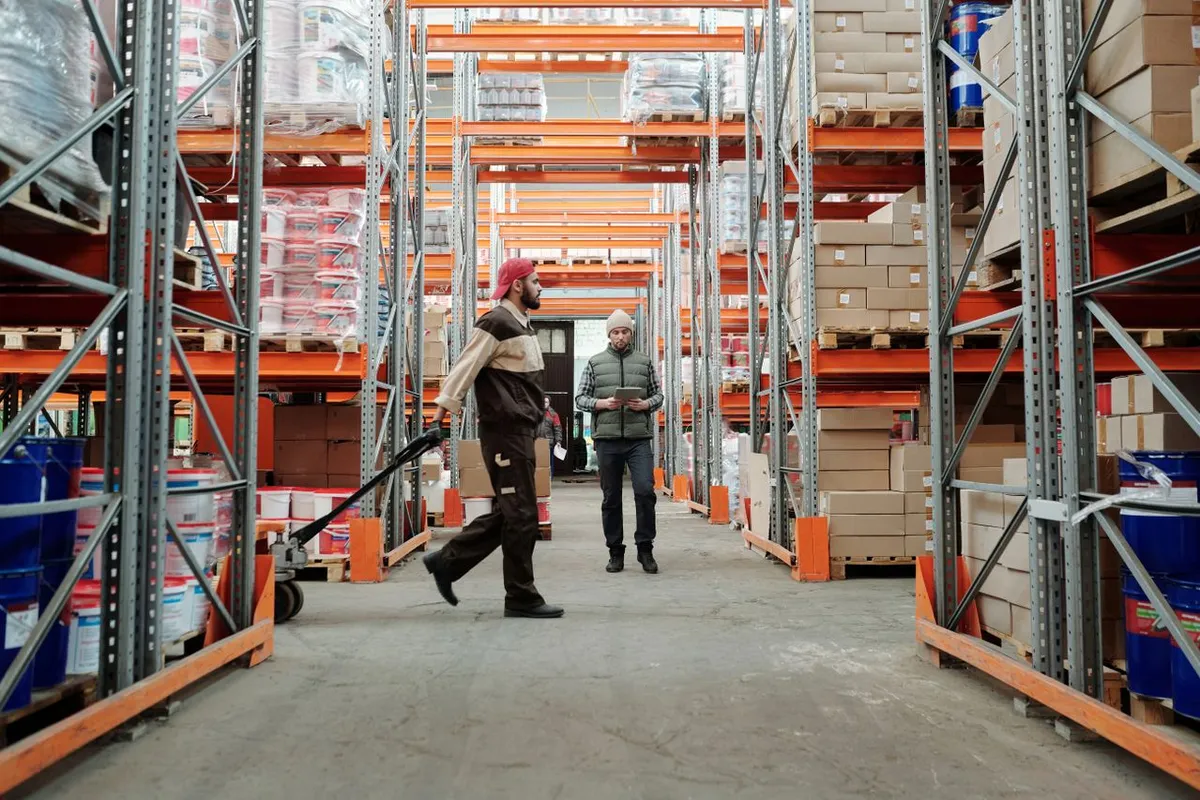
4. Warehousing and Storage
Warehouses store products before they reach customers.
Warehousing helps businesses:
- Manage inventory
- Prepare orders
- Maintain product availability
5. Distribution
Distribution involves moving products from warehouses to final selling locations.
Examples:
- Retail stores
- Online marketplaces
- Direct customer delivery
6. Customer Delivery
The final stage is delivering products to customers.
Modern businesses focus on:
- Fast delivery
- Accurate orders
- Customer satisfaction
Main Components of a Supply Chain
A supply chain consists of several important participants.
1. Suppliers
Suppliers provide the materials or components needed for production.
Example:
A car manufacturer depends on suppliers that provide:
- Steel
- Glass
- Electronics
- Tires
2. Manufacturers
Manufacturers convert raw materials into finished products.
They manage:
- Production
- Quality control
- Efficiency
3. Logistics Providers
Logistics companies manage transportation and movement of goods.
They handle:
- Shipping
- Freight management
- Delivery coordination
4. Warehouses
Warehouses store products and manage inventory.
They help businesses maintain a balance between supply and demand.
5. Retailers
Retailers sell products directly to customers.
Examples:
- Supermarkets
- Online stores
- Electronics shops
6. Customers
Customers are the final part of the supply chain.
The entire system exists to deliver value to customers.
Supply Chain vs Logistics: What Is the Difference?
Many people confuse supply chain and logistics.
| Supply Chain | Logistics |
| Covers the entire production and delivery system | Focuses mainly on transportation and storage |
| Includes suppliers, production, distribution, and customers | Includes movement of goods |
| Broader business process | One part of supply chain management |
Simply:
Logistics is a part of the supply chain.
Why Is Supply Chain Important for Businesses?
A strong supply chain creates many advantages.
1. Reduces Business Costs
Efficient supply chains help companies reduce:
- Transportation costs
- Storage expenses
- Production waste
Lower costs can improve profitability.
2. Improves Customer Experience
Customers expect:
- Fast delivery
- Product availability
- Reliable service
A strong supply chain helps businesses meet these expectations.
3. Creates Competitive Advantage
Companies with efficient supply chains can compete through:
- Lower prices
- Faster delivery
- Better product availability
4. Helps Manage Risks
Businesses can prepare for disruptions through:
- Multiple suppliers
- Better inventory planning
- Flexible operations
Types of Supply Chains
Different industries use different supply chain models.
1. Traditional Supply Chain
A traditional supply chain follows a basic process:
Supplier → Manufacturer → Distributor → Retailer → Customer
This model has been used for decades.
2. Global Supply Chain
A global supply chain involves companies operating across multiple countries.
Example:
A technology company may have:
- Design teams in one country
- Manufacturing in another country
- Customers worldwide
3. Digital Supply Chain
Digital supply chains use technology to improve operations.
Examples:
- Artificial intelligence
- Data analytics
- Cloud systems
- Automation
4. Sustainable Supply Chain
A sustainable supply chain focuses on reducing environmental impact.
Examples:
- Renewable energy use
- Recycling programs
- Lower carbon emissions
How Supply Chains Affect Consumers
Supply chains directly influence everyday life.
A strong supply chain can provide:
- Lower prices
- Faster delivery
- More product choices
A disrupted supply chain can cause:
- Shortages
- Higher prices
- Delayed deliveries
How Supply Chains Affect Inflation
Supply chains have a major relationship with inflation.
When supply chains experience problems:
- Production costs increase
- Transportation costs rise
- Product availability decreases
Businesses may increase prices to cover higher costs.
Example:
If shipping costs increase significantly, imported products may become more expensive.
Supply Chain Disruptions Explained
Supply chains can be affected by many challenges.
1. Natural Disasters
Events such as:
- Floods
- Earthquakes
- Storms
can damage factories and transportation networks.
2. Pandemics
Health crises can disrupt:
- Production
- Worker availability
- Transportation
3. Geopolitical Conflicts
Political conflicts can affect:
- Trade routes
- Energy supplies
- International business operations
4. Tariffs and Trade Restrictions
Trade policies can increase costs and create delays.
For example:
Tariffs on imported goods may increase the cost of materials and products.
Role of Technology in Modern Supply Chains
Technology is transforming supply chain management.
1. Artificial Intelligence (AI)
AI helps companies:
- Predict demand
- Optimize inventory
- Improve decision-making
2. Automation
Automation helps businesses improve:
- Warehouse operations
- Production speed
- Accuracy
3. Data Analytics
Companies analyze data to understand:
- Customer demand
- Market trends
- Supply risks
4. Internet of Things (IoT)
IoT devices help businesses track:
- Product locations
- Equipment performance
- Transportation conditions
What Is Supply Chain Management?
Supply Chain Management (SCM) is the process of planning, controlling, and improving the movement of products and information throughout the supply chain.
It focuses on:
- Efficiency
- Cost reduction
- Quality improvement
- Customer satisfaction
Supply chain managers make decisions about:
- Suppliers
- Inventory
- Transportation
- Production planning
Real-World Supply Chain Examples
1. Automobile Industry
Car production requires thousands of components.
A vehicle may involve:
- Metal suppliers
- Electronics companies
- Tire manufacturers
- Assembly plants
- Dealers
A problem with one supplier can affect the entire production process.
2. Technology Industry
Technology companies depend on complex global supply chains.
Products such as smartphones require:
- Semiconductor chips
- Batteries
- Displays
- Software systems
3. Food Industry
Food supply chains involve:
- Farmers
- Processing companies
- Transportation
- Supermarkets
Food quality and safety depend heavily on efficient supply chains.
Common Supply Chain Challenges
Businesses face several ongoing challenges.
1. Supply Shortages
Unexpected shortages can interrupt production.
2. Rising Transportation Costs
Fuel prices and shipping costs can increase business expenses.
3. Supplier Dependence
Depending on only one supplier creates risk.
4. Inventory Management Problems
Too much inventory increases costs.
Too little inventory creates shortages.
Future of Supply Chains in 2026
Supply chains are becoming more:
- Digital
- Automated
- Sustainable
- Data-driven
Future trends include:
Companies will use AI for better forecasting and decision-making.
Smart Warehouses
Automation will improve storage and delivery speed.
Supply Chain Resilience
Businesses will focus on building systems that can handle disruptions.
Sustainable Operations
Companies will invest in environmentally friendly supply chains.
Frequently Asked Questions (FAQ)
1. What is a supply chain in simple words?
A supply chain is the complete process of creating and delivering products from raw materials to customers.
2. Why are supply chains important?
Supply chains help businesses reduce costs, deliver products efficiently, and satisfy customers.
3. What is the difference between supply chain and logistics?
Logistics focuses on transportation and storage, while supply chain includes the entire production and delivery process.
4. How do supply chains affect prices?
Supply chain problems can increase production and transportation costs, which may lead to higher consumer prices.
5. Why do supply chains become disrupted?
Common causes include natural disasters, pandemics, conflicts, and trade restrictions.
Final Thoughts
Supply chains are the invisible systems that keep the global economy moving.
Every product people use depends on a complex network of:
- Suppliers
- Manufacturers
- Transportation companies
- Retailers
- Customers
A strong supply chain helps businesses grow, reduces costs, and improves customer experiences.
Understanding supply chains is important for investors, business owners, and consumers because global events, trade policies, and economic changes can directly affect how products are made, priced, and delivered.
In an increasingly connected world, supply chain management has become one of the most important parts of modern business success.
Author Note: This article is crafted by “The Economic Reader editorial team”, dedicated to analyzing the latest market trends, financial updates, and global economic shifts to keep you informed with accurate and comprehensive insights.
Disclaimer: The information provided on this website is for educational and informational purposes only and should not be construed as professional financial, investment, or legal advice. Always consult with a certified financial advisor or professional before making any financial decisions based on this content.