
US Stock Market Weekly Update: September 14-18, 2026
US Stock Market Weekly Update: September 14-18, 2026
The U.S. stock market had a volatile week as investors adjusted to a new mix of higher interest rates, elevated Treasury yields, expensive oil, and continued enthusiasm for artificial intelligence.
The major indexes did not move together. The Nasdaq finished higher, while the S&P 500 was almost unchanged and the Dow and Russell 2000 declined. That divergence was one of the most important features of the week because it showed that investors were not simply becoming more or less optimistic about stocks. They were reassessing which parts of the market could handle a higher-cost financial environment.
The Federal Reserve’s September decision added to that uncertainty. The central bank raised its benchmark interest rate by 25 basis points to 3.75%-4.00%, while inflation remained elevated and economic activity continued to expand at a solid pace. (Nasdaq)
A Mixed Week Beneath the Headline Numbers
The week’s performance was relatively modest at the index level, but the differences between major benchmarks were significant.
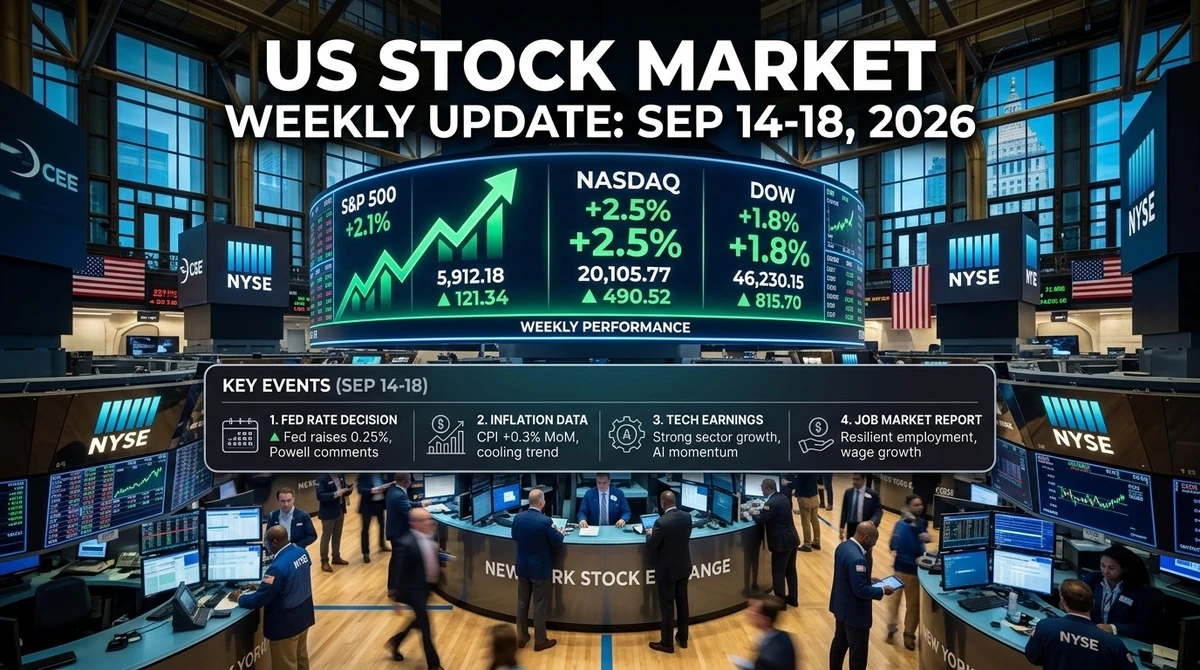
| Index | Weekly Change | Friday Close |
| S&P 500 | -0.1% | 7,650.50 |
| Nasdaq Composite | +0.7% | 26,522.55 |
| Dow Jones Industrial Average | -1.7% | 51,682.64 |
| Russell 2000 | -1.5% | 2,860.40 |
The S&P 500 slipped 0.1% for the week, while the Nasdaq gained 0.7%. The Dow fell 1.7% and the Russell 2000 declined 1.5%. On Friday, the S&P 500 rose 0.2% to 7,650.50 and the Nasdaq gained 0.4% to 26,522.55, while the Dow and Russell 2000 finished lower. (AP News)
This was very different from a simple broad-market selloff. Money continued to move toward parts of the technology sector even as higher rates and energy costs created pressure elsewhere.
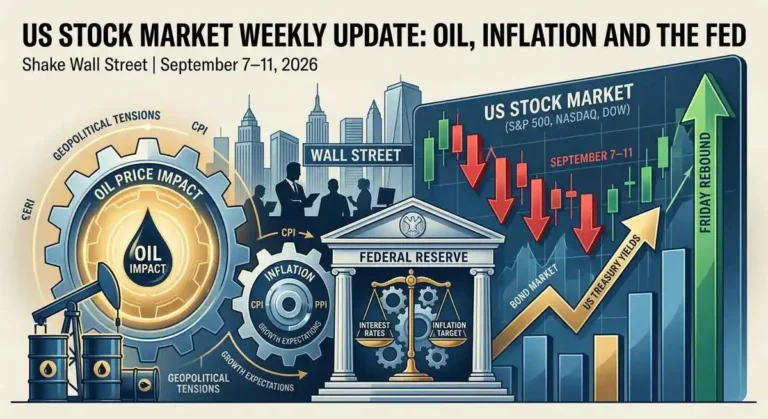
That makes the previous week’s market performance useful context, particularly because the market entered this week with inflation, interest rates and economic data already shaping expectations. U.S. Stock Market Weekly Update: September 7–11, 2026
The Fed Put Rates Back at the Center of the Market
The Federal Reserve’s decision on September 16 was widely expected, but its importance went beyond the 25-basis-point move itself.
The Fed raised the federal funds target range to 3.75%-4.00% and said economic activity was expanding at a solid pace. It also pointed to resilient domestic spending, strong productivity and robust capital investment. At the same time, the central bank said inflation remained elevated. (Nasdaq)
That combination creates a difficult environment for investors.
A strong economy can support corporate earnings, but persistent inflation limits how quickly monetary policy can become easier. Higher interest rates also increase the cost of borrowing and can reduce the present value investors place on future earnings.
For the stock market, therefore, the question is no longer simply whether the economy is growing. Investors also have to consider how much that growth is costing in terms of inflation and interest rates.
Treasury Yields Became a Second Market Signal
The bond market reinforced that message.
The 10-year Treasury yield moved toward 5% during the week, reaching levels not seen since the mid-2000s. On September 18, it again approached the 5% level even as stocks finished mixed. (Reuters)
This matters because the 10-year Treasury yield influences borrowing costs across the economy. Mortgage rates, corporate financing and the valuation of financial assets are all affected by changes in longer-term interest rates.
The relationship with stocks is particularly important for growth companies. When Treasury yields rise, investors may demand a higher return before paying elevated prices for earnings expected several years into the future.
Yet the Nasdaq still gained during the week.
That tells us something important about the current market: investors remain willing to accept higher valuations for companies and industries where they see strong long-term growth potential.
Oil Turned Inflation Into a Bigger Concern
Oil prices added another layer to the interest-rate problem.
Crude prices remained above $100 a barrel for much of the week, although prices eased toward the end of the period. Reuters reported that the combination of elevated oil prices and Treasury yields remained a key source of pressure on stocks. (Reuters)
The concern is not only the price of crude itself. Higher energy costs can feed into transportation, manufacturing and consumer prices, potentially making inflation more persistent.
That matters because U.S. inflation was already running above the Federal Reserve’s 2% target. August CPI increased 0.4% from the previous month and was 3.4% higher than a year earlier, while core CPI was up 2.4% year over year. Energy prices increased 16.3% from a year earlier, with gasoline also showing a large annual increase.
A prolonged period of expensive oil could therefore make the Fed’s inflation problem more difficult even if other parts of the economy remain relatively strong.
Why Technology Stocks Were Different
Technology stocks provided the clearest counterweight to the pressure from rates and oil.
The Nasdaq gained 0.7% for the week, supported by semiconductor strength. Reuters reported that a rally in chip stocks helped the Nasdaq outperform the broader market. (Reuters)
The continued strength of AI-related investment is important here. Investors are still looking for companies that can generate substantial revenue and productivity gains from artificial intelligence, semiconductors and related infrastructure.
At the same time, the week also showed that AI enthusiasm is not completely independent of broader market conditions. A debate around the pace and direction of frontier AI development briefly affected chip stocks before the sector recovered. (Nasdaq)
So the market is not ignoring macroeconomic risks. Instead, investors appear to be weighing those risks against the possibility of continued earnings and investment growth in technology.
Smaller Companies Faced a Different Environment
The Russell 2000’s 1.5% weekly decline highlighted another side of the market.
Smaller companies can be more exposed to financing conditions because borrowing costs can have a larger effect on businesses with less financial flexibility. When interest rates and Treasury yields remain elevated, the cost of capital becomes a more important consideration.
That does not mean every small company is vulnerable or that large companies are protected. It simply means that different parts of the equity market respond differently to the same macroeconomic conditions.
The week’s performance illustrated that difference clearly: technology-heavy stocks remained relatively resilient while smaller-cap stocks weakened.
What the Market Is Really Trying to Price
The most important development this week was not any single data point. It was the interaction between several forces.
The U.S. economy is still showing resilience. Productivity and capital investment remain strong, and consumer spending has not collapsed. But inflation is elevated, oil prices are high, and the Fed has moved interest rates higher.
That creates two competing narratives for stocks.
One is positive: stronger economic activity can support corporate revenues and earnings, while AI investment could create another source of productivity and growth.
The other is more difficult: persistent inflation can keep interest rates higher, Treasury yields can remain elevated, and expensive energy can squeeze both consumers and businesses.
The divergence between the Nasdaq, Dow and Russell 2000 suggests that investors are trying to price both narratives at the same time.
What Investors Should Watch Next
The next week will provide more information about which side of that balance is becoming more important.
Treasury yields remain one of the clearest market signals. A sustained move above 5% could continue to influence equity valuations and borrowing costs.
Oil prices will also matter. If crude remains elevated, investors will continue to consider the effect on inflation and household spending.
Economic data will provide another test of whether the U.S. economy is maintaining its momentum despite tighter financial conditions. The market will also be watching upcoming business and manufacturing indicators for evidence of how companies are responding.
Finally, technology and AI investment will remain a major market theme. Strong demand and earnings growth could continue supporting the sector, but elevated valuations mean expectations also remain high.
The Bottom Line
The September 14-18 week showed a U.S. stock market dealing with a more complicated interest-rate environment.
The Nasdaq’s gain demonstrated that investors were still willing to support technology and semiconductor companies with strong growth expectations. Meanwhile, the declines in the Dow and Russell 2000 showed that higher borrowing costs and elevated yields were creating more pressure across other parts of the market.
The central question heading into the next week is whether inflation and energy costs remain strong enough to keep financial conditions tight.
For the broader market, the important story is no longer simply whether stocks are rising or falling. It is which parts of the market can continue to grow while interest rates, Treasury yields and energy costs remain elevated.