Gold Market Weekly Update: What Happened This Week? (July 13 – 17, 2026)
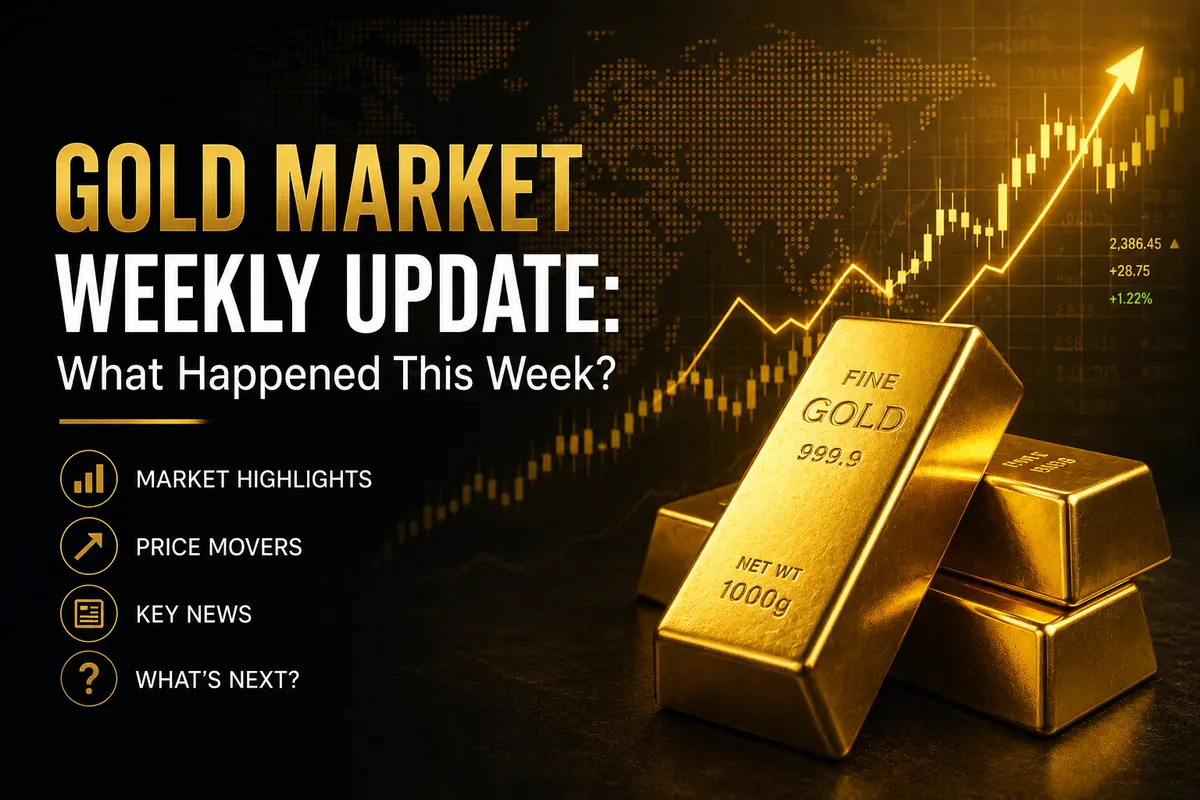
Gold Market Weekly Update: Key Highlights
Gold remained one of the most closely watched financial assets during the week of July 13 – 17, 2026 as investors reacted to changing interest rate expectations, U.S. dollar movements, and global economic uncertainty.
Although geopolitical tensions increased demand for safe-haven assets, gold prices faced pressure during the week as investors focused on higher interest rate expectations and a stronger U.S. dollar.
For investors, this week showed an important lesson: gold does not always rise during uncertainty. Other factors, especially interest rates and currency movements, can strongly influence short-term price changes.
What Happened to Gold Prices This Week?
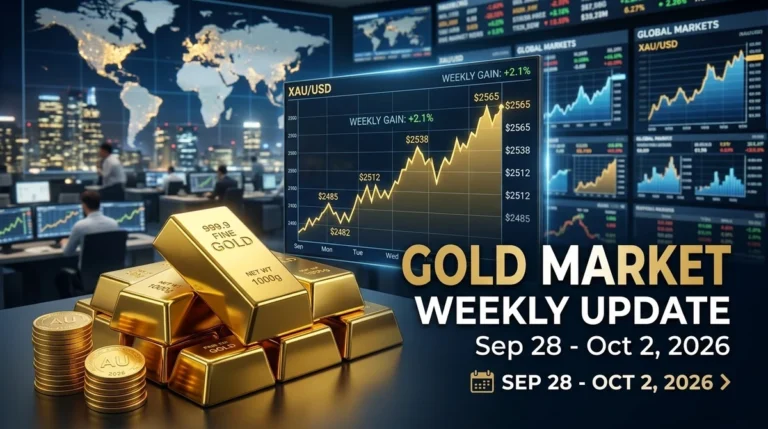
Gold prices declined during July 13 – 17, 2026, falling approximately 2.6% for the week. Investors reacted to a stronger U.S. dollar, interest rate concerns, and changing expectations about future Federal Reserve policy.
Gold Weekly Performance (Real-Time Data)
| Asset | July 13, 2026 | July 17, 2026 | Weekly Change |
| Spot Gold (XAU/USD) | Around $4,125/oz | Around $4,017.60/oz | -2.6% |
| COMEX Gold Futures | Around $4,120 range | Around $4,012.70–$4,018 range | Lower |
Gold experienced selling pressure after failing to maintain earlier momentum.
Daily Gold Market Movement (July 13 – 17, 2026)
| Day | Market Movement |
| Monday (July 13) | Gold started the week under pressure as investors watched dollar movements |
| Tuesday (July 14) | Prices remained volatile due to economic expectations |
| Wednesday (July 15) | Rate concerns increased selling pressure |
| Thursday (July 16) | Safe-haven demand provided some support |
| Friday (July 17) | Gold ended lower as investors adjusted positions |
Why Did Gold Prices Fall This Week?
1. Stronger U.S. Dollar Created Pressure
Gold is priced in U.S. dollars globally.
When the dollar becomes stronger, gold becomes more expensive for international buyers.
This can reduce demand and create downward pressure on prices.
Example:
If someone in another country buys gold using their local currency, a stronger dollar means they need more money to purchase the same amount of gold.
2. Interest Rate Expectations Affected Gold Demand
Interest rates remain one of the biggest drivers of gold prices.
Gold does not pay interest like:
- Savings accounts
- Bonds
- Other income-producing assets
When investors expect higher interest rates, some prefer assets that generate returns.
When rates are expected to fall, gold often becomes more attractive.
3. Investors Took Profits
After strong gold performance earlier, some investors decided to lock in profits.
Profit-taking is common in financial markets.
A simple example:
If someone buys gold at $3,500 and it rises significantly, they may sell part of their holdings to secure gains.
This does not always mean investors are negative about gold’s long-term future.
Geopolitical Tensions and Gold Demand
Global uncertainty remained an important factor during the week.
Geopolitical risks often increase demand for safe-haven assets because investors look for protection during uncertain periods.
However, this week showed that geopolitical concerns alone were not enough to push gold higher because other factors, such as the dollar and interest rates, had stronger short-term influence.
Gold vs Other Investments
Many investors compare gold with stocks and other assets.
Gold
Advantages:
- Wealth protection
- Diversification
- Safe-haven demand
Limitations:
- Does not generate income
- Can experience price declines
Stocks
Advantages:
- Potential company growth
- Dividend opportunities
Limitations:
- Higher market volatility
Many investors choose a combination of different assets rather than depending on only one investment.
What Does This Mean for Gold Investors?
For long-term investors, a weekly decline does not necessarily change the bigger picture.
Gold continues to receive attention because of:
- Central bank buying
- Economic uncertainty
- Inflation concerns
- Currency risks
However, investors should understand that gold prices can move in both directions.
Common Gold Investing Mistakes
Buying Only After Big Price Rises
Many beginners buy assets after seeing large gains.
Successful investors usually focus on strategy rather than emotions.
Treating Gold as a Guaranteed Investment
Gold can protect wealth, but prices can also decline.
No investment moves upward forever.
Ignoring Portfolio Balance
Gold is usually considered one part of a diversified portfolio.
Investors may combine:
- Stocks
- Bonds
- Cash
- Real estate
- Precious metals
Gold Market Outlook: What to Watch Next Week
1. Federal Reserve Signals
Investors will watch Fed comments about:
- Interest rates
- Inflation
- Economic growth
2. U.S. Dollar Movement
A stronger dollar could continue creating pressure on gold.
A weaker dollar could provide support.
3. Inflation Data
Inflation expectations remain important because gold is often viewed as an inflation protection asset.
Key Takeaways
Gold declined approximately 2.6% during July 13 – 17, 2026.
Spot gold closed near $4,017.60 per ounce.
Stronger dollar and rate concerns pressured prices.
Geopolitical uncertainty continued supporting long-term demand.
Gold remains an important diversification asset.
Frequently Asked Questions (FAQ)
1.Why did gold fall this week?
Gold declined because of dollar strength, interest rate concerns, and investor profit-taking.
2.Is gold still valuable during economic uncertainty?
Yes. Many investors continue using gold as a wealth protection asset during uncertain periods.
3.Does a gold price decline mean investors should sell?
Not necessarily. Investors should consider their long-term goals instead of reacting to short-term movements.
4.Does inflation always increase gold prices?
Not always. Interest rates, currencies, and investor demand also play important roles.
5.Is gold better than stocks?
Gold and stocks serve different purposes. Many investors use both for diversification.
Final Thoughts
The Gold Market Weekly Update for July 13 – 17, 2026 showed that even strong assets like gold can experience short-term declines.
Although geopolitical uncertainty supported demand, stronger dollar conditions and interest rate concerns created pressure on prices.
For investors, the main lesson is that gold should be viewed as a long-term portfolio protection tool rather than a quick-profit investment.
Understanding market drivers and maintaining a balanced strategy are key to successful investing.
Click here to view last week’s market update
Author Note: This article is crafted by “The Economic Reader editorial team”, dedicated to analyzing the latest market trends, financial updates, and global economic shifts to keep you informed with accurate and comprehensive insights.
Disclaimer: The information provided on this website is for educational and informational purposes only and should not be construed as professional financial, investment, or legal advice. Always consult with a certified financial advisor or professional before making any financial decisions based on this content.