
Gold Market Weekly Update: September 14-18, 2026
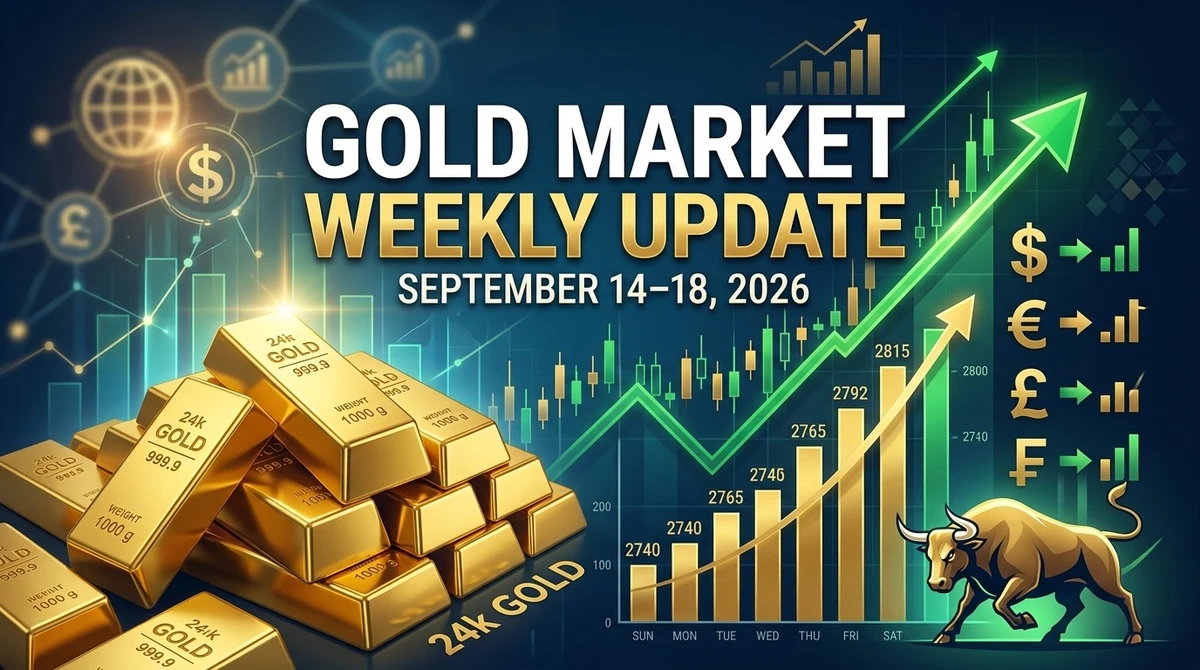
Gold Market Weekly Update: September 14-18, 2026
Gold had a sharp reversal during the week of September 14-18, 2026. The metal started the week under heavy pressure as rising oil prices, elevated Treasury yields and stronger expectations for a Federal Reserve rate hike pushed investors away from non-yielding bullion.
But the story changed quickly. After the Fed raised interest rates on Wednesday, gold initially fell before rebounding strongly as oil prices and Treasury yields eased. By Friday, spot gold had climbed to around $4,390 an ounce, putting the metal on track for its first weekly gain in four weeks. U.S. gold futures settled at $4,424.90. (Reuters)
The week’s price action showed that gold is being pulled in several directions at once.
Gold Faced Heavy Pressure at the Start of the Week
Gold entered the week with several forces working against it.
On Monday, spot gold fell to a more than one-month low, reaching around $4,313 an ounce. Rising oil prices were a major factor because they increased concerns that inflation could remain elevated and encourage central banks to keep monetary policy tighter. (Kitco)
The U.S. dollar was also stronger, while Treasury yields remained elevated. Both factors can pressure gold because higher yields increase the opportunity cost of holding an asset that does not pay interest, while a stronger dollar makes dollar-priced gold more expensive for buyers using other currencies.
The result was a difficult start to the week, even though geopolitical tensions were still supporting some safe-haven demand.
The Fed Hike Created an Immediate Shock
The Federal Reserve became the week’s central event.
On September 16, the Fed raised its target federal funds rate by 25 basis points to 3.75%-4.00%. The move increased borrowing costs and reinforced the market’s focus on persistent inflation. (Reuters)
Gold initially reacted negatively. Reuters reported that spot gold fell more than 1% after the decision as the dollar strengthened and investors reassessed the outlook for future rate increases. (Reuters)
That reaction made sense from a traditional gold-market perspective. Higher interest rates can make yield-generating assets more attractive relative to gold.
But the selloff did not last.
Oil and Treasury Yields Changed the Direction
The most important shift came after the Fed decision.
Oil prices began to ease, while U.S. Treasury yields moved lower. That reduced some of the immediate pressure on inflation expectations and interest-rate-sensitive assets.
On Thursday, gold gained more than 2%, with spot gold reaching about $4,360 an ounce. Reuters attributed the rebound partly to easing oil prices and a weaker dollar as investors continued assessing the Fed’s latest decision. (Reuters)
This created an interesting reversal.
At the start of the week, higher oil prices were hurting gold because they raised expectations for tighter monetary policy. Later in the week, lower oil prices helped gold because they reduced some of that pressure.
The relationship between oil and gold therefore became one of the week’s most important market signals.
Friday Turned the Week Around
By Friday, gold had extended its recovery.
Spot gold rose 1.2% to $4,390.11 an ounce, reaching a one-week high. U.S. gold futures gained 0.6% to settle at $4,424.90. Gold was heading for its first weekly gain in four weeks. (Reuters)
The move was notable because the broader interest-rate environment was not especially supportive for gold.
The dollar had climbed to its highest level in more than seven weeks, while Treasury yields remained relatively high. Yet gold still managed to recover strongly. (Reuters)
That suggests the market was not focusing on interest rates alone.
Geopolitical Risk Still Supports Gold
Geopolitical uncertainty remained another important part of the equation.
The conflict and supply disruptions in the Middle East pushed oil prices sharply higher earlier in the week. That created a complicated environment for gold.
On one side, geopolitical uncertainty can increase demand for gold as a traditional safe-haven asset. On the other, higher oil prices can increase inflation and encourage tighter monetary policy, which creates a headwind for gold.
This week’s trading showed both effects at the same time.
When oil prices were rising rapidly, the inflation and interest-rate effect dominated. When oil prices eased, some of that pressure disappeared and gold was able to recover. (Kitco)
What the Weekly Reversal Tells Us
The biggest takeaway from this week’s market is that gold is not simply trading on the direction of interest rates.
The metal began the week falling because investors were preparing for tighter monetary policy. It then absorbed an actual Fed rate hike and still recovered sharply.
The sequence matters:
Higher oil → stronger inflation concerns → higher-rate expectations → gold pressure
followed by:
Lower oil → easing inflation pressure → lower yields → gold recovery
That does not mean gold has become immune to higher rates. Instead, it shows how quickly the balance between competing market forces can change.
What to Watch Next Week
The next week will give investors several important signals.
Treasury yields: A sustained rise in yields could put renewed pressure on gold.
The U.S. dollar: Further dollar strength could make gold more expensive for international buyers.
Oil prices: Another sharp increase could bring inflation and rate-hike concerns back into focus.
Fed expectations: Markets will continue reassessing how much additional tightening may be needed.
Geopolitical developments: Any escalation affecting energy supplies or shipping routes could influence both oil and safe-haven demand.
Gold’s next move will likely depend on which of these forces becomes dominant.
What This Week Revealed
Gold’s week was less about a simple bullish or bearish trend and more about a rapid change in market expectations.
The metal fell sharply as oil prices and yields rose, then reversed after the Fed hike as oil prices and Treasury yields eased. By Friday, gold had recovered toward $4,400 despite a relatively strong dollar and elevated interest rates. (Reuters)
The key question now is whether that rebound can develop into a broader recovery or whether gold will face renewed pressure if yields, the dollar and oil prices move higher again.
For now, the gold market remains caught between higher-rate pressure on one side and geopolitical risk, changing inflation expectations and safe-haven demand on the other.
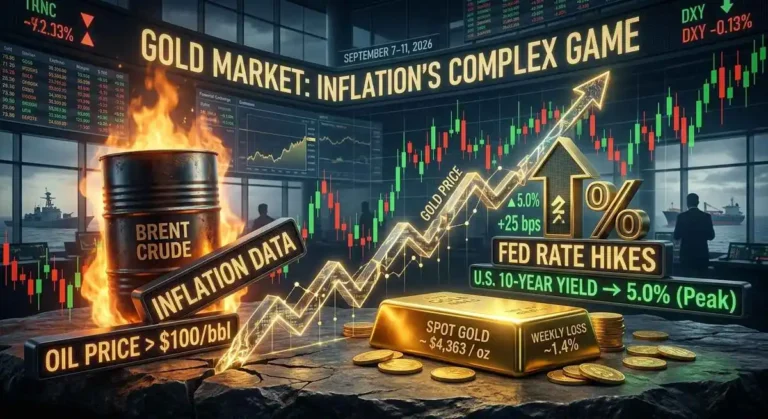
Click here to watch last week Gold Market Weekly Update: September 7-11, 2026.