
What Is an IPO? How Initial Public Offerings Work
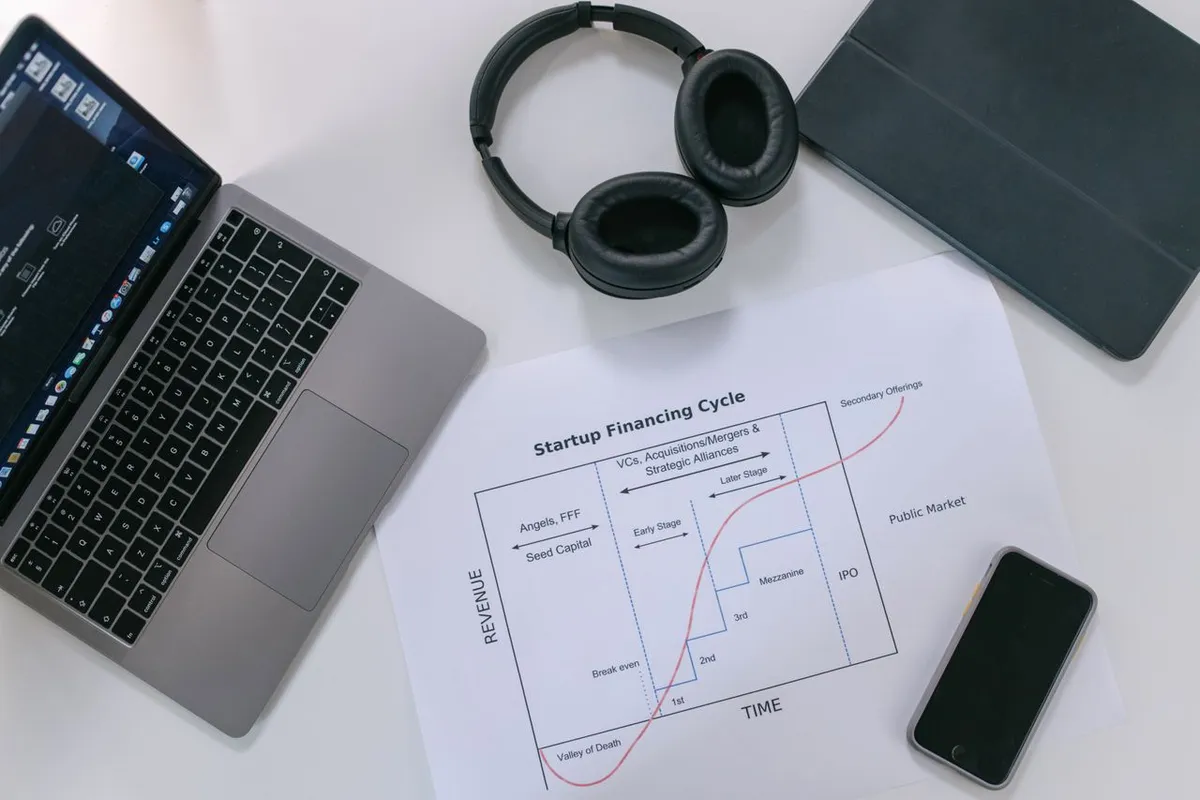
What Is an IPO?
Imagine a private company that has spent years building its business, growing its customer base, and attracting investors. At some point, the company may want access to a much larger pool of capital and public investors may want the opportunity to own a piece of the business.
That is where an Initial Public Offering (IPO) comes in.
An IPO is the process through which a private company offers shares to public investors and becomes a publicly traded company. In a traditional U.S. IPO, newly issued shares are typically sold through investment banks, which act as underwriters.
For the company, an IPO can provide capital for expansion and other business purposes. For investors, it creates an opportunity to buy shares in a company as it enters the public stock market.
But an IPO is more than simply “selling shares to the public.” It involves financial disclosures, regulatory filings, valuation, pricing, investor demand, underwriting, and eventually the start of public trading.
Understanding how this process works can help investors make more informed decisions when they encounter a new IPO in the U.S. stock market.
What Does IPO Mean?
IPO stands for Initial Public Offering.
The three words describe the basic idea:
- Initial means the company’s first public offering of shares.
- Public means the shares are being offered to public investors.
- Offering refers to the sale of securities to investors.
Before an IPO, a company may be owned by founders, employees, venture capital firms, private equity investors, and other private shareholders.
After the company becomes publicly traded, its shares can generally be bought and sold by investors through a public stock exchange.
It is important to remember that an IPO is a process, not a type of company. The company goes through an IPO to become publicly traded.
Private Company vs. Public Company
The biggest difference between a private and public company is who can access its ownership and how the company reports information to investors.
| Feature | Private Company | Public Company |
| Ownership | Usually limited to private investors and shareholders | Shares can be held by public investors |
| Stock Trading | Not traded on a public exchange | Generally traded on a public exchange |
| Financial Disclosure | Generally more limited public disclosure | Extensive ongoing public reporting requirements |
| Access to Capital | Private investors and financing | Public capital markets and other financing |
| Investor Base | Relatively limited | Potentially much broader |
Becoming public can give a company access to public capital markets, but it also brings additional reporting, regulatory, and shareholder responsibilities.
Why Do Companies Go Public?
There is no single reason every company chooses an IPO. The decision usually involves a combination of financing needs, growth plans, shareholder liquidity, and market conditions.
1. Raising Capital
One of the most important reasons for going public is to raise capital.
A company may use money raised in an IPO for:
- Expanding operations
- Research and development
- Hiring employees
- Building facilities
- Developing new products
- Paying certain debts
- General corporate purposes
For example, a rapidly growing technology company may use IPO proceeds to expand into new markets or invest in infrastructure.
2. Providing Liquidity to Existing Shareholders
An IPO can also create a public market for shares already held by founders, employees, and early investors.
However, existing shareholders are not necessarily free to sell all of their shares immediately. Lock-up agreements and other restrictions may apply, depending on the offering.
3. Increasing Public Visibility
Becoming a public company can increase a company’s visibility among customers, employees, business partners, and investors.
A public listing may also strengthen a company’s profile within its industry.
4. Creating a Publicly Traded Stock
A public listing gives the company’s shares a market where investors can trade them.
This can make the company’s equity more liquid than it was in the private market, although the actual level of liquidity depends on trading activity and investor demand.
How Does an IPO Work?
A traditional IPO involves several stages. The exact process can vary by company and offering, but the general structure looks like this.
Step 1: The Company Decides to Go Public
The company’s management and board evaluate whether becoming public makes sense.
They may consider:
- Financial performance
- Growth opportunities
- Capital requirements
- Market conditions
- Investor demand
- Costs and responsibilities associated with being public
Going public is a major corporate decision, so companies typically spend considerable time preparing for it.
Step 2: The Company Hires Investment Banks
A company preparing for a traditional IPO generally works with investment banks known as underwriters.
Underwriters can help with:
- Structuring the offering
- Valuing the company
- Marketing the shares
- Coordinating investor demand
- Determining the offering price
- Managing the distribution of shares
The underwriters play an important role in connecting the company with investors.
Step 3: The Company Files With the SEC
In the United States, companies conducting registered public offerings must provide investors with detailed information through SEC filings.
The registration statement and related prospectus can contain information about:
- The company’s business
- Financial statements
- Management
- Risk factors
- Use of proceeds
- Ownership
- The securities being offered
The SEC reviews registration statements as part of the regulatory process. Companies may respond to SEC comments and update their filings before the offering becomes effective.
For investors, these documents are among the most important sources of information when evaluating an IPO.
Step 4: The Company and Banks Evaluate Its Value
The company and its underwriters assess an appropriate valuation for the offering.
Factors may include:
- Revenue
- Profitability
- Growth rate
- Industry conditions
- Comparable public companies
- Investor demand
- Broader market conditions
The goal is to establish an offering price that reflects the company’s prospects while attracting sufficient investor demand.
Step 5: The Company Markets the IPO
Company executives and underwriters may communicate with potential investors as part of the IPO marketing process.
This is often associated with an investor roadshow, during which management presents the company’s business, financial performance, strategy, and growth plans.
These discussions can help underwriters assess investor interest.
Step 6: The IPO Price Is Set
The company and its underwriters determine the offering price and the number of shares being offered.
For example:
If a company sells 50 million shares at $20 per share, the gross proceeds would be approximately $1 billion, before underwriting discounts, commissions, and other offering expenses.
The amount of money the company actually receives depends on the structure of the offering and associated costs.
Step 7: Shares Begin Public Trading
Once the offering is completed and the shares are listed, public trading begins on a stock exchange.
In the United States, major exchanges include:
At this stage, the market determines the stock’s trading price based on buying and selling activity.
Importantly, the IPO offering price and the later market price are not necessarily the same.
A stock can trade above or below its IPO price after public trading begins.
What Happens on the First Day of IPO Trading?
The first day of trading can attract significant attention.
The IPO has an offering price, but once the shares begin trading publicly, the market determines the trading price through supply and demand.
For example:
A company might price its IPO at $20 per share.
If strong demand pushes the stock to $26 shortly after trading begins, the stock is trading above its offering price.
But if investors are less optimistic, the stock could trade below $20.
This is one reason IPO investing can be volatile.
Why Do Investors Buy IPO Stocks?
Investors may be interested in IPOs for several reasons.
1. Exposure to a New Public Company
An IPO can introduce investors to a company that was previously difficult or impossible for most public-market investors to own directly.
2. Growth Potential
Some newly public companies are growing rapidly.
If the business performs well over the long term, shareholders may benefit from increases in the company’s value.
However, strong historical or projected growth does not guarantee future stock performance.
3. Access to New Industries
IPOs can introduce public investors to businesses operating in areas such as:
- Technology
- Artificial intelligence
- Healthcare
- Biotechnology
- Financial technology
- Clean energy
- Consumer services
Investors may find these businesses attractive because of their potential growth opportunities.
What Are the Risks of Investing in IPOs?
An IPO can offer opportunities, but it can also involve significant risks.
1. Valuation Risk
A company may receive a high valuation because investors expect strong future growth.
If that growth does not materialize, the stock could decline.
A strong company is not automatically a good investment at every price.
2. Price Volatility
Newly public stocks can experience substantial price movements.
Investor expectations can change quickly as the market receives new information about the company.
3. Limited Public Trading History
A newly public company does not have the same long history of public-market trading as an established public company.
This can make it more difficult for investors to evaluate how the stock may behave under different market conditions.
4. Business Risk
An IPO does not eliminate the underlying risks of the business.
A company may face:
- Strong competition
- Regulatory challenges
- High operating costs
- Changing consumer demand
- Technology risks
- Economic downturns
Investors should read the company’s risk disclosures before investing.
5. Lock-Up Risk
Existing shareholders may be subject to contractual restrictions that prevent them from selling shares for a specified period after the IPO.
There is no universal lock-up period that applies to every IPO. The terms can vary by offering. Recent SEC-filed offerings, for example, show different lock-up periods, including 90-day and six-month arrangements.
When a lock-up expires, additional shares may become available for sale, which can affect supply and potentially influence the stock price.
IPO vs. Direct Listing
An IPO is not the only way a private company can become publicly traded.
A direct listing is another pathway.
Traditional IPO
In a traditional IPO:
- The company generally sells newly issued shares.
- Investment banks typically act as underwriters.
- The transaction can raise new capital for the company.
- The offering follows a registered securities process.
Direct Listing
In a direct listing:
- Existing shareholders can sell shares directly into the public market.
- A company may become public without raising new funds through the listing itself.
- The process does not use the traditional underwritten IPO structure.
The SEC notes that direct listings have historically been used by some large, established companies and can have different trading and investor dynamics from traditional IPOs.
The distinction matters because investors should not assume that every company entering the public market follows the same process.
IPO vs. SPAC
A SPAC, or Special Purpose Acquisition Company, is another route to becoming public.
A SPAC is a publicly traded company created to raise capital and later combine with a private company.
The basic difference is:
Traditional IPO:
A company conducts a public offering of its shares.
SPAC transaction:
A private company becomes public through a merger or combination with an existing public SPAC.
The SEC identifies IPOs, SPAC transactions, and direct listings as different pathways companies can use to enter public markets.
How Can Individual Investors Invest in an IPO?
Not every investor will have access to every IPO before public trading begins.
Availability depends on the brokerage firm, the offering, investor eligibility, and how shares are allocated.
If an investor is considering an IPO, a sensible process is:
Step 1: Check Your Brokerage
Find out whether your brokerage offers access to IPOs and what requirements apply.
Step 2: Read the Prospectus
Review the company’s SEC filings and prospectus.
Pay particular attention to:
- Risk factors
- Revenue and earnings
- Debt
- Use of proceeds
- Competition
- Management
- Share ownership
- Valuation
- Potential dilution
Step 3: Understand the Business
Ask basic questions:
- How does the company make money?
- Is revenue growing?
- Is the company profitable?
- Who are its competitors?
- What could threaten future growth?
Step 4: Consider the Valuation
A fast-growing company can still be expensive if investors are paying too much for its expected future growth.
Step 5: Avoid Concentration
Putting a large portion of a portfolio into a single IPO can increase risk.
Diversification can help reduce the impact of one investment performing poorly.
What Should Investors Look for in an IPO Prospectus?
The prospectus is one of the most useful documents for evaluating an IPO.
Investors should look beyond headlines and examine the company’s actual financial and business information.
Important areas include:
Revenue Growth
Is the company consistently increasing sales?
Profitability
Is the company profitable, or is it still operating at a loss?
Cash Flow
How much cash does the business generate or consume?
Debt
Does the company carry significant debt obligations?
Competition
Who are its major competitors, and what makes the company different?
Risks
What does the company itself identify as its most important risks?
Use of Proceeds
How does the company plan to use the money raised from the offering?
These details can provide a more realistic picture than simply looking at the company’s popularity.
Famous IPO Examples
Several major U.S. companies have gone public through IPOs.
Amazon
Amazon completed its IPO in 1997.
The company later expanded from an online retailer into a much broader technology and commerce business.
Facebook went public in 2012.
The company later became part of Meta Platforms as its business expanded across social media, advertising, and other technology areas.
Airbnb
Airbnb completed its IPO in 2020.
The company became publicly traded as the global travel and accommodation industry was undergoing significant changes.
These examples show that IPO companies can develop very differently after becoming public. Past IPO performance should not be treated as a guarantee of future results.
Common IPO Investing Mistakes
1. Buying Because the Company Is Popular
A well-known company can still be an expensive or risky investment.
Popularity alone does not determine investment value.
2. Ignoring Valuation
Investors sometimes focus heavily on a company’s growth story without asking whether the current price already reflects those expectations.
3. Skipping the Prospectus
Reading headlines is not enough.
The prospectus contains important information about financial performance, risks, ownership, and the offering itself.
4. Expecting Immediate Profits
An IPO can rise quickly, but it can also fall sharply.
Investors should avoid assuming that a newly listed stock will automatically increase in value.
5. Confusing a Good Company With a Good Stock
A successful business and an attractive stock price are two different things.
The investment decision depends on both the quality of the business and the price investors are paying for it.
IPO and the U.S. Stock Market
IPOs play an important role in the U.S. capital markets.
They allow eligible companies to access public investors and can create new investment opportunities.
For companies, the process can provide access to capital and a public market for their shares.
For investors, IPOs provide opportunities to participate in companies that are entering the public market.
However, public-market access also comes with greater disclosure, regulatory obligations, shareholder scrutiny, and market expectations.
Frequently Asked Questions About IPOs
1. What is an IPO in simple terms?
An IPO is the process through which a private company offers shares to public investors and becomes publicly traded.
2. Why do companies go public?
Companies may go public to raise capital, create liquidity for existing shareholders, increase their public profile, and gain access to public capital markets.
3. Is an IPO the same as a stock?
No. An IPO is the process of offering shares to the public. The stock is the ownership interest in the company that investors can trade after it becomes publicly listed.
4. Can anyone invest in an IPO?
Not necessarily. Access to an IPO can depend on the brokerage, the offering, investor eligibility, and share allocation. Investors can also wait until public trading begins and purchase shares in the open market.
5. Can an IPO lose money?
Yes. IPO stocks can decline after listing. The stock may trade below its offering price if investor demand weakens or the company’s prospects change.
6. What is an IPO lock-up period?
A lock-up period is a contractual restriction that can prevent certain existing shareholders from selling their shares for a specified period after an IPO. The length and terms vary by offering.
7. What is the difference between an IPO and a direct listing?
A traditional IPO generally involves newly issued shares sold through underwriters, while a direct listing generally allows existing shareholders to sell shares directly to the public and may not raise new capital through the listing.
8. What is a SPAC?
A SPAC is a publicly traded company formed to raise capital and later combine with a private company. This can provide another pathway for a private company to become publicly traded.
9. Where can investors research a U.S. IPO?
Investors can review the company’s SEC filings, including its registration statement and prospectus, through the SEC’s EDGAR system. These documents provide important information about the company’s business, financial condition, risks, and the offering.
Final Thoughts
An IPO marks an important transition in a company’s life.
It can give a private company access to public capital markets while giving investors the opportunity to own shares in a newly public business.
But an IPO should not be viewed simply as an opportunity to buy a stock early.
The more important questions are:
- How strong is the business?
- How fast is it growing?
- Is it profitable?
- What risks does it face?
- How much debt does it have?
- How is the company valued?
- What price are investors being asked to pay?
Understanding these factors can help investors look beyond the excitement surrounding a new stock listing and make more informed decisions.
An IPO can be an important opportunity, but like any investment, it requires research, risk awareness, and a clear understanding of what you are buying.
Continue Learning…
If you’d like to explore this topic further, check out these related guides from Economic Reader:
- 10 Most Profitable Small Business Ideas – in the USA in 2026.
- What Is EBITDA? – A Beginner’s Guide to Understanding Company Profitability.
- What Is a Trade Alliance? – A Complete Guide to International Trade Partnerships, Benefits, and Challenges.
Author Note: This article is crafted by “The Economic Reader editorial team”, dedicated to analyzing the latest market trends, financial updates, and global economic shifts to keep you informed with accurate and comprehensive insights.
Disclaimer: The information provided on this website is for educational and informational purposes only and should not be construed as professional financial, investment, or legal advice. Always consult with a certified financial advisor or professional before making any financial decisions based on this content.