Best Commodity ETFs in the USA: How to Choose the Right Commodity ETF
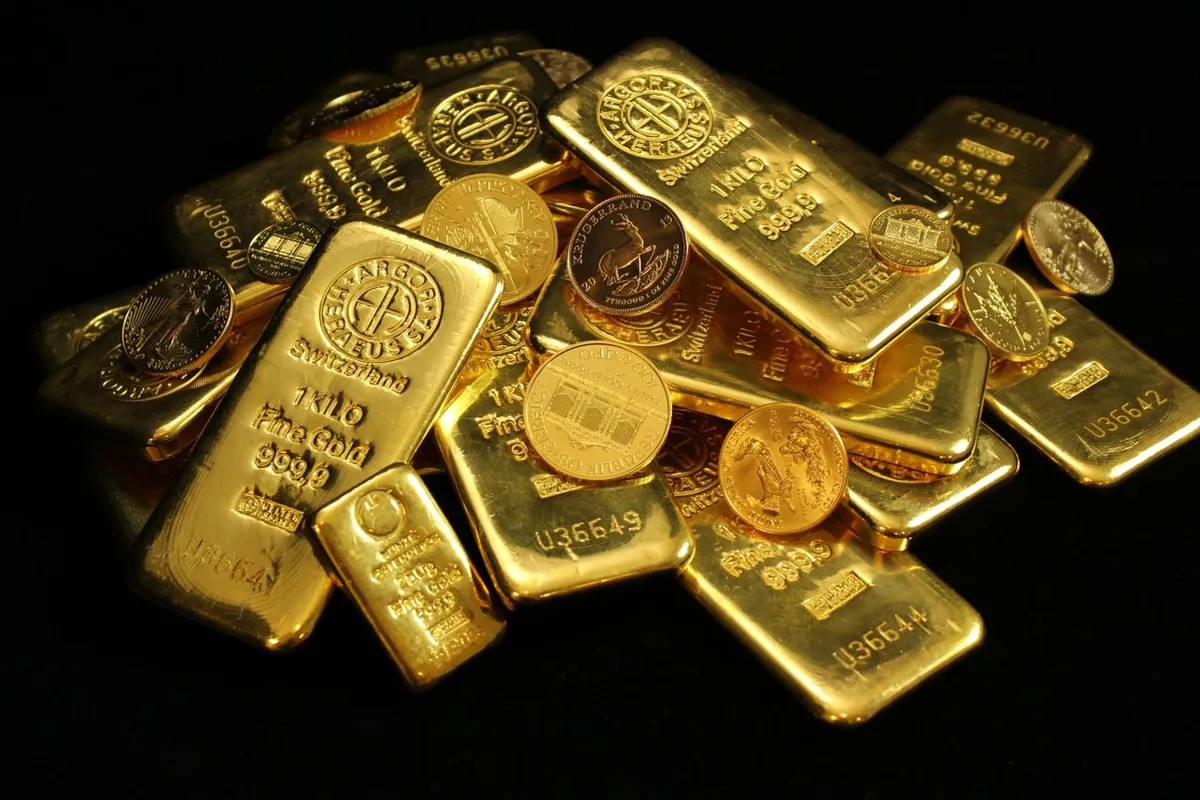
Best Commodity ETFs in the USA
Commodities can play a different role in a portfolio from traditional stocks and bonds.
Gold may be used as a way to gain exposure to precious metals. Oil and natural gas provide access to energy markets. Broad commodity funds can spread exposure across several parts of the commodity market.
The challenge is that buying commodities directly is not always practical.
Owning physical gold requires storage and security. Buying and storing other physical commodities can be even more complicated. Trading commodity futures directly also requires a different level of knowledge and risk management.
Commodity exchange-traded products provide another route.
Through a brokerage account, investors can gain exposure to commodity prices or commodity futures without taking physical delivery of barrels of oil, tonnes of metal, or agricultural products.
But there is an important point that investors should understand:
A commodity ETF is not simply a commodity in a convenient package.
Different funds use different structures. Some are backed by physical commodities, while others use futures contracts or commodity indexes. Those differences can significantly affect performance, costs, and risk.
That is why choosing a commodity ETF should begin with understanding what the fund actually owns and what it is designed to track.
The Commodity ETF Market Is Not One Market
The phrase “commodity ETF” covers several very different types of investments.
A fund may provide exposure to:
- Gold
- Silver
- Oil
- Natural gas
- Industrial metals
- Agriculture
- A broad group of commodities
There is also an important structural distinction.
A physically backed precious-metals product may hold the underlying metal, while a futures-based fund generally obtains exposure through futures contracts.
For example, SPDR Gold Shares (GLD) is designed to reflect the price of gold bullion, less expenses. By contrast, United States Oil Fund (USO) seeks to reflect daily percentage changes in light, sweet crude oil through its benchmark oil futures contract. (SSGA)
This means two commodity funds can both be called “ETFs” while behaving very differently.
Commodity ETFs Worth Researching in the USA
Rather than presenting these funds as a permanent ranking, it is more useful to view them as established examples representing different commodity strategies.
These are research examples, not recommendations to buy or sell.
SPDR Gold Shares (GLD)
Ticker: GLD
Commodity: Gold
Structure: Physically backed gold exposure
GLD is one of the best-known gold exchange-traded products in the U.S. Its objective is to reflect the performance of gold bullion, less the fund’s expenses.
As of August 28, 2026, State Street lists a 0.40% gross expense ratio. (SSGA)
GLD may be relevant for investors who want direct exposure to movements in the gold price without purchasing and storing physical bullion themselves.
However, GLD does not generate regular income, and its value can fall when gold prices decline.
iShares Gold Trust (IAU)
Ticker: IAU
Commodity: Gold
Structure: Physically backed gold exposure
IAU is another major way to obtain exposure to physical gold.
BlackRock states that IAU seeks to reflect the performance of gold bullion. Its sponsor fee is currently listed at 0.25%. (BlackRock)
That lower fee compared with GLD is one factor investors may consider when comparing the two funds.
However, expense ratio should not be the only deciding factor. Trading liquidity, bid-ask spreads, fund structure, and the investor’s intended holding period also matter.
United States Oil Fund (USO)
Ticker: USO
Commodity: Crude oil
Structure: Futures-based
USO is designed to track daily percentage changes in the price of light, sweet crude oil using its benchmark futures contract, together with collateral income and after expenses. (uscfinvestments.com)
This makes USO very different from a physically backed gold fund.
Oil prices can move sharply because of:
- Supply disruptions
- OPEC+ decisions
- Geopolitical events
- Economic growth
- Inventory changes
- Seasonal demand
Investors should therefore understand that oil futures exposure can produce results that differ from simply looking at the current spot price of crude oil.
United States Natural Gas Fund (UNG)
Ticker: UNG
Commodity: Natural gas
Structure: Futures-based
UNG is designed to reflect daily percentage changes in the price of natural gas delivered at Henry Hub through its benchmark futures contract. (uscfinvestments.com)
Natural gas can be particularly volatile because demand is strongly influenced by weather, electricity generation, storage levels, production, and industrial consumption.
This makes UNG more suitable for investors who understand the specific characteristics of the natural gas market rather than investors simply looking for a general commodity allocation.
Invesco DB Commodity Index Tracking Fund (DBC)
Ticker: DBC
Commodity exposure: Multiple commodities
Structure: Commodity futures
DBC provides broader exposure than a single-commodity fund.
Its strategy provides access to several commodity sectors, including energy, metals, and agriculture.
Invesco currently lists DBC’s expense ratio at 0.89%, while noting that its commodity-index methodology was updated in November 2025. (Invesco)
A broad commodity fund can be useful when an investor wants commodity exposure without making a single bet on gold, oil, or natural gas.
However, broad exposure does not eliminate commodity risk.
iShares S&P GSCI Commodity-Indexed Trust (GSG)
Ticker: GSG
Commodity exposure: Broad commodity futures
Structure: Futures-based commodity index
GSG seeks to track a fully collateralized index of diversified commodity futures covering areas such as energy, metals, agriculture, and livestock. (BlackRock)
The fund’s sponsor fee is currently listed at 0.75%. (BlackRock)
Because the fund uses futures rather than simply holding physical commodities, investors need to understand futures-market effects when evaluating its performance.
abrdn Physical Silver Shares ETF (SIVR)
Ticker: SIVR
Commodity: Silver
Structure: Physically backed silver
SIVR seeks to track the price of silver bullion, less the trust’s expenses. The fund holds physical silver bullion in secured vaults. (aberdeeninvestments.com)
Silver is different from gold because it has both investment demand and substantial industrial applications.
That means silver prices can be influenced by:
- Precious-metals demand
- Industrial activity
- Solar technology
- Electronics
- Manufacturing
- Investor sentiment
abrdn currently lists a 0.30% expense ratio after its fee waiver, with the waiver stated to continue until February 28, 2027. (aberdeeninvestments.com)
A Better Way to Compare Commodity ETFs
A simple list of tickers is not enough.
Investors should compare funds according to the exposure they actually want.
| ETF | Main Exposure | Structure | What to Understand |
| GLD | Gold | Physical | Gold price exposure and fund costs |
| IAU | Gold | Physical | Gold exposure and lower sponsor fee |
| USO | Oil | Futures | Oil futures and daily tracking |
| UNG | Natural gas | Futures | High volatility and futures exposure |
| DBC | Broad commodities | Futures | Diversified commodity exposure |
| GSG | Broad commodities | Futures | S&P GSCI-based exposure |
| SIVR | Silver | Physical | Silver price and industrial demand |
The important lesson is that “best” depends on the exposure you want.
Someone looking for gold exposure is comparing a different set of considerations from someone seeking energy exposure or a diversified commodity allocation.
Physical Commodity Funds vs Futures Based Funds
This is one of the most important distinctions in commodity investing.
Physically Backed Funds
Physically backed products hold the underlying commodity or bullion.
Gold and silver funds such as GLD, IAU, and SIVR are examples.
Their performance is generally closely linked to the price of the underlying metal, after expenses and other fund effects. (SSGA)
Futures Based Funds
Futures-based funds obtain commodity exposure through futures contracts.
USO and UNG are examples.
The futures market introduces additional factors that investors need to understand, including the shape of the futures curve and the process of rolling contracts.
As a result, the return of a futures-based fund can differ significantly from the change in the commodity’s spot price.
Why Futures Can Change Your Return
Suppose an investor expects oil prices to rise.
They might look at the current oil price and assume an oil futures fund should produce a similar return.
That assumption can be wrong.
Futures contracts have expiration dates, so funds must generally replace expiring contracts with later contracts.
Depending on market conditions, the replacement contracts may be more expensive or cheaper than the contracts being replaced.
This can create an additional source of return or loss beyond the movement of the commodity itself.
That is one reason investors should read the fund’s methodology and prospectus instead of relying only on the commodity’s headline price.
What Should You Look at Before Choosing a Commodity ETF?
Start With the Investment Objective
First decide what you actually want.
For example:
Gold exposure
A physical gold product may make more sense than an oil or broad commodity fund.
Energy exposure
An investor may research oil or natural gas products.
Broad commodity exposure
A diversified commodity index fund may provide exposure across several sectors.
The investment objective should come before the ticker symbol.
Examine the Fund Structure
Ask:
- Does the fund hold physical commodities?
- Does it use futures?
- What index does it track?
- How are contracts selected and rolled?
- What collateral does it hold?
This can tell you much more about the fund than its name.
Compare Costs
Expense ratios matter, especially for long-term holdings.
But investors should look beyond the headline fee.
Also consider:
- Bid-ask spreads
- Trading costs
- Tracking differences
- Futures-related costs
- Tax considerations
A fund with a lower expense ratio is not automatically the better investment if its structure creates other costs.
Consider Liquidity
Liquidity matters because it can affect how easily investors can enter or exit a position.
Large, actively traded products may have tighter spreads, although liquidity can vary throughout the trading day and during periods of market stress.
Understand What Drives the Commodity
Every commodity has its own economic drivers.
Gold may respond to interest rates, currencies, central-bank demand, and investor sentiment.
Oil can respond to global supply and demand, inventories, geopolitical developments, and production decisions.
Natural gas can be heavily influenced by weather and storage levels.
Silver is influenced by both investment demand and industrial activity.
Understanding those drivers helps investors avoid buying a commodity without knowing what could move its price.
Commodity ETFs and Portfolio Diversification
Commodities are sometimes added to portfolios because their returns can behave differently from traditional financial assets.
That can potentially improve diversification.
But diversification does not mean commodities will always move in the opposite direction from stocks.
During periods of financial stress, many risky assets can decline together.
Commodity exposure should therefore be viewed as one component of a broader portfolio rather than a guaranteed protection mechanism.
Main Risks to Understand
Commodity Price Volatility
Commodity prices can move rapidly.
A sudden change in supply, demand, weather, geopolitics, or economic expectations can produce large price swings.
Futures and Rolling Risk
Futures-based products can behave differently from the spot commodity because of futures-market conditions and contract rolls.
This is especially important for investors holding these products for extended periods.
No Guaranteed Income
Unlike dividend-paying stocks or interest-bearing bonds, many commodity products are primarily designed to provide price exposure.
Investors should not assume that holding a commodity ETF will generate regular income.
Concentration Risk
A fund focused on one commodity exposes the investor heavily to that commodity.
A gold fund, for example, does not provide the same diversification as a broad commodity fund.
Market and Trading Risk
Commodity ETFs trade on exchanges and can fluctuate in price. Their market price can also differ from NAV.
State Street specifically warns that commodity investments involve significant risk and that ETF prices can fluctuate above or below NAV. (SSGA)
Commodity ETF or Commodity Company Stock?
These investments are related, but they are not the same.
If you buy a gold ETF, your investment is primarily linked to gold.
If you buy shares of a gold-mining company, you own part of a business.
That company’s performance can be affected by:
- Gold prices
- Production costs
- Debt
- Management
- Labor costs
- Energy prices
- Political conditions
- Operational problems
The same principle applies to oil producers, mining companies, and agricultural businesses.
A commodity company can therefore rise or fall for reasons that have little to do with the underlying commodity price.
A Simple Selection Framework
Instead of asking:
“Which commodity ETF is the best?”
ask five more useful questions:
What exposure do I want?
Gold, silver, oil, natural gas, or a broad commodity basket?
How does the fund obtain that exposure?
Physical holdings or futures?
What will I pay?
Look at the expense ratio and other trading-related costs.
What could make this investment perform poorly?
Understand the commodity’s economic drivers and the fund’s specific risks.
Does it belong in my portfolio?
Consider how the position fits with your existing investments, time horizon, and risk tolerance.
This approach can produce a more meaningful comparison than simply choosing the ETF with the strongest recent performance.
Frequently Asked Questions (FAQ)
1. What are the best commodity ETFs in the USA?
There is no single best commodity ETF for every investor. GLD, IAU, USO, UNG, DBC, GSG, and SIVR are examples of well-known products representing gold, silver, oil, natural gas, and broad commodity exposure. The appropriate choice depends on the investor’s objective and risk tolerance.
2. Are commodity ETFs a good investment?
They can be useful for investors seeking commodity exposure or additional diversification, but they can also be volatile and involve risks that differ from stocks and bonds.
3. What is the difference between physical and futures-based commodity ETFs?
Physical products hold the underlying commodity, while futures-based products obtain exposure through futures contracts. Futures-based funds can therefore have performance characteristics that differ from the spot price of the commodity.
4. Do commodity ETFs pay dividends?
Many commodity products are designed primarily to provide commodity-price exposure rather than regular dividend income. Investors should check the specific fund’s distribution policy.
5. What should I check before buying a commodity ETF?
Review the commodity exposure, fund structure, index methodology, expense ratio, liquidity, futures exposure if applicable, tax considerations, and major risks. Also consider whether the investment fits your overall portfolio.
Final Thoughts
Commodity ETFs can make access to markets such as gold, silver, oil, natural gas, and diversified commodities much easier than buying or trading the underlying resources directly.
But convenience does not remove complexity.
The most important distinction is understanding what sits behind the ETF.
A physically backed gold fund, a silver trust, an oil futures fund, and a broad commodity futures product can all fall under the commodity-investing umbrella while carrying very different risks and return characteristics.
Instead of chasing the ETF with the strongest recent performance, investors should start with their objective, examine the fund structure, compare costs, understand the commodity’s price drivers, and consider how the investment fits within a diversified portfolio.
The better question is not “Which commodity ETF is the best?”
It is:
“Which commodity exposure makes sense for my investment strategy, and do I understand the risks involved?”
That mindset can help investors use commodity ETFs more deliberately rather than treating them as simple bets on rising commodity prices.
Continue Learning…
If you’d like to explore this topic further, check out these related guides from Economic Reader:
- How Interest Rates Affect the Economy? – A Complete Guide.
- How Business Valuation Works? – Understanding What a Company Is Worth.
- How to Read Financial Statements Correctly? – A Practical Guide for Investors.
Author Note: This article is crafted by “The Economic Reader editorial team”, dedicated to analyzing the latest market trends, financial updates, and global economic shifts to keep you informed with accurate and comprehensive insights.
Disclaimer: The information provided on this website is for educational and informational purposes only and should not be construed as professional financial, investment, or legal advice. Always consult with a certified financial advisor or professional before making any financial decisions based on this content.