How Interest Rates Affect the Economy: A Complete Guide
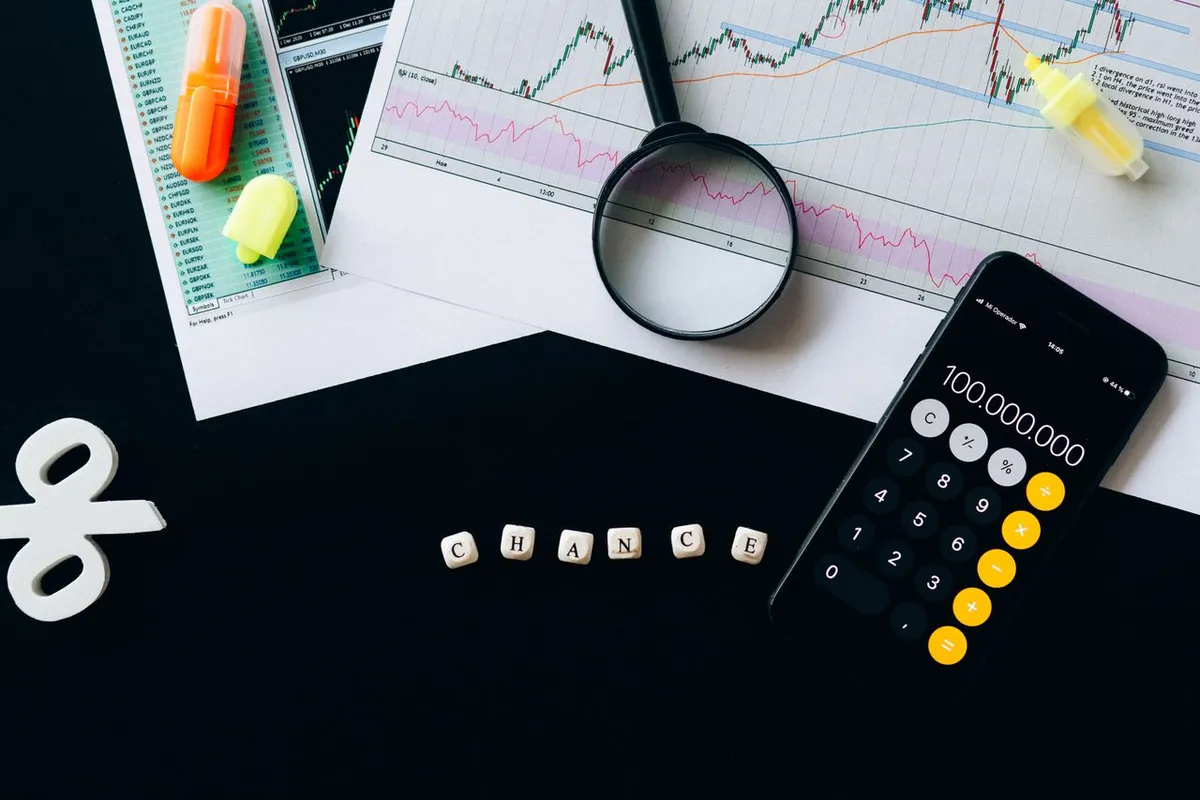
How Interest Rates Affect the Economy
A change in an interest rate may look like a small financial adjustment, but its effects can spread through almost the entire economy.
When borrowing becomes more expensive, households may reconsider buying homes or cars. Businesses may delay expansion projects. Investors may reassess stocks and bonds. Savers, meanwhile, may receive better returns on deposits.
The opposite can happen when borrowing costs fall.
This is why interest rates matter far beyond banks and financial markets. They influence decisions made by consumers, businesses, governments, and investors.
In the United States, the Federal Reserve uses monetary policy to pursue maximum employment and stable prices. One of its main policy tools is the target range for the federal funds rate, which influences broader financial conditions. (Federal Reserve)
The basic relationship is:
Higher interest rates generally make borrowing more expensive and can slow demand, while lower rates can reduce borrowing costs and support spending and investment.
But the effect is not instantaneous or identical across every part of the economy.
To understand how interest rates affect the economy, it helps to follow the chain from central-bank policy to households, businesses, financial markets, inflation, and economic growth.
First, What Does an Interest Rate Actually Represent?
An interest rate is essentially the price of borrowing money or the return earned for lending or saving it.
If you borrow $10,000 at a 5% annual interest rate, the interest rate determines part of the cost of using that money.
For savers and lenders, the relationship works in the opposite direction. The interest rate represents compensation for allowing someone else to use their money.
This makes interest rates an important connection between saving, borrowing, spending, and investment.
The rate that receives particular attention in the United States is the federal funds rate. It is the rate at which depository institutions lend balances held at the Federal Reserve to one another overnight. Changes in this rate can influence other short-term rates and broader financial conditions. (Federal Reserve)
However, the federal funds rate is not the same thing as every interest rate consumers see.
Mortgage rates, credit card rates, business loans, Treasury yields, and savings rates can all move differently because they are also affected by factors such as credit risk, market expectations, and the maturity of the loan or investment.
The Interest Rate Transmission: How One Rate Can Affect an Entire Economy
The easiest way to understand the economic impact is to think of interest rates as a chain reaction.
A simplified version looks like this:
Central bank policy → financial conditions → borrowing and saving decisions → spending and investment → employment and production → inflation and economic growth
The process is more complicated in reality, but this framework explains why central-bank decisions receive so much attention.
The Federal Reserve notes that changes in the federal funds rate can affect other short- and long-term interest rates, foreign exchange rates, money and credit conditions, employment, output, and prices. (Federal Reserve)
What Happens When Interest Rates Rise?
Suppose a central bank raises its policy rate because inflationary pressure is too strong.
The first effect is that financial conditions generally become tighter.
Borrowing becomes less attractive, while saving can become relatively more attractive.
That can influence several parts of the economy.
Households Become More Cautious
Higher borrowing costs can affect decisions about:
- Mortgages
- Auto loans
- Credit cards
- Personal loans
- Other forms of consumer credit
A household considering a major purchase may decide to postpone it if financing becomes significantly more expensive.
That can reduce demand for certain goods and services.
Businesses Reconsider Investment
Companies regularly compare the expected return from an investment with its cost.
Imagine a business is considering building a new factory.
If the company must borrow heavily to finance the project, higher interest rates increase the cost of that financing.
The project may still be profitable, but its expected return may no longer justify the additional cost.
As a result, some companies may:
- Delay expansion
- Reduce capital spending
- Slow hiring
- Reconsider acquisitions
This is one way monetary policy can eventually influence economic activity.
Why Housing Often Reacts Strongly to Interest Rates
Housing provides one of the clearest examples of how interest rates affect real-world decisions.
A mortgage is a long-term financial commitment, so even a relatively small change in the interest rate can affect the amount a household can afford.
Higher mortgage rates can increase monthly payments and reduce purchasing power for potential buyers. The Consumer Financial Protection Bureau notes that the interest rate is an important factor in determining how much home a borrower can afford. (Consumer Financial Protection Bureau)
The effects can spread beyond buyers.
If fewer people can afford to purchase homes:
- Housing demand may weaken
- Home sales may slow
- Construction activity may change
- Spending on furniture and home-related services may decline
However, housing markets do not respond only to interest rates. Housing supply, household income, demographics, local conditions, and expectations also matter.
Savers Experience the Other Side of Higher Rates
Higher interest rates are not necessarily negative for everyone.
People with savings may benefit when banks and other financial institutions offer higher yields on deposits or certificates of deposit.
This creates a trade-off.
A household may decide:
“Should I spend this money now, or earn more by keeping it in an interest-bearing account?”
When saving becomes more attractive, some households may postpone consumption.
That reduction in immediate spending can contribute to the broader cooling effect that central banks seek when inflation is too high.
Businesses Feel the Impact Through More Than Loans
Interest rates affect companies in several ways.
Financing Costs
Companies that borrow money may face higher interest expenses.
This can reduce profits, especially for businesses with significant debt or financing needs.
Investment Decisions
A company may postpone:
- New factories
- Equipment purchases
- Technology upgrades
- Expansion projects
when the expected return does not justify higher financing costs.
Customer Demand
Higher rates can also affect the customers buying a company’s products.
If households reduce spending because loans are more expensive, businesses may experience weaker demand.
So the effect can work in two directions:
Higher rates → higher financing costs
and
Higher rates → potentially weaker customer demand
Together, these pressures can influence corporate earnings.
How Interest Rates Help Fight Inflation
This is one of the most important relationships in economics.
When inflation becomes too high, a central bank may raise interest rates to reduce demand.
The process is not:
Higher rates = immediately lower prices.
Instead, the mechanism is closer to:
Higher rates → more expensive borrowing → weaker demand → slower economic activity → reduced inflation pressure
The Federal Reserve’s monetary-policy framework is designed around maintaining price stability while also pursuing maximum employment. Its longer-run inflation goal is 2% as measured by the annual change in the Personal Consumption Expenditures price index. (Federal Reserve)
But interest rates cannot directly solve every cause of inflation.
For example, a supply shock affecting energy prices or food production can create inflation even when demand is not unusually strong.
This is why central banks must consider a wide range of economic information rather than simply reacting to one price movement.
What Happens to Economic Growth?
Interest rates can influence GDP because consumer spending and business investment are important components of economic activity.
Economic Reader’s What Is GDP? explains how consumption, investment, government spending, and net exports contribute to GDP.
When rates are relatively low, financing can become easier and economic activity may receive support.
When rates are relatively high, households and businesses may become more cautious.
That can reduce:
- Consumer spending
- Business investment
- Housing activity
- Credit growth
If these effects become significant, economic growth can slow.
But lower rates do not automatically create strong growth. Businesses still need customers, consumers need income, and the economy needs productive opportunities for investment.
Interest Rates and Employment: The Link Is Indirect
Employment is another area where the effects of interest rates appear with a delay.
Suppose higher rates reduce consumer demand.
Businesses may respond by reducing production plans.
If weaker demand continues, some companies may:
- Slow hiring
- Reduce working hours
- Delay expansion
- In some cases, reduce their workforce
Lower interest rates can work in the opposite direction when economic conditions are weak.
Cheaper financing and stronger demand can encourage businesses to expand and hire.
However, employment is affected by many other forces, including productivity, demographics, technology, trade, and business confidence. Interest rates are only one part of the picture.
Why Investors Pay Close Attention to Interest Rates
Financial markets often react to changes in interest rates and expectations about future monetary policy.
But the relationship is more complicated than simply saying:
“Rates up = stocks down.”
Investors consider several channels.
Stock Valuations
Higher interest rates can make future corporate earnings less valuable when investors calculate what those future cash flows are worth today.
Higher rates can therefore put pressure on some stock valuations.
Corporate Earnings
Companies with significant borrowing may face higher interest expenses.
At the same time, weaker consumer or business demand can affect revenue.
Investor Alternatives
When safer interest-bearing assets offer higher yields, some investors may become less willing to take additional risk in stocks.
However, stock prices are influenced by earnings expectations, economic growth, valuations, sentiment, and many other factors.
That is why a rate increase does not guarantee that the entire stock market will fall.
The Special Relationship Between Interest Rates and Bonds
Bond investors need to understand one particularly important relationship.
Market interest rates and existing fixed-rate bond prices generally move in opposite directions.
If market rates rise, an existing bond paying a lower fixed coupon becomes less attractive compared with newly issued bonds offering higher rates.
Its market price may therefore fall.
If market rates decline, an existing bond with a relatively higher fixed coupon may become more attractive, potentially pushing its price higher.
The SEC’s Investor.gov explains this inverse relationship and notes that longer-maturity bonds generally have greater interest-rate sensitivity. (Investor)
This is known as interest-rate risk.
It is especially important for investors who may need to sell bonds before maturity.
What About the Stock Market When Rates Change?
The stock market can respond to both the actual rate decision and what investors expected beforehand.
For example, suppose investors expect the central bank to cut rates.
If the central bank actually cuts rates as expected, the market reaction may be relatively limited because the information was already reflected in prices.
But if the central bank unexpectedly signals that rates may remain higher for longer, investors may quickly adjust their expectations.
This is why financial markets often react strongly to central-bank communication, not just the rate itself.
Interest Rates Can Also Influence the Currency
Interest-rate changes can affect a country’s currency through international capital flows.
If investors believe a country’s assets offer relatively attractive returns, demand for that country’s currency may increase.
But exchange rates are influenced by many factors, including:
- Relative interest rates
- Inflation expectations
- Economic growth
- Trade flows
- Political and geopolitical developments
- Investor sentiment
The Federal Reserve notes that changes in the federal funds rate can affect foreign exchange rates as part of the broader monetary-policy transmission process. (Federal Reserve)
Currency movements can then feed back into the economy.
For example, a stronger currency can make imports cheaper but can make exports more expensive for foreign buyers.
Why Interest-Rate Changes Do Not Work Instantly
One of the biggest misunderstandings about monetary policy is expecting immediate results.
A central bank can change its policy rate today, but consumers and businesses do not all change their behavior on the same day.
Existing loans may have fixed rates.
Businesses may already have financing arranged.
Households may continue spending based on existing budgets.
Companies may take months to change investment plans.
Because of these delays, the full economic effect of monetary policy can take time to develop.
This is one reason central banks must make decisions using both current economic conditions and expectations about the future.
A Simple Example: How a Rate Hike Can Travel Through the Economy
Imagine inflation is running too high.
The central bank decides that demand needs to cool.
It raises its policy rate.
The chain could look like this:
1. Policy rate rises
↓
2. Borrowing conditions become tighter
↓
3. Some households reduce major purchases
↓
4. Some businesses delay investment
↓
5. Demand for goods and services slows
↓
6. Economic activity may moderate
↓
7. Inflation pressure may gradually ease
This is a simplified example, not a guaranteed sequence.
The actual outcome depends on the strength of the economy, financial conditions, consumer behavior, supply conditions, and many other factors.
What Happens When Interest Rates Fall?
Rate cuts generally work through the same channels in the opposite direction.
Lower rates can make borrowing less expensive.
That may encourage:
- Home purchases
- Business investment
- Consumer spending
- Refinancing
- Credit growth
Lower rates can also make saving less attractive relative to spending or riskier investments, depending on the available returns.
If economic conditions are weak, these effects can support demand and economic activity.
However, lower rates are not automatically positive.
If rates remain too low while demand is already strong, they can contribute to excessive borrowing, asset-price increases, or renewed inflation pressure.
The appropriate policy therefore depends on the broader economic environment.
Interest Rates Are Not the Same as Monetary Policy
These concepts are closely related, but they are not identical.
Interest rate:
The cost of borrowing or return on lending/saving.
Monetary policy:
The broader set of actions and communications used by a central bank to influence money, credit, and financial conditions.
Economic Reader’s What Is Monetary Policy? goes deeper into how central banks use monetary policy and why it matters.
The Federal Reserve describes monetary policy as actions and communications intended to influence the availability and cost of money and credit in pursuit of economic goals. (Federal Reserve)
So interest rates are one of the most important channels through which monetary policy affects the economy.
High Rates and Low Rates: There Is No Universal Winner
It is tempting to label high interest rates as “bad” and low interest rates as “good.”
The reality is more complicated.
| Economic Environment | Potential Effects |
| Higher interest rates | More expensive borrowing, stronger incentive to save, weaker demand |
| Lower interest rates | Cheaper borrowing, stronger incentive to spend or invest, stronger demand |
| High inflation | Higher rates may help reduce demand and inflation pressure |
| Weak economy | Lower rates may help support borrowing and economic activity |
| Rising rates | Existing fixed-rate bond prices generally face downward pressure |
| Falling rates | Existing fixed-rate bond prices generally may benefit |
The right interest-rate environment depends on what the economy needs.
If inflation is too high, slowing demand may be necessary.
If the economy is weak, supporting demand may become more important.
What Interest Rates Mean for Different People
The impact depends on your financial position.
If You Are a Borrower
Higher rates can increase financing costs.
You may need to pay closer attention to:
- Loan rates
- Refinancing costs
- Credit card balances
- Mortgage terms
If You Are a Saver
Higher rates can create opportunities for greater interest income, depending on the account or investment.
If You Own Bonds
Rising market rates can reduce the market value of existing fixed-rate bonds if you sell before maturity. (Investor)
If You Invest in Stocks
You need to consider how rates affect company earnings, valuations, economic growth, and investor expectations.
If You Are Buying a Home
Mortgage rates can materially affect affordability, but the total cost of a mortgage also includes fees, points, and other expenses. (Consumer Financial Protection Bureau)
What Investors Should Watch When Interest Rates Change
Rather than watching the policy rate alone, investors can follow several indicators.
Inflation
Is inflation accelerating or slowing?
Economic Reader’s What Is Inflation? explains the concept, causes, measurement, and effects of inflation.
Employment
Is the labor market strengthening or weakening?
Economic Growth
Is GDP expanding at a healthy pace?
Central Bank Communication
What are policymakers saying about future monetary policy?
Bond Yields
Changes in Treasury and corporate bond yields can reveal how financial markets are pricing future interest rates and economic conditions.
Looking at these indicators together provides more context than reacting to a single rate decision.
A Look at the U.S. Interest-Rate Environment in 2026
For readers following the U.S. economy, the Federal Reserve’s policy rate remains an important part of the current economic picture.
In its July 2026 Monetary Policy Report, the Federal Reserve said the FOMC had maintained the federal funds target range at 3.50% to 3.75% since the beginning of the year. The report also noted that inflation remained above the Fed’s 2% longer-run goal at that time. (Federal Reserve)
That illustrates an important point: monetary policy decisions depend on the balance between inflation, employment, economic activity, and other financial conditions rather than on one economic number alone.
Because monetary policy changes over time, readers should check the latest Federal Reserve statements when evaluating the current rate environment.
Common Misconceptions About Interest Rates
“Higher Interest Rates Are Always Bad”
Not necessarily.
Higher rates can create challenges for borrowers, but they can benefit savers and may help reduce excessive inflation.
“Lower Rates Always Make the Economy Stronger”
Lower rates can support demand, but they cannot solve every economic problem.
If supply is constrained or inflation is already high, very strong demand can create additional pressure.
“The Federal Reserve Controls Every Interest Rate”
No.
The Fed strongly influences financial conditions, but market interest rates also depend on expectations, risk, supply and demand for credit, and other factors.
“A Rate Cut Automatically Makes Stocks Rise”
Not necessarily.
Investors also consider why rates are being cut.
A cut because inflation is easing while economic growth remains healthy may be interpreted differently from a cut made because the economy is entering a severe downturn.
The Bigger Picture
Interest rates are best understood as part of a much larger economic system.
They connect:
Central banks → financial markets → banks and lenders → households and businesses → spending and investment → employment and production → inflation and growth
That is why a central-bank announcement can affect financial markets within minutes while its broader effects on the economy may take much longer.
Understanding this transmission process is more useful than simply memorizing that “higher rates are bad” or “lower rates are good.”
Frequently Asked Questions (FAQ)
1. How do interest rates affect the economy?
Interest rates influence the cost of borrowing and the reward for saving. Changes can affect consumer spending, business investment, housing, employment, inflation, financial markets, and economic growth.
2. Why does the Federal Reserve change interest rates?
The Federal Reserve adjusts monetary policy to pursue its economic goals, including maximum employment and stable prices. The federal funds rate is its primary policy-rate tool. (Federal Reserve)
3. What happens when interest rates rise?
Borrowing generally becomes more expensive, which can reduce spending and investment. Higher rates can also increase returns on some savings products and put downward pressure on existing fixed-rate bond prices.
4. What happens when interest rates fall?
Lower rates can reduce borrowing costs and encourage spending, investment, and credit growth. However, their effects depend on the wider economic environment.
5. How do interest rates affect inflation?
Higher interest rates can reduce borrowing and demand, which may reduce inflation pressure over time. However, interest rates cannot directly eliminate supply-side causes of inflation.
6. How do interest rates affect the stock market?
Interest rates can affect corporate borrowing costs, earnings expectations, valuations, and investor preferences. The overall stock-market reaction depends on why rates are changing and what investors already expected.
7. Why do bond prices fall when interest rates rise?
Existing fixed-rate bonds can become less attractive when new bonds offer higher rates. As a result, the market price of existing bonds generally falls when market interest rates rise. (Investor)
8. How do interest rates affect mortgages?
Higher mortgage rates generally increase the cost of borrowing and can reduce housing affordability. Lower rates can improve affordability, although home prices, loan fees, income, and housing supply also matter. (Consumer Financial Protection Bureau)
9. Do interest rates affect employment?
Yes, indirectly. Interest rates can influence consumer demand and business investment, which can affect production and hiring. The effect can take time to appear.
10. Are high interest rates good for savers?
They can be. Higher market rates may allow some savings accounts, CDs, and other interest-bearing products to offer higher returns, although the actual rate depends on the financial product and provider.
Final Takeaway
Interest rates are one of the most important connections between monetary policy and everyday economic activity.
A change in rates can influence whether people borrow or save, whether businesses expand or wait, whether home purchases become more affordable, how bonds are valued, and how investors think about future economic growth.
But the relationship is not mechanical.
Higher rates do not automatically mean a bad economy, and lower rates do not automatically mean a strong one.
The effect depends on why rates are changing, what inflation is doing, how consumers and businesses are responding, and what financial markets already expect.
For anyone trying to understand economics or investing, learning how interest rates affect the economy provides a useful foundation for understanding inflation, monetary policy, financial markets, and economic growth.
Economic Reader’s What Is Investment? can help connect these economic concepts to the broader investment process.
Author Note: This article is crafted by “The Economic Reader editorial team”, dedicated to analyzing the latest market trends, financial updates, and global economic shifts to keep you informed with accurate and comprehensive insights.
Disclaimer: The information provided on this website is for educational and informational purposes only and should not be construed as professional financial, investment, or legal advice. Always consult with a certified financial advisor or professional before making any financial decisions based on this content.