
Renewable Energy Investment Opportunities: Where Investors Can Find Growth
Renewable Energy Investment Opportunities
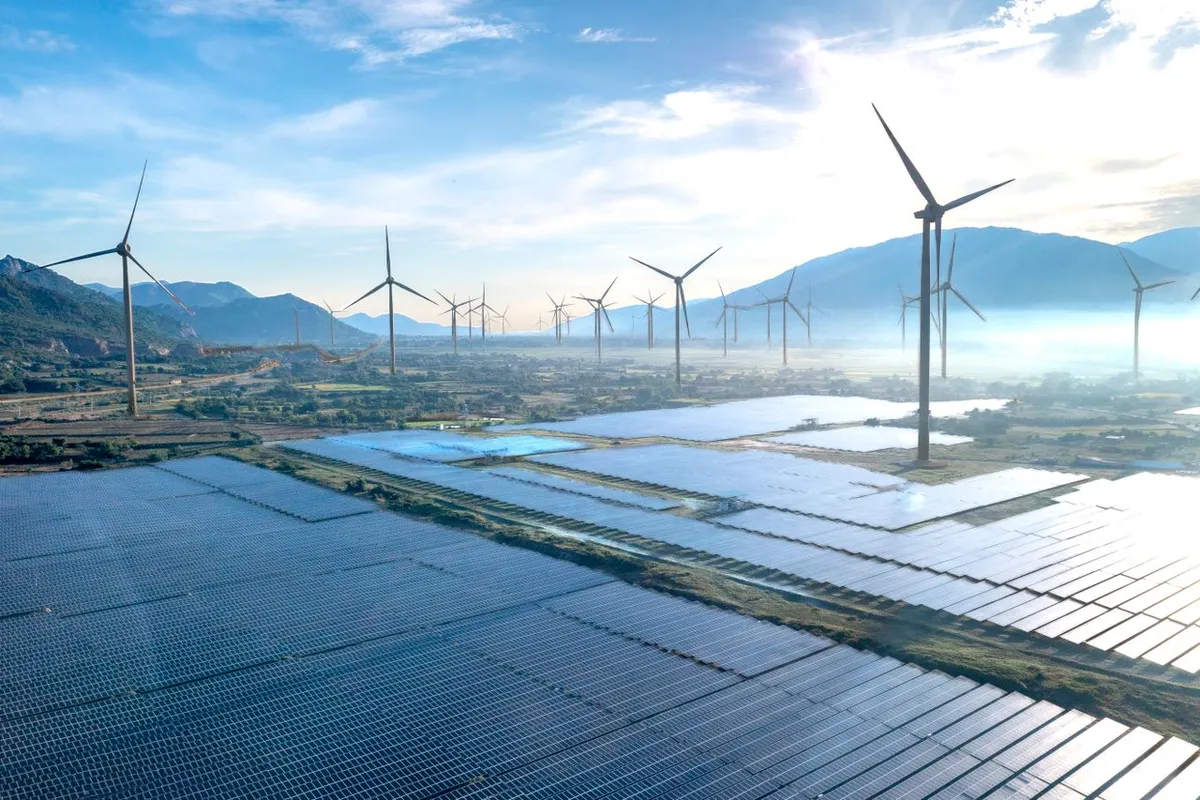
The global energy system is changing, and that change is creating a growing investment opportunity.
Oil, natural gas, and coal continue to play major roles in the global economy. At the same time, governments, businesses, and investors are putting more capital into renewable electricity, energy storage, power infrastructure, electrification, and technologies designed to improve energy efficiency.
According to the International Energy Agency (IEA), global energy investment is expected to reach a record $3.4 trillion in 2026. Around $2.2 trillion is expected to go toward areas including renewables, grids, storage, low-emissions fuels, efficiency, and electrification. (IEA)
That does not mean every renewable energy company will be a successful investment.
It means a large and evolving market is creating opportunities across multiple industries.
For investors, the more useful question is therefore not simply:
“Is renewable energy the future?”
It is:
“Which parts of the renewable energy economy may create attractive investment opportunities, and which businesses are positioned to benefit?”
That distinction matters because a growing industry can still contain companies with weak finances, excessive debt, intense competition, or unrealistic valuations.
Where the Renewable Energy Opportunity Actually Exists
Renewable energy is much broader than solar and wind power.
The transition toward cleaner electricity requires an entire ecosystem of businesses and infrastructure.
That includes:
- Power generation
- Energy storage
- Electricity transmission
- Grid modernization
- Battery technology
- Electric transportation
- Energy-management systems
- Industrial electrification
- Clean-energy equipment
The investment opportunity therefore extends across the energy value chain.
Solar Power
Solar power has become one of the most important sources of new renewable electricity capacity.
The IEA expects solar PV to account for nearly 80% of global renewable electricity capacity expansion between 2025 and 2030, supported by lower module costs and continued deployment. (IEA)
This creates opportunities across several parts of the solar industry:
- Solar developers
- Equipment manufacturers
- Inverter producers
- Installation companies
- Renewable-energy infrastructure
However, rapid industry growth does not automatically mean every solar company will generate strong shareholder returns.
Investors should examine production costs, margins, debt, competition, and the company’s ability to turn rising demand into sustainable profits.
Wind Energy
Wind power is another major part of the renewable electricity market.
Investment opportunities can exist in:
- Wind-farm developers
- Turbine manufacturers
- Infrastructure operators
- Engineering businesses
- Maintenance providers
Wind projects can require substantial upfront capital, making financing costs and project economics particularly important.
A company with a large project pipeline may look attractive, but investors should also ask how those projects will be financed and what returns they are expected to generate.
Battery Storage
Renewable energy creates a fundamental challenge: electricity generation from sources such as solar and wind can vary over time.
Energy storage helps address this problem by allowing electricity to be stored and used when needed.
This creates investment opportunities in:
- Battery manufacturers
- Grid-scale storage
- Battery materials
- Storage software
- Energy-management technology
The IEA expects global investment in battery storage to exceed $100 billion in 2026, highlighting how important storage has become within the wider energy investment landscape. (IEA)
At the same time, battery technology is evolving rapidly, which creates both opportunities and risks.
A company that leads the market today may face new technologies and competitors tomorrow.
Electricity Grids
One of the less obvious renewable energy investment opportunities is the electricity grid.
More renewable generation requires infrastructure capable of transporting electricity efficiently.
This creates demand for:
- Transmission systems
- Distribution networks
- Grid equipment
- Smart-grid technology
- Power-management systems
The IEA expects electricity-related investment to approach $1.6 trillion in 2026, with electricity-grid investment alone approaching $550 billion. (IEA)
This is important because renewable energy expansion cannot happen at scale without supporting infrastructure.
Electric Vehicles and Charging
The energy transition also extends into transportation.
Electric vehicles create demand for:
- Batteries
- Charging networks
- Power-management technology
- Electricity generation
- Battery materials
The opportunity is therefore broader than investing in automobile manufacturers.
Companies supplying the infrastructure and technology required for electrification may also benefit from long-term changes in transportation.
Clean Energy Technology
Another area includes businesses that help companies and consumers use energy more efficiently.
Examples include:
- Energy-management software
- Smart electricity systems
- Industrial electrification
- Power-management equipment
- Energy-efficiency technologies
These businesses can have very different financial models from traditional renewable-energy producers.
That makes individual company research especially important.
How Investors Can Gain Exposure
There is no single way to invest in renewable energy.
The right approach depends on how much company-specific risk, diversification, and direct exposure an investor wants.
Individual Renewable Energy Stocks
Buying individual stocks provides direct exposure to a particular company.
Potential advantages include:
- Greater control over company selection
- Higher upside if a company performs exceptionally well
- Ability to target a specific technology or sector
But the risks are also concentrated.
A company may face:
- Weak earnings
- High debt
- Project delays
- Technology problems
- Regulatory changes
- Strong competition
For that reason, investors should study the company’s financial statements, business model, competitive position, and valuation before investing.
If you want to understand how to analyze the financial health of a company, see Economic Reader’s How to Read Financial Statements Correctly.
Renewable Energy ETFs
Renewable-energy ETFs can provide exposure to multiple companies through one investment.
This can reduce dependence on a single company.
However, not every clean-energy ETF provides the same exposure.
Some may focus heavily on:
- Solar
- Utilities
- Technology
- Energy equipment
- International companies
Investors should therefore check the fund’s holdings, investment strategy, costs, and risks rather than choosing an ETF based only on its name.
The SEC recommends that investors review an ETF’s investment objective, holdings, fees, risks, prospectus, and how the fund achieves its stated objective before investing. (Investor)
Economic Reader’s What Is an ETF? provides a broader explanation of how exchange-traded funds work.
Green Bonds
Green bonds offer another way to participate in the financing of environmental and clean-energy projects.
Depending on the issuer and structure, funds may support areas such as:
- Renewable electricity
- Clean transportation
- Energy efficiency
- Sustainable infrastructure
Unlike stocks, bonds represent lending rather than ownership.
Investors should therefore consider:
- Credit quality
- Interest rates
- Maturity
- Default risk
- The financial condition of the issuer
Direct Renewable Energy Projects
Some investors may have access to direct investments in renewable energy projects such as solar or wind facilities.
These investments can provide exposure to actual energy-producing assets, but they can also involve:
- Large capital requirements
- Lower liquidity
- Complex contracts
- Project-specific risks
- Regulatory considerations
Direct project investing therefore requires substantially more due diligence than buying a publicly traded stock or ETF.
What Makes a Renewable Energy Company Attractive?
A company can operate in a fast-growing industry and still be a poor investment.
This is one of the most important ideas investors should understand.
Industry growth is only one part of the investment case.
Strong Business Economics
Start by asking:
How does the company make money?
A renewable utility, solar manufacturer, battery company, and grid-equipment provider can all benefit from the energy transition while having completely different economics.
Financial Strength
Investors should examine:
- Revenue growth
- Profit margins
- Operating cash flow
- Free cash flow
- Debt
- Capital expenditure
Companies that require constant borrowing to fund expansion may face greater pressure when financing costs increase.
Competitive Advantage
A company needs more than a growing market.
It needs something that helps it compete.
Possible advantages include:
- Lower costs
- Proprietary technology
- Large scale
- Long-term contracts
- Strong customer relationships
- Valuable infrastructure
Valuation
Even an excellent company can become a poor investment if investors pay too much for its expected future growth.
This is especially relevant in industries where investors have high expectations.
A strong investment analysis therefore considers both:
“How good is the company?”
and
“How much am I paying for that quality and growth?”
Why Interest Rates Matter
Renewable energy companies and projects can be sensitive to interest rates because many projects require significant upfront investment.
When borrowing becomes more expensive, new projects can become harder to finance.
Higher interest rates can also put pressure on the valuations of growth companies because investors may place less value on profits expected far into the future.
This means renewable energy stocks can fall even when the long-term industry outlook remains positive.
Investors should therefore separate:
Long-term industry growth
from
Short-term stock-market performance.
They are not the same thing.
Government Policy Can Influence Returns
Government policy is another major factor in renewable energy investing.
Policies can influence:
- Project economics
- Tax incentives
- Clean-energy development
- Electricity markets
- Import and trade rules
- Infrastructure investment
In the United States, for example, the federal tax system includes incentives for qualifying clean-electricity projects and energy-storage technology. The IRS currently describes the Clean Electricity Investment Credit as a technology-neutral credit available for qualifying facilities and storage placed in service after December 31, 2024, subject to its requirements. (IRS)
Investors should not assume that policy support will remain unchanged forever.
Instead, they should understand how dependent a company’s business model is on particular government programs.
The Biggest Risks to Consider
Renewable energy has significant long-term potential, but it also carries meaningful investment risks.
Technology Risk
Energy technology is developing quickly.
A new technology can make an existing product less competitive or reduce its economic value.
Financing Risk
Many renewable projects require substantial capital.
Higher financing costs can reduce expected returns and put pressure on companies with high debt.
Policy Risk
Changes in regulations, incentives, trade rules, or energy policy can affect the profitability of renewable-energy businesses.
Supply-Chain Risk
Renewable-energy equipment can depend on global supply chains and important raw materials.
Disruptions or rising input costs can affect project economics.
Competition
Fast-growing markets attract new competitors.
Companies may face pressure from lower-cost producers, new technologies, or larger competitors.
Valuation Risk
Investors can become overly optimistic about a popular industry.
If a company fails to meet high growth expectations, its stock price can decline even if the underlying industry continues to expand.
The Renewable Energy Opportunity Goes Beyond Power Generation
It is easy to think of renewable energy investing as simply buying solar or wind stocks.
The opportunity is broader.
Consider the chain:
Electricity generation → storage → transmission → distribution → electrification → energy management
Each stage creates potential investment opportunities.
This also explains why investors should avoid treating every renewable-energy company as the same type of investment.
A solar manufacturer may be highly sensitive to equipment prices and international competition.
A utility may have more predictable revenues but require large amounts of capital.
A battery company may have substantial growth potential but face technological disruption.
A grid-equipment company may benefit from rising electricity demand without producing renewable energy itself.
Understanding these differences can lead to better investment research.
Renewable Energy and the Global Economy
The renewable-energy transition is affecting more than financial markets.
It is also changing economic activity.
Electricity Demand
Growing data centers, artificial intelligence, manufacturing, and electrification are increasing electricity demand in several markets.
The IEA has identified electricity demand from data centers and AI as an increasingly important influence on energy investment, particularly in the United States. (IEA)
Infrastructure Spending
New generation capacity requires investment in grids, storage, transmission, and other infrastructure.
Manufacturing
The expansion of clean-energy technologies can increase demand for equipment, components, materials, and industrial capacity.
Energy Security
Countries may also view renewable energy as part of a broader strategy to reduce exposure to imported fuels and energy-supply disruptions.
Recent geopolitical developments have reinforced interest in domestically available energy sources, including renewable power, according to the IEA. (IEA)
What Could Shape Renewable Energy Investments in 2026 and Beyond?
Several developments could influence the sector over the coming years.
Artificial Intelligence and Electricity
AI is increasing demand for data-center infrastructure and electricity.
This could create opportunities in power generation, grid infrastructure, storage, and energy management.
Battery Development
Improvements in energy storage could make renewable electricity more flexible and useful.
Grid Modernization
A larger and more complex electricity system will require continued investment in transmission and distribution infrastructure.
Electrification
More transportation, industrial activity, and other economic processes may shift toward electricity.
Energy Security
Geopolitical uncertainty may encourage countries to invest in energy sources and infrastructure that reduce dependence on vulnerable supply routes.
These trends can create opportunities, but they do not eliminate the risks involved in individual investments.
A Better Way to Approach Renewable Energy Investing
Investors do not need to predict exactly which renewable technology will dominate decades from now.
A more practical approach is to look for businesses with:
- Strong financial positions
- Sustainable business models
- Competitive advantages
- Growing demand
- Manageable debt
- Reasonable valuations
Diversification can also reduce the risk of relying on a single company or technology.
For investors who prefer broader exposure, an ETF may be more suitable than selecting individual companies.
For investors with strong industry knowledge, individual stocks may offer more targeted exposure.
The important point is to understand what you own and why you own it.
Frequently Asked Questions
1. What are renewable energy investment opportunities?
Renewable energy investment opportunities include solar and wind companies, battery-storage businesses, grid infrastructure, electric-vehicle technology, clean-energy equipment, ETFs, green bonds, and renewable-energy projects.
2. Is renewable energy a good investment?
Renewable energy has significant long-term growth drivers, but that does not mean every renewable-energy stock or project will perform well. Investors should evaluate financial strength, valuation, competition, and risk before investing.
3. How can I invest in renewable energy?
Investors can gain exposure through individual stocks, renewable-energy ETFs, green bonds, funds, and, where available, direct investments in renewable-energy projects.
4. What are the biggest renewable energy sectors?
Major areas include solar, wind, battery storage, electricity grids, electric transportation, and clean-energy technology.
5. Are renewable energy stocks risky?
Yes. Renewable-energy stocks can be affected by interest rates, government policy, technology changes, competition, financing costs, supply-chain disruptions, and market valuations.
6. What should I look at before investing in a renewable energy company?
Investors should examine the company’s revenue model, profitability, cash flow, debt, capital requirements, competitive advantage, growth prospects, valuation, and exposure to technology and policy risks.
Final Perspective
Renewable energy is becoming an increasingly important part of the global investment landscape.
But the opportunity is much broader than simply investing in solar panels or wind turbines.
The transition is creating demand for energy storage, electricity grids, batteries, electric transportation, power-management systems, and other technologies that support a more electrified economy.
The IEA expects global energy investment to reach a record level in 2026, with a large share directed toward clean energy, electricity infrastructure, storage, efficiency, and electrification. (IEA)
For investors, however, a growing market is only the starting point.
The more important task is identifying businesses that can convert industry growth into sustainable earnings and cash flow.
That means looking beyond headlines and studying the economics of each investment.
Renewable energy may remain a major long-term investment theme, but the eventual winners will be determined by technology, costs, financing, competition, execution, and capital discipline.
Continue Learning…
If you’d like to explore this topic further, check out these related guides from Economic Reader:
- What Is Sustainable Development? – A Complete Guide to Building a Better Future.
- How Climate Change Affects the Economy? – Understanding the Economic Impact of a Changing Climate.
- How Inflation Affects Housing Prices? – The Connection Between Inflation, Mortgage Rates, and Home Affordability.
Author Note: This article is crafted by “The Economic Reader editorial team”, dedicated to analyzing the latest market trends, financial updates, and global economic shifts to keep you informed with accurate and comprehensive insights.
Disclaimer: The information provided on this website is for educational and informational purposes only and should not be construed as professional financial, investment, or legal advice. Always consult with a certified financial advisor or professional before making any financial decisions based on this content.