
What Are Free Trade Agreements? A Complete Guide to Understanding Trade Agreements

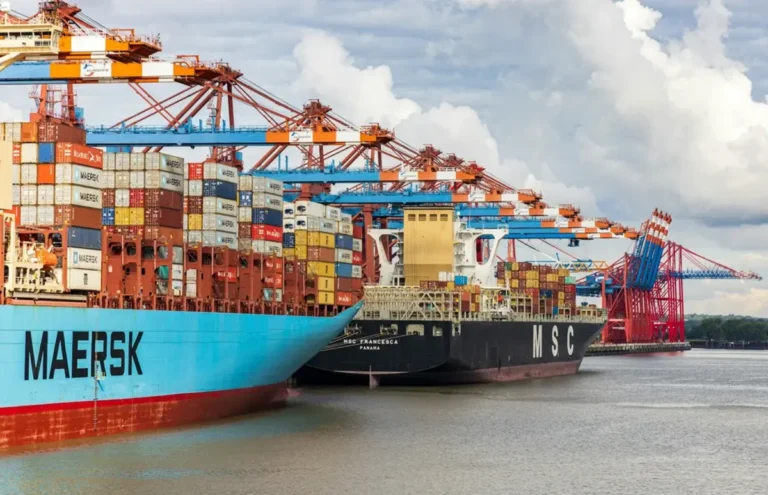
International trade connects economies that may be thousands of miles apart. A product designed in one country can use components from several others, be assembled somewhere else, and eventually reach customers around the world.
But moving goods and services across borders is not always simple. Governments can impose tariffs, quotas, licensing requirements, and other rules that increase the cost or difficulty of international trade.
Free trade agreements are designed to address some of these barriers. By establishing agreed rules between participating countries, they can make it easier for businesses to trade, invest, and compete across borders.
At the same time, an FTA does not mean that every product becomes completely free of restrictions. Different agreements contain different commitments, exceptions, and rules.
So, what exactly is a Free Trade Agreement, and why does it matter?
What Are Free Trade Agreements?
A Free Trade Agreement (FTA) is a legally binding arrangement between two or more countries or economies that establishes rules for trade and reduces or eliminates certain barriers between the participating parties.
These agreements can cover much more than tariffs. Depending on the agreement, they may include provisions concerning services, investment, intellectual property, government procurement, customs procedures, labor, environmental standards, and digital trade.
The central objective is to create more predictable and favorable conditions for trade between the participating economies.
In simple terms, an FTA sets agreed rules that can make it easier for businesses in participating economies to buy from and sell to one another.
Why Does International Trade Need Agreements?
Countries have different economic policies, industries, tax systems, regulations, and standards.
Without agreed rules, a company exporting a product may face:
- Import tariffs
- Customs requirements
- Different product standards
- Import quotas
- Licensing rules
- Restrictions on certain goods or services
These barriers can increase costs and make international business more complicated.
Trade agreements attempt to reduce some of these obstacles while giving participating countries a framework for managing their commercial relationships.
How Do Free Trade Agreements Work?
An FTA works through negotiated commitments between its members. The exact provisions vary considerably from one agreement to another.
Here are some of the most important mechanisms.
1. Tariff Reduction
Tariffs are taxes imposed on imported goods.
An FTA may reduce or eliminate tariffs on qualifying products traded between member economies.
For example, suppose a product normally faces a 10% import tariff. If an FTA eliminates that tariff for eligible goods, the importer may face a lower landed cost.
However, tariff reductions are usually governed by detailed schedules and conditions rather than applying automatically to every product.
One of the most important but easily overlooked parts of an FTA is the rules of origin.
These rules determine whether a product qualifies for preferential treatment under the agreement.
This matters because a company cannot necessarily import a product from a non-member country, make a minor change to it, and automatically claim the FTA’s benefits.
Rules of origin may consider where materials came from, where substantial production occurred, and how much value was added within participating economies.
3. Customs Facilitation
Trade agreements may also make customs procedures more predictable and efficient.
This can involve:
- Clear documentation requirements
- Faster customs procedures
- Greater transparency
- Electronic processing
- Cooperation between customs authorities
Reducing administrative complexity can be particularly valuable for businesses that regularly move goods across borders.
4. Market Access
Market access refers to the ability of businesses to sell goods or services in another economy under agreed conditions.
An FTA can improve market access by reducing tariffs and addressing certain regulatory or administrative barriers.
For exporters, this can create opportunities to reach customers they may not have been able to serve competitively before.
5. Rules for Services and Investment
Modern trade agreements often extend beyond physical products.
Depending on the agreement, they may establish commitments concerning:
- Financial services
- Telecommunications
- Professional services
- Foreign investment
- Business operations
This is increasingly important because services account for a large share of modern economic activity.
What Do Free Trade Agreements Usually Cover?
There is no single template used for every FTA. Agreements differ in scope and complexity.
Common areas include:
| Area | What It May Cover |
| Goods | Tariffs and market access for products |
| Services | Conditions for providing services across borders |
| Customs | Procedures for importing and exporting |
| Rules of origin | Requirements for receiving preferential treatment |
| Investment | Protections and rules for foreign investors |
| Intellectual property | Patents, trademarks, copyrights, and related rights |
| Government procurement | Rules concerning access to government purchasing |
| Labor | Certain worker-related commitments |
| Environment | Environmental obligations or cooperation |
| Digital trade | Rules involving electronic commerce and data |
Not every FTA includes all of these areas, and the obligations can vary significantly.
Why Do Countries Create Free Trade Agreements?
Countries negotiate FTAs for different economic and strategic reasons.
Expanding Export Markets
An agreement can give domestic businesses improved access to foreign consumers.
A manufacturer that previously faced high tariffs may become more competitive in a partner market after tariff reductions take effect.
Increasing Competition
Opening markets to foreign companies can increase competitive pressure.
That pressure can encourage businesses to improve:
- Product quality
- Productivity
- Pricing
- Technology
- Customer service
Supporting Investment
Businesses often consider trade rules when deciding where to invest.
A country that provides access to several markets through trade agreements may become more attractive to companies planning regional production or distribution operations.
Strengthening Supply Networks
Modern products often depend on international supply chains.
Companies may source:
- Raw materials
- Components
- Machinery
- Technology
- Specialized services
Trade agreements can make these cross-border relationships easier to manage.
Creating More Predictable Trade Rules
Businesses make long-term decisions based on expectations about costs and regulations.
Clear trade commitments can provide greater predictability than relying entirely on changing domestic trade policies.
Types of Free Trade Agreements
FTAs can be categorized by the number of participants and the structure of cooperation.
1. Bilateral Free Trade Agreements
A bilateral FTA involves two participating countries or economies.
For example, two countries may negotiate an agreement that reduces tariffs and establishes trade rules between them.
2. Regional Trade Agreements
A regional agreement involves several economies, often from the same geographic region.
These arrangements can create preferential trade relationships across multiple markets.
3. Plurilateral Trade Agreements
A plurilateral agreement involves multiple participating economies, but participation is limited to the countries or economies that join the specific agreement.
The Comprehensive and Progressive Agreement for Trans-Pacific Partnership (CPTPP) is an example of a major plurilateral trade agreement.
Free Trade Agreement vs. Trade Agreement
The terms are related, but they are not always interchangeable.
A trade agreement is a broad term for an agreement that establishes rules governing trade between participating countries.
A free trade agreement is a particular type of trade agreement that generally focuses on reducing or eliminating trade barriers among its members.
| Free Trade Agreement | Trade Agreement |
| A specific type of trade agreement | A broader term |
| Usually emphasizes reducing trade barriers | Can cover many different trade arrangements |
| Often includes preferential market access | May or may not provide broad tariff preferences |
| Contains negotiated rules and commitments | Scope depends on the particular agreement |
The exact meaning and scope depend on the agreement being discussed.
Free Trade Agreements vs. Free Trade
Free trade is an economic concept describing relatively unrestricted international trade.
A Free Trade Agreement is a formal legal arrangement negotiated between participating economies.
Therefore, an FTA does not create completely unrestricted trade. It establishes negotiated rules that can reduce particular barriers while retaining other requirements and exceptions.
Benefits of Free Trade Agreements
When designed and implemented effectively, FTAs can create several potential benefits.
1. Greater Export Opportunities
Businesses can gain access to foreign markets under more favorable conditions.
This can be especially important for companies that want to expand beyond their domestic customer base.
2. Lower Trade Costs
Reduced tariffs and more efficient customs procedures can lower some of the costs associated with international commerce.
Businesses may then be able to offer more competitive prices or improve their margins.
3. More Consumer Choice
Greater international competition can give consumers access to a wider range of:
- Products
- Services
- Brands
- Prices
4. Stronger Business Competition
Foreign competition can encourage companies to become more productive and innovative.
Businesses that face new competitors may have stronger incentives to improve their products and operations.
5. Better Access to Inputs
Manufacturers can potentially obtain materials and components from international suppliers under more favorable trading conditions.
This can help companies build more efficient production networks.
6. Investment Opportunities
Trade agreements can create clearer rules for businesses considering cross-border investment.
This may support the development of regional production and distribution networks.
Challenges and Potential Drawbacks
Trade agreements can produce benefits, but the effects are not always evenly distributed.
Pressure on Domestic Industries
Businesses that previously faced little foreign competition may struggle when international competitors gain easier access to their markets.
Adjustment in Employment
Industries exposed to stronger international competition may reduce production or employment, while other industries expand.
This means the gains and losses from trade can occur in different sectors and regions.
Complex Compliance Requirements
Businesses must follow the specific rules of an agreement to receive its benefits.
Rules of origin, documentation, certification, and other requirements can create additional administrative work.
Uneven Economic Benefits
Larger companies may have more resources to take advantage of international trade rules than small businesses.
The overall economic benefits of an agreement therefore do not necessarily reach every business or worker equally.
Reduced Policy Flexibility
Countries that enter binding trade commitments may have less freedom to change certain trade policies without considering their obligations under the agreement.
Real-World Examples
Several major trade arrangements demonstrate how international trade rules work in practice.
United States-Mexico-Canada Agreement (USMCA)
The USMCA governs important trade relationships among the United States, Mexico, and Canada.
It replaced the North American Free Trade Agreement (NAFTA) and contains provisions covering areas such as goods, services, digital trade, labor, environment, and rules of origin.
The Comprehensive and Progressive Agreement for Trans-Pacific Partnership is a major trade agreement involving economies across the Asia-Pacific and beyond.
It covers areas including goods, services, investment, intellectual property, labor, environmental issues, and digital trade.
ASEAN Free Trade Area
The ASEAN Free Trade Area (AFTA) supports regional economic integration among ASEAN member states.
It has played an important role in reducing trade barriers and strengthening economic connections within Southeast Asia.
European Union Single Market
The European Union’s Single Market is often discussed alongside FTAs, but it is important to distinguish the two.
The Single Market is a much deeper form of economic integration involving the free movement of goods, services, capital, and people within the EU framework.
It is therefore not simply a conventional FTA.
How Free Trade Agreements Affect Businesses
The impact of an FTA depends heavily on the industry, product, country, and specific provisions of the agreement.
For an exporter, an FTA may mean lower tariffs and access to a larger customer base.
For an importer, it may provide access to international suppliers at lower costs.
For a domestic company, however, the same agreement can introduce additional competition.
Businesses should therefore examine:
- Applicable tariffs
- Rules of origin
- Customs requirements
- Product standards
- Sector-specific provisions
- Compliance costs
An FTA can create an opportunity, but businesses still need a competitive product and effective strategy.
How Free Trade Agreements Affect Consumers
Consumers can experience both direct and indirect effects.
Potential benefits include:
- Greater product variety
- More competitive prices
- Access to foreign products
- Increased competition among suppliers
However, consumers can also be affected when domestic industries face stronger competition and adjust their production or employment.
The overall effect depends on the structure of the economy and the specific agreement.
How Free Trade Agreements Affect Investors
Investors may consider trade agreements when evaluating companies, industries, and countries.
An FTA can influence:
- Export potential
- Production costs
- Supply chains
- Foreign investment
- Market access
- Industry competition
For example, a manufacturing company may benefit if an agreement lowers the cost of importing components while also improving access to overseas customers.
But investors should not assume that every company benefits equally. The specific industry and the agreement’s rules matter.
A Simple Example of How an FTA Can Change a Business
Consider a fictional clothing manufacturer that sells products in two countries.
Before an FTA, its products face a significant import tariff in the second country. The additional cost makes the company’s products less competitive.
After the countries introduce an FTA, the tariff on qualifying products is reduced.
The company may then have several options:
- Lower its selling price.
- Maintain its price and improve its profit margin.
- Invest in marketing and expand sales.
- Increase production to serve the larger market.
However, the company can receive the preferential tariff only if its products satisfy the agreement’s requirements.
This illustrates an important point: an FTA can create an opportunity, but the business still has to meet the rules and compete effectively.
What Should Businesses Look at Before Using an FTA?
Businesses should not assume that an agreement automatically makes exporting cheaper.
Before using an FTA, a company should examine:
Product eligibility: Does the product qualify for preferential treatment?
Rules of origin: Does the product meet the agreement’s origin requirements?
Tariff schedule: What tariff applies before and after the agreement’s commitments?
Documentation: What certificates, records, or customs documents are required?
Regulatory requirements: Are there product standards or other requirements that must be satisfied?
Total cost: After shipping, compliance, taxes, and other expenses, is the foreign market still attractive?
This analysis can help businesses determine whether an FTA provides a meaningful commercial advantage.
The Future of Free Trade Agreements
International trade agreements are evolving alongside the global economy.
Future agreements are likely to pay increasing attention to areas such as digital commerce, supply chain resilience, clean technology, data-related rules, and critical materials.
At the same time, governments are balancing the benefits of international trade with concerns about domestic industries, national security, employment, and economic resilience.
As a result, future trade agreements may focus not only on lowering tariffs but also on creating rules for increasingly complex global business relationships.
Frequently Asked Questions
1. Can a small business benefit from a Free Trade Agreement?
Yes. Small businesses can potentially benefit through lower tariffs, access to new customers, and improved access to suppliers. The practical benefit depends on the business’s products, target markets, and ability to meet the agreement’s requirements.
2. Does an FTA mean every product can enter another country tariff-free?
No. Preferential treatment depends on the specific agreement, product, tariff schedule, and eligibility requirements. Some products may remain subject to tariffs or other restrictions.
3. Who negotiates Free Trade Agreements?
Governments negotiate FTAs on behalf of participating countries or economies. The process can involve trade officials, ministries, industry representatives, and other stakeholders.
4. Can a country leave a Free Trade Agreement?
Depending on the agreement’s legal provisions, a participating country may be able to withdraw. The process and timing are determined by the agreement itself and the country’s domestic procedures.
5. Why do some businesses oppose Free Trade Agreements?
Some businesses may oppose an FTA because they expect increased foreign competition, changes in domestic production, compliance costs, or pressure on prices and employment.
Final Thoughts
Free Trade Agreements are an important part of the international trading system.
They can reduce selected trade barriers, improve market access, establish common rules, and create opportunities for businesses operating across borders.
But an FTA is not the same as completely unrestricted trade. Each agreement contains its own commitments, exceptions, rules of origin, and compliance requirements.
For businesses, understanding those details can help identify export opportunities and manage international supply chains.
For investors, trade agreements can provide useful context when evaluating industries, companies, and economies.
For consumers, they can influence prices, product choices, and competition.
The key is to look beyond the simple idea that “free trade” means fewer barriers. The real economic impact depends on what an agreement contains, who benefits from it, and how businesses and governments respond to the changes it creates.
Continue Learning…
If you’d like to explore this topic further, check out these related guides from Economic Reader:
- What Is an IPO? – How Initial Public Offerings Work.
- What Is a Health Savings Account (HSA)? – How HSAs Work in the U.S.
- What Is a Trade Alliance? – A Complete Guide to International Trade Partnerships, Benefits, and Challenges.
Author Note: This article is crafted by “The Economic Reader editorial team”, dedicated to analyzing the latest market trends, financial updates, and global economic shifts to keep you informed with accurate and comprehensive insights.
Disclaimer: The information provided on this website is for educational and informational purposes only and should not be construed as professional financial, investment, or legal advice. Always consult with a certified financial advisor or professional before making any financial decisions based on this content.