AI vs Human Jobs: Which Careers Are Safer in 2026?
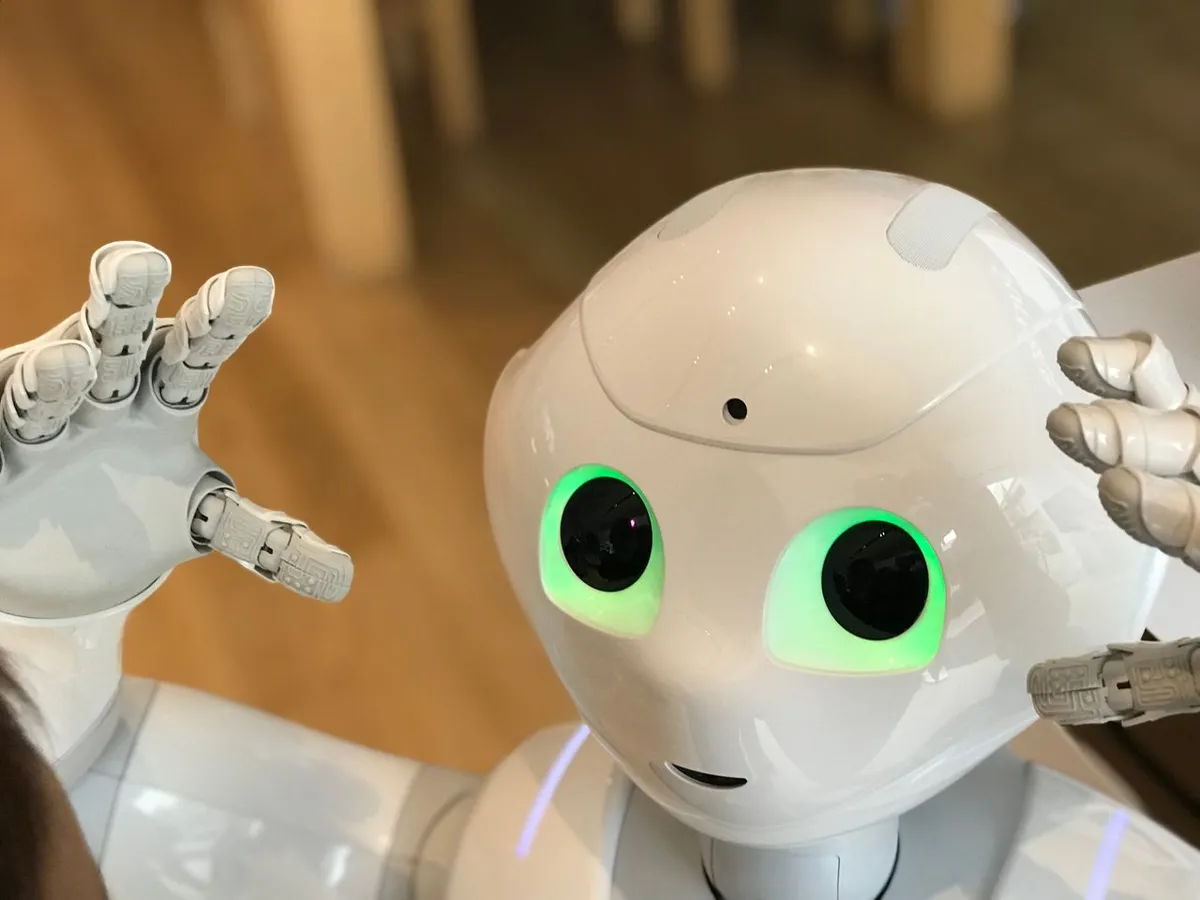
AI vs Human Jobs
The question is no longer whether artificial intelligence will change the workplace.
It already is.
AI tools are being used to write, analyze information, answer customer questions, generate software code, summarize documents, create images, and automate routine business processes. As these tools become more capable, workers in many industries are starting to wonder what their careers will look like a few years from now.
That creates an uncomfortable question:
Will AI replace human workers?
The answer is more complicated than a simple yes or no.
Some jobs contain large numbers of repetitive tasks that AI can increasingly perform. Other careers depend heavily on physical work, human relationships, judgment, leadership, or situations that are difficult to standardize.
The International Labour Organization’s research on generative AI and jobs suggests that generative AI is more likely to transform many jobs than eliminate them entirely, with clerical occupations among those with particularly high exposure.
So instead of asking which jobs are completely “AI-proof,” a better question is:
Which careers are harder to automate, and which workers are best positioned to work alongside AI?
What Actually Makes a Job Vulnerable to AI?
A job title by itself does not tell you how exposed a worker is to AI.
Two people in the same profession may perform very different tasks.
For example, an accountant who spends most of the day entering and organizing information may face more automation pressure than an accountant who advises business owners, interprets financial results, and helps clients make decisions.
The difference is the tasks, not simply the job title.
Jobs are generally more exposed to AI when they involve large amounts of:
- Repetitive digital work
- Structured information processing
- Routine document creation
- Predictable analysis
- Standardized communication
- Rules-based tasks
Jobs become harder to automate when they require combinations of:
- Human judgment
- Physical presence
- Trust
- Emotional intelligence
- Leadership
- Negotiation
- Creativity
- Adaptability
- Responsibility for complex decisions
This does not mean AI cannot assist in these areas. It means completely replacing the human role can be more difficult.
AI Is More Likely to Change Tasks Than Entire Careers
One of the biggest misconceptions about AI and employment is that a company either replaces a worker with an AI system or does nothing.
In reality, workplace change can happen gradually.
A company may introduce AI that handles part of an employee’s workload while the employee focuses on more complex responsibilities.
Imagine a financial analyst who previously spent several hours collecting and organizing data.
An AI system may reduce that work to minutes.
The analyst can then spend more time interpreting the results, discussing them with management, and making recommendations.
The job has changed, but it has not necessarily disappeared.
This distinction is important when thinking about the future of employment.
The World Economic Forum’s Future of Jobs Report 2025 projects significant labor-market disruption through 2030, with both job creation and job displacement expected as technology, demographic changes, and economic trends reshape employment.
Careers That May Be More Resistant to Full Automation
No career can honestly be guaranteed to be safe from technological change.
However, some types of work have characteristics that make full automation more difficult.
1. Healthcare and Direct Patient Care
Healthcare is one of the clearest examples.
Doctors, nurses, therapists, technicians, and other healthcare professionals can use AI to support diagnosis, documentation, research, scheduling, and other tasks.
But healthcare also involves something technology cannot easily reproduce: direct human care.
Patients may need someone who can:
- Understand their concerns
- Explain difficult information
- Make decisions in uncertain situations
- Provide emotional support
- Perform physical examinations or procedures
- Build trust
AI can become an important healthcare tool without becoming a complete replacement for healthcare professionals.
The important point is not that healthcare jobs are immune to AI. They are not.
Rather, healthcare workers who learn to use AI effectively may find their roles changing instead of disappearing.
2. Skilled Trades
Electricians, plumbers, mechanics, construction workers, HVAC technicians, and similar professionals often work in environments that are difficult to standardize.
A plumber does not know exactly what problem will be behind a wall before opening it.
An electrician may encounter an unusual wiring configuration.
A mechanic may need to diagnose a problem that does not perfectly match a database description.
These situations require a combination of:
- Physical skills
- Experience
- Problem-solving
- Adaptability
- On-site judgment
Robotics and AI may eventually automate parts of these jobs, but widespread replacement is more difficult when work takes place in unpredictable physical environments.
3. Teachers and Educators
AI can already explain concepts, generate practice questions, summarize material, and provide personalized learning support.
That does not eliminate the need for teachers.
Education involves motivation, classroom management, mentoring, social development, and understanding how individual students learn.
A teacher also has to respond to situations that cannot always be reduced to a standard instruction.
The future classroom may therefore involve more AI rather than fewer teachers.
A teacher could use AI to prepare materials while spending more time helping students understand difficult concepts.
4. Mental Health and Human Support Professions
Human relationships are difficult to automate completely.
Counselors, therapists, social workers, and other support professionals often deal with highly personal situations where trust and emotional understanding matter.
AI may assist with administrative work, information gathering, or other supporting tasks.
But people may still prefer human professionals when they need someone who can understand their circumstances and respond with empathy and judgment.
5. Leadership and Management
AI can analyze information and generate recommendations.
It cannot simply take responsibility for every difficult organizational decision.
Managers and business leaders often have to:
- Resolve conflicts
- Motivate employees
- Negotiate
- Allocate resources
- Handle uncertainty
- Communicate difficult decisions
- Build organizational culture
Leadership therefore involves more than processing information.
The ability to work with people can remain a major advantage even as AI becomes more capable.
6. Jobs Built Around Complex Human Relationships
Some careers depend heavily on trust and personal relationships.
Examples include:
- High-level sales
- Business consulting
- Client management
- Negotiation
- Executive leadership
- Certain financial advisory roles
AI can provide research and recommendations, but clients may still want a person who understands their specific circumstances and can take responsibility for important decisions.
Careers Likely to Experience Greater AI Pressure
Some jobs may not disappear, but their daily responsibilities could change significantly.
Administrative and Clerical Work
Administrative work is particularly exposed because many tasks involve structured digital information.
Examples include:
- Data entry
- Scheduling
- Document processing
- Basic record management
- Routine reporting
The ILO’s global analysis of generative AI exposure identifies clerical occupations as having the highest exposure to generative AI, although exposure does not automatically mean job elimination.
This could mean fewer people performing routine administrative work manually while remaining workers take on more complex responsibilities.
Basic Customer Support
AI-powered chatbots can handle many straightforward questions.
For example:
- “What are your business hours?”
- “Where is my order?”
- “How do I reset my password?”
These are relatively structured requests.
More complicated customer problems can still require human employees who can investigate unusual situations, negotiate solutions, and deal with frustrated customers.
Routine Accounting and Data Processing
Accounting is unlikely to disappear as a profession, but some accounting tasks are increasingly suitable for automation.
AI and software can assist with:
- Data entry
- Transaction categorization
- Document processing
- Basic calculations
- Financial summaries
This could shift accountants toward more analytical, advisory, and strategic responsibilities.
Basic Content Production
AI can produce drafts, summaries, product descriptions, simple marketing copy, and other forms of routine content.
That creates pressure on roles where the main value is producing large quantities of standardized text.
However, high-value content often requires:
- Original research
- Editorial judgment
- Subject expertise
- Brand understanding
- Fact-checking
- Real-world experience
The result may be a shift from writing everything manually to directing, reviewing, improving, and verifying AI-assisted work.
What AI Still Struggles to Replace
AI capabilities are advancing quickly, but several human strengths remain difficult to reproduce reliably.
Judgment Under Uncertainty
Real-world decisions rarely come with perfect information.
A business leader may need to decide whether to enter a new market without knowing exactly what will happen.
A doctor may have to weigh competing risks.
A manager may need to decide how to handle a sensitive employee situation.
These decisions involve context, consequences, and responsibility.
Emotional Intelligence
Understanding what another person is feeling is different from recognizing patterns in text.
Human interaction often depends on tone, trust, timing, empathy, and social awareness.
Physical Adaptability
A machine can perform a task extremely well in a controlled environment.
Real-world environments are often messy.
Homes, construction sites, hospitals, workshops, and streets contain unexpected conditions that make physical automation more difficult.
Accountability
Someone ultimately has to take responsibility for important decisions.
In many professional settings, that responsibility remains with humans even when AI provides assistance.
Original Perspective
AI can generate combinations of existing information at impressive speed.
But people bring personal experiences, cultural understanding, observations, goals, and lived context to creative work.
That human perspective can be particularly valuable in areas where originality matters.
The Most Valuable Skills in an AI-Driven Workplace
If AI is changing tasks rather than simply eliminating entire professions, workers need to think beyond traditional job descriptions.
The most valuable skills may increasingly be a combination of technical ability and human ability.
AI Literacy
Workers do not necessarily need to become AI engineers.
But understanding how to use AI tools, evaluate their output, and recognize their limitations can become increasingly useful.
Critical Thinking
AI can produce an answer that sounds convincing but is still incorrect.
Workers need to know how to question information, verify important claims, and identify weaknesses in an AI-generated result.
Communication
Strong communication remains valuable because businesses still depend on people working with other people.
Writing clearly, presenting ideas, listening, negotiating, and explaining complicated topics can all remain important.
Problem-Solving
The ability to identify a problem, understand its causes, and develop a practical solution is difficult to reduce to a simple automated process.
Adaptability
Perhaps the most important career skill is the ability to learn.
Technology changes quickly.
A skill that is valuable today may become less important later, while a new skill may become highly valuable.
Workers who can continually update their capabilities may be better positioned than those who rely on one fixed skill set.
AI vs. Human Jobs: A Better Way to Compare Them
Instead of dividing work into “AI jobs” and “human jobs,” it is more useful to compare what each is generally good at.
| Area | AI | Humans |
| Processing large datasets | Very strong | Limited by time and attention |
| Repetitive digital tasks | Very strong | Can become inefficient |
| Pattern recognition | Strong | Strong with context |
| Emotional understanding | Limited | Strong |
| Physical adaptability | Limited in many environments | Strong |
| Personal relationships | Limited | Strong |
| Creative assistance | Strong | Strong in originality and context |
| Complex judgment | Useful as a support tool | Strong |
| Speed | Very high | Lower |
| Accountability | Not responsible in the human sense | Can take responsibility |
The most important conclusion is that this is not necessarily a competition.
In many workplaces, AI and humans will perform different parts of the same job.
The Rise of the AI-Augmented Worker
One of the biggest changes in the labor market may be the emergence of workers who use AI as part of their normal workflow.
Consider a marketing employee.
Before AI, they might spend hours researching competitors, organizing information, drafting copy, and preparing reports.
With AI, some of those tasks can be accelerated.
The employee can then spend more time:
- Developing strategy
- Understanding customers
- Reviewing ideas
- Making decisions
- Working with clients
The technology does not necessarily remove the worker.
It changes where the worker spends their time.
This is why the distinction between AI replacing workers and AI increasing worker productivity is so important.
What Should Workers Do Now?
The best response to AI is not to predict one perfect “future-proof” career.
Instead, build a career that can adapt.
Learn the Tools Used in Your Industry
You do not need to learn every AI application.
Start with the tools that are actually relevant to your work.
A marketer should understand marketing AI tools.
An analyst should understand AI-assisted data analysis.
A developer should understand modern AI coding tools.
The goal is practical knowledge, not technology for its own sake.
Become Better at the Parts AI Cannot Easily Handle
If AI is becoming better at routine tasks, workers can increase their value by developing skills around:
- Judgment
- Strategy
- Communication
- Leadership
- Relationship building
- Problem-solving
Verify AI-Generated Work
AI should not automatically be treated as correct.
Important information should be checked, especially in fields such as finance, healthcare, law, and business.
A worker who can use AI while also recognizing when its output is wrong may be more valuable than someone who simply accepts whatever the system produces.
Keep Learning
Career development may become less about learning one profession once and more about continuously updating your skills.
The U.S. Bureau of Labor Statistics Occupational Outlook Handbook provides employment projections and occupational information that can help workers evaluate how different careers are expected to develop.
Workers can use resources like these to look beyond headlines and examine actual employment trends.
Will AI Create More Jobs Than It Eliminates?
There is no reliable way to know the exact answer yet.
Technology has historically eliminated some types of work while creating new occupations and industries.
The introduction of computers reduced demand for certain manual processes but created entire categories of technology-related jobs.
The internet transformed retail, media, advertising, finance, and communication while creating careers that barely existed before the digital economy.
AI could produce a similar pattern.
However, the transition may not be painless.
Some workers may lose jobs.
Others may need to retrain.
Some industries may experience faster changes than others.
And the new jobs created by AI may require different skills from the jobs that disappear.
The World Economic Forum’s 2025 report estimates that major labor-market changes will create both new roles and displaced roles by 2030, reinforcing the idea that the future of work is likely to involve both opportunity and disruption.
What This Means for Young Workers
People entering the workforce in 2026 face a different environment from previous generations.
Learning one narrow technical skill and relying on it for an entire career may become less reliable.
A stronger approach is to build a combination of skills.
For example:
Finance + AI
Marketing + Data
Healthcare + Technology
Design + AI Tools
Business + Analytics
Engineering + Automation
The combination can be more valuable than either skill alone.
A worker does not necessarily need to compete with AI.
They can become the person who knows how to use AI effectively within a specific profession.
What Businesses Need to Consider
The AI transition is not only a worker issue.
Companies also need to decide how to introduce AI without damaging productivity, trust, or employee morale.
Successful adoption may require:
- Employee training
- Clear AI policies
- Human oversight
- Data protection
- Quality control
- Continuous evaluation
Replacing a task with AI does not automatically improve a business.
If the technology produces inaccurate information, creates security problems, or damages customer relationships, the company may create new risks while trying to reduce costs.
The most effective approach may be to identify where AI genuinely improves performance and then combine it with human expertise.
The Real Future of Work: Human + AI
The most realistic future may not be AI versus humans.
It may be humans working with AI.
A doctor may use AI to analyze information but still make clinical decisions.
A lawyer may use AI to review documents but still advise a client.
A financial professional may use AI to process data but still explain what the numbers mean.
A designer may use AI to explore ideas but still decide what fits the brand.
A business owner may use AI to analyze opportunities but still take responsibility for the final decision.
This creates a new type of competitive advantage.
The valuable worker may not be the person who knows everything without technology.
It may be the person who knows when to use AI, how to use it, and when human judgment needs to take over.
Frequently Asked Questions (FAQ)
1. Will AI replace all human jobs?
No. AI is likely to automate some tasks and significantly change some occupations, but many jobs require physical skills, judgment, human relationships, creativity, or accountability that make complete automation more difficult.
2. Which careers are safer from AI?
Healthcare, skilled trades, education, leadership, relationship-based professions, and jobs requiring complex physical or interpersonal skills may be more resistant to full automation. However, no career is guaranteed to remain unchanged.
3. Which jobs are most exposed to AI?
Jobs involving repetitive digital tasks, structured information processing, routine administrative work, and standardized content are generally more exposed to AI-driven automation.
4. Should I learn AI skills for my career?
Yes. You do not necessarily need advanced technical knowledge. Understanding how AI tools work, how to use them effectively, and how to verify their output can be valuable across many professions.
5. Will AI create new jobs?
AI is likely to create new roles as businesses develop new products, services, and ways of working. At the same time, some existing jobs may decline or change significantly.
6. Is creativity still valuable in an AI-driven workplace?
Yes. AI can assist with brainstorming and content production, but human creativity remains valuable when originality, context, personal experience, strategy, and emotional connection matter.
7. What is the most important skill for the future of work?
Adaptability may be one of the most important skills because workers may need to continuously learn new tools and adjust as technology changes.
Final Thoughts
The future of employment is unlikely to be divided neatly into jobs that AI takes and jobs that AI cannot touch.
The bigger change is likely to happen inside jobs themselves.
Some tasks will disappear.
Some will become automated.
Some will become faster.
And entirely new responsibilities will emerge.
That means the safest career strategy is not trying to find a profession that technology can never affect.
It is building skills that remain valuable as technology changes.
Workers who combine AI literacy, critical thinking, communication, creativity, problem-solving, and professional expertise may be in a stronger position than workers who rely on either technology or traditional skills alone.
So the most useful question in 2026 may not be:
“Will AI take my job?”
It may be:
“How can I become more valuable in a workplace where AI is already part of the team?”
That shift in thinking can turn AI from something to fear into a tool that helps build a more adaptable career.
Continue Learning…
If you’d like to explore this topic further, check out these related guides from Economic Reader:
- How Businesses Expand Globally? – Strategies for International Growth.
- How Interest Rates Affect Stock Markets? – What Investors Need to Know?
- How to Protect Your Assets Through Insurance? – A Practical Guide to Wealth Protection.
Author Note: This article is crafted by “The Economic Reader editorial team”, dedicated to analyzing the latest market trends, financial updates, and global economic shifts to keep you informed with accurate and comprehensive insights.
Disclaimer: The information provided on this website is for educational and informational purposes only and should not be construed as professional financial, investment, or legal advice. Always consult with a certified financial advisor or professional before making any financial decisions based on this content.