
Apple’s 2026 iPhone Strategy: How iPhone 18 Could Reshape the Smartphone Market
Apple’s 2026 iPhone Strategy
Apple’s 2026 iPhone launch is more than another annual smartphone upgrade.
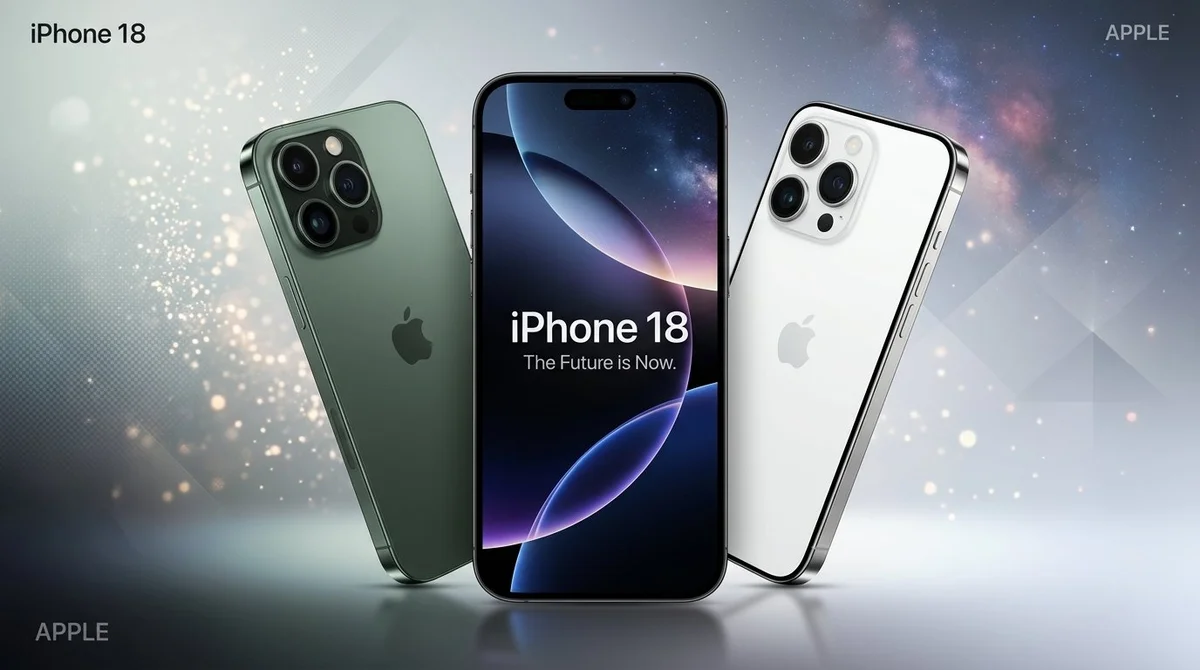
On September 9, Apple introduced the iPhone 18 Pro and iPhone 18 Pro Max, alongside the company’s first foldable iPhone, the iPhone Duo. The Pro models continue Apple’s push toward higher-performance and AI-enabled smartphones, while the $1,999 Duo takes Apple into a premium foldable category that has largely been developed by Samsung and Chinese manufacturers. (Apple)
That makes this year’s launch particularly important from an economic perspective.
The question is not simply whether the iPhone 18 is better than the previous generation.
The bigger question is:
Can Apple use premium pricing, AI, ecosystem integration and a new foldable category to increase the economic value of the smartphone market?
The answer could influence competitors, suppliers, consumers and investors well beyond Apple’s own product lineup.
Key Economic Takeaways
- Apple is pushing further into the premium segment. The iPhone Duo starts at $1,999, while Samsung’s Galaxy Z Fold8 starts at $1,899.99 in the U.S., putting Apple’s first foldable directly into the industry’s highest-priced mainstream smartphone tier. (Reuters)
- Premiumization is already lifting the broader smartphone market. Counterpoint Research says global smartphone ASP reached $399 in Q1 2026, up 12% year over year, even as shipments declined. (Counterpoint Research)
- The foldable market could become much more competitive. Apple is entering after Samsung and Huawei have already established the category, potentially bringing more consumers into foldables rather than simply taking share from existing buyers. (Reuters)
- Emerging markets may see a very different response. A $1,999 flagship sits far above the average smartphone price in many developing markets, making Apple’s premium strategy more dependent on financing, older models and lower-priced devices for broader adoption. Counterpoint projects India’s 2025 smartphone ASP at below $250. (Counterpoint Research)
Apple Is Selling More Than a Smartphone
One reason Apple’s strategy matters is that the company rarely competes only on hardware specifications.
An iPhone combines hardware, operating software, services, applications, accessories, cloud storage and an established ecosystem.
That creates a different economic model from selling a device as a standalone product.
A customer who owns an iPhone may also use iCloud, Apple Music, Apple Pay, AirPods, an Apple Watch and other Apple products. The more connected those products become, the greater the practical cost of moving to another ecosystem.
This creates what economists call switching costs.
The smartphone therefore becomes an entry point into a much larger customer relationship.
Economic Reader’s How Companies Make Money explores the different ways businesses create and capture value beyond the simple sale of a product.
The iPhone 18 strategy continues that broader approach.
The iPhone 18 Pro Is About Premium Differentiation
Apple’s iPhone 18 Pro models introduce new camera capabilities, the A20 Pro chip, improved battery performance and deeper AI functionality through iOS 27 and Apple Intelligence. Apple says the Pro Max delivers its biggest battery-life improvement to date. (Reuters)
Individually, these upgrades may look like technical improvements.
Economically, they serve another purpose.
They help Apple defend the premium segment.
That matters because the smartphone market is mature in many developed economies. A consumer who already owns a high-end phone does not necessarily need another one every year.
For manufacturers, this creates a difficult problem.
If consumers replace smartphones less frequently, companies need to generate more value from each sale.
That can happen through:
- Higher average selling prices
- Premium models
- Services
- Accessories
- Financing and upgrade programs
- Greater customer retention
Apple’s strategy increasingly combines these elements.
The company is therefore not simply trying to sell more phones.
It is trying to make each customer relationship economically more valuable.
The Smartphone Market Is Already Moving Upmarket
Apple’s strategy is easier to understand when viewed against the broader smartphone market.
Counterpoint Research reported that global smartphone average selling price reached $399 in Q1 2026, up 12% from a year earlier, even though global shipments declined. It attributed the higher ASP partly to price increases, a shrinking entry-level segment and stronger demand for premium devices. (Counterpoint Research)
The trend was also visible in late 2025. Counterpoint reported that global smartphone ASP reached $425 in Q4 2025, while quarterly smartphone revenue reached a record $142 billion. (Counterpoint Research)
This matters because Apple is not creating premiumization from nothing.
It is operating inside an industry where manufacturers are already trying to capture more revenue from fewer, higher-value devices.
That gives Apple’s 2026 strategy a broader economic significance.
The competition is increasingly about value per customer, not just units shipped.
The $1,999 iPhone Duo Changes the Premium Ceiling
The most significant part of Apple’s 2026 strategy may not be the iPhone 18 Pro.
It may be the iPhone Duo.
Apple’s first foldable iPhone starts at $1,999, placing it above conventional flagship smartphones and slightly above Samsung’s U.S. starting price of $1,899.99 for the Galaxy Z Fold8. (Reuters)
| Premium foldable | U.S. starting price |
| Apple iPhone Duo | $1,999 |
| Samsung Galaxy Z Fold8 | $1,899.99 |
Prices shown are U.S. starting prices before taxes and promotional trade-in offers.
This comparison is more important than it initially appears.
Apple is not entering the foldable market as a value competitor.
It is entering at the premium end, almost directly alongside Samsung’s flagship foldable.
That creates room for Apple to test how much consumers are willing to pay for a combination of foldable hardware and the iOS ecosystem.
But the price also creates a major challenge.
At $1,999, the Duo is not competing only against other phones.
It is competing against consumer budgets.
A buyer has to decide whether a foldable iPhone provides enough additional value to justify spending significantly more than they would on a conventional premium smartphone.
That is an economic question, not simply a technology question.
Apple’s Foldable Strategy Could Change Competition
Samsung has spent years developing the premium foldable market, while Huawei and other Chinese manufacturers have pushed aggressively into the category.
Apple’s arrival changes the competitive environment because of its enormous installed customer base and global brand.
Reuters reported that analysts expect Apple to take a significant share of the foldable market, while Samsung currently remains the market leader. Reuters also noted that Apple is entering after several generations of competing foldable devices have already been developed. (Reuters)
The important point is not the exact future market-share forecast.
It is the possibility that Apple could make foldable smartphones more mainstream among consumers who previously ignored them.
That could create a second wave of competition.
Instead of asking:
“Do consumers want foldable phones?”
the industry may increasingly ask:
“Which foldable ecosystem offers the most value?”
That is a much bigger competitive battle.
The Real Competition May Be Between Ecosystems
A smartphone market based purely on specifications would be easier to understand.
Consumers could compare processor speed, camera resolution, battery capacity and display size.
But mature technology markets rarely work that way.
Brand trust, software, accessories, applications, customer support and switching costs all influence purchasing decisions.
This gives Apple an advantage that cannot be measured by a specification sheet.
For example, someone who already owns a MacBook, Apple Watch and AirPods may evaluate an iPhone differently from a consumer buying their first premium smartphone.
The iPhone is part of a network of products.
That network can make Apple less dependent on winning every individual hardware comparison.
It also helps explain why Apple can maintain premium pricing even when cheaper smartphones offer competitive technical specifications.
The company is selling integration and convenience, not just hardware.
AI Could Become the Next Major Battleground
Artificial intelligence is another important part of the iPhone 18 strategy.
Apple is integrating Apple Intelligence and a new Siri AI experience more deeply into the iPhone. Apple says the new Siri can use personal context and on-screen awareness, while Apple Intelligence combines on-device processing with Private Cloud Compute for certain workloads. (Apple)
The economic question is whether AI will actually increase smartphone replacement demand.
That remains uncertain.
Consumers may not replace a perfectly functional phone simply because it has additional AI features.
But AI can become economically important if it changes how people use their devices.
Consider the difference between:
AI as a feature
and
AI as a reason to own a newer device.
The first adds functionality.
The second creates a new upgrade cycle.
Apple needs the second outcome.
That is because smartphone manufacturers ultimately depend on consumers believing that a new device solves a problem their existing device cannot solve easily.
Apple’s China Strategy Matters
China remains one of the world’s most important smartphone markets and one of Apple’s most strategically important markets.
Apple’s challenge there is particularly interesting because local manufacturers compete aggressively on price, specifications and foldable technology.
Apple therefore has to demonstrate that its ecosystem and brand justify a premium over domestic alternatives.
The foldable strategy could help.
A consumer who already values iOS may view an iPhone Duo differently from a buyer choosing between foldable devices purely on hardware specifications.
But the opposite is also possible.
If Chinese manufacturers provide similar functionality at lower prices, Apple’s premium positioning could face greater pressure.
That makes China an important test of whether Apple’s ecosystem advantage can translate into pricing power in a highly competitive market.
Emerging Markets Show the Limits of Premium Pricing
The $1,999 price becomes even more significant when viewed outside the United States.
Premium smartphones are becoming more important globally, but average prices vary enormously by region.
Counterpoint Research projected India’s 2025 smartphone ASP at below $250, compared with much higher prices in developed markets. It also expects India’s ASP to rise gradually as consumers move toward more premium devices. (Counterpoint Research)
That creates a very different economic environment for Apple’s foldable strategy.
For a high-income U.S. consumer, a $1,999 device may represent an expensive discretionary purchase.
In a lower-income market, the same price can represent several months of household income or compete with much larger categories of spending.
Apple can therefore pursue two strategies at the same time:
Premium innovation at the top end, and older or lower-priced iPhones for broader market reach.
This is economically important because Apple’s growth does not require every consumer to buy the newest flagship.
The company can use premium products to raise the value of its brand and ecosystem while older models remain accessible to price-sensitive customers.
India provides an especially important example because it is both a growing smartphone market and an increasingly important manufacturing base for Apple. Reuters reported that Apple significantly raised iPhone prices in India in 2026, with some models seeing increases of more than 20%, while local taxes and import duties contributed to higher consumer prices. (Reuters)
The result is a clear divide:
Apple’s technology may become more global, but its pricing power is not equally transferable across markets.
Higher Prices Can Create Opportunities and Risks
Premium pricing can be attractive because Apple does not necessarily need enormous unit growth to increase revenue.
Suppose consumers buy fewer smartphones but spend more per device.
A company with strong margins and a loyal customer base may still generate substantial revenue growth.
This is particularly important in a mature market.
But premium pricing creates a different risk.
The higher the price, the more sensitive consumers become to economic conditions.
When household budgets are under pressure, consumers can delay upgrades.
They may also choose older models, trade-in programs or cheaper alternatives.
That makes Apple’s pricing strategy partly dependent on the health of the broader consumer economy.
In other words:
A premium product strategy works best when consumers believe the additional value is worth paying for.
Apple’s Supply Chain Remains an Economic Constraint
The iPhone is also a global manufacturing product.
Its components come from a complex international supply chain involving semiconductors, displays, memory, cameras, batteries and other specialized components.
That means Apple’s product strategy is influenced by factors beyond consumer demand.
Component prices matter.
Trade policy matters.
Currency movements matter.
Manufacturing capacity matters.
Geopolitical risk matters.
The complexity becomes particularly important when Apple pushes into a technically demanding product such as a foldable phone.
A smartphone may be designed by Apple but depend on a global network of suppliers and manufacturing facilities.
Economic Reader’s How Does International Trade Work? explains why modern products such as smartphones depend on international trade and globally distributed production rather than a single country producing everything.
For Apple, maintaining a reliable supply chain is therefore part of protecting its premium business model.
The iPhone Is Becoming a Platform for Services and AI
Another reason Apple can justify investing heavily in the iPhone is that the device can generate economic value beyond its initial sale.
A customer who buys an iPhone may later spend money on:
- Cloud storage
- Music
- Video
- Applications
- Accessories
- Payment services
- Other Apple products
This creates a customer lifetime value model.
The company does not have to maximize profit from the hardware transaction alone.
Instead, it can use the device to maintain a long-term relationship with the customer.
That makes the iPhone strategically different from a conventional consumer-electronics product.
A television manufacturer sells a television.
Apple increasingly sells access to an ecosystem.
What the iPhone 18 Launch Means for Consumers
For consumers, the economic question is simple:
Does the new technology solve a problem that justifies the price?
For someone with an older smartphone, the answer may be yes.
For someone with a recent premium iPhone, the economic benefit may be much smaller.
The iPhone Duo presents an even clearer calculation.
Its larger foldable display is designed for multitasking, content consumption and productivity, while Apple is also integrating AI capabilities into the experience. (Apple)
But those benefits have to be weighed against a starting price of $1,999.
That means consumers should not evaluate the Duo simply as “the newest iPhone.”
They should evaluate it as a premium technology purchase.
The more expensive the device, the more important its useful life becomes.
What Investors Should Watch
For investors, the most important information will come after the launch.
Several indicators will reveal whether Apple’s strategy is working.
iPhone average selling prices
If Apple can increase average selling prices without causing a significant decline in demand, its premium strategy is gaining strength.
Foldable adoption
The iPhone Duo will show whether Apple’s ecosystem can accelerate adoption of foldable smartphones.
Upgrade cycles
If consumers continue keeping smartphones for longer periods, Apple may need to rely increasingly on premium pricing and services.
Services revenue
A growing installed base can create additional recurring revenue even when hardware growth slows.
China performance
Apple’s ability to defend or expand its position in China will remain important because of the market’s scale and competitive intensity.
AI adoption
The biggest long-term question may be whether Apple Intelligence becomes a genuine reason for consumers to upgrade.
If AI becomes central to everyday smartphone use, it could help create a new replacement cycle.
If consumers treat AI as another feature they rarely use, its economic impact will be much smaller.
The Bigger Question: Can Apple Make the Smartphone Market More Valuable?
The iPhone 18 launch is significant because Apple is attempting to solve a problem facing the entire smartphone industry.
Smartphones are already extremely capable.
That makes it harder for manufacturers to convince consumers that they need a new device every year or two.
Apple’s answer is to move upward.
More premium hardware.
More ecosystem integration.
More AI.
And now, a $1,999 foldable device.
The strategy could work because Apple has something many competitors do not have at the same scale: a huge installed customer base that is already connected to its ecosystem.
But the strategy also creates a test.
How much more are consumers willing to pay for the next generation of smartphone technology?
The iPhone Duo will help answer that question.
If consumers embrace it, Apple could help turn foldable smartphones from a niche premium category into a much larger part of the high-end market. That could encourage competitors to invest more aggressively and potentially push average smartphone prices higher.
If adoption remains limited, Apple may discover that even its brand and ecosystem have a ceiling when technology becomes too expensive.
That makes the 2026 iPhone launch more than another product release.
It is a real-world test of whether Apple can keep expanding the economic value of the smartphone after years of increasingly mature hardware.
For consumers, the lesson is to focus less on whether the iPhone 18 is the newest device and more on whether its additional capabilities justify the additional cost.
For competitors, the challenge is even bigger: Apple is no longer simply competing for smartphone buyers. It is competing to define what the premium smartphone should be worth. And for the broader technology industry, that may be the most important consequence of Apple’s 2026 strategy.