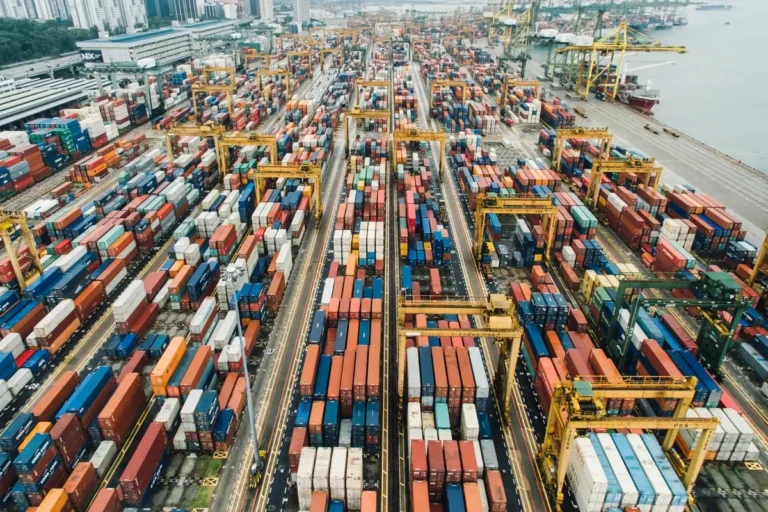

Why Did Trump Use Tariffs? Understanding the Economic Impact of Trump’s Trade Policies
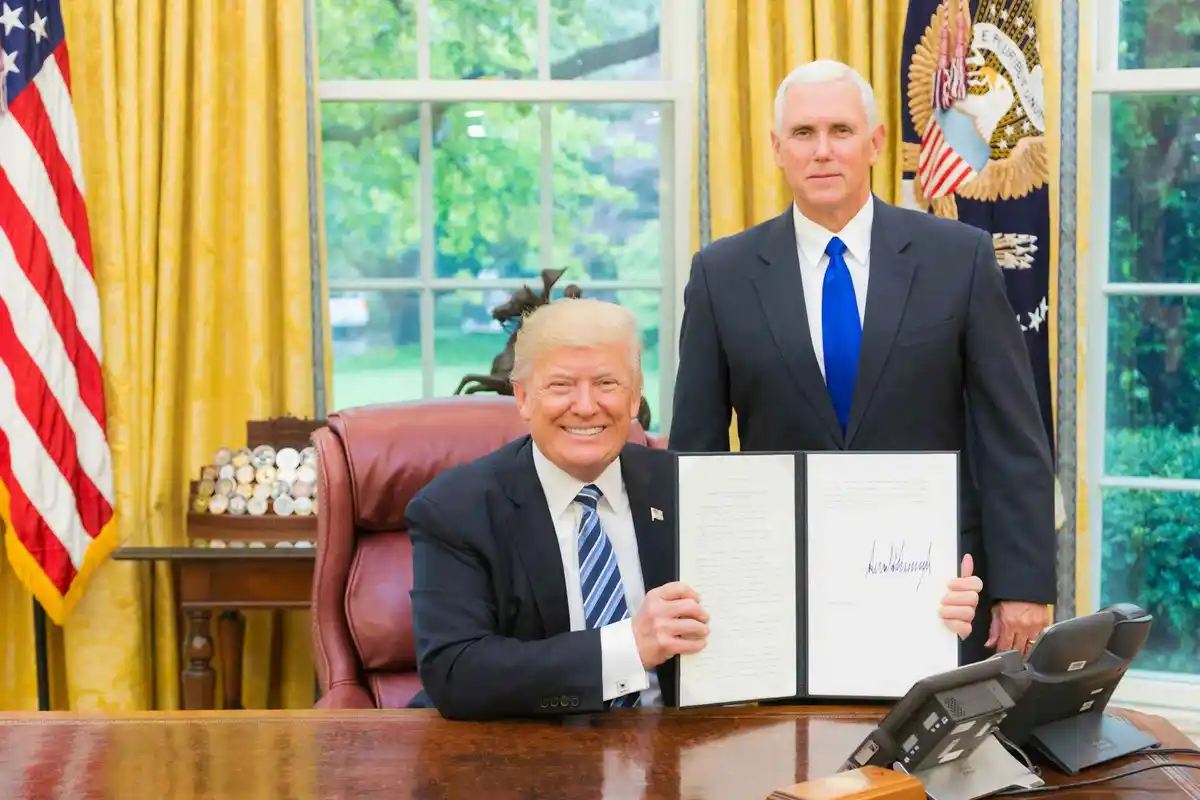
Why Did Trump Use Tariffs?
Tariffs became one of the defining economic policies of Donald Trump’s presidency.
Trump has used tariffs not simply as a way to tax imports, but as a broader economic and geopolitical tool. His administration has argued that tariffs can protect American industries, encourage domestic manufacturing, reduce dependence on foreign suppliers, address trade imbalances, and give the United States leverage in negotiations with other countries.
The economic criticism is equally important. Tariffs make imported goods and inputs more expensive, can disrupt supply chains, raise prices, and encourage other countries to retaliate against U.S. exports.
Both sides of the debate point to real economic mechanisms.
That is why the more useful question is not simply whether Trump’s tariffs are “good” or “bad.”
It is:
Why did Trump choose tariffs, how are they supposed to work, and what do they actually change in the U.S. economy?
Following that chain reveals why tariffs can create both benefits and costs at the same time.
What Is a Tariff?
A tariff is a tax imposed on imported goods.
Suppose a U.S. company imports $1 million worth of machinery and faces a 20% tariff. The importer would owe $200,000 in tariff payments when the goods enter the country.
But that does not necessarily mean the foreign producer absorbs the entire cost.
The importer could:
- Raise prices for customers
- Accept lower profit margins
- Negotiate a lower price with the foreign supplier
- Find another supplier
- Shift production
- Reduce the quantity imported
The economic burden therefore depends on how businesses and consumers respond.
This distinction is important because tariffs are collected at the border, but their economic effects can spread much further through the economy.
Economic Reader’s guide to How Does International Trade Work? explains how goods move through international suppliers, transportation networks, customs systems, businesses, and consumers.
A tariff changes the incentives throughout that chain.
Why Did Trump Use Tariffs?
Trump’s tariff strategy has several objectives.
They are related, but they are not identical.
1. Protect American Manufacturing
One of the central arguments behind Trump’s tariffs is that the United States should produce more strategically important goods at home.
The basic economic mechanism is straightforward.
If imported products become more expensive because of tariffs, domestic production becomes relatively more competitive.
Imagine an American company deciding whether to import a component or produce it domestically.
If the imported version suddenly carries a substantial tariff, the economics of building a domestic factory can become more attractive.
That can encourage:
- Factory investment
- Domestic suppliers
- Employment
- Capital spending
- Production capacity
The Trump administration has repeatedly described reshoring manufacturing and strengthening the U.S. industrial base as important goals of its trade policy. The administration’s presidential tariff actions show how tariffs have been used across sectors and countries as part of this broader strategy.
But there is a major limitation.
A tariff can change prices immediately.
A factory takes years to build.
Companies need workers, equipment, infrastructure, financing, energy, suppliers, and enough expected demand to justify the investment.
This creates an important timing problem:
The cost of protection can appear before the benefits of new domestic capacity.
2. Reduce Dependence on Foreign Supply Chains
Trump’s tariff policy is also closely connected to economic security.
The pandemic and subsequent geopolitical tensions exposed vulnerabilities in highly concentrated global supply chains.
For strategically important products, the cheapest supplier is not always the safest supplier.
This is particularly relevant to products such as:
- Semiconductors
- Critical minerals
- Steel
- Aluminum
- Industrial equipment
- Pharmaceuticals
- Defense-related components
A country may accept somewhat higher production costs if doing so reduces the risk of losing access to an essential product during a crisis.
That changes the economic calculation.
Traditional globalization often emphasizes efficiency:
Produce where costs are lowest.
Economic-security policy adds another objective:
Produce important goods where supply is more resilient.
Trump’s tariffs are partly an attempt to push American companies toward that second objective.
The problem is that resilience has a cost.
A supply chain with multiple suppliers and geographically diversified production can be safer, but it can also be more expensive than relying on the cheapest available producer.
3. Use Tariffs as Negotiating Leverage
Trump has also treated tariffs as a bargaining instrument.
The logic is that a country facing a large U.S. tariff has an incentive to negotiate.
The United States can then seek changes involving:
- Market access
- Foreign tariffs on U.S. products
- Trade barriers
- Industrial policies
- Investment
- Critical supply chains
- Other economic or geopolitical issues
In this context, the tariff is not necessarily intended to remain permanently.
It can be used as pressure.
The 2026 policy landscape illustrates this approach. The White House has adjusted tariff treatment for individual countries as negotiations and broader policy objectives changed. For example, its February 2026 announcement on India linked changes to tariff treatment with commitments involving Russian oil purchases. (The White House)
This makes Trump’s tariff policy different from a simple protectionist tax.
It is also a form of economic leverage.
But leverage works only if the other side has a reason to compromise.
If the other country retaliates instead, both economies can end up paying higher costs.
4. Address Trade Imbalances
Trump has repeatedly criticized persistent U.S. trade deficits.
The argument is that the United States imports too much relative to what it exports and therefore needs a different trade relationship with its partners.
Tariffs can theoretically reduce imports by making foreign goods more expensive.
The intended chain is:
Higher tariffs → higher import costs → lower import demand → greater domestic production → smaller trade deficit
The problem is that the trade deficit is influenced by much more than tariff rates.
It is connected to domestic saving and investment, consumption, capital flows, exchange rates, and the overall structure of the U.S. economy.
That means tariffs can change where the United States imports from without necessarily eliminating the underlying trade imbalance.
If a U.S. company stops buying a product from China but starts buying the same product from Vietnam, the country of origin changes.
The broader U.S. demand for imported goods may not change very much.
This is why a bilateral trade deficit with one country should not be treated as the same thing as the overall U.S. trade deficit.
5. Raise Government Revenue
Tariffs also generate government revenue.
When importers pay customs duties, the federal government collects the money.
That creates an additional incentive for policymakers, especially when tariff rates apply across a large volume of imports.
But tariff revenue should not be viewed as free money.
The government receives revenue because businesses are paying the tariff.
Those businesses may then recover some of the cost through higher prices, lower margins, changes in sourcing, or lower wages and investment.
So there is a fundamental economic trade-off:
Higher tariff revenue can come with higher private-sector costs.
The size of that trade-off depends on how much of the tariff is passed through into prices and how much is absorbed elsewhere.
Who Actually Pays Trump’s Tariffs?
This is one of the most important questions in the entire debate.
A tariff is legally paid by the importer.
But the economic burden can be shared across businesses, foreign suppliers, and consumers.
Research from the Federal Reserve Bank of New York found that U.S. firms and consumers bore most of the burden of the 2025 tariffs rather than foreign exporters absorbing the full cost.
That does not mean every tariff dollar appears immediately as a price increase.
Businesses can initially absorb some of the cost through lower margins.
They can also change suppliers or delay price increases.
The result is that tariff pass-through can take time.
A 2026 New York Fed analysis found that many firms that had already paid tariffs still planned additional price increases, suggesting that the full effect of tariff costs does not necessarily appear immediately in retail prices. (Liberty Street Economics)
That delayed effect is one reason tariff policy can remain economically important even after the initial tariff announcement has disappeared from the headlines.
How Tariffs Reach Consumers
Consider a U.S. company importing a component for $100.
A new 25% tariff raises the import cost to $125.
The company now has several choices.
It can absorb the entire $25.
It can raise the product price by $10.
It can raise the price by $20.
It can negotiate with the supplier.
Or it can find another supplier.
The final consumer price therefore depends on the entire supply chain.
This is why a 25% tariff does not necessarily produce a 25% increase in the retail price.
But the opposite is also important.
A tariff does not have to be fully passed through to consumers to cause economic damage.
Even if a business absorbs part of the cost, its profit margin may fall.
That can reduce hiring, investment, or expansion.
So tariffs can affect the economy through prices, profits, investment, and employment.
Tariffs Can Raise Inflation But the Effect Is More Complicated.
Tariffs can contribute to inflation because they increase the cost of imported goods and imported inputs.
Suppose a manufacturer uses imported steel, electronics, chemicals, or machinery.
A tariff can raise production costs.
The company can then respond by raising prices, reducing margins, cutting costs, or changing suppliers.
Economic Reader’s guide to What Is Inflation? explains why changes in production costs and prices matter for purchasing power and monetary policy.
Recent Federal Reserve research provides evidence that tariffs did feed into consumer prices.
A Federal Reserve analysis published in 2026 found that retail prices gradually reflected tariff increases during 2025, with the pass-through occurring over time rather than immediately. (Federal Reserve)
The St. Louis Fed also reported that the effective U.S. tariff rate fell from a peak of about 11% in late 2025 to just below 7% by May 2026, while tariff effects on inflation were still visible. (Federal Reserve Bank of St. Louis)
That creates a critical distinction.
A tariff can raise the price level without permanently increasing the inflation rate.
If a product rises from $100 to $110 because of a tariff and then remains around $110, the initial increase contributes to inflation, but the tariff does not automatically generate another 10% increase every year.
The problem becomes more serious if businesses repeatedly adjust prices, wages, and expectations in response to higher costs.
That is when a one-time tariff shock can become more persistent.
Why Tariffs Create a Problem for the Federal Reserve
Tariffs can put the Federal Reserve in a difficult position.
Suppose tariffs raise goods prices while weakening consumer demand and business investment.
The Fed cannot remove the tariff.
It can only respond to the broader economic consequences.
Higher interest rates can reduce demand and help contain inflation expectations, but they can also make borrowing more expensive for households and businesses.
Lower rates can support growth, but if inflation is already elevated, easier monetary policy can create another problem.
Economic Reader’s guide to How Interest Rates Affect the Economy explains how interest rates influence borrowing, spending, investment, inflation, and economic activity.
This is why tariffs can become a monetary-policy issue even though the tariff itself is a trade-policy decision.
The Fed has to distinguish between a temporary price-level adjustment and a broader inflation problem.
Tariffs Can Reshape Supply Chains
One of the most important long-term effects of Trump’s tariff policy may be the way companies change their supply chains.
Imagine a manufacturer that has historically sourced most of its components from one country.
A large tariff changes the economics of that arrangement.
The company may then:
- Move some production to the United States
- Add suppliers in Mexico
- Source from another Asian country
- Build larger inventories
- Redesign products
- Automate production
- Invest in domestic suppliers
This can reduce dependence on one country.
But diversification is not free.
A company may end up paying more for components from a new supplier.
It may need to build another factory.
It may have to qualify new suppliers.
It may carry more inventory.
Those costs can eventually reach consumers.
This is one of the biggest economic trade-offs behind Trump’s trade policy:
A more resilient supply chain may be more expensive than the most efficient supply chain.
Could Tariffs Actually Bring Manufacturing Back?
They can create an incentive, but they cannot guarantee it.
Manufacturing investment depends on much more than import prices.
Companies also consider:
- Labor costs
- Energy costs
- Productivity
- Taxes
- Infrastructure
- Financing costs
- Skilled workers
- Technology
- Regulatory conditions
- Expected demand
A tariff can make domestic production more competitive without making the United States the world’s lowest-cost manufacturing location.
This distinction matters because the ultimate goal is not simply to make imports expensive.
The goal is to create enough domestic productive capacity that the United States becomes less dependent on imports.
Recent developments show the trade-off clearly.
In September 2026, the White House delayed a decision on tariffs on refined copper amid concerns that higher import costs could raise manufacturing expenses. The United States remains heavily dependent on imported copper, while policymakers are weighing the benefits of encouraging domestic production against the cost to industries that use copper. (Reuters)
That is the tariff dilemma in one example:
The same tariff that protects a domestic producer can increase costs for domestic manufacturers that use the protected product.
Tariffs Create Winners and Losers
This is why it is difficult to describe Trump’s tariffs as simply good or bad for “the American economy.”
Different sectors can experience completely different outcomes.
A domestic steel producer may benefit because imported steel becomes more expensive.
But an American manufacturer that uses steel as an input may face higher costs.
A domestic producer protected from foreign competition may gain market share.
A retailer importing consumer goods may face lower margins or higher prices.
An exporter may suffer if another country retaliates.
The economic effect therefore depends heavily on where a company sits in the supply chain.
This is one reason tariff analysis should look beyond the industry being protected.
The more important question is:
How many downstream businesses depend on the product being protected?
The Risk of Retaliation
Trading partners do not have to accept U.S. tariffs passively.
They can impose tariffs of their own.
That creates another chain reaction:
U.S. tariff → foreign retaliation → lower demand for U.S. exports → pressure on American producers
Agriculture provides a useful example.
A U.S. farmer may have nothing to do with the original import tariff.
But if a trading partner responds by taxing American agricultural exports, the farmer can still become a casualty of the trade dispute.
Retaliation can therefore spread the cost of tariffs far beyond the industries originally targeted.
The 2026 U.S.-Canada dispute illustrates how quickly this can happen. Canada announced retaliatory tariffs in response to U.S. measures, while the Trump administration subsequently announced additional restrictions and tariff changes on selected Canadian goods. (The Wall Street Journal)
Once retaliation begins, tariffs can become a cycle rather than a one-way policy.
Can Tariffs Reduce the U.S. Trade Deficit?
This is one of the most important questions, and the answer is more complicated than it appears.
Tariffs can reduce imports of specific products.
But that does not automatically mean the overall trade deficit will fall.
There are several reasons.
First, businesses can switch suppliers.
Second, consumers may continue buying imported goods even if the source country changes.
Third, the overall U.S. trade balance depends on broader macroeconomic factors such as national saving and investment.
So tariffs can change the composition of trade without necessarily changing the fundamental balance.
This is why looking only at whether imports from a particular country decline can give an incomplete picture of whether the policy is working.
What About Economic Growth?
Tariffs can have both positive and negative effects on economic growth.
The potential positive effect comes from investment.
If tariff protection encourages companies to build factories, develop domestic suppliers, and invest in productivity, the U.S. economy could gain productive capacity over time.
The negative effect comes from higher costs.
More expensive inputs can reduce business margins.
Higher consumer prices can reduce household purchasing power.
Retaliatory tariffs can hurt exporters.
Uncertainty can cause companies to delay investment.
The net result depends on which effect dominates.
That means the most important data are not simply tariff revenue or import volumes.
Economists should also watch:
- Manufacturing investment
- Factory construction
- Business capital spending
- Productivity
- Consumer prices
- Corporate margins
- Employment
- Import volumes
- Export growth
- Supply-chain relocation
Those indicators show whether tariffs are changing the productive structure of the economy or primarily changing prices.
Trump’s Tariff Policy Has Also Become More Complicated
The current tariff regime is not simply the same set of broad tariffs announced in 2025.
The legal and policy framework has changed.
The U.S. Supreme Court’s February 2026 decision limited the administration’s ability to use the International Emergency Economic Powers Act as the basis for broad tariffs. The administration subsequently relied more heavily on other trade authorities, including Sections 301, 232, and 338. Current tariff policy therefore remains fluid rather than being one permanent tariff schedule. (Atlantic Council)
That matters for businesses.
A company deciding whether to build a factory in the United States needs to know whether today’s tariff advantage will still exist several years from now.
Frequent changes create uncertainty.
And uncertainty itself has an economic cost.
A business may postpone an investment if it cannot confidently estimate future import costs, market access, or trade rules.
What Trump’s Tariffs Mean for Global Trade
The effects extend well beyond the United States.
The U.S. is deeply integrated into global supply chains, so changes in American trade policy affect companies around the world.
Businesses may respond by moving production toward countries that face lower tariff exposure.
That can benefit countries such as Mexico, Vietnam, India, and others.
But it can also make global production less efficient.
For decades, globalization encouraged companies to place each stage of production where it could be performed most efficiently.
Tariff-driven restructuring adds another consideration:
Where can we produce while minimizing geopolitical and trade risk?
That may produce more resilient supply chains.
It may also produce more expensive ones.
This is one reason Trump’s tariff policy could have consequences for the structure of globalization itself.
So, Why Did Trump Use Tariffs?
The answer is broader than “to protect American jobs.”
Trump’s tariff strategy is designed around several objectives:
Manufacturing: Encourage production and investment in the United States.
Trade leverage: Use access to the U.S. market as bargaining power.
Trade policy: Address what the administration considers unfair or non-reciprocal trade practices.
Economic security: Reduce dependence on foreign suppliers for strategically important products.
Trade imbalances: Reduce certain imports and attempt to change the structure of U.S. trade.
Government revenue: Collect additional revenue from imports.
These objectives can reinforce one another, but they can also conflict.
For example, a tariff can encourage domestic steel production while raising costs for American manufacturers that use steel.
A tariff can reduce imports while increasing prices.
A tariff can strengthen supply-chain resilience while making the supply chain more expensive.
A tariff can generate government revenue while reducing private-sector purchasing power.
That is why evaluating the policy requires looking at the trade-offs.
The Bigger Economic Question
The real test of Trump’s tariff policy is not whether tariffs can protect an industry.
They can.
It is whether the protection produces enough long-term economic value to justify the costs imposed elsewhere.
If tariffs encourage productive investment, strengthen critical industries, diversify vulnerable supply chains, and create more competitive domestic production, the long-term benefits could be meaningful.
But if tariffs mainly increase costs without generating enough new investment or productivity, they risk functioning primarily as a tax on businesses and households.
The difference will depend on what companies actually do after tariffs are imposed.
Do they build factories?
Do they invest in technology?
Do they develop domestic suppliers?
Do they become more productive?
Do consumers switch to cheaper alternatives?
Do foreign countries negotiate or retaliate?
Those responses determine the economic outcome.
That is also why Trump’s tariff policy should not be judged only by the headline tariff rate.
The more important indicators are investment, productivity, prices, trade flows, employment, and supply-chain restructuring.
Trump used tariffs because he believes the United States can gain more economic security and bargaining power by making foreign access to the American market more conditional.
Whether that strategy ultimately strengthens the U.S. economy will depend on what comes next.
If tariffs create productive domestic capacity, they could become part of a broader industrial strategy. If they mainly create higher costs without enough new investment, the burden will increasingly fall on American businesses and consumers.
That is the central economic trade-off behind Trump’s trade policies.