
What Is Green Economy? How Sustainable Growth Is Changing the Future

Economic growth has traditionally depended on a simple formula: invest capital, produce more goods and services, create jobs, and increase incomes.
But that model becomes harder to sustain when economic activity depends heavily on limited resources, energy systems that create pollution, or production methods that impose costs on society without fully reflecting them in market prices.
The green economy is an attempt to change that equation.
It is not simply about protecting forests, building solar farms, or encouraging people to recycle. It is about changing how an economy creates value how governments invest, how businesses produce, how financial institutions allocate capital, how workers develop skills, and how consumers use resources.
The United Nations Environment Programme (UNEP) describes a green economy as one that is low-carbon, resource-efficient and socially inclusive, with investment and economic activity supporting lower emissions and pollution, greater resource efficiency, and protection of natural systems. UNEP: Green Economy
That makes the green economy an economic concept as much as an environmental one.
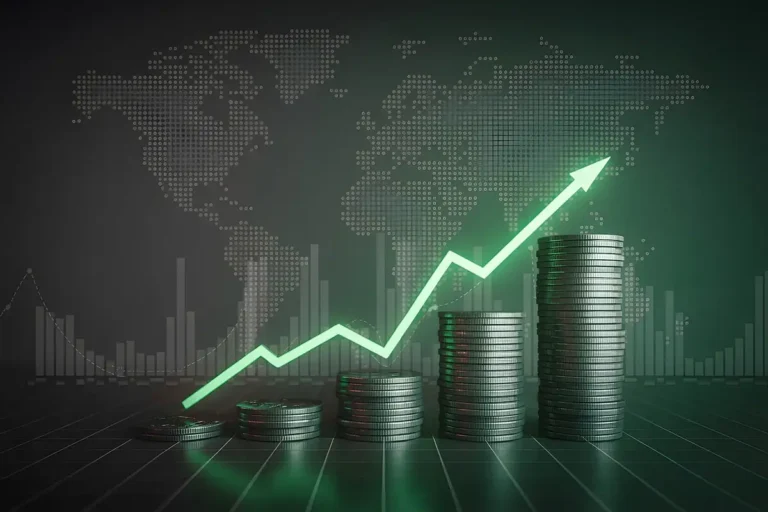
And the transition is already changing investment priorities. The International Energy Agency estimates that total energy investment will reach about $3.4 trillion in 2026, with clean-energy investment approaching $2.2 trillion, almost twice the amount going to fossil fuels. IEA: World Energy Investment 2026
The bigger question is what this shift means for growth, businesses, workers and countries.
What Is Green Economy?
A green economy is an economic system that seeks to generate growth and employment while reducing environmental damage and using natural resources more efficiently.
Three ideas sit at its center:
Lower environmental impact. Economic activity should reduce carbon emissions, pollution and damage to ecosystems.
Better resource efficiency. Economies should generate more value from less energy, water and raw material use.
Broader social benefits. The transition should create productive employment and economic opportunities rather than simply shifting costs onto vulnerable households and workers.
This is why a green economy is broader than renewable energy.
Solar and wind power are important, but the transition also involves buildings, transport, manufacturing, agriculture, financial markets, waste management, infrastructure and supply chains.
A factory that uses less energy per unit of output is participating in the transition. So is a city that invests in efficient public transportation, a company that redesigns products to reduce waste, or a bank that finances energy-efficient infrastructure.
Green Economy vs. Sustainable Development
The two concepts are closely related, but they are not identical.
Sustainable development is the broader goal of improving living standards while maintaining the conditions needed for future generations.
The green economy focuses more specifically on how economic activity, investment, production and employment can be reorganized to support that goal.
A useful way to think about the difference is:
Sustainable development asks:
What kind of long-term development do we want?
The green economy asks:
How can economic systems, markets and investment be changed to move toward it?
This distinction matters because the green economy is fundamentally concerned with economic mechanisms.
It asks where capital goes, what businesses produce, what energy they use, how resources are priced, which technologies become competitive and what skills workers need.
For a broader explanation of the long-term development framework, see Economic Reader’s What Is Sustainable Development?.
Why Is the Green Economy Becoming More Important?
The transition is partly driven by environmental pressure, but economics is also becoming increasingly important.
Climate-related disruptions can damage infrastructure, reduce agricultural output, disrupt supply chains and increase business costs. Resource scarcity can raise production expenses. Energy dependence can expose economies to price shocks.
These risks can eventually affect inflation, government budgets, corporate profits and investment decisions.
At the same time, technological change is making alternatives more competitive.
Solar panels, batteries, electric vehicles, energy-efficient equipment, digital energy management and other technologies are changing the economics of energy and production.
This creates a feedback loop:
Policy and environmental pressures change incentives → businesses and investors respond → capital moves toward new technologies and infrastructure → costs and productivity change → industries adapt.
That is one reason the green transition is increasingly becoming an economic transformation rather than a separate environmental agenda.
The Energy System Is at the Center of the Transition
Energy is one of the clearest examples of how the green economy changes economic structures.
Traditional economic systems have depended heavily on coal, oil and natural gas. These fuels remain important, but growing investment in renewable energy, electricity networks, batteries and energy efficiency is changing the composition of capital spending.
The IEA’s 2026 investment outlook estimates that clean-energy investment will reach about $2.2 trillion, compared with roughly half that amount for fossil fuels. IEA: World Energy Investment 2026
That does not mean fossil fuels disappear overnight.
The global economy still needs reliable energy, and the transition itself requires large amounts of investment in electricity grids, storage, minerals, manufacturing capacity and infrastructure.
Instead, the economic change is about where the next unit of investment is going.
For businesses, this can create both opportunities and competitive pressure.
A company with lower energy consumption may have a cost advantage.
A manufacturer that adopts cleaner production technologies may gain access to markets with stricter environmental standards.
An energy company that successfully diversifies into renewable generation may create new revenue streams.
The transition therefore changes business strategy, not simply energy sources.
For more on this business impact, see Economic Reader’s How Renewable Energy Changes Business.
Resource Efficiency Can Become a Productivity Strategy
The green economy is also about using fewer resources to create the same or greater economic value.
Consider a manufacturer that reduces the amount of electricity needed to produce one unit of output.
If the investment lowers energy consumption without reducing production, the company can reduce operating costs.
The same principle applies to water, raw materials, packaging, industrial waste and transport fuel.
This creates an important connection between environmental policy and productivity.
Reducing waste is not always a cost imposed on businesses. In many cases, it can become a way of improving efficiency.
That is one reason the circular economy is becoming part of the broader green transition. Instead of the traditional model of extract → produce → use → discard, circular business models seek to extend product lifetimes, repair products, reuse materials and recover valuable resources.
UNEP has highlighted the role of finance in supporting circular business models and resource efficiency, including opportunities in manufacturing, agriculture, construction, electronics and other industries. UNEP: Financing Circularity
The Green Economy Is Creating New Investment Markets
An economic transition requires capital.
Governments can finance infrastructure, but private investors, banks, pension funds and companies also determine where capital flows.
That makes finance one of the most important mechanisms behind the green economy.
Capital can move toward renewable energy, electricity networks, energy-efficient buildings, electric transportation, battery storage, sustainable agriculture, water infrastructure, recycling, circular businesses, climate-resilient infrastructure and nature-based solutions.
Green bonds and other sustainability-linked financial instruments are examples of how financial markets can connect investors with projects designed around environmental objectives.
But green finance is not simply about creating a new label for investments.
The real economic question is whether capital is being allocated toward productive projects that can generate credible financial and environmental benefits.
UNEP notes that governments can use fiscal policy, public spending, financial mechanisms and incentives to help mobilize private investment for an inclusive green transition. UNEP: Fiscal Policy and Green Economy
This is particularly important in developing economies, where financing costs can be high and large infrastructure projects require substantial upfront capital.
What Does the Green Economy Mean for Businesses?
For companies, the green transition can create both costs and opportunities.
A manufacturer may need to invest in cleaner equipment.
A logistics company may need to upgrade its vehicle fleet.
A property developer may face higher standards for building efficiency.
A food company may need to rethink packaging and agricultural sourcing.
These changes can require significant capital.
But companies can also benefit.
Businesses that develop useful green technologies may enter expanding markets. Companies that reduce energy and material consumption may lower operating costs. Firms that adapt early to changing regulations can reduce the risk of expensive last-minute adjustments.
The transition can therefore produce a competitive divide between companies that adapt effectively and those that treat environmental change only as a compliance expense.
This is one reason the green economy should not be viewed as a separate “environmental industry.”
It is increasingly becoming part of mainstream corporate strategy.
Green Jobs Are About More Than Solar Panels
The transition is also changing labor markets.
Green jobs can include engineers designing renewable-energy systems, technicians installing solar equipment, construction workers improving building efficiency, software specialists managing energy systems, workers in recycling and repair, and professionals involved in environmental finance and risk management.
But the transition also creates disruption.
Workers in carbon-intensive industries may face declining demand, changing job requirements or relocation.
The International Labor Organization emphasizes that green transitions can reshape economies, labor markets and livelihoods and that successful transitions require skills development, employment policies and social protection. ILO: Green Employment and Just Transition
This is the idea behind a just transition.
A green economy cannot be considered fully successful if new industries grow while workers and communities dependent on declining industries are left without realistic alternatives.
Training therefore becomes an economic investment.
If businesses need new skills but workers cannot acquire them, labor shortages can slow the transition. If workers can move into new industries, the same structural change can become a source of employment and productivity growth.
The Cost of Going Green Is Real
A serious discussion of the green economy also needs to recognize its trade-offs.
Green technologies can require substantial upfront investment.
Electricity grids need upgrading.
Workers need retraining.
Some existing businesses may become less competitive.
Consumers can face higher prices if transition costs are passed through too quickly.
Governments also have to decide how much public money should support the transition when budgets are already under pressure.
These costs do not invalidate the green economy.
They show why policy design matters.
A poorly designed transition can create unnecessary economic pain. A well-designed transition can spread costs over time, encourage private investment and help workers and businesses adjust.
The objective should therefore not be “green at any cost.”
It should be an economically efficient, environmentally effective and socially workable transition.
Government Policy Shapes the Speed of the Transition
Markets alone do not always account for environmental costs.
A company may benefit financially from an activity that creates pollution while part of the cost is imposed on society.
Governments can influence these incentives through carbon pricing, environmental regulations, tax incentives, public infrastructure investment, clean-energy standards, research and development support, green procurement and worker-training programs.
The challenge is finding the right balance.
Policy that is too weak may fail to change investment behavior.
Policy that is poorly designed can create unnecessary costs, distort competition or encourage companies to move activity to jurisdictions with weaker standards.
Good green-economy policy therefore needs to consider both environmental outcomes and economic incentives.
Nature Is Also Economic Infrastructure
One of the less obvious aspects of the green economy is the economic value of natural systems.
Forests regulate water. Wetlands can reduce flood risks. Healthy soils support agriculture. Oceans support fisheries and tourism.
These services may not always appear directly on a company’s balance sheet, but businesses and communities depend on them.
UNEP’s 2026 State of Finance for Nature estimates that $7.3 trillion flowed into nature-negative activities in 2023, while only about $220 billion supported nature-based solutions. UNEP estimates annual investment in nature-based solutions needs to reach about $571 billion by 2030 to meet global targets. UNEP: State of Finance for Nature 2026
The implication is important.
The green economy is not only about replacing fossil fuels.
It is also about recognizing that natural capital is part of the productive foundation of an economy.
How the Green Economy Could Change Economic Growth
The traditional question about growth is:
How much more can an economy produce?
The green economy adds another question:
How efficiently can the economy create value without exhausting the resources that production depends on?
That changes how growth is understood.
Future competitiveness may increasingly depend on access to reliable clean energy, efficient infrastructure, resilient supply chains, skilled workers, technology and affordable capital.
This does not mean GDP becomes irrelevant.
Economic output, productivity and income still matter.
But long-term growth becomes harder to separate from resource efficiency, climate resilience and the quality of infrastructure supporting the economy.
Economic Reader’s What Is Economic Growth? provides the foundation for understanding why productivity, investment and technology matter to long-term expansion. The green economy adds another dimension: whether that expansion can remain productive as environmental constraints become more important.
What the Green Economy Means for Investors
Investors do not need to treat the green economy as a simple list of “green stocks.”
The more useful approach is to examine how the transition changes industries.
Questions worth asking include:
Which companies benefit from new investment?
Renewable-energy developers, grid operators, equipment manufacturers and efficiency businesses may gain from rising capital expenditure.
Which companies face higher transition costs?
Carbon-intensive businesses may need significant investment to comply with changing regulations or consumer expectations.
Which businesses can improve margins through efficiency?
Companies that reduce energy, water or material consumption may lower operating costs.
Which companies have transition risk that the market may be underestimating?
Assets designed around older technologies can become less competitive if markets shift faster than expected.
This makes the green economy relevant to traditional investment analysis rather than a separate category of investing.
The Future of the Green Economy
The green economy is unlikely to arrive as a single global transformation on a specific date.
Instead, it will develop unevenly across industries and countries.
Some sectors will change rapidly because technology is already competitive.
Others will move more slowly because alternatives remain expensive or technically difficult.
Governments will experiment with different policies. Businesses will invest where they see commercial opportunities. Investors will redirect capital toward technologies and companies they believe can benefit from structural change.
The result will not be a completely “green” economy replacing a completely “traditional” economy.
It will be a gradual restructuring of the existing economy.
Energy systems will evolve. Manufacturing will become more resource-efficient. Transport will change. Financial institutions will increasingly evaluate environmental and transition risks. Workers will need new skills. Infrastructure will have to become more resilient.
And businesses that adapt successfully may gain an advantage over competitors that wait.
Conclusion
The green economy is best understood not as an environmental slogan, but as a change in the way economic value is created.
It connects capital investment, energy, technology, productivity, employment, finance and environmental resources.
Its central challenge is difficult but increasingly important: how can economies continue to grow while using resources more efficiently, reducing environmental damage and protecting the natural systems that support production?
There will be costs.
There will be industries that contract, workers who need new skills and businesses that must make large investments before the benefits become visible.
But there are also opportunities.
Clean energy, efficient infrastructure, circular production, climate technology, sustainable agriculture and nature-based investment can create new markets while improving economic resilience.
The countries and companies that benefit most may not simply be the ones that become “greener.”
They will be the ones that turn the transition into higher productivity, stronger resilience, new investment and competitive advantage.
That is ultimately what makes the green economy an economic story: the future of sustainability will be shaped not only by environmental goals, but by where capital flows, where businesses invest, and how effectively economies adapt to a changing world.