
How Does International Trade Work? Understanding Imports, Exports, and the Global Economy
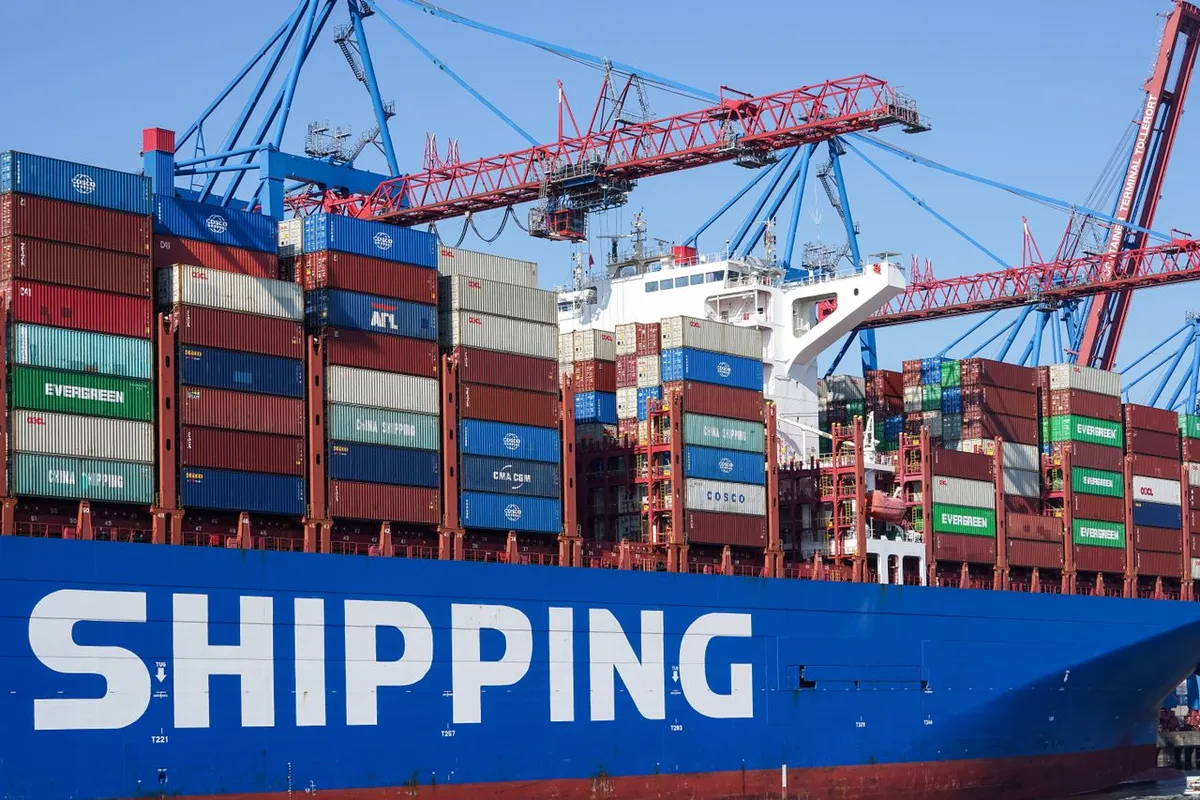
How Does International Trade Work
The products people buy every day often have a global story behind them.
A smartphone may be designed in one country, contain components from several others, be assembled somewhere else, and then sold to customers around the world. A car can follow a similar path, with parts crossing borders several times before the finished vehicle reaches a customer.
This is the modern system of international trade.
Countries exchange goods and services because they have different natural resources, technologies, skills, production costs, and consumer needs. Businesses use international markets to find customers and suppliers beyond their home countries.
The World Trade Organization (WTO) tracks both merchandise trade and trade in commercial services, showing how broad the modern trading system has become. (World Trade Organization)
In simple terms:
International trade is the buying and selling of goods and services across national borders.
Understanding how this system works helps explain everything from the price of imported products to exchange rates, tariffs, supply chains, and economic growth.
International Trade in One Simple Example
Imagine a company in the United States wants to sell coffee machines.
The company might:
- Design the machine in the United States.
- Purchase electronic components from suppliers overseas.
- Manufacture or assemble the machine in another country.
- Ship the finished product internationally.
- Import the machines into the United States.
- Sell them through retailers or online platforms.
Money moves in the opposite direction.
Customers pay retailers, retailers pay distributors or manufacturers, and international suppliers receive payments for the components or products they provide.
This illustrates an important point:
International trade is not simply one country selling something to another. It is a network of businesses, suppliers, financial institutions, governments, transport companies, and customers.
This is closely connected to the concept of globalization, which describes the broader economic connections created by trade, investment, technology, and supply chains. Economic Reader explains this relationship in its guide to What Is Globalization?.
Imports and Exports: The Two Sides of Trade
The basic language of international trade is straightforward.
An export is a good or service sold to a customer in another country.
For example, if a company in Japan sells machinery to a business in Germany, Japan is exporting the machinery.
An import is a good or service purchased from another country.
In the same example, Germany is importing the machinery.
A country can be both an importer and exporter at the same time.
For instance, a country may export agricultural products while importing energy, machinery, electronics, or software.
Why Don’t Countries Produce Everything Themselves?
At first, it might seem logical for every country to produce everything its population needs.
In practice, that would usually be inefficient.
Countries differ in:
- Natural resources
- Climate
- Labor costs and skills
- Technology
- Infrastructure
- Capital
- Production capabilities
These differences create opportunities for specialization.
Comparative Advantage
One of the most important ideas behind international trade is comparative advantage.
A country has a comparative advantage when it can produce a particular good or service at a lower opportunity cost than another country.
For example, one country may be particularly efficient at producing agricultural products while another has stronger capabilities in advanced manufacturing.
Trade allows each country to specialize to some degree and exchange what it produces for products and services produced elsewhere.
This does not mean every country specializes in only one industry. Modern economies usually export and import across many sectors.
What Actually Happens When a Product Crosses a Border?
International trade involves much more than moving a box from one country to another.
A typical transaction can involve the following chain:
Buyer → Seller → Financing → Documentation → Customs → Transportation → Importer → Distribution → Customer
Each stage can affect the final price and delivery time.
1. A Business Finds a Foreign Supplier or Customer
Trade can begin when a company wants to:
- Sell products overseas
- Purchase raw materials
- Find cheaper or specialized inputs
- Access technology
- Enter a new market
2. The Commercial Agreement Is Made
The buyer and seller agree on important details such as:
- Product specifications
- Quantity
- Price
- Delivery arrangements
- Payment terms
International contracts may also specify who is responsible for transportation, insurance, customs, and other costs.
3. Payment Is Arranged
International transactions often involve banks and financial institutions.
Depending on the transaction, businesses may use:
- Bank transfers
- Letters of credit
- Trade finance
- Other payment arrangements
Currency conversion can also be necessary when the buyer and seller use different currencies.
4. Goods Are Prepared for Shipment
The exporter prepares the products and required documentation.
This may involve:
- Commercial invoices
- Shipping documents
- Certificates
- Customs information
- Product-specific regulatory requirements
5. Goods Cross the Border
Products may travel by:
- Container ships
- Air freight
- Trucks
- Rail
- A combination of several methods
Modern global trade therefore depends heavily on logistics and supply-chain infrastructure.
If you want to understand that part in more detail, see Economic Reader’s guide to What Is Supply Chain?.
6. Customs and Import Requirements Are Completed
When goods arrive in another country, customs authorities may check:
- Product declarations
- Country of origin
- Applicable tariffs
- Regulatory requirements
- Documentation
Once the required procedures are completed, the goods can enter the domestic market.
7. Products Reach Businesses and Consumers
Imported products may then move through:
Importer → Distributor → Retailer → Consumer
For digital services, the process can look very different because the product may cross borders electronically rather than physically.
International Trade Is More Than Physical Products
Trade is often associated with containers full of goods, but services are increasingly important.
Trade in Goods
Examples include:
- Cars
- Electronics
- Machinery
- Food
- Clothing
- Oil
Trade in Services
Examples include:
- Banking
- Tourism
- Consulting
- Transportation
- Insurance
- Software services
Digitally Delivered Services
Technology has made it possible for businesses to sell services internationally without physically shipping a product.
Examples include:
- Cloud software
- Online consulting
- Digital design
- Remote professional services
- Online education
The WTO separately tracks commercial services and digitally delivered services, reflecting their growing importance in global commerce. (World Trade Organization)
Where Do Governments Enter the Picture?
International trade is not controlled entirely by private businesses.
Governments establish rules that influence what can enter and leave their economies.
These may include:
- Tariffs
- Import quotas
- Product standards
- Licensing requirements
- Health and safety rules
- Environmental regulations
- Export controls
The WTO provides the international framework for many of the rules governing trade between nations, while individual governments maintain their own trade policies. (World Trade Organization)
How Tariffs Change International Trade
A tariff is a tax imposed on imported goods.
Suppose a government places a tariff on imported steel.
The importer may face a higher cost.
That additional cost could then affect:
Tariff → Higher import cost → Higher business cost → Possible price increase
But the outcome is not always identical.
A business might instead:
- Absorb some of the cost
- Find another supplier
- Reduce its profit margin
- Switch to domestic production
- Increase the price charged to customers
This is why trade policy can affect businesses, consumers, and producers in different ways.
The Role of Exchange Rates
Currency values are another important part of international trade.
Imagine a U.S. company imports machinery priced in euros.
If the euro becomes more expensive relative to the dollar, the machinery may cost more in dollar terms.
Similarly, a weaker domestic currency can sometimes make a country’s exports more price-competitive abroad, although the final effect depends on many factors.
Exchange rates therefore influence:
- Import costs
- Export competitiveness
- Business profits
- Consumer prices
- International investment decisions
Trade Surplus and Trade Deficit
A country’s trade balance compares the value of its exports and imports over a particular period.
A country has a trade surplus when the value of its exports exceeds the value of its imports.
Exports > Imports
A country has a trade deficit when the value of its imports exceeds the value of its exports.
Imports > Exports
A trade deficit does not automatically mean an economy is failing.
The meaning depends on the wider economic situation, including investment, savings, capital flows, domestic demand, and the types of goods and services being traded.
This is one reason trade statistics should be interpreted alongside broader economic indicators such as GDP. Economic Reader’s guide to What Is GDP? provides more context on how net exports fit into national economic measurement.
Why International Trade Matters to Businesses
For businesses, international trade can change the size and structure of their opportunities.
Larger Markets
A company that sells only domestically is limited to customers in its home market.
Exporting can provide access to millions of additional customers.
Access to Inputs
Businesses can purchase raw materials, components, technology, and services from international suppliers.
Greater Specialization
Companies can focus on activities where they are particularly efficient while sourcing other inputs from elsewhere.
More Competition
International markets also create stronger competition.
Domestic companies may need to improve:
- Product quality
- Pricing
- Technology
- Customer service
- Efficiency
How International Trade Affects Consumers
Consumers experience international trade constantly, often without realizing it.
Trade can provide access to:
- More products
- Different brands
- Foreign foods
- Advanced technology
- International services
Competition between domestic and international businesses can also put pressure on companies to improve value and efficiency.
However, consumers can also face higher prices when tariffs, transportation costs, currency movements, or supply disruptions increase the cost of imported goods.
The Hidden System Behind Global Trade
One of the most important features of modern trade is the rise of global value chains.
A product does not necessarily have one country of origin in the simple sense that consumers might imagine.
Different stages of production can occur in different countries:
Raw materials → Components → Manufacturing → Assembly → Distribution → Final customer
The World Bank notes that global value chains have played a major role in economic development and that almost half of global trade involves these interconnected production networks. (World Bank)
This explains why a disruption in one country can sometimes affect businesses thousands of miles away.
What Can Disrupt International Trade?
Global trade can be affected by events far beyond the control of individual companies.
Supply Chain Disruptions
Problems with ports, shipping, production, or transportation can delay goods.
Geopolitical Conflicts
Political tensions can change trade routes, restrictions, and business decisions.
Natural Disasters
Floods, storms, droughts, and earthquakes can interrupt production and transportation.
Trade Policy Changes
New tariffs, export controls, or regulations can change the economics of international transactions.
Global Economic Slowdowns
When consumers and businesses reduce spending, demand for imported and exported products can decline.
Recent World Bank analysis highlights how global trade continues to adapt to shocks, policy uncertainty, supply-chain pressures, and structural changes in global value chains. (World Bank)
International Trade and Economic Growth
Trade can contribute to economic growth by allowing businesses to reach larger markets, encouraging specialization, supporting investment, and increasing access to goods and technology.
The World Bank describes trade as an important engine of growth and economic opportunity, particularly for developing economies. (World Bank)
However, trade does not guarantee that every person, business, or region benefits equally.
Some industries may expand because of increased exports, while others may face stronger competition from imported products.
This means governments often have to balance the benefits of open trade with policies that help workers, businesses, and communities adjust to economic change.
A Real-World Example: The Global Smartphone
Consider a smartphone.
Its journey may involve:
- Raw materials sourced from several countries
- Semiconductor production in specialized manufacturing centers
- Software development in another country
- Final assembly elsewhere
- International shipping
- Retail distribution across multiple markets
The finished phone may be sold in dozens of countries.
This single product demonstrates why international trade is closely connected to:
Technology + Manufacturing + Logistics + Finance + Consumer Demand
How International Trade Is Changing
The global trading system continues to evolve.
Three trends are particularly important.
Digital Trade
Businesses can increasingly sell services internationally through digital platforms.
More Resilient Supply Chains
Companies are paying greater attention to supplier diversification, inventory planning, and alternative production locations.
AI and Trade
Artificial intelligence can improve:
- Demand forecasting
- Logistics
- Inventory management
- Fraud detection
- Trade documentation
- Business decision-making
Technology is therefore changing not only what countries trade, but also how trade is organized.
Frequently Asked Questions
1. How does international trade work in simple terms?
International trade works by allowing businesses and countries to buy and sell goods and services across borders. The process can involve contracts, payments, transportation, customs, tariffs, and distribution.
2. What is the difference between imports and exports?
Exports are goods or services sold to foreign customers. Imports are goods or services purchased from foreign suppliers.
3. Why do countries trade with each other?
Countries trade because they have different resources, technologies, skills, production capabilities, and costs. Trade allows them to specialize and access products they may not produce as efficiently themselves.
4. How do tariffs affect international trade?
Tariffs increase the cost of imported goods. Businesses may respond by raising prices, changing suppliers, reducing margins, or adjusting production.
5. Is international trade good for an economy?
International trade can support economic growth, business expansion, specialization, consumer choice, and access to resources. However, it can also create adjustment costs and expose economies to external shocks.
Final Thoughts
International trade is much more than goods moving between countries.
It is a system connecting:
- Businesses
- Consumers
- Governments
- Banks
- Manufacturers
- Suppliers
- Shipping companies
- Digital service providers
A product can cross several borders before reaching the final customer, while money, information, and services move across borders alongside it.
That interconnected system creates enormous economic opportunities, but it also means that disruptions in one part of the world can spread through global markets.
For businesses, understanding international trade is essential for managing suppliers, entering new markets, controlling costs, and responding to global risks.
For consumers and investors, it provides a clearer picture of why exchange rates, tariffs, shipping costs, trade policies, and international economic conditions can influence everyday prices and business performance.
International trade is one of the mechanisms that turns separate national economies into an interconnected global economy.
Continue Learning…
If you’d like to explore this topic further, check out these related guides from Economic Reader:
- How El Niño Affects Global Business? – Supply Chains, Business Risks, and Strategies.
- How Investors Should Prepare for a Recession? – Strategies for Managing Risk and Protecting Wealth.
Author Note: This article is crafted by “The Economic Reader editorial team”, dedicated to analyzing the latest market trends, financial updates, and global economic shifts to keep you informed with accurate and comprehensive insights.
Disclaimer: The information provided on this website is for educational and informational purposes only and should not be construed as professional financial, investment, or legal advice. Always consult with a certified financial advisor or professional before making any financial decisions based on this content.