
Oil Market Weekly Update: September 14-18, 2026
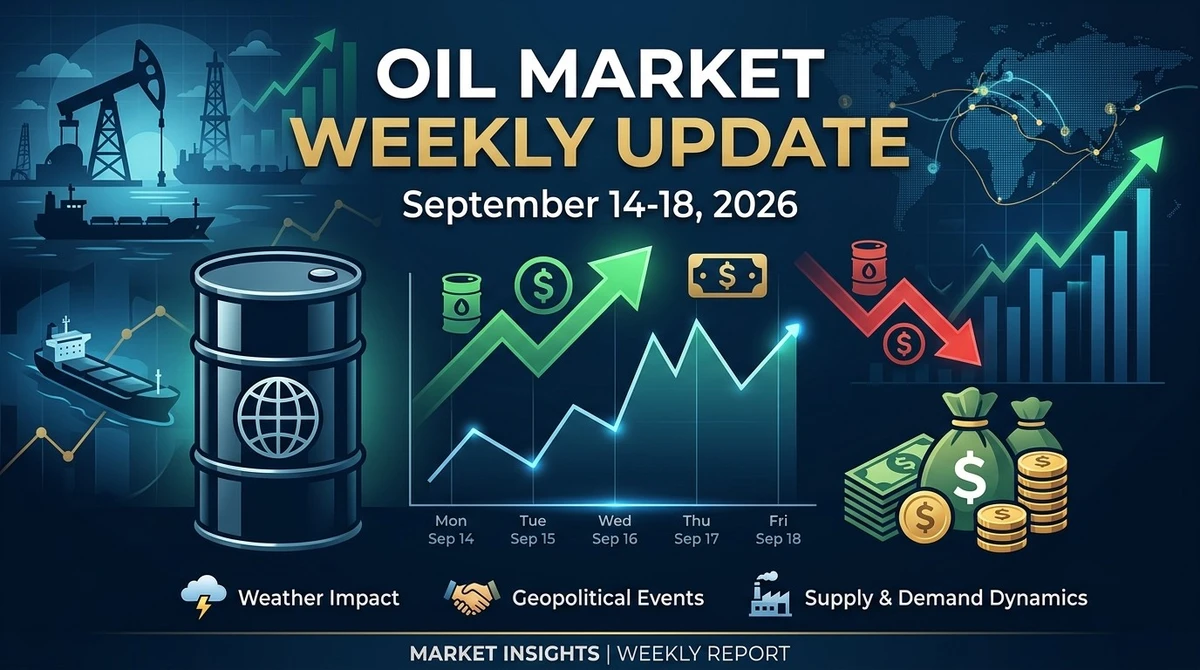
Oil Market Weekly Update: September 14-18, 2026
Oil markets experienced another highly volatile week from September 14-18, 2026. Crude prices initially jumped as attacks on Saudi energy infrastructure and shipping routes increased concerns about global supply. Brent moved above $107 a barrel early in the week, while WTI climbed above $102. (Investing.com)
But the rally did not last.
By Friday, reports that Saudi Arabia was finding alternative ways to move crude, combined with easing concerns about immediate supply shortages, pushed prices lower for a third consecutive session. WTI settled at $100.30 a barrel, while Brent ended at $103.87. (Reuters)
The result was a week that looked very different depending on which day investors were watching.
Supply Risk Sent Oil Prices Higher
The week began with the market focused heavily on supply.
New attacks on Saudi energy infrastructure and ships in the Middle East raised concerns about how much crude could reach international markets. On Monday, Brent futures were up more than 2% during trading, while WTI also climbed more than 2%. (Investing.com)
The concern was not simply about one damaged facility or one disrupted shipment. Oil markets are highly sensitive to the possibility that transportation routes or export infrastructure could remain unavailable for an extended period.
That risk premium quickly became visible in crude prices.
Saudi Arabia Became the Week’s Key Supply Story
The market began to change direction when evidence emerged that Saudi Arabia could move additional crude through alternative routes.
On Wednesday, Reuters reported that Saudi Arabia was offering additional crude cargoes through Oman. At the same time, U.S. crude inventories showed a smaller-than-expected draw, giving traders another reason to reduce their immediate supply concerns. (Reuters)
Brent fell $2.92, or 2.7%, that day to settle at $105.83. WTI dropped $3.40, or 3.2%, to $102.43. (Reuters)
That reversal demonstrated how quickly an oil-market risk premium can disappear when traders see evidence that physical supply may continue reaching buyers.
Oil Stayed Above $100 Despite the Pullback
The decline did not mean the supply situation had returned to normal.
On Thursday, both major benchmarks fell roughly 1%, but remained above $100 a barrel as traders continued weighing supply disruptions against reports of additional Saudi crude reaching the market. (Reuters)
By Friday, Brent and WTI fell again. Reuters reported that Brent was heading for its first weekly loss in three weeks, while concerns about Saudi supply disruptions continued to ease. (Euronext Live)
Yet the closing prices remained historically high relative to recent levels.
WTI finished the week at $100.30, recording a small 0.2% weekly gain, while Brent settled at $103.87, down about 0.7% for the week. (The Wall Street Journal)
So the week’s real story was not simply that oil rose or fell. It was that prices remained around the $100 level even after some of the immediate supply fears weakened.
The $100 Oil Price Matters Beyond Energy Markets
Oil at or above $100 has implications well beyond the commodity market.
Higher crude prices can increase gasoline, diesel, transportation and production costs. If the increase persists, it can also contribute to broader inflation pressure.
That creates a difficult environment for central banks.
The Federal Reserve raised its target federal funds rate by 25 basis points during the week to 3.75%-4.00%, while continuing to describe inflation as elevated. (Reuters)
Oil therefore became part of the broader interest-rate story. A temporary oil spike may have a limited effect, but a prolonged supply disruption could make inflation more persistent and complicate monetary-policy decisions.
Oil and Gold Told Different Stories
The week’s oil reversal also influenced other markets.
When crude prices rose sharply earlier in the week, concerns about inflation and interest rates pressured gold. Later, as oil prices eased, some of that pressure faded and gold recovered.
That relationship highlights why oil is such an important macroeconomic variable. A change in crude prices can affect inflation expectations, interest rates, currencies, bonds and commodities at the same time.
The oil market was therefore not operating in isolation.
The Supply Problem Has Not Disappeared
Despite the Friday decline, several risks remain.
The Strait of Hormuz continues to face major restrictions, while Saudi Arabia’s damaged East-West pipeline remains an important concern for international crude flows. Reuters reported that the pipeline disruption had affected deliveries and that the timing of repairs remained uncertain. (Reuters)
At the same time, efforts to reroute Saudi crude and increased fuel exports from China have helped reduce some immediate concerns about shortages. (Euronext Live)
This leaves the market focused on a simple but difficult question: how long will the supply disruptions last?
What to Watch Next Week
The oil market will likely remain highly sensitive to developments affecting physical supply.
Key factors include:
- Saudi pipeline repairs and alternative export routes
- Strait of Hormuz shipping activity
- Attacks on oil infrastructure and vessels
- U.S. crude and refined-product inventories
- Brent and WTI price action around the $100 level
- Inflation expectations and central-bank policy
- Any diplomatic developments that could reduce supply risks
The market will also be watching whether the recent decline is simply a correction after a sharp rally or the beginning of a more sustained easing in the risk premium.
What This Week Revealed
This week’s oil market showed how quickly crude prices can move when physical supply becomes uncertain.
Prices surged at the start of the week as attacks raised concerns about Saudi exports and regional shipping. They then reversed as alternative supply routes and easing shortage fears gave traders more confidence that crude could continue reaching the market. (Reuters)
Yet oil still finished around $100 a barrel, meaning the market remains far from a completely comfortable supply environment.
The next move will depend less on the size of this week’s price swing and more on whether the underlying disruptions continue. If supply flows improve, the risk premium could continue to fade. If disruptions deepen, crude could come under renewed upward pressure. Oil markets experienced another highly volatile week from September 14-18, 2026. Crude prices initially jumped as attacks on Saudi energy infrastructure and shipping routes increased concerns about global supply. Brent moved above $107 a barrel early in the week, while WTI climbed above $102. (Investing.com)
But the rally did not last.
By Friday, reports that Saudi Arabia was finding alternative ways to move crude, combined with easing concerns about immediate supply shortages, pushed prices lower for a third consecutive session. WTI settled at $100.30 a barrel, while Brent ended at $103.87. (Reuters)
The result was a week that looked very different depending on which day investors were watching.
Click here to watch last week Oil Market Weekly Update: September 7-11, 2026.