
What Is a Crypto Wallet? Understanding Digital Asset Storage in 2026
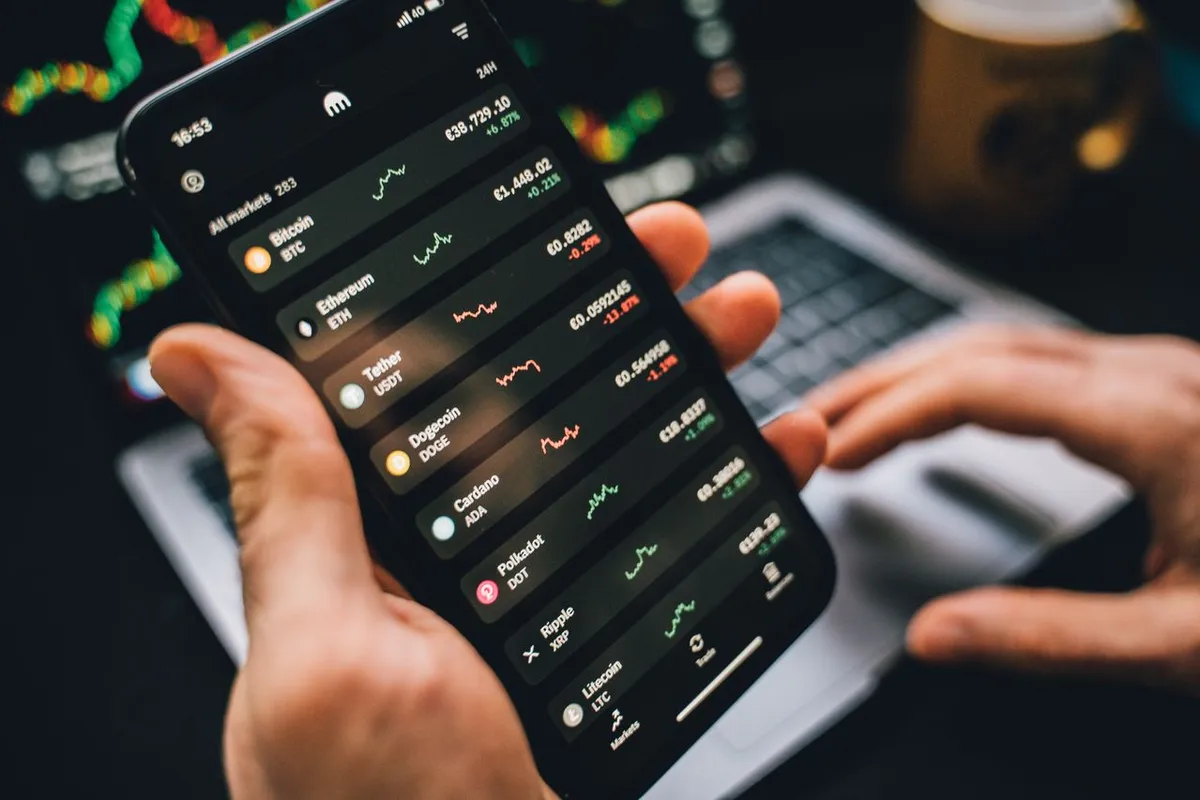
Buying cryptocurrency is only the beginning.
Once you own Bitcoin, Ethereum, or another digital asset, an important question follows: Where is it stored, and who controls access to it?
That is where a crypto wallet comes in.
A crypto wallet is a software application, hardware device, or other tool that allows you to access and manage digital assets through cryptographic keys. Despite the name, a wallet does not literally store cryptocurrency inside the device. The assets remain recorded on a blockchain, while the wallet manages the keys used to authorize transactions. (Investor.gov)
That makes crypto wallets different from physical wallets and traditional bank accounts.
The most important question is not simply which wallet you use. It is who controls the keys, how those keys are protected, and what happens if access is lost or compromised.
What Is a Crypto Wallet?
A crypto wallet is a tool for interacting with blockchain-based assets.
It can be:
- A mobile app
- A desktop application
- A browser extension
- A hardware device
- A wallet service connected to a cryptocurrency exchange
Wallets manage the cryptographic information that allows users to receive, send, and control digital assets.
For example, an Ethereum wallet can let users view balances, send transactions, and connect to decentralized applications. Ethereum describes wallets as interfaces for accessing accounts and interacting with applications rather than containers that physically hold cryptocurrency. (Ethereum)
This distinction is important:
Your cryptocurrency is recorded on the blockchain. Your wallet gives you the ability to control it.
Economic Reader’s What Is Blockchain? explains the distributed-ledger technology that records these transactions and ownership relationships.
How Does a Crypto Wallet Work?
Three concepts help explain how wallets work:
Address → Public information → Private key
A wallet address is information that can generally be shared with someone who wants to send you cryptocurrency.
A private key is secret information used to authorize transactions.
The public and private parts of the system serve different purposes. The SEC explains that the public key can be used to verify transactions and receive assets, while the private key authorizes transactions. (Investor.gov)
You can therefore share your wallet address.
You should never share your private key.
A simple way to remember the difference is:
Public address = where someone can send crypto.
Private key = what gives control over the crypto.
That distinction becomes critical when thinking about wallet security.
Does a Crypto Wallet Actually Store Cryptocurrency?
Not in the traditional sense.
The blockchain records ownership and transactions. The wallet manages the cryptographic credentials needed to interact with those records.
The SEC’s investor guidance specifically notes that crypto wallets do not store the crypto assets themselves; they store the private keys or passcodes that provide access to those assets. (Investor.gov)
This explains why losing a device does not necessarily mean losing the cryptocurrency.
If the wallet can be restored using the correct recovery information, access may be recovered on another device.
But if the private key or recovery phrase is permanently lost, access to the assets may also be permanently lost.
That makes wallet management fundamentally different from forgetting a password to a normal online account.
Hot Wallets vs. Cold Wallets
One of the main ways to classify wallets is by whether the keys are connected to the internet.
Hot Wallets
A hot wallet is connected to the internet.
Examples include:
- Mobile wallets
- Browser wallets
- Desktop wallets
- Web-based wallets
Their main advantage is convenience.
They are useful when users frequently send transactions, interact with decentralized applications, or move between different blockchain services.
The trade-off is greater exposure to online threats.
A compromised device, malicious browser extension, phishing attack, or other security problem can potentially expose wallet credentials.
Cold Wallets
A cold wallet generally keeps private keys offline.
Hardware wallets are the best-known example.
Keeping keys offline can reduce exposure to certain online attacks, which is why cold storage is often considered for longer-term holdings. But physical security still matters: a hardware device can be lost, damaged, or stolen.
The SEC similarly describes hot wallets as convenient but more exposed to cyber threats, while cold wallets generally provide greater protection from online attacks at the cost of convenience. (Investor.gov)
So the choice is not simply:
Hot = good
Cold = better
It is a trade-off between accessibility and security.
Custodial vs. Self Custody Wallets
An even more important distinction is who controls the private keys.
Self-Custody
With self-custody, you control the private keys.
This gives you direct control over the assets and allows you to interact with blockchain applications without relying on an exchange to authorize every transaction.
But control comes with responsibility.
If you lose the private keys or recovery phrase, there may be no company that can restore access for you.
The SEC warns that self-custody means taking responsibility for protecting private keys and recovery information, and losing those credentials can result in permanent loss of access. (Investor.gov)
Third-Party Custody
With third-party custody, another organization controls the private keys.
A cryptocurrency exchange is a common example.
You may simply log into an account using a password and two-factor authentication while the exchange handles the underlying custody.
That can be easier for beginners.
But it also creates counterparty risk.
If the custodian is hacked, shuts down, restricts withdrawals, or experiences financial problems, access to your assets could be affected.
This is why an exchange account and a self-custody wallet should not be treated as identical.
Crypto Exchange vs. Crypto Wallet
The distinction can become confusing because many exchanges provide wallet functionality.
An exchange primarily provides a marketplace for buying, selling, and trading digital assets.
A self-custody wallet primarily gives the user control over private keys and the ability to interact directly with blockchain networks.
The practical difference is control.
When an exchange holds your crypto, the exchange generally controls the relevant private keys.
When you use a self-custody wallet, you control them yourself.
The right choice depends on how much convenience and direct control you want.
What Is a Seed Phrase?
Many self-custody wallets generate a seed phrase, also called a recovery phrase or mnemonic phrase.
It is a sequence of words that can be used to restore access to a wallet.
That makes it one of the most sensitive pieces of information in crypto.
If your phone or hardware wallet is lost, a properly protected recovery phrase may allow you to restore the wallet.
But if another person obtains the phrase, they may be able to gain control of the assets connected to it.
Ethereum’s security guidance describes the recovery phrase as the master key to a wallet and warns users never to share it with another person, website, or supposed support agent. (Ethereum)
What You Should Never Do With a Seed Phrase
Never:
- Send it to another person
- Enter it into an unfamiliar website
- Give it to customer support
- Store it in a public cloud document
- Post a screenshot online
- Share it with someone offering to recover lost crypto
Ethereum also warns against taking screenshots of recovery phrases because they may be synchronized to cloud services and become accessible to attackers. (Ethereum)
The basic rule is simple:
Treat your seed phrase like the master key to your digital assets.
What Can You Do With a Crypto Wallet?
A wallet is more than a storage interface.
Depending on the blockchain and wallet, it can allow you to:
Send and Receive Crypto
You can send cryptocurrency to another blockchain address or receive assets from someone else.
But transactions require care.
Blockchain transactions are often difficult or impossible to reverse, so users need to verify the receiving address and the network before sending funds. Ethereum’s wallet guidance specifically recommends checking transaction details carefully because transactions cannot simply be reversed.
Connect to Decentralized Applications
Wallets can also act as gateways to decentralized applications, often called dApps.
For example, a wallet may connect to:
- Decentralized exchanges
- Lending platforms
- NFT marketplaces
- Blockchain games
- Other Web3 applications
This makes the wallet an interface between the user and the blockchain rather than simply a place to view a balance.
Manage Digital Assets
Some wallets support multiple tokens and networks.
However, compatibility varies.
A wallet designed primarily for one blockchain may not support every asset or network. Sending an asset through an unsupported network can create serious problems.
Users should therefore confirm network compatibility before transferring funds.
Why Wallet Security Matters
Traditional financial accounts usually provide several recovery mechanisms.
If you forget your online-banking password, your bank can normally verify your identity and restore access.
Self-custody crypto works differently.
The private key is the authority.
That changes the economics of security.
You gain more direct control, but you also assume more responsibility.
Basic precautions include:
- Use strong device security
- Enable multi-factor authentication where available
- Keep recovery information offline and secure
- Download wallet software from legitimate sources
- Verify wallet addresses before sending
- Be cautious with unfamiliar links and applications
- Keep long-term holdings separate from wallets used for frequent transactions
Ethereum’s current security guidance places particular emphasis on phishing, recovery phrases, private keys, and hardware-wallet protection. (Ethereum)
Phishing Can Be More Dangerous Than the Technology
Crypto theft does not always require breaking the underlying blockchain.
Sometimes attackers simply trick the user.
A fake wallet website may look legitimate.
A fraudulent support account may ask for a recovery phrase.
A malicious application may request permission to interact with assets.
A fake transaction may appear ordinary while actually transferring assets to an attacker.
This makes user behavior an important part of wallet security.
Even highly sophisticated cryptography cannot protect a user who voluntarily gives an attacker the private information needed to control the wallet.
Which Type of Wallet Makes Sense?
There is no universal answer.
The appropriate setup depends on how you use cryptocurrency.
For Frequent Transactions
A hot wallet can be more convenient because it provides quick access to applications and blockchain networks.
For Long-Term Holdings
Cold storage may make more sense when minimizing online exposure is the priority.
For Beginners
Third-party custody through a reputable exchange can be easier to understand initially because account access and recovery may resemble familiar online services.
The trade-off is that the user does not directly control the underlying private keys.
For Advanced Users
Self-custody provides greater direct control and access to decentralized applications, but requires greater technical and security responsibility.
The important relationship is:
Convenience ↔ Control ↔ Security ↔ Responsibility
Increasing one can sometimes require accepting trade-offs in another.
What Does a Crypto Wallet Cost?
Many software wallets can be downloaded without an upfront purchase.
Hardware wallets generally cost money to buy.
But the wallet itself is only part of the cost.
Users may also encounter:
- Blockchain network fees
- Swap fees
- Withdrawal fees
- Currency-conversion costs
- Exchange fees
- Hardware costs
The SEC advises investors to consider both the cost of the wallet and transaction-related fees when evaluating custody options. (Investor.gov)
A “free” wallet therefore does not necessarily mean that using the overall crypto infrastructure is free.
What Is Changing for Crypto Wallets in 2026?
Wallets are increasingly becoming broader interfaces for digital assets rather than simple storage tools.
Ethereum’s current wallet ecosystem includes mobile, browser, desktop, and hardware options, reflecting the range of ways users can interact with blockchain networks. (Ethereum)
Wallets can now connect users to decentralized finance, NFTs, gaming, tokenized assets, and other blockchain applications.
That means the wallet is becoming an important layer between users and the broader digital economy.
For example, an NFT is not simply an image stored inside a wallet. The wallet can control the blockchain account associated with ownership of the token.
Similarly, tokenized assets can use blockchain accounts and cryptographic authorization as part of their ownership and transfer mechanisms.
The wallet therefore becomes part of the infrastructure of digital ownership.
The Economic Trade Off Behind Crypto Wallets
The wallet decision ultimately involves several competing priorities.
Convenience: How easily can you access and use your assets?
Control: Who controls the private keys?
Security: How exposed are the keys to online and physical threats?
Responsibility: Who deals with a lost key or compromised account?
Cost: What do the wallet and transactions cost?
There is no setup that maximizes all five.
Third-party custody can improve convenience but creates dependence on another organization.
Self-custody provides greater control but transfers security responsibility to the user.
Hot wallets provide easier access but greater online exposure.
Cold wallets can reduce online exposure but are less convenient for frequent transactions.
Understanding these trade-offs is more useful than simply asking which wallet is “best.”
A Crypto Wallet Is Really a Control Tool
The easiest way to understand a crypto wallet is to stop thinking of it as a digital version of a physical wallet.
It is better understood as a control and authorization tool.
The blockchain records the assets.
The public address identifies where assets can be sent.
The private key authorizes transactions.
The wallet provides the interface through which users manage those credentials and interact with the network.
Once this distinction is clear, many crypto concepts become easier to understand.
It also explains why custody matters so much.
If another organization controls the private keys, you are relying on that custodian.
If you control the keys yourself, you have greater direct control but also greater responsibility.
The Bottom Line
A crypto wallet does not physically hold Bitcoin, Ethereum, or other digital assets. It manages the cryptographic keys that allow users to access and control blockchain-based assets.
The most important distinctions are:
- Hot vs. cold: online convenience versus reduced online exposure
- Custodial vs. self-custody: someone else controls the keys versus you controlling them
- Public address vs. private key: information that can generally be shared versus information that must remain secret
- Exchange vs. wallet: trading platform versus a tool for controlling and interacting with blockchain assets
For beginners, the biggest mistake is treating a crypto wallet as simply an app that “stores coins.”
The more important questions are:
Who controls the keys?
How are those keys protected?
What happens if they are lost or compromised?
Those questions get to the heart of digital-asset ownership in 2026.
As cryptocurrency expands into decentralized applications, tokenized assets, gaming, and other parts of the digital economy, wallets are becoming an increasingly important layer between users and blockchain networks.
Understanding how they work and the trade-offs between convenience, control, security, and responsibility is therefore essential before deciding where and how to hold digital assets.