Smart Investing in a High Rate Environment: Stocks vs. Bonds vs. Cash Alternatives

Smart Investing in a High Rate Environment
For years, investors could look at cash as money waiting to be invested and bonds as the conservative part of a portfolio. When interest rates rise, that simple framework changes.
Cash and short-term government securities can begin generating meaningful income. Bonds can offer higher yields than they did when rates were near zero. At the same time, stocks have to compete with those yields while still offering the possibility of long-term growth.
That creates a different investment decision.
The question is no longer simply whether stocks, bonds, or cash are “better.” It is what role each asset can play when interest rates are high and the cost of waiting has changed.
As of September 2026, the Federal Reserve’s target federal funds rate is 3.75% to 4.00%, following a 25-basis-point increase on September 16. Inflation also remains above the Fed’s 2% longer-run goal: August CPI increased 3.4% from a year earlier. (Federal Reserve)
That combination makes the trade-off between growth, income, liquidity, and capital preservation especially important.
Why Higher Rates Change the Investing Equation
Interest rates affect more than borrowing costs.
When short-term rates rise, the return available from relatively low-risk assets can rise too. That changes the opportunity cost of holding stocks or other riskier investments.
The Federal Reserve explains that changes in the federal funds rate influence other short-term interest rates, which then affect household and business spending and broader economic activity. (Federal Reserve)
For investors, the effect is more direct.
Suppose an investor can earn a competitive yield from a short-term Treasury security. A stock now has to offer enough potential upside to justify taking additional business and market risk.
That does not mean stocks become unattractive.
It means the hurdle for taking risk changes.
A high-rate environment therefore makes portfolio construction less about finding one winning asset and more about deciding how much capital should be:
- Available for near-term needs
- Generating relatively predictable income
- Exposed to long-term growth
- Protected from unnecessary interest-rate or market risk
Cash Is No Longer Just Money Sitting on the Sidelines
When cash earns little or no interest, holding a large cash balance can have a significant opportunity cost.
A higher-rate environment changes that.
Savings accounts, money-market products, Treasury bills, certificates of deposit, and similar instruments can provide income while keeping money relatively accessible.
U.S. Treasury data showed the 13-week Treasury bill equivalent yield at about 4.08% on September 24, 2026. The Treasury’s published yield curve also showed rates around 4.01% at three months and 4.87% at one year.
These yields can make short-term instruments useful for investors who need capital within a relatively short period.
But cash still has a weakness.
Its nominal value may remain stable while its purchasing power changes.
With U.S. CPI rising 3.4% over the year through August 2026, a nominal yield needs to be considered alongside inflation and taxes. (Bureau of Labor Statistics)
So the relevant question is not simply:
“How much interest am I earning?”
It is:
“How much purchasing power am I preserving after inflation and taxes?”
Bonds Become More Competitive When Yields Rise
Higher interest rates can make newly issued bonds more attractive because investors can lock in higher yields than were available in a low-rate environment.
But bonds are more complicated than simply “rates are high, so bonds are good.”
The maturity of the bond matters.
A short-term Treasury and a 20-year Treasury can react very differently to changes in interest rates.
Longer-duration bonds generally have greater sensitivity to changes in market yields. If market rates rise after an investor purchases a long-term bond, the market value of that existing bond can fall.
The opposite can also happen.
If rates decline, existing bonds with higher coupons can become more valuable.
That creates an important distinction between income today and price sensitivity tomorrow.
Investor.gov also notes that bond investors can diversify by maturity and by issuer type, while recognizing that different bonds carry different risks. (Investor.gov)
Stocks Have to Compete with Safer Yields
Stocks represent ownership in businesses, so their long-term return potential comes from factors such as earnings growth, cash generation, dividends, and changes in valuation.
But stocks also carry substantially more uncertainty than short-term government securities.
When short-term yields are low, investors may accept that uncertainty because the alternative return from cash is limited.
When short-term yields are meaningfully higher, the comparison becomes harder to ignore.
Imagine an investor deciding between a relatively stable 4%-5% short-term yield and a stock expected to produce a higher long-term return.
The stock may still make sense for long-term capital growth.
But the investor has to accept:
- Market volatility
- Business risk
- Valuation risk
- Possible losses over shorter periods
- Uncertainty about future earnings
This does not make the stock inferior.
It simply means the expected reward needs to compensate for the additional uncertainty.
The Hidden Risk of Staying in Cash Too Long
The attractiveness of cash can create another problem: reinvestment risk.
Short-term yields can change as monetary policy changes. An investor who keeps rolling short-term securities into new investments may see income fall if market rates decline.
There is also a longer-term opportunity cost.
Money that remains in cash for many years may miss the growth potential of assets such as stocks.
That does not make cash a poor investment.
It means cash has a specific job.
It can provide liquidity, protect money needed soon, and reduce the chance that an investor has to sell volatile assets during a market downturn. Investor.gov similarly identifies cash and cash equivalents as useful for liquidity and capital preservation while highlighting inflation as their key long-term risk. (Investor.gov)
The goal, therefore, is not to eliminate cash.
It is to avoid holding more cash than the portfolio’s actual needs require.
Short Term Bonds vs. Long Term Bonds
A high-rate environment makes maturity selection particularly important.
Short-term bonds and Treasury bills generally have less sensitivity to interest-rate changes than longer-duration bonds.
That can make them useful for money that may be needed relatively soon.
Long-term bonds introduce greater interest-rate sensitivity, but they can also lock in yields for longer periods.
For example, an investor buying a longer-term Treasury at an attractive yield may benefit if rates later decline. The bond’s market value could rise, although the outcome depends on the timing, maturity, and changes in market yields.
This creates two different approaches:
Short duration: prioritize liquidity and lower interest-rate sensitivity.
Long duration: accept greater price volatility in exchange for longer-term yield exposure and potential price gains if rates decline.
Neither is automatically better.
The appropriate choice depends on why the money is being invested.
What Cash Alternatives Actually Include
“Cash alternatives” can mean several different things.
Common examples include:
- Treasury bills
- Money-market funds
- Certificates of deposit
- High-yield savings accounts
- Short-term government securities
- Short-duration bond funds
These instruments do not all carry the same risks.
A Treasury bill is different from a bank deposit.
A money-market fund is different from a Treasury security.
A certificate of deposit has different liquidity characteristics from a savings account.
That means investors should look beyond the headline yield.
Important questions include:
- Is the principal guaranteed?
- Who issues the security?
- Can the investment lose market value?
- Is the money immediately accessible?
- Are there withdrawal penalties?
- What fees apply?
- How is the income taxed?
The highest advertised yield is not automatically the best choice if accessing the money is difficult or the additional return comes with additional risk.
Why Yield Alone Is Not the Right Comparison
Suppose three investments offer:
- 4.5% yield
- 5.0% yield
- 5.5% yield
It may seem obvious to choose 5.5%.
But the comparison is incomplete.
The 5.5% investment might involve greater credit risk, longer duration, lower liquidity, or higher fees.
The 4.5% Treasury security might provide a different combination of safety and liquidity.
The 5.0% bond might carry more credit risk.
The correct comparison is therefore risk-adjusted return, not headline yield.
This becomes particularly important when investors compare government securities with corporate bonds, money-market products, or other cash alternatives.
Taxes Can Change the Real Return
Taxes can significantly change the amount an investor actually keeps.
Two investments with the same stated yield can produce different after-tax outcomes depending on the investor’s tax bracket and the tax treatment of the income.
For U.S. investors, Treasury interest is generally subject to federal income tax but exempt from state and local income taxes. Other investments can have different tax characteristics.
That means the useful calculation is not:
Yield = return
It is closer to:
After-tax return = investment income minus applicable taxes and costs
For investors holding substantial amounts of fixed-income assets, tax treatment can become an important part of portfolio construction.
Inflation Still Matters
A high nominal yield does not automatically mean a high real return.
If an investment earns 4.5% and inflation is 3.4%, the simplified pre-tax real return is much smaller than the headline number.
That matters because the purpose of investing is not only to preserve a dollar balance.
It is to preserve or increase purchasing power over time.
August 2026 data showed headline CPI up 3.4% year over year and core CPI up 2.4%. Energy prices were particularly strong, rising 16.3% over the same period. (Bureau of Labor Statistics)
Economic Reader’s How Inflation Affects Your Money explains the broader relationship between inflation, purchasing power, savings, and investment returns.
For investors, this creates a useful distinction:
Cash and short-term securities can protect near-term capital while still exposing investors to inflation risk over longer periods.
That is one reason a long-term portfolio may still need assets with greater growth potential.
What Happens When Rates Eventually Fall?
The investment landscape can change quickly when rates decline.
Cash yields generally fall as short-term interest rates decline.
Existing bonds can become more valuable when market yields fall, particularly longer-duration bonds.
Stocks may also benefit from lower financing costs and changing valuation conditions, although economic growth and corporate earnings remain important.
This creates a timing problem.
An investor waiting for rates to fall before investing may discover that markets have already adjusted.
Trying to predict the exact turning point can therefore be less useful than building a portfolio that can function under multiple rate environments.
The goal is not necessarily to predict the next Fed decision.
It is to avoid building a portfolio that only works under one scenario.
Economic Reader’s Historical Fed Decisions provides additional context on how monetary-policy changes have affected financial markets during different economic periods.
The Role of Time Horizon
Time horizon can be more important than the current interest-rate headline.
Money needed within one year has a very different job from money intended for retirement 20 years from now.
For short-term goals, preserving capital and maintaining liquidity may matter more than maximizing long-term growth.
For long-term goals, holding too much cash can create a different problem: insufficient exposure to assets capable of growing faster than inflation over long periods.
Investor.gov similarly emphasizes that asset allocation should reflect an investor’s time horizon and risk tolerance. (Investor.gov)
That is why the same investor may reasonably hold:
- Cash for emergencies
- Short-term securities for near-term spending
- Bonds for income and diversification
- Stocks for long-term growth
The portfolio does not have to assign one asset a single permanent role.
Why Liquidity and Capital Preservation Matter
Liquidity is easy to underestimate during calm markets.
An investor may be comfortable owning a volatile stock until the money is suddenly needed.
If the stock has fallen 20% at exactly that moment, the investor may be forced to sell at an unfavorable price.
This is one reason cash and short-term securities can have value beyond their yield.
They provide optionality.
An investor with sufficient liquid assets may not need to sell long-term investments during a market decline.
That can make liquidity part of risk management rather than simply a low-return allocation.
Economic Reader’s What Is Risk Management in Investing? explores the broader role of diversification, concentration, liquidity, and managing investment risk.
A High Rate Portfolio Does Not Have to Pick One Asset
The biggest mistake in a high-rate environment may be treating the decision as a competition.
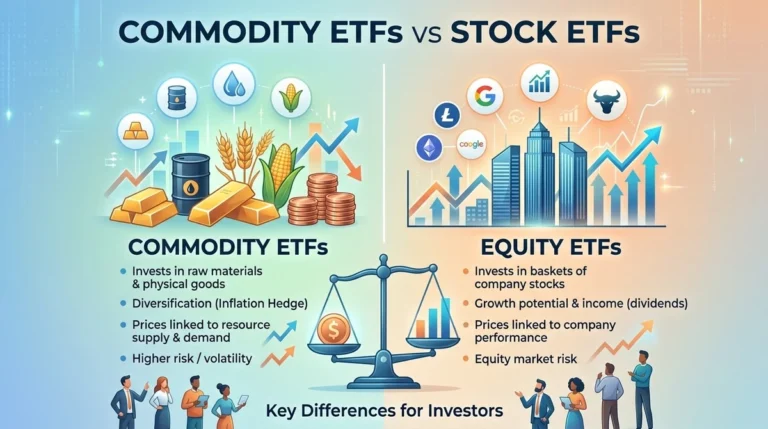
Stocks, bonds, and cash alternatives solve different problems.
| Asset | Primary role | Main opportunity | Main risk |
| Cash / cash alternatives | Liquidity and capital preservation | Current income | Inflation and reinvestment risk |
| Bonds | Income and diversification | Yield and potential price gains | Interest-rate and credit risk |
| Stocks | Long-term growth | Earnings and capital appreciation | Market and business risk |
The allocation can change according to the investor’s circumstances.
Someone saving for a home purchase in two years may need more liquidity.
Someone investing for retirement decades away may be more concerned about long-term purchasing power.
Someone already holding a large stock portfolio may use bonds and short-term securities differently from an investor whose portfolio is mostly cash.
The right allocation therefore depends partly on what the rest of the portfolio is already doing.
Investor.gov Asset Allocation and Diversification guide also emphasizes that there is no single allocation appropriate for every investor; time horizon and risk tolerance matter.
How Different Investors May Approach the Trade Off
A conservative investor with near-term spending needs may prioritize liquidity and short-duration assets.
An investor with a longer time horizon may accept more stock-market volatility in exchange for greater growth potential.
An investor focused on income may combine bonds with other income-producing assets while paying attention to duration and credit quality.
Another investor may use a mix of stocks, bonds, and short-term securities so that different parts of the portfolio serve different purposes.
None of these approaches is automatically correct for every investor.
The key is matching the asset to the job the money needs to perform.
The Key Question Is What Your Money Needs to Do
A high-rate environment changes the investment landscape because investors have more meaningful alternatives to simply taking market risk.
That makes the decision more nuanced.
Cash alternatives can provide liquidity and income, but they may not protect long-term purchasing power.
Bonds can offer attractive yields and diversification, but their prices can move when interest rates change.
Stocks can provide long-term growth, but their returns are uncertain and can be volatile.
As of September 24, 2026, the Treasury yield curve showed roughly 4.01% at three months, 4.87% at one year, and 5.18% at 10 years.
The important lesson is not that one asset class has replaced another.
It is that the cost of taking investment risk has changed.
When safer assets can generate meaningful income, investors have more choices. That makes portfolio construction less about chasing the highest return and more about balancing growth, income, liquidity, inflation, taxes, and risk.
For many investors, the smartest approach in a high-rate environment may therefore be less about choosing between stocks, bonds, and cash and more about deciding which portion of the portfolio needs each one to do a different job.