What Is a FICO Score? How Credit Scores Work and Why They Matter
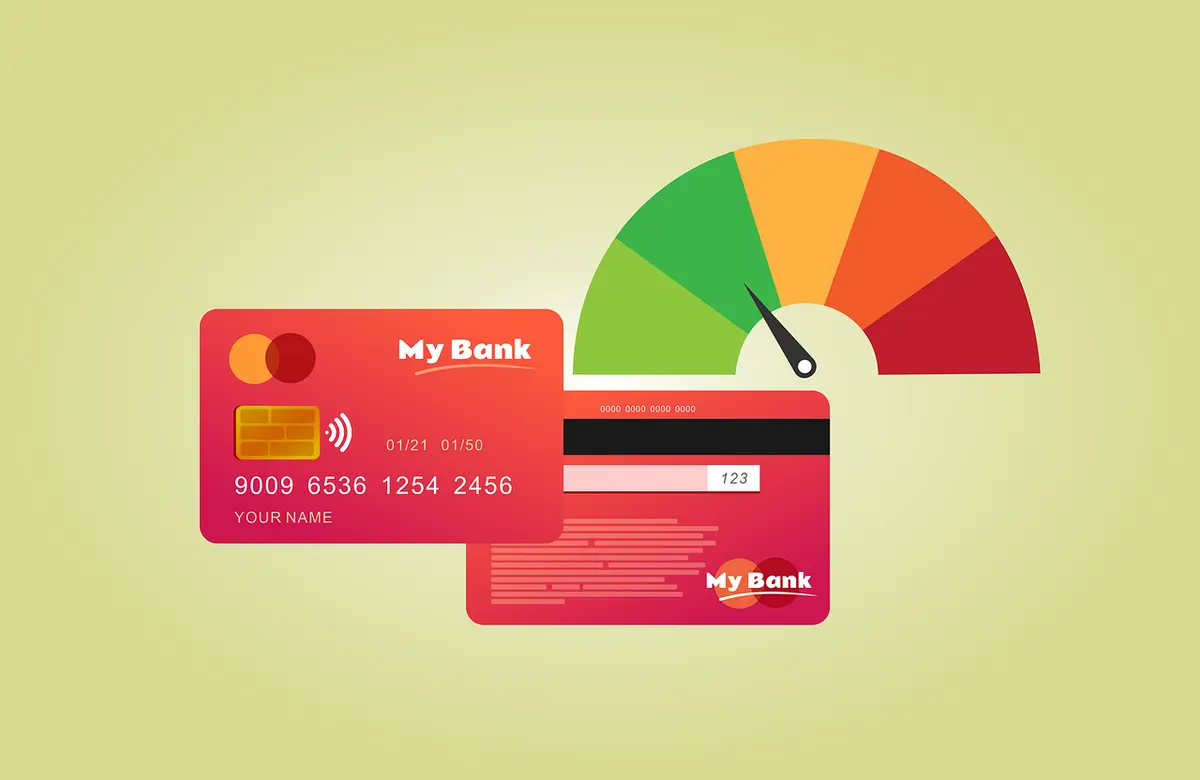
When you apply for a credit card, mortgage, auto loan, or another form of borrowing, a lender needs to estimate how likely you are to repay the debt. One of the tools commonly used for that assessment is a FICO Score.
A FICO Score is a three-digit number calculated from information in a consumer’s credit report. Developed by Fair Isaac Corporation (FICO), it has become one of the most widely used credit-scoring systems in the United States. Base FICO Scores generally range from 300 to 850, with higher scores generally indicating lower credit risk. (myFICO)
The number is useful because it turns a large amount of credit-history information into a standardized risk signal. But it is not a complete measure of someone’s financial health. FICO Scores are based on credit-report information, while lenders may also consider income, existing debt, employment, the type of credit requested, and other factors when making a lending decision.
What Is a FICO Score?
A FICO Score is a credit score developed by Fair Isaac Corporation. It uses information in a consumer’s credit report to estimate credit risk.
Credit reports can contain information about credit accounts, payment history, balances, credit limits, account age, and recent applications. A FICO scoring model evaluates relevant information and converts it into a numerical score.
This gives lenders a standardized way to assess credit risk. Instead of relying only on a manual review of someone’s entire credit history, a lender can use a score as one part of its broader underwriting process.
The commonly used base FICO Score ranges from 300 to 850. FICO also produces different score versions and industry-specific scores, so the score a consumer sees is not necessarily the exact score a lender will use for every application.
How Does a FICO Score Work?
A FICO Score is calculated from information in a consumer’s credit report. It does not directly measure income, savings, investments, or total wealth.
The scoring system evaluates patterns such as:
- Whether credit accounts have been paid on time
- How much debt is owed
- How much revolving credit is being used
- How long credit accounts have been established
- Whether the consumer has recently applied for new credit
- The types of credit accounts in the person’s history
These patterns help the model estimate credit risk.
For example, someone with a long history of on-time payments and relatively low revolving-credit utilization may present a different risk profile from someone with repeated late payments and heavily used credit lines.
There is no simple rule in which one action always adds or subtracts a fixed number of points. FICO says the importance of different factors can vary depending on the individual’s overall credit profile.
The Five Main Factors Behind a FICO Score
For the general population, FICO publishes five broad categories that influence its scores:
| Factor | Approximate Weight |
| Payment history | 35% |
| Amounts owed | 30% |
| Length of credit history | 15% |
| New credit | 10% |
| Credit mix | 10% |
These percentages are useful for understanding the model, but they are not a personal point calculator. The relative importance of each category can vary from one credit profile to another.
Payment History – 35%
Payment history is the largest category. It considers whether previous credit obligations were paid as agreed.
Late payments, missed payments, collections, and other negative information can affect a score. FICO also considers factors such as the severity, recency, and frequency of negative payment information.
This makes payment behavior one of the clearest signals available in a credit report: it shows how a borrower has handled financial obligations in the past.
Amounts Owed – 30%
Amounts owed is the second-largest category.
It includes the amount of debt a consumer carries and, importantly, how much available revolving credit is being used. This is commonly referred to as credit utilization.
For example, suppose a credit card has a $10,000 limit and a reported balance of $8,000. The account is using a large share of its available revolving credit.
Having debt does not automatically produce a poor FICO Score. The model considers the broader credit profile, including balances, the number of accounts with balances, and utilization.
Length of Credit History – 15%
FICO also considers how long a person’s credit accounts have been established.
This can include the age of the oldest account, the newest account, and the average age of accounts. A longer credit history can provide more information about how someone has managed credit over time.
A short credit history, however, does not automatically prevent someone from having a good score.
New Credit – 10%
Recent applications and newly opened credit accounts are another part of the scoring model.
Opening several accounts within a short period can represent a higher level of credit risk, particularly for someone with a limited credit history. FICO therefore considers recent credit activity when calculating scores.
Credit Mix – 10%
Credit mix refers to the different types of credit in a consumer’s history. These can include credit cards, retail accounts, installment loans, finance-company accounts, and mortgages.
Consumers do not need to have every possible type of credit account. Credit mix is simply one part of the overall scoring model.
What Do FICO Score Ranges Mean?
FICO’s commonly used base score is divided into five broad ranges:
| FICO Score | Category |
| 300–579 | Poor |
| 580–669 | Fair |
| 670–739 | Good |
| 740–799 | Very Good |
| 800–850 | Exceptional |
These ranges are useful benchmarks, but they are not universal lending rules. A particular score does not guarantee approval or a specific interest rate. Lenders can use different underwriting standards depending on the type of credit and their own risk policies.
Why Does a FICO Score Matter?
A lender is essentially making a decision under uncertainty.
When a bank provides a mortgage or an auto loan, it gives the borrower money today in exchange for expected repayments over time. The lender therefore needs information that helps estimate the probability of repayment.
A FICO Score provides one standardized signal.
It can influence:
- Whether a credit application is approved
- The interest rate offered
- The amount of credit available
- Other loan or credit terms
But it is not the only information lenders can consider. Income, existing obligations, employment, collateral, loan amount, and the type of credit requested can also matter.
This creates an important economic connection. A consumer’s past credit behavior becomes information that can influence the price and availability of borrowing.
FICO Score vs. Credit Score
The terms FICO Score and credit score are often used as though they mean the same thing, but they do not.
A credit score is a general term for a numerical assessment of credit risk.
A FICO Score is a specific type of credit score produced using FICO’s scoring models.
Other scoring systems exist, including Vantage Score. Different models can use credit-report information differently, which means a consumer can have multiple credit scores at the same time. The CFPB also notes that different lenders may use different scores based on different reporting-company information. (Consumer Financial Protection Bureau)
So, seeing a credit score through a financial app does not necessarily mean that it is the same score a lender will use.
Why Can Your FICO Score Differ from Another Credit Score?
There is no single universal credit score assigned to every consumer.
One reason is that different scoring models exist. FICO also has multiple score versions, including industry-specific models.
Another reason is timing. Credit-report information can change as lenders report new balances, payments, accounts, or inquiries.
Credit reports can also differ between the major credit reporting companies because information may be reported or updated at different times.
That means two scores can be different without either one necessarily being incorrect.
The important question is not simply, “Which number is my real score?” It is which scoring model and credit-report information are being used for the particular decision.
What Can Lower a FICO Score?
Several types of credit activity can negatively affect a FICO Score, including:
- Missing or making late payments
- Carrying high revolving-credit balances
- Applying for multiple new credit accounts in a short period
- Accumulating negative information on a credit report
- Changes in the age and composition of credit accounts
The effect depends on the person’s complete credit profile. There is no universal rule saying that one specific action will reduce everyone’s score by a fixed number of points.
That is why claims such as “opening one credit card will lower your score by exactly 20 points” are generally too simplistic.
How Can You Improve a FICO Score?
Improving a FICO Score is largely about improving the underlying credit history rather than trying to manipulate the number.
Consistently paying credit obligations on time is important because payment history carries the largest published weighting. Managing revolving balances can also help maintain a healthier credit profile.
Avoiding unnecessary applications for new credit can limit excessive recent credit activity. Maintaining established accounts can also preserve useful credit-history information, although whether an account should be closed depends on the individual’s circumstances.
It is equally important to check the underlying credit reports for inaccurate information.
Consumers can obtain their federally authorized free credit reports through AnnualCreditReport.com. The site allows consumers to request reports from Equifax, Experian, and TransUnion and provides a process for disputing inaccurate information.
The goal should therefore be to build a reliable credit history, not simply to chase a particular number.
The Limits of a FICO Score
A FICO Score is useful, but it does not tell the whole story about a person’s financial position.
It does not directly measure:
- Income
- Savings
- Investments
- Net worth
- Emergency funds
- Overall household cash flow
Someone can have a high credit score but very little cash savings. Another person can have significant assets but a limited or damaged credit history.
The score is also model-dependent. Different FICO versions and other credit-scoring models can produce different results.
Most importantly, lenders do not have to base a decision entirely on the score. The FICO Score is one risk signal within a broader credit decision.
For example, a mortgage application involves much more than credit scoring. The size of the loan, interest rate, repayment period, down payment, and total borrowing cost all matter. Economic Reader’s How Mortgage Loans Work explains how these elements interact over the life of a mortgage.
FICO Scores and the Cost of Borrowing
The economic significance of a FICO Score becomes clearer when it is connected to interest rates.
Suppose two borrowers apply for similar loans. If one borrower is viewed as presenting a higher credit risk, a lender may compensate for that risk through different pricing or lending terms. A lower-risk borrower may receive more competitive terms, depending on the lender and the full application.
This does not mean a FICO Score mechanically determines an interest rate.
Instead, it is one input into a broader pricing and risk-management process.
That distinction matters because borrowing costs influence household decisions. A higher cost of credit can affect whether someone buys a home, finances a vehicle, carries a credit-card balance, or delays another major purchase.
For a broader explanation of how borrowing costs influence households, businesses, and the economy, see Economic Reader’s How Interest Rates Affect the Economy.
Why FICO Scores Matter in the Credit Market
A FICO Score does something relatively simple but economically important: it converts information about a consumer’s credit history into a standardized numerical signal.
That signal helps lenders evaluate credit risk at scale.
For consumers, the result can affect access to credit and the terms attached to borrowing. For lenders, credit scoring provides a consistent way to incorporate historical repayment behavior into risk assessment.
At the market level, credit scoring helps connect individual financial behavior with the broader allocation of credit.
The score itself is only a number. Its importance comes from what that number represents: a model-based assessment of information contained in a consumer’s credit history.
Understanding that distinction is more useful than treating a FICO Score as a simple measure of whether someone is “good with money.”