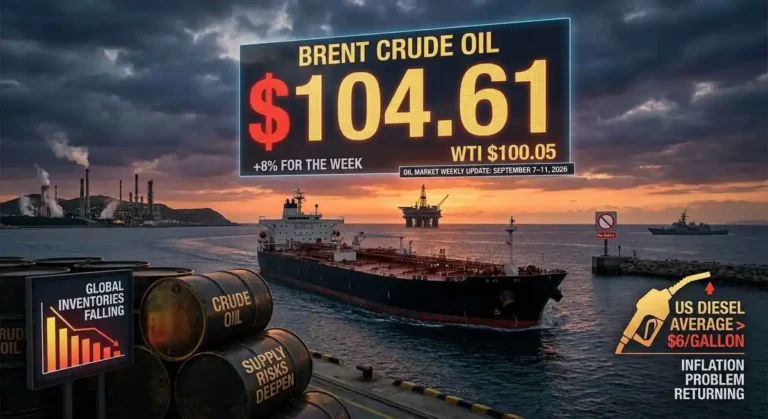

Oil Market Weekly Update: What Happened This Week? (July 13-17, 2026)
Oil Market Weekly Update: Key Highlights
The global oil market experienced a strong move higher during the week of July 13 – 17, 2026, as investors reacted to rising geopolitical uncertainty, supply concerns, and changing expectations about global energy demand.
Crude oil prices increased significantly during the week, creating opportunities for energy companies while raising concerns about higher costs for consumers and businesses.
For everyday people, oil prices are important because they influence:
- Gasoline prices
- Transportation costs
- Airline expenses
- Manufacturing costs
- Product prices
A simple example:
When fuel prices rise, delivery companies spend more money on transportation. Over time, those extra costs can affect the prices customers pay in stores.
What Happened in the Oil Market This Week?
Oil prices moved higher during July 13 – 17, 2026, as supply disruption concerns and geopolitical risks pushed WTI and Brent crude prices upward. Investors closely watched global oil supply conditions and energy market stability.
Oil Weekly Performance Overview (Real-Time Data)
| Oil Benchmark | WTI Crude Oil | Brent Crude Oil |
| July 13 Opening Area | Around $76 – $77/barrel | Around $80 – $81/barrel |
| July 17 Closing Area | $80.77/barrel | $84-$85/barrel |
| Weekly Change | Approximately +5% to +6% | Approximately +5% to +7% |
Daily Oil Market Movement (July 13-17, 2026)
| Day | Market Movement |
| Monday | Oil prices moved higher as supply concerns increased |
| Tuesday | Investors monitored geopolitical developments |
| Wednesday | Strong buying interest continued |
| Thursday | Prices remained elevated as uncertainty continued |
| Friday | WTI and Brent finished the week higher |
Why Did Oil Prices Rise This Week?
1. Geopolitical Risks Increased
The biggest factor affecting oil prices was uncertainty around major energy-producing regions.
Oil markets are extremely sensitive to potential supply disruptions.
Even when physical supply remains available, investors often react before an actual shortage happens.
Example:
If a farmer expects a possible crop shortage, prices can rise before the shortage occurs because people prepare for future risks.
Oil markets work in a similar way.
2. Supply Disruption Concerns
Global oil supply depends on:
- Production levels
- Export activity
- Shipping routes
- Political stability
Any risk to supply can quickly influence prices.
3. Investors Added a Risk Premium
During uncertain periods, traders often pay higher prices because they expect future supply risks.
This additional price is called a risk premium.
How Higher Oil Prices Affect the Economy
Consumers
Higher oil prices can increase:
- Fuel costs
- Travel expenses
- Delivery costs
Businesses
Companies may face:
- Higher transportation expenses
- Increased production costs
- Lower profit margins
Inflation
Energy is an important part of inflation.
Higher oil prices can influence the prices of many goods and services.
Energy Stock Impact: How Oil Prices Affect Investors
One of the most important questions for stock investors is:
“When oil prices rise, what happens to energy stocks?”
The answer depends on the company, but many large energy producers can benefit from higher crude prices.
Exxon Mobil (XOM) Impact
Exxon Mobil is one of the world’s largest integrated energy companies.
When oil prices rise:
Potential benefits:
- Higher revenue from oil production
- Stronger cash flow
- Improved earnings expectations
However, investors should also consider:
- Production costs
- Government policies
- Global energy demand
Chevron (CVX) Impact
Chevron is another major oil and gas producer.
Higher oil prices can support:
- Upstream business profits
- Cash generation
- Dividend strength
However, oil companies are still affected by long-term energy trends and market cycles.
Shell (SHEL) Impact
Shell operates across oil, gas, and energy markets.
Higher oil prices may support:
- Exploration and production earnings
- Overall company revenue
But Shell’s performance also depends on:
- Refining margins
- Natural gas markets
- Global demand
How Rising Oil Prices Affect Your Stock Portfolio
Oil price changes do not affect every stock in the same way.
Companies That May Benefit:
- Energy producers
- Oil service companies
- Some commodity-related businesses
Companies That May Face Pressure:
- Airlines
- Transportation companies
- Fuel-dependent businesses
Example:
If you own airline stocks, higher oil prices can increase fuel expenses and reduce profits.
This is why investors often look at oil prices when analyzing different industries.
Oil Market Outlook: What Investors Should Watch Next?
1. Geopolitical Developments
Any improvement or worsening situation can quickly change oil prices.
2. Global Demand
Investors will watch:
- Economic growth
- Industrial activity
- Consumer demand
3. Oil Inventory Reports
Weekly inventory data provides information about:
- Supply levels
- Market balance
- Future price direction
Beginner Guide: Understanding Oil Prices
Oil prices are influenced by several factors:
- Supply
- Demand
- Politics
- Currency movements
- Economic growth
- Investor sentiment
A beginner investor should avoid looking at only one factor.
Common Oil Investing Mistakes
Buying After Big Price Moves
Many investors buy after prices already rise significantly.
A better approach is understanding the market cycle.
Ignoring Risk
Oil markets can change quickly.
Unexpected events can cause large price movements.
Focusing Only on Oil Prices
Energy companies depend on more than crude oil prices.
Company management, costs, and strategy also matter.
Key Takeaways
WTI crude oil closed near $80.77 per barrel.
Brent crude oil moved toward the mid $80 range.
Oil gained approximately +10% during the week.
Supply concerns and geopolitical risks were major drivers.
Energy companies may benefit from higher oil prices.
Airlines and transportation companies may face higher costs.
Frequently Asked Questions (FAQ)
1.Why did oil prices rise this week?
Oil prices increased because investors worried about possible supply disruptions and geopolitical risks.
2.Does higher oil price help energy stocks?
Generally, higher oil prices can support oil producers because they may earn more from selling crude oil.
3.How do oil prices affect inflation?
Higher oil prices can increase transportation and production costs, which may affect consumer prices.
4.What is the difference between WTI and Brent?
WTI is a major U.S. crude oil benchmark, while Brent is widely used as a global benchmark.
5.Can oil prices fall quickly?
Yes. Oil markets are highly sensitive to news, supply changes, and economic conditions.
Final Thoughts
The Oil Market Weekly Update for July 13 – 17, 2026 showed how quickly energy markets can react to global events.
Crude oil prices moved higher as investors focused on supply risks and geopolitical uncertainty. This created positive conditions for many energy companies but increased cost pressure for consumers and some industries.
For investors, understanding the connection between oil prices and different sectors is essential. Oil is not only a commodity; it is also a major factor influencing stock markets, inflation, and the global economy.
Click here to view last week’s market update
Author Note: This article is crafted by “The Economic Reader editorial team”, dedicated to analyzing the latest market trends, financial updates, and global economic shifts to keep you informed with accurate and comprehensive insights.
Disclaimer: The information provided on this website is for educational and informational purposes only and should not be construed as professional financial, investment, or legal advice. Always consult with a certified financial advisor or professional before making any financial decisions based on this content.