
Gold Market Monthly Review: September 2026 – Rising Yields, Strong Dollar, and Gold’s Safe Haven Test
Gold Market Monthly Review: September 2026
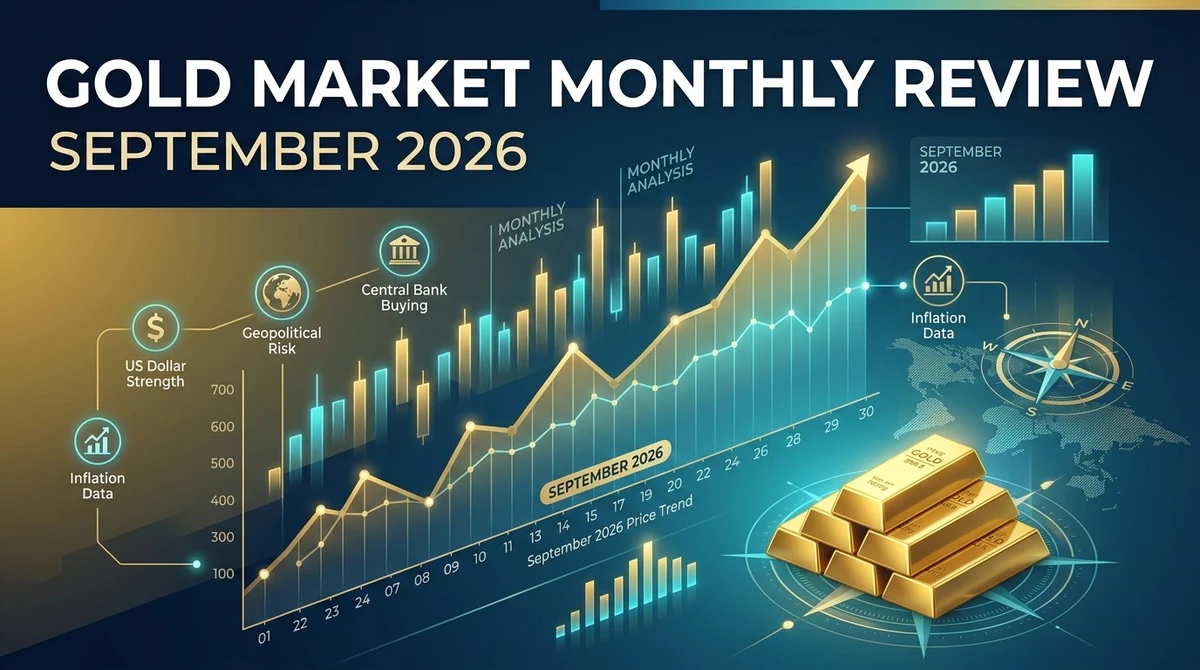
September 2026 was a difficult month for gold.
Gold entered the month after an exceptional August rally, but the momentum reversed sharply. Gold prices fell about 6.6% in September, marking the metal’s weakest monthly performance since June. On September 30, spot gold was around $4,153 an ounce. (Reuters)
The decline was notable because several forces that traditionally support gold remained in place.
Oil prices climbed. Geopolitical tensions remained elevated. U.S. inflation stayed above the Federal Reserve’s 2% target, while investors continued to view gold as a diversification and safe-haven asset.
Yet gold still fell.
The main reason was a stronger counterforce: higher Treasury yields and a firmer U.S. dollar increased the opportunity cost of holding a non-yielding asset.
That tension became the defining feature of the gold market during September.
September Gold Market at a Glance
| Market Indicator | September 2026 |
| Gold monthly change | About -6.6% |
| Gold price on Sept. 30 | About $4,153/oz |
| August gold close | About $4,563/oz |
| August PCE inflation | 3.4% YoY |
| August core PCE inflation | 3.0% YoY |
| August monthly PCE increase | 0.3% |
| September Fed target range | 3.75%–4.00% |
Gold had finished August at an unusually high level after a roughly 13% monthly rally. The World Gold Council described August as the third-strongest monthly return for gold in a quarter century, driven heavily by ETF buying, futures flows and options activity. (World Gold Council)
That starting point matters because September was not simply a continuation of the previous trend. It became a test of whether gold’s strong structural demand could withstand a much less favorable interest-rate and currency environment.
Gold Entered September With Strong Momentum
The metal ended August near $4,563 an ounce after a powerful rally.
The World Gold Council reported that global physically backed gold ETFs attracted $18 billion in August, while collective holdings increased to a record 4,189 tons. North American, European and Asian funds all recorded inflows. (World Gold Council)
The WGC’s analysis also identified momentum factors, particularly widespread ETF buying, as major contributors to August’s performance. A weaker U.S. dollar and increased options activity added to the move. (World Gold Council)
That made the September reversal more significant.
Once Treasury yields began rising and the dollar strengthened, some of the conditions that had supported August’s rally moved in the opposite direction.
Treasury Yields Became Gold’s Biggest Headwind
Gold does not pay interest.
As a result, the opportunity cost of owning it becomes increasingly important when government bond yields rise.
When Treasury yields are low, investors give up relatively little income by holding gold. When yields increase, interest-bearing assets become more competitive.
September brought a sharp rise in U.S. long-term yields. Reuters reported that the 10-year Treasury yield recorded its largest monthly increase since 2022 as global bond markets suffered one of their worst months in years. (Reuters)
For gold, the issue was not simply that interest rates were already high.
Longer-term yields were also demanding greater compensation from investors. That changed the relative attractiveness of assets that provide regular income versus an asset whose return depends primarily on price appreciation.
Economic Reader’s How Interest Rates Affect the Economy explains how changes in rates and financial conditions can spread through asset prices, borrowing costs, spending and investment.
Gold therefore faced a familiar problem in September: even without a major deterioration in gold-specific demand, higher yields could pressure prices by changing the opportunity cost of holding the metal.
The Fed Raised Rates as Gold Faced a Policy Headwind
The Federal Reserve added another complication on September 16.
The Federal Open Market Committee raised the federal funds target range by 25 basis points to 3.75%-4.00%. The Fed said economic activity had continued to expand at a solid pace, while inflation remained elevated.
The decision mattered for gold because higher policy rates can increase the attractiveness of yield-producing assets.
At the same time, the September rate increase did not mean markets expected an unlimited tightening cycle. Expectations changed as new inflation and labor-market data arrived.
That distinction became important near the end of the month.
Softer-than-expected August PCE data reduced expectations for an immediate October hike and initially helped gold recover. Reuters reported that gold still ended September sharply lower because the support from softer inflation was outweighed by higher energy prices and bond yields. (Reuters)
Gold was therefore caught between two opposing signals: inflation was still elevated enough to matter, but the market’s response to inflation was being expressed through higher yields rather than a sustained rush into bullion.
Inflation Supported Gold, but Not Enough
The U.S. inflation data released at the end of September provided some support for gold.
The Bureau of Economic Analysis reported that the August PCE price index increased 3.4% from a year earlier, while core PCE rose 3.0%. On a monthly basis, headline PCE increased 0.3% and core PCE rose 0.2%. (Reuters)
Those figures remained above the Fed’s 2% inflation objective.
But the monthly increase was not large enough to create a new inflation shock.
For gold, the distinction between inflation being high and inflation accelerating enough to change monetary-policy expectations is important.
Higher inflation can support gold when investors become concerned about purchasing-power erosion or future monetary instability.
However, if inflation simultaneously pushes interest rates and Treasury yields higher, part of that support can disappear.
September demonstrated that relationship clearly.
Oil prices were rising, which increased inflation concerns. At the same time, bond yields were climbing, creating a stronger headwind for a non-yielding asset.
The Stronger Dollar Added Another Layer of Pressure
Gold is priced internationally in U.S. dollars.
When the dollar strengthens, gold becomes more expensive for buyers using other currencies, all else equal.
The dollar remained on track for a monthly gain in September even after softer U.S. inflation data temporarily reduced expectations for an immediate Fed hike. (Reuters)
The currency effect is not mechanical. Exchange rates respond to interest-rate expectations, capital flows, economic conditions and global risk sentiment.
Still, dollar strength can reinforce the pressure created by higher U.S. yields.
That combination is particularly relevant for gold because both factors can reduce the relative appeal of holding bullion.
Why Gold Did Not Fully Benefit From Geopolitical Risk
One of September’s most interesting features was the limited ability of geopolitical risk to keep gold prices higher.
Gold is widely treated as a safe-haven asset because investors may seek stores of value when political, financial or economic uncertainty increases.
Safe-haven demand, however, does not operate in isolation.
Investors continue comparing gold with Treasury securities, cash, currencies and other assets. If geopolitical uncertainty rises at the same time that Treasury yields jump, gold can receive support from one direction while facing pressure from another.
September produced exactly that combination.
Oil prices rose sharply as Middle Eastern supply risks intensified. Reuters reported that Brent crude gained about 14% during the month. (Reuters)
Higher energy prices could normally strengthen the argument for holding gold as an inflation hedge.
But the same oil shock also increased concerns about inflation and interest rates.
In other words, one event created two competing effects for gold: greater uncertainty supported safe-haven demand, while higher inflation expectations contributed to higher yields.
The Gold Market Was Still Supported by Investment Demand
The September correction should not be interpreted as evidence that investor interest in gold disappeared.
The World Gold Council’s August data showed unusually strong investment demand. Global gold ETFs added $18 billion that month, while holdings reached a record 4,189 tonnes. (World Gold Council)
The broader market also continued to benefit from structural demand from investors and central banks.
The World Gold Council’s Gold Market Commentary tracks the factors behind gold prices, including spot performance, ETF flows, futures positioning and macroeconomic conditions.
This distinction matters when interpreting a monthly correction.
A lower gold price does not automatically mean that the long-term reasons for owning gold have disappeared. Short-term prices can respond to yields, currencies and positioning even while strategic demand remains intact.
Gold’s September Correction Was Also a Positioning Reset
Macro factors were not the only reason September looked different from August.
The previous month’s rally had been unusually strong.
The World Gold Council’s analysis found that ETF buying, futures flows, options activity and momentum were major contributors to August’s performance. (World Gold Council)
After such a rapid move, investors can become more sensitive to changes in yields, the dollar and monetary-policy expectations.
A reversal in one of those variables can encourage profit-taking and reduce speculative positioning.
That can make the price decline larger than the change in the underlying fundamental outlook alone would suggest.
September therefore looked partly like a macro-driven correction and partly like a reset following August’s exceptional rally.
The Inflation Gold Relationship Is More Complicated Than It Looks
Gold is often described as an inflation hedge.
The description is useful, but incomplete.
Gold does not automatically rise whenever inflation rises.
What matters is how inflation affects:
- Interest-rate expectations
- Real yields
- The U.S. dollar
- Economic growth expectations
- Investor demand for stores of value
Suppose inflation rises sharply while central banks keep policy relatively loose. Gold may benefit because investors become more concerned about purchasing-power erosion.
But suppose inflation rises and markets respond by pushing real and nominal yields significantly higher. The resulting increase in the opportunity cost of holding gold can offset some of the inflation benefit.
September followed much closer to the second pattern.
Oil prices increased inflation concerns, but higher yields and a stronger dollar limited gold’s ability to benefit from that inflation risk.
What September Revealed About Gold
The month offered a broader lesson about how gold actually trades.
Its price was not being driven by one simple factor.
Several forces were interacting:
Interest rates: Higher yields increased the opportunity cost of holding gold.
The U.S. dollar: Dollar strength created another headwind for dollar-priced bullion.
Inflation: Price pressures remained elevated, but the monthly data did not create a fresh inflation shock.
Geopolitical risk: Uncertainty supported safe-haven demand, but the effect was partly offset by higher yields.
Investment flows: Strong ETF demand going into September showed that structural investor interest remained important.
Positioning: The exceptional August rally left the market vulnerable to profit-taking when macro conditions changed.
Together, these forces explain why gold could fall sharply even while several traditionally bullish factors remained active.
What the Gold Market Is Watching in October
Several indicators will determine whether September’s correction continues or begins to reverse.
Treasury yields: A sustained decline in long-term yields would reduce one of gold’s biggest current headwinds.
Federal Reserve policy: Markets will continue reassessing the timing and pace of future rate changes. Economic Reader’s Historical Fed Decisions provides additional context on how monetary-policy shifts can affect financial markets across different economic cycles.
Inflation: The next PCE releases will remain important because they can influence expectations for monetary policy.
The U.S. dollar: Continued dollar strength could keep pressure on gold, while sustained weakness could provide support.
ETF flows: Investment flows will help show whether the September decline represents a temporary correction or a broader reduction in demand.
Central-bank purchases: Official-sector demand remains an important structural factor for the gold market.
Geopolitical developments: Renewed escalation can increase safe-haven demand, although the price response will still depend on what happens to yields and the dollar at the same time.
Where Gold Stands Entering Q4
September showed that gold’s safe-haven reputation does not guarantee rising prices during every period of uncertainty.
The metal entered the month with powerful momentum and strong investment demand. It then faced a sharp reversal as Treasury yields climbed, the dollar strengthened and markets reassessed the monetary-policy environment. Reuters’ month-end reporting captured that tension: softer inflation data helped reduce near-term rate-hike expectations, but higher energy prices and yields continued to pressure bullion.
The correction did not erase gold’s longer-term role as a diversification and reserve asset. It did, however, show why inflation and geopolitical risk alone are not enough to explain its price.
For Q4, the central relationship to watch is the balance between gold’s structural demand and the opportunity cost created by U.S. interest rates.
If Treasury yields and the dollar remain elevated, gold can continue facing pressure even while geopolitical and inflation risks remain high. If yields ease and monetary-policy expectations become more supportive, investment demand could regain greater influence.
The September correction therefore leaves gold at a more complicated point than the monthly decline alone suggests. The next major move will depend less on whether uncertainty exists and more on which macro force becomes dominant: safe-haven demand, investment flows, or the opportunity cost created by higher yields.