What Is a Mortgage? How Home Loans Work and What Borrowers Should Know
Introduction
For most people, buying a home starts with a simple question: How can I afford a property that costs far more than the cash I have available?
The answer is often a mortgage.
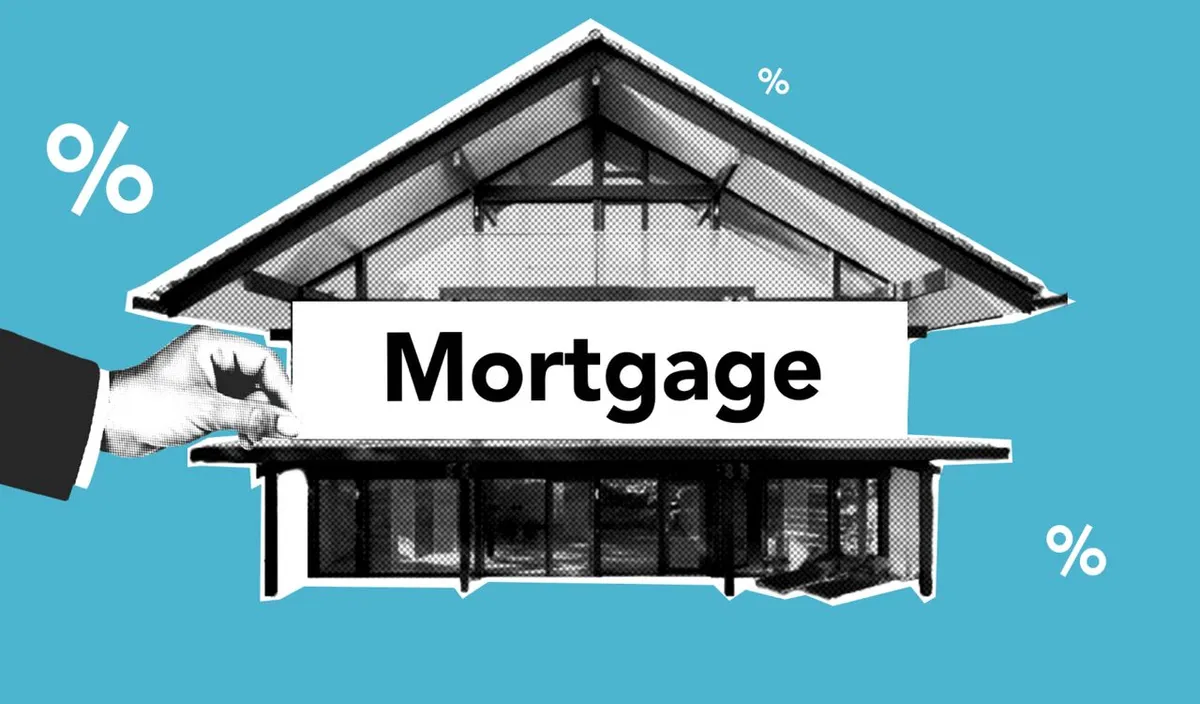
A mortgage allows a buyer to borrow money from a lender to purchase real estate and repay the debt over time. Instead of paying the entire purchase price upfront, the buyer makes a down payment and finances the remaining amount through a home loan.
But a mortgage is more than just money borrowed to buy a house. It can affect your monthly budget, total interest costs, credit profile, financial flexibility, and long term wealth.
Understanding how mortgages work can help you evaluate a home purchase more realistically and avoid taking on a loan that puts unnecessary pressure on your finances.
What Is a Mortgage?
A mortgage is a loan used to purchase or refinance real estate, with the property serving as collateral for the debt.
In a typical mortgage arrangement:
- The buyer provides some money upfront.
- A lender provides the remaining amount needed to purchase the property.
- The borrower agrees to repay the loan according to the mortgage terms.
- The lender charges interest for providing the money.
- The property secures the loan.
If the borrower stops making required payments and the loan goes into default, the lender may have legal rights to pursue the property through the foreclosure process, subject to applicable laws and the specific loan agreement.
The Consumer Financial Protection Bureau explains that a mortgage is a loan used to buy or refinance a home and that the home itself secures the loan. (consumerfinance.gov)
A Simple Example
Suppose you want to buy a home for $400,000.
You have saved $80,000 for the purchase.
Your basic financing could look like this:
- Home price: $400,000
- Down payment: $80,000
- Mortgage: $320,000
You now own the property, but you still owe the lender $320,000 plus the interest and other applicable costs associated with the loan.
You then make scheduled payments over the mortgage term.
As you repay the principal, your outstanding loan balance gradually falls.
This is the basic mechanism behind most traditional home purchases.
What Actually Makes Up a Mortgage Payment?
One reason mortgages can be confusing is that the amount leaving your bank account each month may include more than the loan itself.
A mortgage payment can include several components.
Principal
Principal is the amount you borrowed and still owe.
If you initially borrow $320,000, that is your starting principal balance.
When part of your monthly payment goes toward principal, the amount you owe the lender decreases.
Interest
Interest is the cost of borrowing money.
Your mortgage interest rate determines how much interest is charged on the outstanding balance, although the exact calculation depends on the loan structure.
Over a long mortgage term, even a relatively small difference in interest rates can significantly change the total amount paid.
Property Taxes
Homeowners may also need to pay property taxes.
Depending on the mortgage arrangement, the lender may collect money for property taxes through an escrow account and then pay the taxes on the homeowner’s behalf.
Homeowners Insurance
Homeowners insurance can protect the property against certain covered risks.
Mortgage lenders commonly require borrowers to maintain homeowners insurance because the property serves as collateral for the loan.
PITI
The four commonly discussed components are known as PITI:
Principal + Interest + Taxes + Insurance
However, not every mortgage payment is structured exactly the same way, and some homeowners have additional costs such as mortgage insurance or homeowners association fees.
Why Do People Need Mortgages?
The biggest advantage of a mortgage is simple: it allows people to buy property without having enough cash to purchase the entire home outright.
Without mortgage financing, someone wanting to buy a $400,000 home would need $400,000 in available cash, excluding other transaction costs.
With mortgage financing, the buyer may be able to purchase the property with a smaller upfront amount and finance the rest.
This can make homeownership accessible to a much larger number of households.
But borrowing also comes with a cost.
The buyer is effectively committing part of their future income to repaying today’s housing purchase.
That is why the size and terms of a mortgage matter so much.
Fixed-Rate vs. Adjustable-Rate Mortgages
One of the most important decisions borrowers face is the type of interest rate attached to the loan.
Fixed-Rate Mortgage
A fixed-rate mortgage keeps the interest rate unchanged for the agreed loan term, subject to the terms of the loan.
This provides a major benefit: predictability.
If you have a fixed-rate mortgage, changes in market interest rates generally do not change the interest rate on your existing loan.
That can make long-term budgeting easier.
For example, if you take out a 30-year fixed-rate mortgage, you generally know what interest rate applies to the loan even if market rates rise later.
Your total monthly housing cost can still change because property taxes, insurance, or other expenses may change.
Adjustable-Rate Mortgage
An adjustable-rate mortgage, or ARM, can change its interest rate after an initial period according to the loan’s terms.
An ARM may begin with a lower rate than some fixed-rate options, but future payments can increase if the interest rate adjusts upward.
The Consumer Financial Protection Bureau notes that borrowers should understand when an ARM can adjust, how much the rate can change, and what the maximum payment could become. (consumerfinance.gov)
For that reason, an ARM should not be judged only by its initial rate.
What Is a Down Payment?
A down payment is the portion of the home’s purchase price that you pay upfront rather than borrowing.
For example:
A $400,000 home with a $60,000 down payment would require a $340,000 mortgage, before considering other costs.
A larger down payment generally means borrowing less money.
However, putting more money into the home is not automatically the best financial decision for everyone.
A buyer also needs to consider:
- Emergency savings
- Closing costs
- Moving expenses
- Home repairs
- Other debts
- Investment goals
Using nearly all available savings for a down payment can leave a homeowner with very little cash after closing.
What Determines Your Mortgage Rate?
Mortgage rates do not depend on just one factor.
They are influenced by broader economic conditions as well as the characteristics of the individual borrower and loan.
Federal Reserve Policy
The Federal Reserve does not directly set the rate you receive on a typical 30-year mortgage.
However, Federal Reserve policy influences broader financial conditions and short-term interest rates, which can affect borrowing costs throughout the economy.
Mortgage rates are also strongly influenced by the bond market and investor expectations.
The Federal Reserve explains that monetary policy affects interest rates and financial conditions across the economy, which can influence consumer and business borrowing conditions. (federalreserve.gov)
Inflation can influence expectations about future interest rates and bond yields.
When investors expect inflation to remain elevated, longer-term interest rates can come under upward pressure.
Because mortgage rates are closely connected to longer-term market rates, mortgage borrowing costs can also be affected.
Credit Profile
Your credit history can affect the mortgage terms you qualify for.
A stronger credit profile may help a borrower qualify for more favorable pricing, although lenders consider multiple factors rather than relying on a credit score alone.
Loan Amount and Down Payment
The amount you borrow and the size of your down payment can affect the structure and cost of a mortgage.
A larger down payment generally means a smaller loan relative to the property’s value.
Loan Term
The mortgage term also matters.
A 15-year mortgage and a 30-year mortgage can have very different monthly payments and total interest costs.
15-Year vs. 30-Year Mortgage
The 30-year mortgage is popular because it spreads repayment over a long period.
That usually results in a lower required monthly principal-and-interest payment than a comparable 15-year mortgage.
A 15-year mortgage generally has higher monthly payments but allows the borrower to repay the debt faster.
For example, imagine two borrowers have the same loan amount and interest rate.
The borrower with the 15-year loan will generally pay more each month but for fewer years.
The 30-year borrower will generally have a lower scheduled monthly payment but may pay substantially more interest over the life of the loan.
Neither option is automatically better.
The right choice depends on income, cash flow, financial goals, and how much flexibility the borrower wants.
Mortgage Insurance: What Is It?
Some borrowers may be required to pay mortgage insurance.
This can happen when the borrower makes a relatively small down payment, depending on the type of mortgage.
Mortgage insurance is different from homeowners insurance.
Homeowners insurance protects against certain property risks.
Mortgage insurance primarily protects the lender against certain losses associated with the mortgage.
For conventional mortgages, private mortgage insurance, commonly called PMI, may be required when a borrower’s down payment is below a certain level.
Government-backed loans can have different insurance requirements.
Borrowers should therefore understand exactly what type of mortgage insurance applies to their loan and how much it costs.
Mortgage vs. Rent
One of the most common personal finance debates is whether it is better to buy a home or rent one.
There is no universal answer.
A mortgage can help you build equity over time, but homeowners also take on costs and responsibilities that renters may not have.
| Factor | Buying With a Mortgage | Renting |
| Ownership | Builds ownership over time | No ownership |
| Monthly payment | Mortgage and other housing costs | Rent |
| Maintenance | Usually homeowner’s responsibility | Often landlord’s responsibility |
| Flexibility | Lower | Generally higher |
| Equity | Can build equity | Does not build home equity |
| Upfront costs | Down payment and closing costs | Usually lower upfront costs |
| Market risk | Home value can rise or fall | No direct home value exposure |
Buying may make sense for someone planning to stay in one location for many years and who can comfortably afford the full cost of homeownership.
Renting may make more sense for someone who values flexibility, expects to move, or does not want the responsibilities associated with owning property.
The decision should be based on the entire financial picture, not simply the monthly mortgage payment versus monthly rent.
The Benefits of Having a Mortgage
Access to Homeownership
The biggest benefit is the ability to purchase property without paying the entire price upfront.
Opportunity to Build Equity
As you repay the mortgage principal, your ownership stake in the property can increase.
Equity can also change because the market value of the property changes.
Potential Long-Term Wealth Building
A home can become an important part of a household’s net worth.
However, home values are not guaranteed to rise, and ownership comes with ongoing costs.
Predictable Payments With Fixed Rates
A fixed-rate mortgage can make the principal-and-interest portion of housing costs easier to plan for over time.
The Risks of Taking Out a Mortgage
A mortgage can be useful, but it is also a significant financial obligation.
Long-Term Debt
A mortgage can remain with you for decades.
That means today’s borrowing decision can affect your finances for many years.
Interest Costs
The total interest paid over a long mortgage can be substantial.
This is one reason borrowers should consider both the monthly payment and the total cost of the loan.
Home Values Can Fall
Real estate is not guaranteed to increase in value.
A homeowner can potentially owe more on a mortgage than the property is worth, particularly after a significant decline in home prices.
Foreclosure Risk
If a borrower repeatedly fails to make required mortgage payments, the lender may eventually begin foreclosure proceedings.
Losing a home can create both financial and personal consequences.
Maintenance and Unexpected Costs
Homeowners are responsible for repairs and maintenance.
A broken air conditioner, damaged roof, plumbing problem, or other major repair can create expenses outside the regular mortgage payment.
What Does It Really Cost to Own a Home?
One of the biggest mistakes first-time buyers make is looking only at the mortgage payment.
The actual cost of owning a home can include:
- Mortgage principal
- Mortgage interest
- Property taxes
- Homeowners insurance
- Mortgage insurance
- Homeowners association fees
- Maintenance
- Repairs
- Utilities
- Closing and transaction costs
This is why a home that appears affordable based on its mortgage payment alone may still put pressure on a household budget.
Before buying, it is useful to estimate the total monthly cost of ownership, not just the amount owed to the lender.
How to Prepare Before Applying for a Mortgage
Good preparation can make the mortgage process easier and help you avoid borrowing more than you can comfortably afford.
Check Your Credit
Review your credit reports and look for errors before applying.
A stronger credit profile can potentially improve the mortgage terms available to you.
Reduce High-Cost Debt
Credit card balances and other expensive debt can make it harder to manage a new mortgage.
Reducing existing debt may improve your overall financial position.
Build Cash Reserves
Do not assume every dollar you have should go toward the down payment.
Keeping an emergency fund can help you handle unexpected expenses after moving into the home.
Compare Multiple Lenders
Mortgage offers can differ in:
- Interest rates
- Fees
- Closing costs
- Loan terms
- Payment structures
The Consumer Financial Protection Bureau recommends comparing Loan Estimates from multiple lenders so borrowers can evaluate the costs and terms of different offers. (consumerfinance.gov)
Understand the Loan Before Signing
Do not focus only on the interest rate.
Review the entire loan, including fees, repayment period, penalties if applicable, mortgage insurance, and other conditions.
Common Mortgage Mistakes to Avoid
Buying Based on the Maximum Approval Amount
A lender may approve you for a particular loan amount.
That does not mean you should borrow the maximum available.
Your personal budget may be more restrictive than the lender’s qualification calculation.
Ignoring Closing Costs
Buying a home involves costs beyond the down payment.
Closing costs can include lender charges, title-related expenses, taxes, and other transaction costs.
Focusing Only on the Monthly Payment
A lower monthly payment can sometimes result from a longer repayment period or different loan structure.
Always look at the total cost of borrowing.
Failing to Compare Offers
Accepting the first mortgage offer without comparing alternatives can mean missing potentially better terms.
Draining Your Savings
Putting every available dollar into the home can leave you financially vulnerable after closing.
Homeownership often brings unexpected expenses.
Not Understanding Adjustable Rates
An ARM’s initial payment may look attractive, but future adjustments can increase the cost.
Borrowers should understand the worst-case payment scenarios allowed under the loan terms.
How Mortgages Affect the Broader Economy
Mortgages are also important to the U.S. economy.
Housing activity affects industries such as:
- Construction
- Banking
- Real estate
- Home improvement
- Furniture
- Appliances
- Insurance
When mortgage rates rise, some buyers may delay purchasing homes because monthly payments become less affordable.
When rates fall, borrowing can become more attractive, potentially increasing demand.
Mortgage conditions can therefore influence home sales, construction activity, consumer spending, and broader economic growth.
The housing market can also affect financial markets because mortgages are packaged into mortgage-backed securities and traded by investors.
That means the mortgage market is connected to the wider financial system, not just individual homeowners.
A Mortgage Is a Financial Tool, Not Free Money
It is easy to think of a mortgage as simply a way to get a house.
A better way to view it is as a financial tool that allows you to bring future income into the present to purchase an asset.
That can be powerful, but it creates an obligation.
You are committing future earnings to repay the debt.
The decision becomes much more manageable when the mortgage payment fits comfortably within your broader financial plan.
A home should not leave you with no emergency savings, no room for investing, and no flexibility in your monthly budget.
Frequently Asked Questions (FAQ)
1. What is a mortgage in simple terms?
A mortgage is a loan used to buy or refinance real estate. The property serves as collateral, and the borrower repays the loan over time with interest.
2. Is a mortgage the same as a home loan?
In everyday language, the terms are often used interchangeably. A mortgage is a type of home loan secured by the property being financed.
3. How does a mortgage work?
A lender provides money to help purchase a property. The borrower makes a down payment and then repays the borrowed amount, plus interest and other applicable costs, through scheduled payments.
4. What is the difference between principal and interest?
Principal is the amount borrowed that remains unpaid. Interest is the cost charged by the lender for borrowing that money.
5. What is a fixed-rate mortgage?
A fixed-rate mortgage has an interest rate that remains unchanged according to the loan agreement. This can make the principal-and-interest portion of payments easier to predict.
6. What is an adjustable-rate mortgage?
An adjustable-rate mortgage, or ARM, has an interest rate that can change after an initial period according to the loan’s terms.
7. Is a 15-year mortgage better than a 30-year mortgage?
Not necessarily. A 15-year mortgage generally allows you to repay the loan faster and can reduce total interest, but it usually requires higher monthly payments. A 30-year mortgage generally offers lower scheduled monthly payments but may cost more in total interest.
8. Can you lose your home if you cannot pay your mortgage?
Yes. If a borrower fails to make required payments and the loan enters default, the lender may have the right to pursue foreclosure, subject to applicable laws and the terms of the mortgage.
9. Is buying a home better than renting?
It depends on your financial situation, lifestyle, location, and long-term plans. Buying can provide an opportunity to build equity, while renting can provide greater flexibility and fewer property maintenance responsibilities.
10. What should I consider before getting a mortgage?
Consider the total cost of homeownership, your income stability, existing debts, emergency savings, down payment, interest rate, loan term, closing costs, taxes, insurance, and whether the payment fits comfortably within your budget.
Final Thoughts
A mortgage can turn homeownership from an impossible cash purchase into a realistic long-term financial commitment.
But the fact that a lender is willing to lend you a certain amount does not mean that amount is automatically right for you.
The most important question is not “How much can I borrow?”
It is “How much can I comfortably afford while still protecting my financial future?”
Understanding the interest rate, loan term, down payment, total monthly costs, and risks can help you make a more informed decision.
For many people, a mortgage will be one of the largest financial commitments they ever make. Taking the time to understand how it works before signing the loan can make homeownership easier to manage and help you avoid costly mistakes.
Continue Learning…
If you’d like to explore this topic further, check out these related guides from Economic Reader:
- How the Federal Reserve Controls Inflation – A Simple Guide for Investors and Beginners.
- Stock Market Terms Beginners Should Know – A Complete Guide to Investing Vocabulary.
- What Are Smart Investment Decisions? – A Complete Guide to Investing Wisely and Building Long Term Wealth.
Author Note: This article is crafted by “The Economic Reader editorial team”, dedicated to analyzing the latest market trends, financial updates, and global economic shifts to keep you informed with accurate and comprehensive insights.
Disclaimer: The information provided on this website is for educational and informational purposes only and should not be construed as professional financial, investment, or legal advice. Always consult with a certified financial advisor or professional before making any financial decisions based on this content.