

What Is Demand? A Beginner’s Guide to Meaning, Law of Demand, Factors, Types, and Importance

What Is Demand: Introduction
Demand is one of the most important concepts in economics.
Every day, people make decisions about what they want to buy, how much they are willing to pay, and whether they actually purchase a product or service.
Businesses study demand because it helps them understand customers and make better decisions about:
- Pricing
- Production
- Marketing
- Expansion
Governments and economists also analyze demand because it affects:
- Economic growth
- Inflation
- Market activity
- Business cycles
The simple idea is:
Demand is the willingness and ability of consumers to purchase a specific good or service at a given price during a certain period of time.
In this guide, we will explain what demand is, how it works, the law of demand, factors affecting demand, types of demand, and why it is important for businesses and economies.
What Is Demand?
Demand refers to the amount of a product or service that consumers are willing and able to buy at different prices during a specific time period.
In simple words:
Demand means how much people want something and have the ability to purchase it.
For demand to exist, two things are necessary:
- Desire to buy a product
- Ability to pay for it
Example:
A person may want a luxury car, but if they cannot afford it, their desire alone is not considered economic demand.
How Does Demand Work?
Demand works through the relationship between consumers and prices.
When consumers decide to buy something, they create demand.
Businesses respond to demand by deciding:
- How much to produce
- What price to charge
- How to market products
Example:
If many people want smartphones, companies increase production to meet demand.
The Law of Demand
The Law of Demand is one of the fundamental principles of economics.
It states:
When the price of a product increases, the quantity demanded usually decreases. When the price decreases, the quantity demanded usually increases, assuming other factors remain unchanged.
In simple words:
Higher price → Lower demand
Lower price → Higher demand
Example of the Law of Demand
Imagine a coffee shop.
If a cup of coffee costs $3:
- Many customers may buy it.
If the price increases to $8:
- Some customers may buy less or choose alternatives.
The increase in price reduces quantity demanded.
Demand Curve Explained
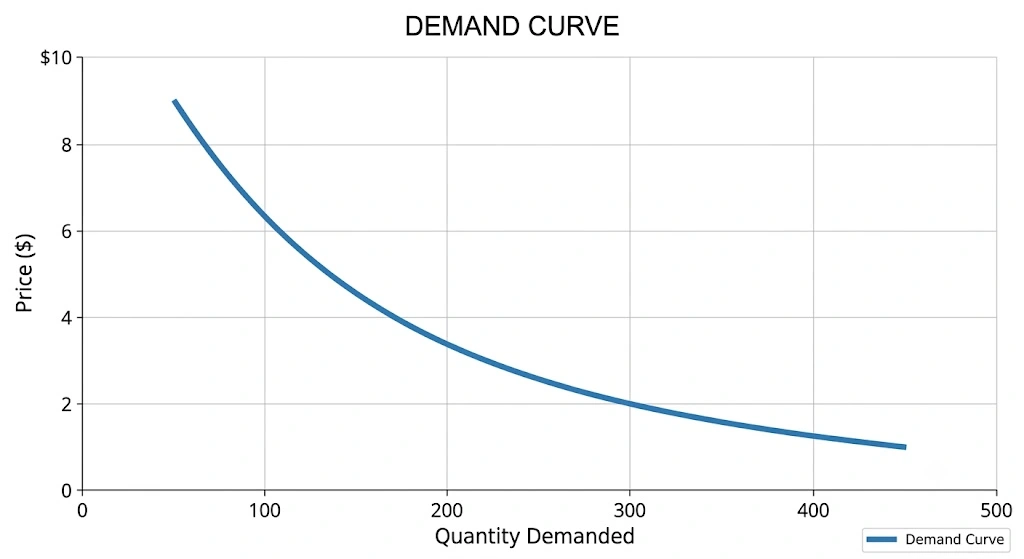
A demand curve shows the relationship between price and quantity demanded.
Generally:
- Price is shown on the vertical axis.
- Quantity demanded is shown on the horizontal axis.
The demand curve usually slopes downward because consumers buy less when prices rise.
Factors That Affect Demand
Demand is influenced by several factors besides price.
1. Price of the Product
The price of a product is one of the biggest factors affecting demand.
Generally:
- Lower prices increase demand.
- Higher prices decrease demand.
Example:
Discount sales often increase customer purchases.
2. Consumer Income
Income affects people’s purchasing ability.
When income increases:
- People may buy more products.
- Demand for certain goods increases.
Example:
Higher income may increase demand for:
- Travel
- Entertainment
- Luxury products
3. Consumer Preferences and Trends
Changes in customer preferences affect demand.
Factors include:
- Fashion trends
- Technology changes
- Social influences
Example:
A new smartphone trend can increase demand for a particular brand.
4. Prices of Related Goods
The prices of other products can influence demand.
There are two main categories:
Substitute Goods
Substitutes are products that can replace each other.
Example:
- Coffee and tea
If coffee becomes expensive, some consumers may buy more tea.
Complementary Goods
Complements are products used together.
Example:
- Cars and fuel
If car prices increase significantly, demand for fuel may also decrease.
5. Consumer Expectations
People’s expectations about the future affect current demand.
Example:
If consumers expect prices to increase soon, they may buy more products today.
6. Number of Buyers
A larger population or more customers can increase market demand.
Example:
A growing city may create higher demand for:
- Housing
- Transportation
- Food services
Types of Demand
Economists classify demand into different categories.
1. Individual Demand
Individual demand refers to the demand of one person or household.
Example:
One person’s demand for a laptop.
2. Market Demand
Market demand is the total demand from all consumers in a market.
Example:
Total demand for smartphones in a country.
3. Direct Demand
Direct demand refers to demand for products used directly by consumers.
Examples:
- Food
- Clothing
- Electronics
4. Derived Demand
Derived demand occurs when demand for one product comes from demand for another product.
Example:
Demand for construction workers increases because demand for buildings increases.
5. Joint Demand
Joint demand occurs when products are needed together.
Examples:
- Printers and ink
- Cars and fuel
6. Competitive Demand
Competitive demand occurs when products compete with each other.
Example:
Different smartphone brands competing for customers.
Demand vs Supply
Demand and supply work together to determine market prices.
| Demand | Supply |
| Represents buyers | Represents sellers |
| Shows willingness to purchase | Shows willingness to produce |
| Influences consumption | Influences production |
| Affected by consumer behavior | Affected by business decisions |
A market reaches balance when demand and supply interact.
Change in Demand vs Change in Quantity Demanded
These concepts are different.
Change in Quantity Demanded
This happens because of a change in the product’s price.
Example:
A decrease in smartphone prices causes people to buy more smartphones.
Change in Demand
This happens because other factors change.
Examples:
- Income changes
- Consumer preferences change
- Population changes
Example:
A health trend increases demand for organic food.
Importance of Demand for Businesses
Businesses rely heavily on demand analysis.
1. Pricing Decisions
Companies study demand to determine suitable prices.
Understanding customer willingness to pay helps businesses maximize revenue.
2. Production Planning
Demand forecasts help businesses decide:
- How much to produce
- How many workers to hire
- How much inventory to maintain
3. Marketing Strategies
Companies use demand information to create better marketing campaigns.
They analyze:
- Customer preferences
- Buying behavior
- Market trends
4. Business Growth Decisions
Demand helps companies decide whether to:
- Enter new markets
- Launch products
- Expand operations
Importance of Demand in the Economy
Demand affects the overall economy.
1. Drives Business Activity
Higher consumer demand encourages companies to produce more.
2. Influences Employment
When demand increases:
- Businesses may expand
- More workers may be hired
3. Affects Prices
Changes in demand can influence market prices.
High demand with limited supply can increase prices.
4. Impacts Economic Growth
Strong consumer demand can support economic expansion.
Real-Life Examples of Demand
Example 1: Smartphone Market
When a new smartphone model becomes popular:
- Consumer interest increases
- Demand rises
- Companies increase production
Example 2: Housing Market
When more people want homes:
- Housing demand increases
- Property prices may rise
Example 3: Seasonal Products
Demand for certain products changes with seasons.
Examples:
- Winter clothing during cold months
- Holiday decorations during festivals
Common Business Mistakes Related to Demand
1. Ignoring Customer Needs
Businesses must understand what customers actually want.
2. Producing Too Much
If production exceeds demand:
- Inventory increases
- Costs rise
3. Incorrect Pricing
Setting prices too high or too low can reduce sales.
4. Not Monitoring Market Changes
Consumer preferences can change quickly.
Businesses must adapt.
Frequently Asked Questions (FAQ)
1.What is demand in simple words?
Demand is the amount of a product or service people want and can afford to buy at a certain price.
2.What is the law of demand?
The law of demand states that people usually buy less when prices increase and more when prices decrease.
3.What factors affect demand?
Price, income, preferences, related goods, expectations, and number of buyers affect demand.
4.Why is demand important for businesses?
Demand helps businesses make decisions about pricing, production, marketing, and growth.
5.What is the difference between demand and supply?
Demand represents buyers’ willingness to purchase, while supply represents sellers’ willingness to produce.
Final Thoughts
Demand is a fundamental concept that explains how consumers influence markets and economies.
It affects:
- Product prices
- Business strategies
- Economic activity
- Resource allocation
Understanding demand helps businesses make smarter decisions and helps individuals understand how markets work.
From everyday purchases to global economic trends, demand plays a major role in shaping the world economy.
If you want to know What Is the Federal Reserve is, read our full Article; click here.
If you want to know the USA Economy New Trends 2026, read our full Article; click here.
Author Note: This article is crafted by “The Economic Reader editorial team”, dedicated to analyzing the latest market trends, financial updates, and global economic shifts to keep you informed with accurate and comprehensive insights.
Disclaimer: The information provided on this website is for educational and informational purposes only and should not be construed as professional financial, investment, or legal advice. Always consult with a certified financial advisor or professional before making any financial decisions based on this content.