What Is the Economy? A Beginner’s Guide to Understanding How the Economy Works
Introduction
What is the economy, and how does it affect our daily lives? Every day, people make economic decisions without even realizing it.
When someone buys groceries, a company hires employees, a bank provides a loan, or a government builds infrastructure, all of these activities are connected to the economy.
The economy affects almost every part of our lives:
- The jobs people find
- The prices they pay
- The businesses they create
- The investments they make
- The financial opportunities available to them
However, many beginners hear the word “economy” in the news and wonder:
“What exactly does the economy mean?”
Understanding the economy is one of the first steps toward understanding business, investing, markets, and personal finance.
The basic idea is simple:
The economy is the system through which people, businesses, governments, and organizations produce, exchange, and consume goods and services.
In this guide, we will explain what the economy is, how it works, different types of economies, how economic activity is measured, and why understanding the economy matters.
What Is the Economy?
The economy is the organized system of production, distribution, and consumption of goods and services within a country or region.
In simple words:
The economy describes how people and organizations use resources to create value and meet their needs.
An economy includes:
- Making products
- Providing services
- Buying and selling
- Creating jobs
- Investing money
- Managing resources
Everything from a small local business to a global technology company is part of the economy.
How Does an Economy Work?
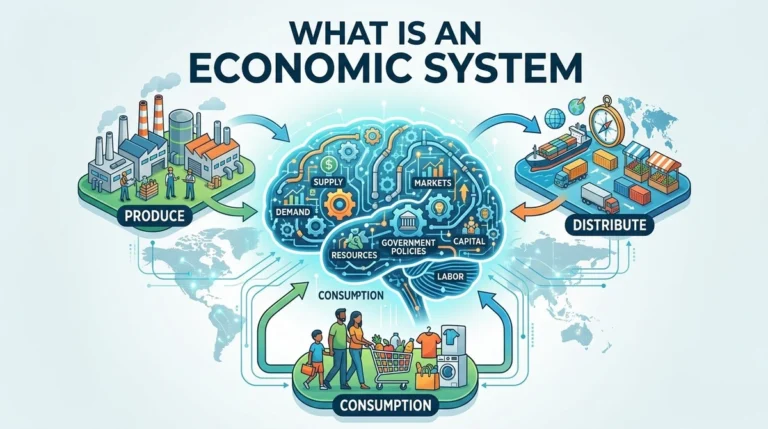
An economy works through the interaction between different groups.
The main activities are:
- Production
- Distribution
- Consumption
1. Production
Production means creating goods and services.
Examples:
- A farmer grows food.
- A factory produces vehicles.
- A software company creates applications.
- A doctor provides healthcare services.
Production creates economic value.
2. Distribution
Distribution refers to how goods and services move from producers to consumers.
Examples:
- Transportation companies deliver products.
- Retail stores sell goods.
- Online platforms connect buyers and sellers.
3. Consumption
Consumption means using goods and services.
Examples:
- Buying food
- Paying for internet services
- Using transportation
- Purchasing clothing
Consumer spending is one of the biggest drivers of economic activity.
Main Parts of an Economy
An economy is made up of several important groups.
1. Households
Households include individuals and families.
They participate in the economy by:
- Working
- Earning income
- Buying goods and services
- Saving money
- Investing
Consumers play a major role because their spending creates demand.
2. Businesses
Businesses create products and services.
They:
- Hire employees
- Invest in growth
- Pay wages
- Create innovation
Example:
A technology company creates software, hires workers, and sells products globally.
3. Government
Governments influence economies through:
- Laws and regulations
- Taxes
- Public spending
- Economic policies
Governments also provide services such as:
- Infrastructure
- Education
- Public safety
4. Financial Markets
Financial markets connect people who save money with those who need capital.
Examples:
- Stock markets
- Bond markets
- Banking systems
Financial markets help businesses raise money and allow investors to participate in economic growth.
5. International Trade
Modern economies are connected globally.
Countries exchange:
- Goods
- Services
- Technology
- Resources
Example:
A company may design products in one country, manufacture them in another, and sell them worldwide.
Types of Economies
Different countries organize their economies in different ways.
1. Market Economy
A market economy is mainly driven by supply and demand.
Businesses and consumers make many economic decisions.
Examples:
- What products are created
- What prices are charged
- What businesses succeed
Advantages:
- Encourages innovation
- Supports competition
Challenges:
- Can create income inequality
- Markets can experience instability
2. Command Economy
The government mainly controls a command economy.
The government decides:
- Production levels
- Resource allocation
- Economic priorities
Advantages:
- Government can quickly direct resources
Challenges:
- Less competition
- Less market flexibility
3. Mixed Economy
A mixed economy combines market forces with government involvement.
Most modern economies use this system.
Examples include:
- Private businesses operating in markets
- Government regulations and public services
4. Traditional Economy
A traditional economy is based on customs and historical practices.
Economic decisions are often influenced by:
- Culture
- Traditions
- Community practices
How Is an Economy Measured?
Economists use different indicators to understand economic health.
1. Gross Domestic Product (GDP)
GDP measures the total value of goods and services produced within an economy over a specific period.
It is one of the most common measures of economic activity.
A growing GDP often indicates economic expansion.
2. Employment Levels
Employment shows the condition of the labor market.
Important measures include:
- Employment growth
- Unemployment rate
- Wage growth
Strong employment often supports consumer spending.
3. Inflation
Inflation measures how quickly prices increase.
Moderate inflation can be normal.
However, high inflation can reduce purchasing power.
4. Consumer Spending
Consumer spending shows how much people are buying.
Since consumers drive much of economic activity, their spending patterns are closely monitored.
5. Business Investment
Business investment includes spending on:
- Equipment
- Technology
- Expansion
- Research
Strong investment often signals business confidence.
Economy vs Market: What Is the Difference?
Many beginners confuse the economy with the market.
They are connected but different.
| Economy | Market |
| Entire system of production and consumption | Place where buyers and sellers exchange assets |
| Includes jobs, businesses, consumers, government | Often refers to financial markets. |
| Broader concept | More specific concept |
Example:
The US economy may be growing while some stocks decline.
The economy and markets influence each other but do not always move together.
How Does the Economy Affect Everyday Life?
The economy affects daily decisions in many ways.
1. Jobs and Income
A strong economy can create:
- More job opportunities
- Higher wages
- Business expansion
A weak economy may lead to:
- Job losses
- Lower business activity
2. Prices
Economic conditions influence the prices of:
- Food
- Housing
- Energy
- Services
Inflation can make everyday expenses more expensive.
3. Interest Rates
Economic conditions influence central bank decisions.
Interest rates affect:
- Loans
- Mortgages
- Savings
- Investments
4. Investment Opportunities
Economic trends influence different investments.
Examples:
Factors That Influence the Economy
Many forces can change economic conditions.
1. Technology
Technology can transform industries and create new opportunities.
Examples:
- Artificial intelligence
- Automation
- Digital platforms
2. Government Policies
Policies related to:
- Taxes
- Trade
- Regulations
- Spending
can influence economic activity.
3. Interest Rates
Interest rates affect borrowing, spending, and investment.
Higher rates may slow activity.
Lower rates may encourage growth.
4. Consumer Behavior
Changes in consumer preferences can create new industries.
Example:
The growth of online shopping changed retail businesses worldwide.
5. Global Events
Events such as:
- Financial crises
- Pandemics
- Wars
- Supply disruptions
can affect economies globally.
Economic Growth vs Economic Development
These two concepts are related but different.
| Economic Growth | Economic Development |
| Increase in economic output | Improvement in living standards |
| Often measured by GDP | Includes education, healthcare, quality of life |
| Focuses on production | Focuses on overall progress |
A country can have economic growth without achieving broad development.
Why Understanding the Economy Matters for Investors
Investors study the economy because economic conditions influence financial markets.
Important economic factors include:
- Interest rates
- Inflation
- Employment
- Consumer confidence
- Business growth
Example:
If an economy is growing strongly, companies may generate higher profits.
However, investors must also consider risks.
Economic knowledge helps investors make more informed decisions.
Real-Life Example of How the Economy Works
Imagine a farmer grows wheat.
The farmer sells wheat to a company.
The company uses wheat to produce food products.
A transportation company delivers those products to stores.
Consumers buy the products.
Employees earn income throughout the process.
This entire chain represents economic activity.
Every participant is connected.
Common Beginner Misunderstandings About the Economy
1. The Economy and Stock Market Are the Same
They are connected but different.
The stock market represents ownership in companies, while the economy includes all economic activity.
2. A Growing Economy Means Everyone Is Wealthy
Economic growth does not automatically mean everyone benefits equally.
3. The Government Controls Everything
Governments influence economies, but many factors affect economic outcomes.
4. A Bad Economy Means No Opportunities
Even during difficult periods, new industries and opportunities can emerge.
Frequently Asked Questions (FAQ)
1. What is the economy in simple words?
The economy is the system that explains how people, businesses, and governments produce, exchange, and consume goods and services.
2. Why is the economy important?
The economy affects jobs, prices, businesses, investments, and living standards.
3. What are the main parts of an economy?
The main parts include households, businesses, government, financial markets, and international trade.
4. What is GDP?
GDP is the total value of goods and services produced by an economy during a specific period.
5. How does the economy affect investors?
Economic conditions influence company profits, interest rates, and investment opportunities.
Final Thoughts
The economy is the foundation of modern society.
Every job, business, purchase, investment, and financial decision is connected to economic activity.
Understanding the economy helps people better understand:
- Business decisions
- Market movements
- Government policies
- Investment opportunities
The economy is constantly changing because technology, people, and global conditions continue to evolve.
Those who understand economic principles can make better decisions and adapt more effectively to future changes.
Economic knowledge is not only useful for economists.
It is valuable for everyone.
Author Note: This article is crafted by “The Economic Reader editorial team”, dedicated to analyzing the latest market trends, financial updates, and global economic shifts to keep you informed with accurate and comprehensive insights.
Disclaimer: The information provided on this website is for educational and informational purposes only and should not be construed as professional financial, investment, or legal advice. Always consult with a certified financial advisor or professional before making any financial decisions based on this content.