What Is a Roth IRA? A Beginner’s Guide to Tax-Free Retirement Investing
What Is a Roth IRA: Introduction
When people think about retirement planning, one of the biggest questions is:
“How can I build wealth today and create financial security for my future?”
For many investors in the United States, retirement accounts play an important role in answering that question.
One popular retirement account option is the Roth IRA (Individual Retirement Account).
A Roth IRA allows individuals to invest money for retirement while offering a unique tax advantage: qualified withdrawals in retirement may be tax-free.
Unlike some retirement accounts that provide tax benefits today, a Roth IRA focuses on providing potential tax benefits in the future.
For beginners, concepts like after-tax contributions, qualified withdrawals, and investment options may sound complicated.
But the basic idea is simple:
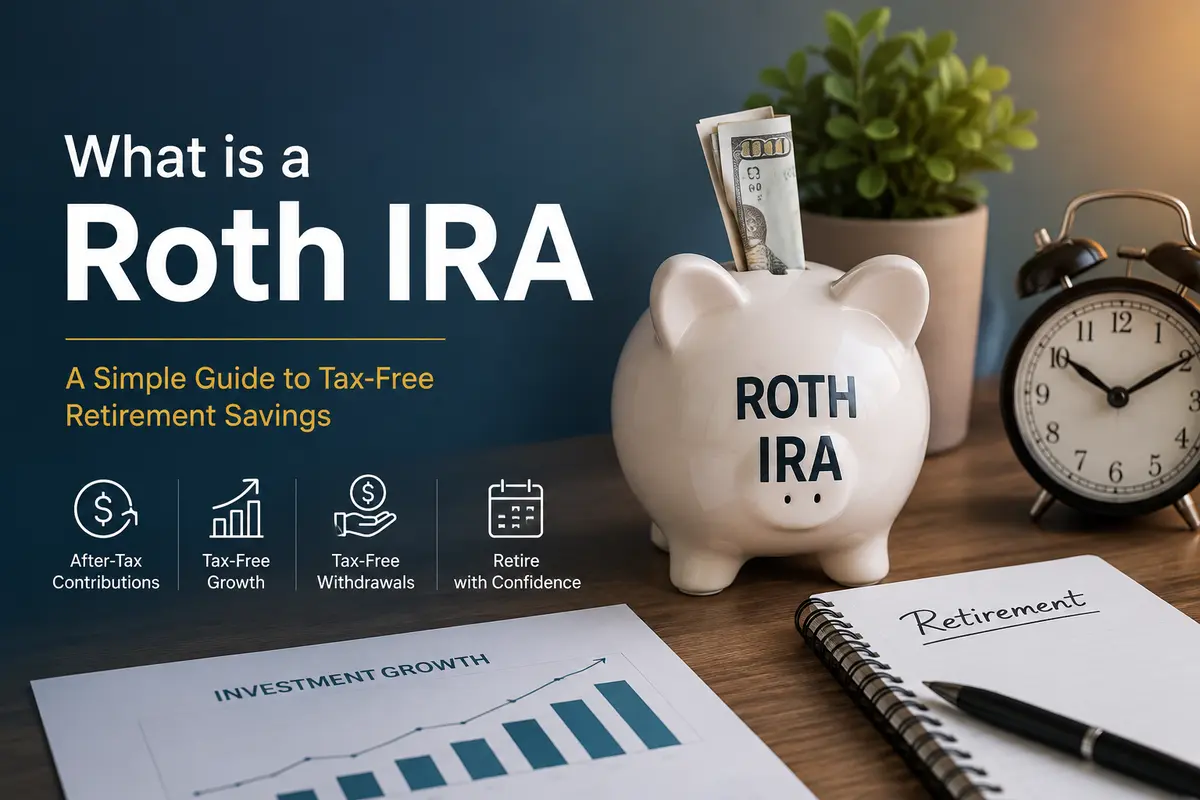
A Roth IRA is a retirement investment account where you pay taxes on your money before investing, allowing your investments to potentially grow and be withdrawn tax-free under qualifying conditions.
In this guide, we will explain what a Roth IRA is, how it works, its benefits, risks, investment options, and how beginners can understand whether it fits their retirement goals.
What Is a Roth IRA?
A Roth IRA is an individual retirement account that allows people to invest after-tax money and potentially withdraw their investment earnings tax-free during retirement if they meet certain rules.
In simple words:
A Roth IRA is a special account designed to help you grow retirement savings while paying taxes upfront.
The money inside the account can be invested in assets such as:
- Stocks
- Bonds
- ETFs
- Mutual funds
- REITs
The purpose is to allow investments to grow over many years.
How Does a Roth IRA Work?
A Roth IRA works through a simple process.
Step 1: Open a Roth IRA Account
An individual opens a Roth IRA through a financial institution.
Examples include:
- Brokerage firms
- Banks
- Investment platforms
Unlike a workplace retirement plan, you do not need an employer to open a Roth IRA.
Step 2: Contribute After-Tax Money
With a Roth IRA, contributions are made using money that has already been taxed.
For example:
You earn income.
You pay required taxes.
You then contribute part of that money to your Roth IRA.
Step 3: Invest the Money
The money inside the Roth IRA can be invested.
Common investment choices include:
- Stocks
- Bonds
- ETFs
- Mutual funds
- REITs
The goal is long-term growth.
Step 4: Withdraw Money During Retirement
If certain requirements are met, qualified withdrawals from a Roth IRA can be tax-free.
This is one of the biggest attractions of Roth IRAs.
Why Do People Use Roth IRAs?
1. Potential Tax-Free Retirement Income
The main benefit of a Roth IRA is the possibility of tax-free withdrawals during retirement.
This can be valuable because investors may not need to pay taxes on qualified investment growth and withdrawals.
2. Long-Term Wealth Building
A Roth IRA encourages investors to think long term.
Money invested for decades has more time to benefit from compound growth.
3. More Investment Control
Roth IRAs often provide more flexibility compared with some employer retirement plans.
Investors can choose investments that match their goals.
How Roth IRA Tax Benefits Work
The tax structure of a Roth IRA is different from a Traditional IRA.
Roth IRA:
- Pay taxes before contributing.
- Investments can grow inside the account.
- Qualified withdrawals may be tax-free.
- Contributions may provide tax benefits.
- Withdrawals are generally taxed later.
The better option depends on personal financial circumstances and future expectations.
Roth IRA Investment Options
A Roth IRA is not an investment itself.
It is an account that holds investments.
Stocks allow investors to own shares of companies.
Many younger investors use stocks inside retirement accounts because they have a longer time horizon.
Bonds can provide income and stability.
They may help balance a retirement portfolio.
Exchange-traded funds (ETFs) are popular because they provide diversification.
A single ETF can contain many different investments.
Mutual funds combine money from many investors to purchase different assets.
They are commonly used in retirement portfolios.
Real Estate Investment Trusts allow investors to gain exposure to real estate markets without purchasing physical property.
Some investors include REITs as part of a diversified retirement strategy.
Roth IRA vs Traditional IRA
| Roth IRA | Traditional IRA |
| Contributions are made after taxes. | Contributions may provide tax benefits. |
| Qualified withdrawals may be tax-free. | Withdrawals are generally taxed. |
| May benefit people expecting higher future taxes | May benefit people wanting possible tax benefits today |
| No required minimum distributions for original owners under current rules | Required distributions generally apply under current rules |
Tax laws can change, so investors should review current rules.
Roth IRA vs 401(k)
| Roth IRA | 401(k) |
| Opened individually | Usually offered by employers. |
| More investment flexibility | Employer plan structure |
| Contributions have limits | Different contribution limits |
| No employer required | May include employer matching |
Some investors use both accounts together.
Benefits of a Roth IRA
1. Potential Tax-Free Growth
One of the biggest advantages is that qualified investment growth may not be taxed.
2. Tax-Free Qualified Withdrawals
After meeting certain requirements, withdrawals may be tax-free.
3. Long-Term Investment Opportunity
Starting early allows more time for investments to grow.
4. Investment Flexibility
Investors often have many investment choices.
5. No Employer Requirement
Anyone who meets eligibility requirements can open a Roth IRA without needing a workplace retirement plan.
Risks and Limitations of a Roth IRA
1. Contribution Limits
Roth IRA contributions are limited by government rules.
2. Income Restrictions
Some high-income individuals may have restrictions on direct Roth IRA contributions.
3. Investment Risk
The value of investments inside the Roth IRA can increase or decrease depending on market performance.
4. Early Withdrawal Rules
Although Roth IRAs have flexibility, withdrawing earnings early may create taxes or penalties depending on circumstances.
Who Should Consider a Roth IRA?
A Roth IRA may be attractive for people who:
- Want potential tax-free retirement income
- Are starting retirement investing early
- Expect their future tax rate may be higher
- Want more control over investments
Young investors often consider Roth IRAs because they may have many years for growth.
Real-Life Example of Roth IRA Investing
Imagine Emma starts investing in a Roth IRA at age 25.
She contributes money regularly and invests it in diversified investments.
Over the next 40 years:
- Her investments have time to grow.
- She builds retirement wealth.
- Qualified withdrawals may receive tax advantages.
The biggest advantage is not only the amount invested.
It is the combination of:
- Time
- Consistency
- Compound growth
Common Roth IRA Mistakes Beginners Make
1. Opening a Roth IRA but Not Investing
Some people open the account but leave their money unused.
A Roth IRA does not automatically create investment growth.
2. Ignoring Fees
High fees can reduce long-term returns.
Always understand investment costs.
3. Choosing Investments Without Research
Do not buy investments simply because they are popular.
Understand what you own.
4. Waiting Too Long to Start
Time is one of the most valuable advantages in retirement investing.
5. Using a Roth IRA for Short-Term Goals
A Roth IRA is designed primarily for retirement, not everyday expenses.
How to Open a Roth IRA Step-by-Step
Step 1: Understand Your Retirement Goals
Think about:
- Desired retirement age
- Future lifestyle
- Investment risk
Step 2: Choose a Financial Provider
Compare:
- Fees
- Investment choices
- Account features
Step 3: Select Investments
Choose investments based on:
- Time horizon
- Risk tolerance
- Financial goals
Step 4: Contribute Consistently
Regular investing is one of the strongest habits for long-term wealth building.
Frequently Asked Questions (FAQ)
1. What is a Roth IRA in simple words?
A Roth IRA is a retirement account where you invest after-tax money and may withdraw qualified money tax-free in retirement.
2. Is a Roth IRA better than a Traditional IRA?
Neither is always better. The right choice depends on personal income, taxes, and retirement goals.
3. Can beginners open a Roth IRA?
Yes. Many beginners use Roth IRAs as a starting point for retirement investing.
4. Can I invest in stocks through a Roth IRA?
Yes. Many Roth IRAs allow investments such as stocks, ETFs, bonds, and mutual funds.
5. Is a Roth IRA completely tax-free?
Qualified withdrawals may be tax-free, but contributions and rules depend on IRS requirements.
Final Thoughts
A Roth IRA is one of the most powerful retirement investing tools available to many US investors.
Its biggest advantage is the possibility of tax-free growth and qualified withdrawals in retirement.
However, the success of a Roth IRA does not come from simply opening the account.
It comes from:
- Starting early
- Investing consistently
- Choosing suitable investments
- Staying focused on long-term goals
Retirement wealth is usually built through years of disciplined decisions, not overnight success.
For beginners who want to understand investing and build financial independence, learning how Roth IRAs work is an important step.
The financial choices you make today can create opportunities for your future self.
If you want to learn what an IRA is, read our full guide; click here.
If you want to learn What Is Foreign Direct Investment, read our full guide; click here.
Author Note: This article is crafted by “The Economic Reader editorial team”, dedicated to analyzing the latest market trends, financial updates, and global economic shifts to keep you informed with accurate and comprehensive insights.
Disclaimer: The information provided on this website is for educational and informational purposes only and should not be construed as professional financial, investment, or legal advice. Always consult with a certified financial advisor or professional before making any financial decisions based on this content.