Best Commodity ETFs: A Complete Guide to Investing in Commodity Funds
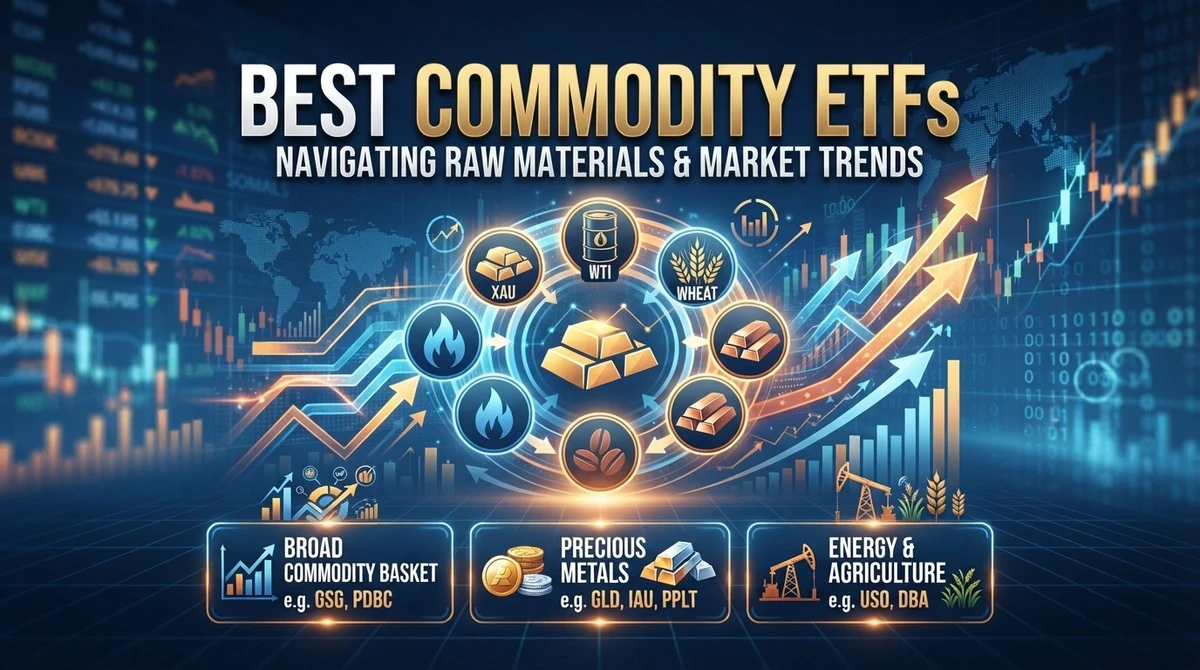
Best Commodity ETFs
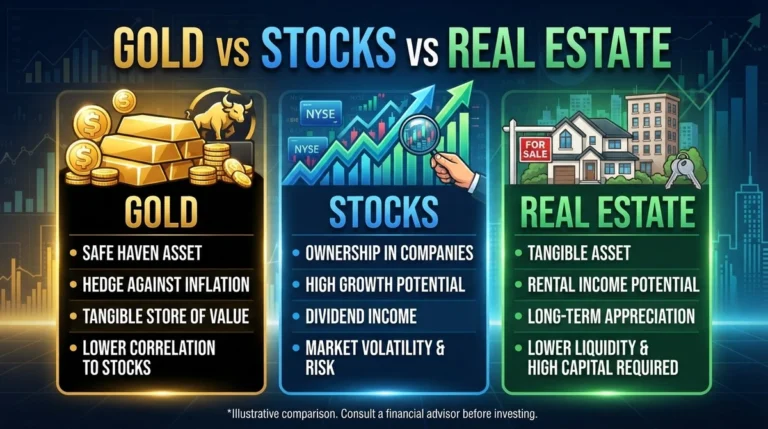
Commodity ETFs give investors a relatively simple way to gain exposure to commodities without opening a futures trading account or storing physical assets. But not all commodity ETFs work the same way.
Some funds are backed by physical commodities, while others use futures contracts or other derivatives. Some focus on one commodity, such as gold, while others spread exposure across energy, metals, and agriculture. The differences can have a meaningful effect on returns, costs, volatility, and tax treatment.
That makes the process of choosing a commodity ETF less about finding a single “best” fund and more about understanding what each fund actually owns and how its strategy works.
This guide explains how commodity ETFs work, the main types available, several widely used funds, and the factors investors should examine before investing.
What Is a Commodity ETF?
A commodity ETF or exchange-traded commodity fund is designed to provide exposure to the price or performance of one or more commodities.
Unlike buying barrels of crude oil, gold bars, or physical agricultural products, an investor can buy shares through a regular brokerage account. The fund handles the underlying exposure according to its investment structure.
This is different from a traditional stock ETF. A stock ETF generally owns shares of companies. A commodity fund may instead hold physical commodities, futures contracts, or other financial instruments linked to commodity prices.
Understanding that difference is important because two funds with similar names can produce very different investment results.
For a broader explanation of commodities themselves, see Economic Reader’s Best Commodity ETFs in the USA.
Why Investors Use Commodity ETFs
Commodity exposure can serve several different purposes within a portfolio.
One reason is diversification. Commodity prices are influenced by supply disruptions, weather, geopolitical events, production decisions, inventories, and global demand. These drivers are different from the factors that primarily determine the value of many stocks and bonds.
Commodities can also respond differently during periods of inflation or major supply shocks. Energy prices, for example, can rise sharply when global oil supplies are disrupted, while precious metals may respond to changes in real interest rates, currency conditions, or demand for defensive assets.
That does not mean commodities always rise when inflation rises or always protect a portfolio during market stress. Their behavior depends on the specific commodity and the economic environment.
Investors can therefore use commodity ETFs for targeted exposure, diversification, inflation-related strategies, or participation in specific commodity trends.
The Two Main Ways Commodity ETFs Gain Exposure
The most important distinction between commodity funds is often how they obtain exposure.
Physical Commodity Funds
Physical commodity funds hold the underlying commodity or assets representing direct ownership of it.
Gold funds are the clearest example. The iShares Gold Trust (IAU) seeks to reflect the performance of gold bullion and holds physical gold rather than a portfolio of gold-mining companies. Its sponsor fee is currently 0.25%.
Because the fund’s exposure is tied more directly to the underlying commodity, investors may find physical funds easier to understand when their objective is specifically to track a commodity such as gold.
However, physical commodity funds are not identical to owning the commodity yourself. Fund expenses and the structure of the trust can cause returns to differ from the commodity’s headline price.
Futures-Based Commodity Funds
Other commodity funds gain exposure through futures contracts.
A futures contract is an agreement to buy or sell a commodity at a specified price and date. Commodity funds can use these contracts to obtain exposure without physically storing oil, wheat, copper, or other commodities.
This structure creates an important issue: the fund’s return can differ significantly from the change in the commodity’s spot price.
One reason is the cost or benefit of replacing expiring futures contracts with later-dated contracts. This is known as rolling the futures position.
When futures prices are higher than current spot prices, the market is in contango. Rolling contracts can create a drag on returns if the fund repeatedly sells lower-priced expiring contracts and buys higher-priced replacements.
When futures prices are below spot prices, the market is in backwardation. Rolling contracts can instead provide a positive effect under certain conditions.
This is one of the most important concepts to understand before buying a broad commodity ETF. The commodity price you see in financial news is not necessarily the same thing as the return an investor receives from a futures-based fund.
Broad Commodity ETFs
Some investors want exposure to commodities as a group rather than betting on a single commodity.
Invesco DB Commodity Index Tracking Fund (DBC)
The Invesco DB Commodity Index Tracking Fund (DBC) is a broad commodity fund that uses futures exposure across major commodity sectors.
As of September 2026, Invesco lists a 0.89% total expense ratio, including estimated futures brokerage costs. The fund’s index methodology covers commodities across areas such as energy, metals, and agriculture.
DBC can therefore be useful for investors who want diversified commodity exposure through a single fund rather than building separate positions in individual commodity markets.
Its broader exposure, however, also means that performance can be affected by several commodity cycles at the same time. Oil prices, agricultural markets, and metals do not necessarily move together.
Invesco Optimum Yield Diversified Commodity Strategy No K-1 ETF (PDBC)
The Invesco Optimum Yield Diversified Commodity Strategy No K-1 ETF (PDBC) also provides diversified commodity exposure through derivatives.
Invesco describes PDBC as a diversified fund covering heavily traded commodities across energy, metals, and agriculture. It is structured as a 1940 Act fund and is designed to avoid generating a K-1 for investors. Tax treatment can still be complex, so investors should review the fund’s current tax documents and consider their own circumstances.
The key point is that PDBC and DBC are not simply interchangeable versions of the same product. Their structures, index methodologies, fees, and tax characteristics should be compared before investing.
Gold ETFs and Physical Precious-Metal Exposure
Gold is one of the most common ways investors gain direct commodity exposure through an exchange-traded product.
The iShares Gold Trust (IAU) is designed to reflect the performance of gold bullion and currently charges a 0.25% sponsor fee.
A fund such as IAU is different from a gold-mining ETF.
A gold-mining ETF owns shares of companies that explore for, produce, and sell gold. Those companies have operating costs, debt, management decisions, labor expenses, energy costs, and other business risks.
As a result, a gold-mining stock fund is not simply a substitute for physical gold exposure.
That distinction matters whenever an investor’s objective is specifically to track the commodity rather than companies associated with it.
Agriculture Commodity ETFs
Agriculture funds provide exposure to markets such as corn, wheat, soybeans, sugar, coffee, and other agricultural commodities.
The Invesco DB Agriculture Fund (DBA) is one example. Invesco currently lists a 0.93% total expense ratio for DBA.
Agricultural commodities can behave differently from energy or precious metals because production depends heavily on weather, planting decisions, crop yields, inventories, and seasonal cycles.
For investors researching agriculture markets, the U.S. Department of Agriculture’s WASDE reports are also useful because they provide regularly updated estimates on global agricultural supply, demand, production, and inventories.
The result is that agriculture exposure can add a different source of commodity risk than an energy-focused or precious-metals fund.
What Makes One Commodity ETF Different From Another?
The fund’s name and expense ratio are only the starting points.
1. Underlying Exposure
First ask what the fund actually owns.
Does it hold physical gold? Futures contracts? Shares of commodity-producing companies? A combination of derivatives and collateral?
The answer determines what the investment is really tracking.
2. Commodity Concentration
A fund focused on gold has very different exposure from a broad commodity fund.
A broad fund may reduce dependence on one commodity, but it can also dilute the impact of a strong move in a particular market.
The right choice depends on the exposure an investor is actually seeking.
3. Expense Ratio
Fees directly reduce investment returns over time.
The SEC notes that even relatively small differences in fund expenses can have a meaningful effect on long-term returns. Investors should therefore examine the prospectus and fee table rather than relying only on a fund’s headline description. (Investor.gov)
For commodity funds, however, the expense ratio is not the only cost that matters.
Futures-based funds can also be affected by brokerage costs, trading spreads, collateral income, and the economic effect of rolling futures contracts.
4. Futures Structure
For futures-based funds, investors should examine how the fund selects and rolls its contracts.
Two funds can both track a broad commodity index while using different methodologies. Those differences can affect performance, especially when futures markets remain in contango or backwardation for extended periods.
5. Liquidity
Trading liquidity matters because investors generally want to be able to buy or sell shares efficiently.
Higher trading volume and tighter bid-ask spreads can reduce the friction associated with entering or exiting a position. Investors should look at trading volume and spreads rather than assuming that every ETF offers the same trading conditions.
6. Tax Considerations
Commodity funds can have tax characteristics that differ from ordinary stock ETFs.
The structure of the fund, the underlying instruments, and distributions can all affect the investor’s tax situation. Some commodity products may also use partnership structures or other arrangements with specific reporting requirements.
PDBC, for example, is specifically structured as a No K-1 fund, while other commodity products can have different tax reporting characteristics. Investors should review current fund documentation and consult a qualified tax professional when necessary.
Commodity ETFs vs. Commodity Producer Stocks
This distinction is easy to overlook.
Suppose an investor wants exposure to rising oil prices. Buying an oil-focused commodity fund provides exposure to the commodity market itself.
Buying shares of an oil producer is different.
The company’s stock price can be affected by oil prices, but also by production costs, debt, capital spending, management decisions, political risks, dividends, and the company’s expectations for future production.
The same applies to gold.
A physical gold fund and a gold-mining ETF may both benefit from a strong gold market, but they represent different economic exposures.
Common Mistakes When Choosing Commodity ETFs
One common mistake is assuming that the ETF with the lowest expense ratio is automatically the most suitable.
Costs matter, but the fund’s structure matters too.
Another mistake is assuming that a commodity ETF will perfectly match the commodity’s spot-price movement. This can be particularly misleading with futures-based products because rolling contracts can materially affect returns.
Investors can also overlook concentration. A broad commodity ETF may sound diversified, but its exposure can still be influenced heavily by certain commodity sectors.
Another issue is confusing commodity exposure with producer-company exposure. A mining or energy stock fund can behave differently from a fund that directly tracks the underlying commodity.
Finally, past performance should not be treated as a guarantee of future returns. The SEC notes that historical performance can provide information about volatility and past behavior, but it does not predict future results. (Investor.gov)
How Commodity ETFs Can Fit Into a Portfolio
Commodity ETFs generally make more sense when investors first identify the role they want the investment to play.
Someone seeking direct gold exposure may look at a physically backed gold trust.
Someone seeking broader commodity exposure may consider a diversified futures-based fund.
An investor interested specifically in agricultural markets may prefer an agriculture-focused product.
These are different objectives, so comparing the funds only by recent returns can miss the most important question: what economic exposure does the fund provide?
Commodity funds can also be volatile. Energy prices can react sharply to supply disruptions, agricultural markets can move because of weather and crop conditions, and metals can respond to industrial demand, currency movements, interest rates, and global economic activity.
That makes position size and portfolio context important.
A Practical Way to Compare Commodity ETFs
Before investing, investors can work through a simple checklist:
What commodity exposure does the fund provide?
Physical commodity, futures, producer stocks, or another structure?
How concentrated is the fund?
Single commodity, one sector, or several commodity groups?
What does it cost?
Look beyond the expense ratio and consider other fund-level costs.
How does the fund handle futures contracts?
Understand its roll methodology and the potential effect of contango or backwardation.
How liquid is the ETF?
Check trading volume and bid-ask spreads.
What are the tax implications?
Review the fund’s tax documents and reporting structure.
Does the fund match the intended portfolio role?
A gold fund, agriculture fund, and broad commodity fund are not interchangeable.
This approach is more useful than simply searching for the ETF with the highest recent return.
Understanding the Fund Before Buying It
There is no single commodity ETF that fits every investment objective.
The important question is not simply which fund has performed best recently. It is what type of commodity exposure the investor wants, how that exposure is created, what it costs, and how the fund may behave when commodity markets change.
Physical funds can provide relatively direct exposure to certain commodities such as gold. Futures-based funds can provide broader access to commodity markets but introduce additional factors such as contract rolls and futures-curve conditions. Producer-stock ETFs offer yet another form of exposure because they combine commodity prices with the economics of operating companies.
That is why comparing the fund structure, underlying exposure, fees, liquidity, tax characteristics, and portfolio role is more useful than treating commodity ETFs as interchangeable products.
Commodity investing ultimately starts with understanding the exposure behind the ticker symbol. Once that is clear, it becomes much easier to judge whether a particular fund belongs in the portfolio at all.