
Crypto Trading vs Crypto Investing: What Is the Difference?

Crypto Trading vs Crypto Investing
Cryptocurrency can be approached in very different ways.
One person may buy Bitcoin because they believe it could become more valuable over several years. Another may buy and sell Bitcoin several times in a week, attempting to profit from shorter-term price movements.
Both are participating in the same market, but they are making different kinds of decisions.
That is the basic difference between crypto investing and crypto trading.
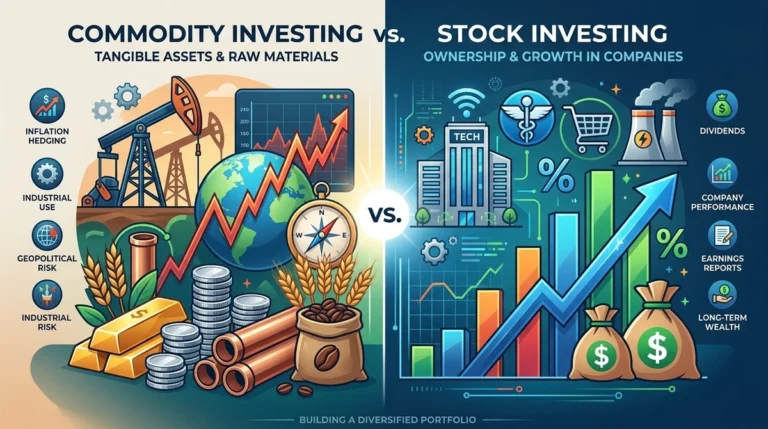
Crypto investing generally focuses on owning a digital asset for a longer period and assessing its potential value, adoption, utility, or economic role. Crypto trading focuses more directly on price movements and attempts to profit from changes over shorter or medium-term periods.
The distinction affects how someone researches an asset, manages risk, uses leverage, handles transaction costs, and evaluates performance. It also matters because cryptocurrency markets can experience large price swings over relatively short periods. The SEC has described bitcoin and ether as highly speculative investments, while the CFTC has warned that virtual-currency volatility can create significant risks, particularly when leverage is involved. (Investor.gov)
Crypto Investing Starts With the Asset
Long-term crypto investing usually begins with a question about the asset itself.
An investor may ask:
- What problem does this cryptocurrency or blockchain network solve?
- Does the network have sustained demand?
- How is the asset used?
- How does its supply work?
- Could adoption increase over time?
- What could weaken its long-term value?
Bitcoin and Ethereum illustrate why this analysis can differ from one cryptocurrency to another.
A Bitcoin investor may focus on scarcity, network security, adoption, and Bitcoin’s potential role as a digital monetary asset.
An Ethereum investor may pay more attention to network activity, smart-contract usage, demand for block space, staking, and the role of ETH within the Ethereum ecosystem.
These are not the same investment thesis.
The important point is that long-term crypto investing attempts to understand what could create or sustain demand for the asset over time.
For a broader explanation of the technology behind many crypto assets, see Economic Reader’s What Is Blockchain?.
Trading Looks at the Market Through Price
Crypto trading starts from a different question.
Instead of primarily asking where an asset could be several years from now, a trader may ask where its price could move over the next few hours, days, or weeks.
Traders can analyze:
- Price charts
- Trading volume
- Momentum
- Support and resistance
- Market volatility
- Order-book activity
- Open interest
- Funding rates
- News and market events
For example, a trader may buy Bitcoin at $100,000 because they expect a short-term breakout and plan to sell if the price reaches a predetermined target. Another trader may take a short position if they expect a decline.
The objective is not necessarily to determine Bitcoin’s long-term economic value. The objective is to identify a potential price movement and manage the risk if that expectation proves wrong.
That difference in objective changes how the market is interpreted.
Time Horizon Changes What Counts as a Problem
Time horizon is one of the clearest differences between the two approaches.
An investor may think in terms of years. A trader may think in terms of minutes, hours, days, or weeks.
Imagine Bitcoin falls from $100,000 to $90,000 shortly after someone buys it.
A long-term investor may view that decline as temporary volatility if the original reason for owning Bitcoin remains intact.
A short-term trader may see the same move as evidence that the trade is no longer working.
Neither reaction is automatically correct. The positions were created for different reasons.
This is why a strategy designed around a five-year outlook should not be evaluated in exactly the same way as one designed to capture a five-day price movement.
The Same Volatility Can Mean Different Things
Crypto markets make this distinction particularly important.
Digital assets can react sharply to changes in:
- Market liquidity
- Investor sentiment
- Regulation
- Network developments
- Institutional demand
- Macroeconomic conditions
- Leverage
- Broader risk appetite
For an investor, some of these short-term moves may simply be market noise.
For a trader, volatility is central to the strategy because price movement creates both the opportunity and the risk.
The CFTC notes that virtual-currency markets can be more volatile than traditional fiat currencies and that leverage can amplify both gains and losses in margined products. (CFTC)
So the same $10,000 price movement can have completely different significance depending on whether someone owns the asset as a long-term position or is trying to capture a short-term move.
What Crypto Investors Usually Analyze
Long-term investors generally spend more time examining factors that could influence an asset’s value over an extended period.
Depending on the cryptocurrency, that research can include:
- Network adoption
- Token supply and issuance
- Utility
- Developer activity
- Network security
- Competition
- Governance
- Liquidity
- Regulatory developments
- Actual economic demand
The CFTC similarly advises people considering digital coins or tokens to examine factors such as future demand, potential uses, liquidity, technological changes, competition, and the relationship between a token’s value and the underlying network or service. (CFTC)
That type of analysis is different from simply asking whether a chart looks bullish.
It also highlights an important point: a cryptocurrency is not automatically comparable to a stock just because both can be bought as investments.
A stock represents an ownership claim on a company. A cryptocurrency can instead be a native asset of a blockchain network with a completely different economic structure.
Investors therefore need to understand what actually creates demand for the specific asset they are considering.
What Crypto Traders Usually Analyze
Traders tend to place more emphasis on market conditions surrounding a particular price movement.
A trader may identify a potential breakout after a period of consolidation. Another may look for a reversal following a sharp rally. A derivatives trader may pay close attention to funding rates, open interest, liquidation levels, and market volatility.
The underlying blockchain can remain exactly the same while the trading opportunity changes from one day to the next.
That creates two different questions:
Investor: Could this asset have greater economic value over the long term?
Trader: Is there a price movement that can potentially be captured within my trading horizon?
Those questions can lead to completely different decisions.
Trading Usually Creates More Costs
One practical difference is the number of transactions.
A long-term investor might buy an asset occasionally and hold it for years.
A trader may enter and exit positions repeatedly.
Each transaction can involve costs such as:
- Trading fees
- Bid-ask spreads
- Slippage
- Funding costs
- Borrowing costs
- Potential taxes
A single fee may look small. Repeated fees can become much more important.
Suppose a trader makes dozens of transactions during a month. Even if each trade appears profitable before costs, the combined effect of fees and execution costs can materially reduce the final return.
That means gross trading performance is not the same as net performance.
This is particularly relevant in crypto markets, where liquidity can vary considerably between assets and trading venues.
Leverage Changes the Risk Completely
Leverage is another major dividing line between simply owning cryptocurrency and actively trading certain crypto products.
Leverage allows traders to control a larger position using a smaller amount of capital. That can magnify gains, but it also magnifies losses.
For example, a trader using 5× leverage can gain or lose money much faster than someone who simply owns the underlying asset without borrowing.
If the market moves sharply against a leveraged position, the trader may have to add collateral or close the position. Depending on the product and circumstances, losses can become substantial.
The CFTC specifically warns that leverage amplifies the risks of virtual-currency futures and can require traders to replenish margin or close positions when markets move against them. (CFTC)
This creates an important distinction:
Holding an asset and trading a leveraged position are not the same risk exposure.
Trading Requires More Frequent Decisions
The challenge in trading is not only market prediction.
A trader must repeatedly decide:
- When to enter
- How much capital to commit
- When to take profits
- When to exit a losing position
- Whether to use leverage
- Whether the original trade setup is still valid
That creates more opportunities for behavioral mistakes.
A trader might buy because prices are rising rapidly, refuse to close a losing position, increase leverage after a loss, or trade more frequently after a successful trade.
The problem is not unique to cryptocurrency, but crypto’s rapid price movements can make these decisions more difficult.
A trading strategy therefore needs rules that can be followed even when market conditions become stressful.
Long Term Investing Still Requires Risk Management
The absence of frequent trading does not make crypto investing safe.
Long-term investors still face risks including:
- Large price declines
- Regulatory changes
- Cybersecurity incidents
- Network vulnerabilities
- Competition between blockchain networks
- Changes in token economics
- Liquidity problems
- Custody risks
- Falling demand
The SEC has also highlighted risks involving volatility, illiquidity, platform failures, hacking, regulatory changes, and the possibility that some crypto assets could become difficult or impossible to trade. (Investor.gov)
For that reason, a long holding period should not be confused with low risk.
Someone can hold an asset for ten years and still lose a substantial portion of the original capital if the asset’s economic value deteriorates.
Economic Reader’s What Is Risk Management in Investing? explores the broader role of risk management in investment decisions.
Trading and Investing Can Produce Very Different Results
Consider two people who each allocate $10,000 to Bitcoin.
The first buys Bitcoin with a five-year investment horizon.
The second uses the $10,000 as trading capital and repeatedly buys and sells Bitcoin.
Suppose Bitcoin rises substantially over those five years.
The investor may benefit from the overall increase without correctly predicting every short-term move.
The trader could produce a very different result. Selling too early, buying after sharp rallies, taking repeated losses, paying transaction costs, or using excessive leverage could reduce the trading account even though Bitcoin itself increased significantly over the period.
This leads to an important distinction:
Being correct about the long-term direction of a cryptocurrency does not automatically make someone a successful trader.
Trading adds another layer of decisions between the market’s movement and the final result.
Spot Trading and Investing Can Look Similar
The boundary between trading and investing is not always determined by the holding period alone.
Someone who buys Bitcoin and sells it six months later could reasonably describe the activity as investing or trading depending on the original strategy.
A trader can hold a position for months if the trade is based on a medium-term price thesis.
An investor can sell after several months if the original investment thesis has changed.
The more useful question is:
Why was the position established, and what conditions would cause the person to exit it?
If the primary objective is to capture a defined price movement, the activity is closer to trading.
If the position is based on a longer-term view of the asset’s economic value or network adoption, it is closer to investing.
Where Staking Fits
Staking adds another layer to the comparison.
Someone holding ETH, for example, may earn staking rewards while maintaining exposure to Ethereum. That can resemble long-term investing because the holder remains exposed to the underlying asset.
But staking rewards do not eliminate market risk.
If the value of ETH declines significantly, the rewards earned may not offset the fall in the asset’s market price.
The same principle applies to other crypto products that advertise yields. A stated yield should not be considered in isolation from asset-price risk, liquidity, counterparty exposure, fees, and other conditions.
In the United States, the IRS treats certain digital-asset activities, including staking, as part of the federal tax framework for digital assets. The exact tax treatment depends on the transaction and taxpayer’s circumstances. (IRS)
Tax rules vary by country, so readers should check the rules that apply to their own jurisdiction.
The Platform Matters Too
The difference between trading and investing also affects how a person interacts with a crypto platform.
An investor may mainly need a way to buy, hold, transfer, and securely store an asset.
A trader may need access to advanced order types, derivatives, margin, market data, and other trading tools.
Platforms such as Bybit and Kraken offer different combinations of spot markets, derivatives, custody, and other crypto services. Economic Reader’s What Is Bybit? and What Is Kraken? explain how these platforms fit into the broader crypto market.
The availability of particular products and services can vary by country, account type, and regulatory requirements.
For investors, custody is another consideration. The SEC’s Investor Bulletin explains that crypto-asset custody involves how and where assets are stored and accessed, and highlights issues such as transaction fees, transfer fees, private-key security, phishing, and third-party custodians. (Investor.gov)
Taxes Become More Complicated With Frequent Trading
Tax administration can also become more demanding as transaction activity increases.
An investor who makes occasional purchases may have a relatively straightforward transaction history.
A trader making frequent purchases, sales, swaps, or transfers can generate a much larger number of records that need to be tracked.
The tax treatment itself depends on the country.
For U.S. taxpayers, the IRS says digital-asset transactions can include sales, exchanges for other digital assets, transfers involving goods or services, and certain rewards such as staking or mining. (IRS)
That does not mean the same rules apply globally. Anyone actively trading or investing in cryptocurrency should understand the tax requirements in their own jurisdiction and keep appropriate records.
Crypto Trading vs Crypto Investing: Key Differences
| Factor | Crypto Investing | Crypto Trading |
| Typical horizon | Months to years | Minutes to months |
| Main focus | Long-term asset or network value | Price movements |
| Activity level | Usually lower | Often higher |
| Research | Adoption, utility, tokenomics, network fundamentals | Price, volume, momentum, market structure |
| Transaction costs | Usually lower | Can become significant |
| Leverage | Not required | Common in some strategies |
| Main challenge | Assessing long-term value | Managing frequent decisions and risk |
| Emotional pressure | Often lower day to day | Can be higher |
| Risk management | Position sizing, diversification, custody | Position sizing, leverage, liquidity, exit rules |
| Return objective | Long-term appreciation and potential network-related value | Capturing price movements |
These are broad distinctions rather than strict rules. Real strategies can sit somewhere between the two.
The Two Approaches Can Exist in the Same Portfolio
Trading and investing do not necessarily have to be mutually exclusive.
Someone may maintain a long-term crypto allocation while using a smaller portion of capital for active trading.
The important issue is keeping the objectives clear.
If a long-term investment suddenly becomes a short-term trade simply because the price falls, the investor may end up making a decision without a defined strategy.
The opposite can happen too. A trader may turn a losing short-term position into a long-term holding simply because they do not want to accept a loss.
Separating the two approaches can make performance easier to evaluate.
A long-term position can be judged against its original investment thesis.
A trading position can be judged against its trading rules, risk limits, transaction costs, and execution.
The Biggest Difference Is the Question Being Asked
Crypto trading and crypto investing take place in the same market, but they approach that market from different directions.
Investing asks whether an asset or network can create and sustain value over a longer period.
Trading asks whether a price movement can be identified and managed within a defined period.
That difference affects research, time horizon, transaction costs, leverage, risk management, taxes, and even how volatility is interpreted.
Neither label tells you whether a particular strategy will succeed. What matters is whether the strategy matches its objective and whether the risks are understood.
For anyone participating in cryptocurrency markets, the most useful starting point is therefore not simply deciding whether they are a “trader” or an “investor.” It is understanding why the position exists, what could make the thesis wrong, how much risk can be accepted, and what would justify changing the position.
That clarity becomes especially important in a market where a long-term investment thesis and a short-term price movement can point in completely different directions.