

Why Natural Gas Prices Are Volatile
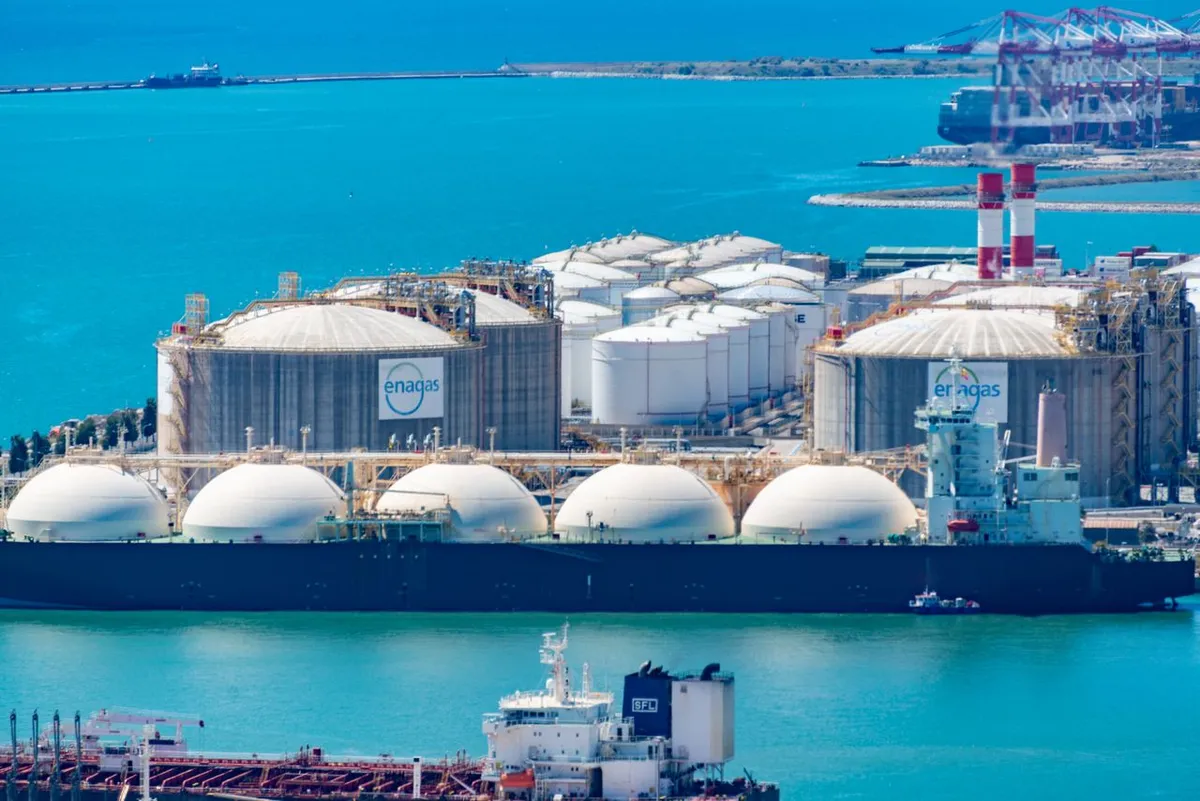
Why Natural Gas Prices Are Volatile
Natural gas prices can move sharply in a matter of days, sometimes even when there has been no major change in long-term supply or demand.
That is one of the unusual features of the natural gas market. Weather can change demand quickly, storage can absorb only so much excess supply, and pipelines limit how easily gas can move between regions. At the same time, growing liquefied natural gas (LNG) exports have connected U.S. natural gas more closely with international markets.
The result is a market where relatively small changes in the expected balance between supply and demand can produce large price movements.
The U.S. Energy Information Administration (EIA) identifies production, storage, imports and exports as major supply-side factors, while weather, economic activity, power generation, and competing fuels influence demand. The EIA also notes that short-term changes can have an outsized effect because many consumers cannot quickly switch away from natural gas for heating or electricity generation. (U.S. Energy Information Administration)
Natural Gas Has a Narrow Margin for Error
At its core, natural gas pricing comes down to supply and demand.
When production and available inventories are sufficient to meet consumption, prices generally face less upward pressure. When demand rises faster than supply can respond, prices can increase rapidly.
The important part is the timing.
A natural gas producer cannot necessarily increase output immediately because wells, gathering systems, processing facilities, and pipelines have physical limits. Consumers, meanwhile, may need the fuel immediately when temperatures change.
Consider a cold winter morning. Millions of households may increase heating demand at roughly the same time. If power-sector demand is also elevated, the market needs additional gas quickly.
Storage can provide some of that supply. Pipelines can move gas between regions where capacity is available. Producers may eventually respond to higher prices.
But none of these responses is unlimited or instantaneous.
That short-term imbalance is one of the main reasons natural gas prices can be so volatile.
For a broader explanation of how commodity prices connect physical supply with financial markets, see Economic Reader’s What Are Commodities?
Weather Can Move Prices Before Gas Consumption Changes
Weather is one of the strongest short-term influences on natural gas demand.
During winter, colder temperatures increase heating demand from households and businesses. During summer, unusually hot weather can increase electricity consumption as air-conditioning use rises, which can increase demand for natural gas from power plants.
That creates two major seasonal demand patterns:
Winter: colder weather → more heating → higher natural gas demand
Summer: hotter weather → more electricity demand → potentially higher gas-fired generation
The market also reacts to forecasts, not just actual temperatures.
Suppose forecasters suddenly expect a much colder week than previously anticipated. Utilities, traders, producers, and other market participants may adjust their expectations for gas consumption before the cold weather arrives.
If the forecast later becomes milder, those expectations can reverse.
This is why natural gas prices sometimes move sharply even though the physical market has not changed yet. The market is pricing what participants expect to happen next.
Storage Is the Market’s Shock Absorber
Underground storage gives the natural gas market flexibility.
Gas is generally injected into storage during periods when demand is relatively lower and withdrawn when demand increases. Storage therefore helps bridge the gap between relatively steady production and highly seasonal consumption. (U.S. Energy Information Administration)
But storage does not eliminate volatility.
What matters is not simply how much gas is in storage. Market participants also consider how inventories compare with historical levels and how much gas may be required during the coming high-demand season.
As of September 18, 2026, working gas in Lower-48 underground storage stood at 3.351 trillion cubic feet, according to the EIA. That was 146 billion cubic feet below the same week a year earlier but 95 billion cubic feet above the five-year average. (EIA)
Those comparisons matter because the same amount of stored gas can have a different market significance depending on expected weather, production, exports, and demand.
A market entering winter with comfortable inventories has more room to absorb a cold spell.
A market entering winter with unusually low inventories has less room for error.
That is why the EIA’s weekly storage report receives so much attention from natural gas market participants.
Production Responds to Prices, but Not Instantly
The growth of U.S. shale production has fundamentally changed the country’s natural gas market. But higher prices do not automatically create additional supply overnight.
Producers make decisions about drilling, completion activity, capital spending, and production based partly on expected prices and costs. Existing wells also continue producing even when market conditions change.
That can create different kinds of volatility.
If production remains strong while demand weakens, inventories can build faster than expected. If storage capacity becomes increasingly valuable, producers may face stronger pressure to reduce output or find additional markets.
The opposite can happen when production is disrupted during a period of strong demand.
Severe weather can affect both sides of the market. For example, extremely cold conditions can increase demand while also causing operational problems at some production or transportation facilities. The EIA notes that supply disruptions during periods of high demand can produce larger-than-expected price increases. (U.S. Energy Information Administration)
The important point is that natural gas supply has a response time. Prices can move before physical production has enough time to adjust.
LNG Has Added a Global Dimension
LNG has made the U.S. natural gas market more connected to overseas demand.
Natural gas can be cooled to about -260°F, turning it into a liquid that occupies roughly 600 times less volume than the gas in its normal state. That makes ocean transportation possible and allows gas to reach markets that are not connected by pipeline. (U.S. Energy Information Administration)
For the U.S. market, this has created another major source of demand.
An LNG export facility receives natural gas through pipelines, processes it, and loads the resulting LNG onto specialized ships. When export facilities operate at high utilization, they require large and relatively steady volumes of feedgas.
U.S. LNG exports averaged 17.4 billion cubic feet per day during the first half of 2026, 23% higher than during the same period in 2025, according to the EIA. The increase was driven largely by additional export capacity. (U.S. Energy Information Administration)
That growth matters for domestic prices because gas sent to LNG terminals is gas that is no longer available for other domestic uses or storage.
The relationship can also work in reverse.
If an LNG terminal undergoes maintenance or experiences an outage, feedgas demand can fall. More gas can then remain in the domestic market or flow into storage, potentially reducing price pressure. EIA analysis in 2026 has highlighted this relationship between LNG feedgas demand, storage, and Henry Hub prices. (U.S. Energy Information Administration)
Pipelines Make Location a Major Part of the Price
Natural gas cannot be moved as easily as oil.
Pipeline networks connect production areas, storage facilities, trading hubs, power plants, industrial users, and local distribution systems. When available pipeline capacity is sufficient, gas can move toward areas with stronger demand.
When capacity is constrained, the situation becomes very different.
A producing region can have plenty of natural gas while a nearby demand center faces tight supply.
That can produce significant differences between regional prices.
The EIA notes that consumer prices vary partly because of the distance from production and storage areas, pipeline availability and capacity, and the characteristics and timing of local demand. (U.S. Energy Information Administration)
This is why natural gas pricing is not simply a matter of watching one national number.
A useful way to think about the problem is:
Gas available somewhere ≠ gas available where it is needed
During extreme weather, that distinction becomes particularly important. A pipeline operating close to capacity has little room to accommodate a sudden increase in demand.
Infrastructure therefore acts as a physical limit on how quickly the market can rebalance.
Electricity Demand Can Tighten the Market Quickly
The electricity sector adds another layer to natural gas demand.
Natural gas-fired power plants are an important source of electricity generation in the United States. When temperatures become unusually hot, air-conditioning demand increases and power generators may consume more natural gas. (U.S. Energy Information Administration)
That can create a feedback loop between two markets:
Higher temperatures → higher electricity demand → more gas-fired generation → higher natural gas demand
The effect can be particularly important when other electricity sources are not producing enough to meet demand.
Changes in electricity generation can also influence storage. Strong summer gas consumption can reduce the amount of gas available for injection, leaving inventories lower than they otherwise would have been heading into winter.
Natural gas prices therefore cannot always be understood by looking at the gas industry alone. Electricity-market conditions can matter just as much.
Why Prices Can Fall as Fast as They Rise
Natural gas volatility works in both directions.
The same market that can experience a sudden shortage can also become oversupplied.
Imagine several developments occurring together:
- Weather turns milder than expected.
- Natural gas production remains strong.
- LNG export demand temporarily weakens.
- Electricity consumption falls.
- Storage injections are larger than expected.
The market then has more gas relative to immediate demand.
If inventories continue building, traders may become increasingly concerned about excess supply. Prices can fall as expectations change.
EIA’s 2026 outlook provides an example of how these relationships work. In August, the agency lowered its third-quarter Henry Hub price forecast partly because reduced LNG feedgas demand and robust production were expected to support higher storage levels. (U.S. Energy Information Administration)
This is an important feature of natural gas markets: price volatility does not require a dramatic change in physical supply. A change in expectations about future supply, demand, or storage can be enough.
Global LNG Markets Can Feed Back Into U.S. Prices
LNG has connected regional natural gas markets more closely, but the world still does not have one completely unified gas market.
North America, Europe, and Asia have different infrastructure, storage systems, weather patterns, contracts, and sources of supply. LNG provides a bridge between these markets, but shipping capacity, terminal capacity, and available cargoes still limit how freely gas can move.
International disruptions can therefore affect domestic market expectations.
For example, the closure of the Strait of Hormuz in 2026 caused major disruptions to LNG flows and pushed European and Asian gas prices higher. EIA reported that by late April, European TTF prices were 35% above their pre-closure level, while the Asian JKM benchmark was 51% higher. U.S. Henry Hub prices moved differently because domestic storage and supply conditions, along with limited near-term opportunities to increase LNG exports, insulated the U.S. market to some degree. (U.S. Energy Information Administration)
That episode illustrates an important point: global gas markets can influence one another without moving in exactly the same direction.
The effect on each region depends on its own supply, storage, infrastructure, and ability to import or export LNG.
This broader relationship is also connected to international trade and global supply chains. Economic Reader’s explains how physical goods, transportation, trade infrastructure, and international markets interact. How Does International Trade Work?
Economic Growth Adds a Longer Term Demand Driver
Weather tends to dominate short-term natural gas demand, but economic activity matters over longer periods.
Factories use natural gas as an energy source and as a feedstock for products including fertilizer and chemicals. When industrial activity expands, natural gas consumption can increase. During weaker economic periods, industrial demand may slow.
That creates another connection between natural gas and the broader economy.
Higher economic activity can increase demand for energy and manufactured goods. At the same time, higher natural gas prices can increase operating costs for businesses that depend heavily on the fuel.
The effect is particularly important for energy-intensive industries.
Economic Reader’s provides broader context on how energy, raw materials, transportation, and production networks connect businesses across countries. How Global Supply Chains Work
Why Natural Gas Volatility Matters Beyond Energy Markets
Natural gas price movements can spread into other parts of the economy.
For households, higher gas prices can increase heating costs. Electricity prices can also be affected when gas-fired generation becomes more expensive.
For businesses, natural gas is an important input in industries such as chemicals, fertilizer, manufacturing, and power generation.
That creates several potential transmission channels:
Natural gas prices → energy costs → production costs → business prices → consumer prices
The strength of this chain depends on the size and duration of the price movement.
A short-lived spike may have a limited effect on broader inflation. A prolonged increase can have a wider impact, particularly when several energy-intensive industries are affected at the same time.
The effect also differs across countries because electricity systems, energy mixes, natural gas infrastructure, and pricing structures are not the same everywhere.
Henry Hub Is a Benchmark, Not Every Customer’s Price
Henry Hub is the most widely recognized U.S. natural gas pricing benchmark and an important reference point for futures contracts and physical transactions.
But the Henry Hub price is not necessarily the price paid by a household or business.
Consumer prices also reflect transportation and distribution costs, along with taxes and fees. Regional prices can differ because of local supply conditions, pipeline capacity, and demand.
This distinction matters when interpreting headlines about natural gas.
A sharp move in the Henry Hub benchmark does not necessarily mean every consumer will immediately experience the same percentage change in their energy bill.
Likewise, a region facing a local pipeline constraint can experience much larger price movements than the national benchmark suggests.
What Should Investors and Businesses Watch?
Following natural gas prices effectively requires more than watching the daily futures price.
Weather Forecasts
Temperature forecasts provide clues about future heating and cooling demand.
The most important change is often the difference between the latest forecast and what the market previously expected.
Storage Data
The EIA’s weekly storage report shows how underground inventories are changing.
Comparing current stocks with the previous year and the five-year average can provide useful context.
Production
Production trends indicate how much supply is entering the market.
Strong production can put downward pressure on prices when demand is not keeping pace.
LNG Exports
LNG feed gas demand has become an increasingly important part of the U.S. balance.
Higher exports can tighten domestic supply, while terminal maintenance or disruptions can have the opposite effect.
Pipeline Conditions
Pipeline capacity and outages help explain regional price differences and sudden local shortages.
Electricity Demand
Power-sector gas consumption can rise rapidly during extreme heat or other periods of strong electricity demand.
Futures Prices
Natural gas futures provide a market-based view of expected future conditions. They are not guaranteed forecasts, but changes in the futures curve can reveal how expectations are shifting.
Natural Gas Volatility Is a Physical Market Story
Natural gas prices are volatile because several parts of the market can change at different speeds.
Weather can alter demand within days.
Production takes time to respond.
Storage provides flexibility but has limits.
Pipelines determine where gas can actually go.
Power generation can create sudden additional demand.
LNG exports connect U.S. gas to international buyers.
Economic activity influences industrial consumption.
Infrastructure disruptions can turn a relatively small imbalance into a much larger regional price movement.
The most important factor is therefore not any single variable. It is the interaction between them.
A cold winter combined with low storage and constrained pipelines creates a very different market from a mild winter with strong production and comfortable inventories.
That is why watching the natural gas price alone can be misleading.
The more useful question is what is happening underneath it: How much gas is being produced? How much is being stored? How much is being consumed? How much is being exported? And can the available supply reach the places where it is needed?
Natural gas volatility ultimately comes from the difficulty of keeping those pieces in balance. In a market where demand can change quickly and physical infrastructure limits how fast supply can move, even a relatively small change in expectations can produce a large price response.