
U.S. Stock Market Monthly Update: August 2026 AI Drives Wall Street Higher as Rate Risks Build
U.S. Stock Market Monthly Update: August 2026
August was another strong month for U.S. equities, but the rally became noticeably more complicated as the month progressed. Artificial intelligence remained the market’s most powerful growth theme, corporate earnings gave investors confidence, and major indexes continued to trade near record levels.
At the same time, inflation remained above the Federal Reserve’s target, Treasury yields moved higher and renewed Middle East tensions pushed oil prices above $90 a barrel near month-end. By the final trading day, investors were no longer asking simply whether stocks could keep rising. The bigger question was whether valuations, inflation and interest-rate risks were beginning to catch up with the rally.
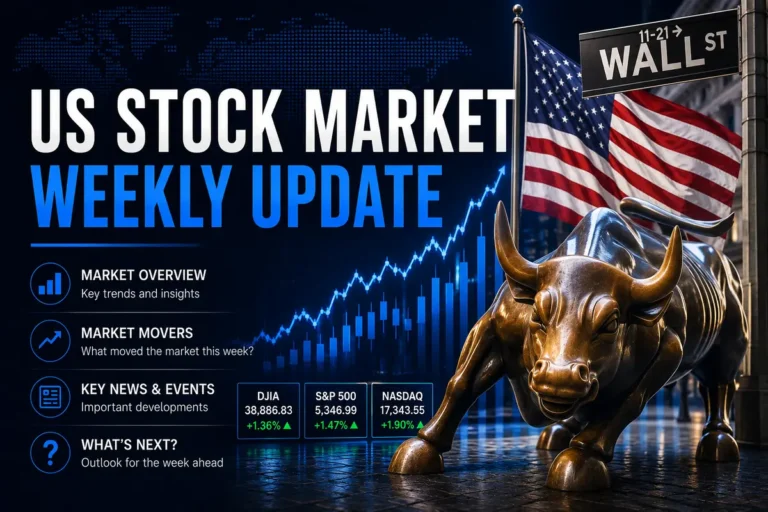
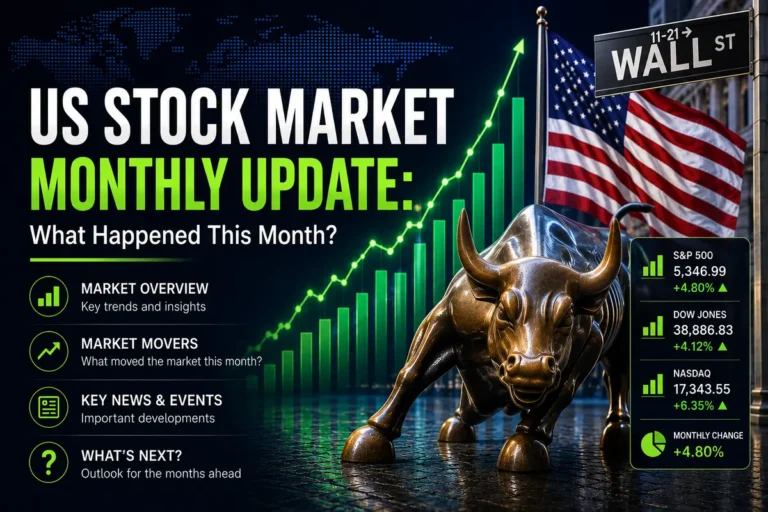
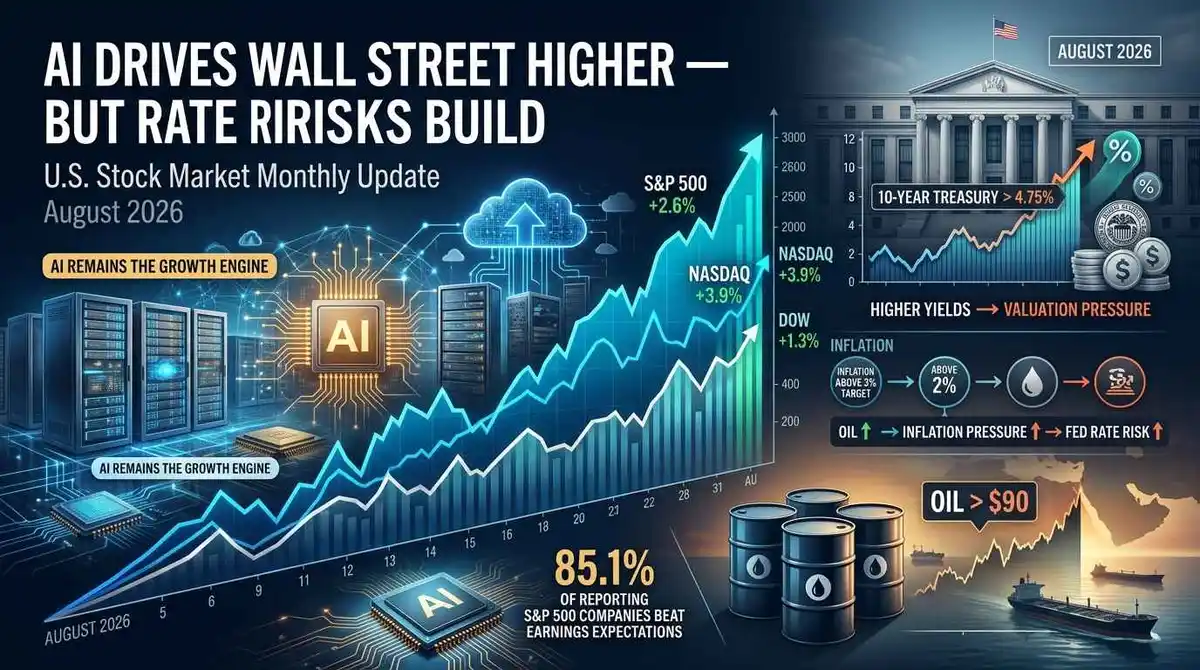
According to Reuters’ August 31 market report, the S&P 500 gained about 2.6% during August, the Nasdaq Composite rose about 3.9%, and the Dow Jones Industrial Average advanced about 1.3%. The Dow recorded its fifth consecutive monthly gain, while the Nasdaq delivered the strongest performance of the three major indexes. (Reuters)
August was a good month for stocks but the path was uneven
The headline numbers make August look straightforward. It was not.
The month began with investors watching economic data and Federal Reserve policy expectations closely. Early in August, weaker U.S. employment data reduced expectations for an immediate rate increase and helped push Treasury yields lower.
On August 7, the S&P 500 closed at a record high after U.S. payrolls unexpectedly declined by 23,000 in July. The softer labor-market data reduced expectations for a September rate hike, while lower oil prices also eased some inflation concerns. At that point, investors were effectively receiving a familiar market combination: weaker economic data, lower-rate expectations and strong corporate earnings. (Reuters)
For investors trying to understand why interest rates matter for equities, Economic Reader’s guide to how inflation affects your money provides useful background on the connection between inflation, purchasing power and financial markets.
But the market’s optimism did not last unchanged throughout the month.
AI remained the market’s strongest engine
The most important reason the Nasdaq outperformed the Dow in August was the continued strength of technology and artificial-intelligence-related stocks.
For much of the year, investors had been questioning whether the enormous capital spending required to build AI infrastructure could eventually produce sufficient profits. August earnings helped reduce some of those concerns.
Nvidia became the clearest example.
The chipmaker’s latest results again showed powerful demand from data-center customers. Reuters reported on August 27 that Nvidia’s data-center revenue had more than doubled from a year earlier and that the company was projecting roughly 70% sales growth for 2027. The results helped reinforce confidence that the AI investment cycle had not yet run out of momentum. (Reuters)
That matters well beyond Nvidia itself.
The AI investment story increasingly includes semiconductor manufacturers, cloud-computing companies, networking businesses, power providers and data-center infrastructure firms. Investors were therefore not simply buying one technology stock. They were positioning around a broader investment cycle.
Reuters also reported during August that large investors were increasingly looking beyond individual chipmakers toward hyperscale cloud companies and other businesses positioned to benefit from continued AI infrastructure spending. (Reuters)
For readers interested in the underlying valuation question, Economic Reader’s guide to how business valuation works explains why expectations about future earnings can have such a large influence on stock prices.
Earnings gave the rally something fundamental to stand on
One reason the August rally looked more durable than a purely speculative move was the strength of corporate earnings.
By early August, Reuters reported that 85.1% of the S&P 500 companies that had reported results were beating analyst earnings expectations, well above the long-term historical average. Strong results helped offset concerns about expensive valuations and enormous AI-related capital expenditure. (Reuters)
That distinction is important.
A stock market can rise because investors simply become more willing to pay higher prices for shares. But a stronger foundation exists when rising share prices are accompanied by improving corporate earnings.
August provided evidence of both forces.
Technology companies continued to benefit from AI spending, while other sectors also produced enough earnings strength to keep investors engaged. That helped the S&P 500 maintain its upward trend even when interest-rate expectations became less favorable.
Then the bond market started sending a warning
The most interesting development in the second half of August was not necessarily in the stock market itself.
It was in the bond market.
U.S. Treasury yields began moving higher as investors reassessed inflation and the future path of Federal Reserve policy. Rising long-term yields matter for equities because they increase the return investors can potentially receive from relatively safer assets while also raising the discount rate applied to future corporate earnings.
That can be particularly important for growth stocks.
Companies whose valuations depend heavily on profits expected several years into the future are generally more sensitive to changes in interest rates than companies producing large amounts of cash today.
By the end of August, this relationship was becoming increasingly visible.
On August 31, the U.S. 10-year Treasury yield moved above 4.75%, while crude oil prices rose above $90 a barrel. The combination pressured stocks and reinforced concerns that inflation could remain difficult for the Federal Reserve to control. (Reuters)
This was one of the clearest signs that August’s equity rally was becoming more demanding.
The Fed changed the conversation
Federal Reserve policy became a major market issue after Chairman Kevin Warsh’s speech at the Jackson Hole Economic Policy Symposium on August 28.
Warsh pointed to inflation as the more concerning side of the Fed’s dual mandate. He noted that the 12-month PCE inflation rate stood at 3.7%, while the six-month measure was 4.1%, both well above the Federal Reserve’s 2% target. (Federal Reserve)
That message mattered because markets had been hoping for a more accommodative interest-rate environment.
Instead, investors were reminded that the Fed could still raise rates if inflation remained too high.
Reuters reported that U.S. stocks ended lower on August 28 after Warsh reaffirmed the central bank’s focus on fighting inflation. (Reuters)
For readers unfamiliar with the institution behind these decisions, Economic Reader’s What Is the Federal Reserve? explains the Fed’s role in monetary policy and the U.S. financial system.
Oil added another layer of risk
The final days of August introduced another problem for Wall Street: energy prices.
Renewed military tensions involving the United States and Iran pushed crude prices higher, with concerns surrounding the Strait of Hormuz adding to the market’s risk premium.
That matters for stocks because higher oil prices can feed into inflation.
For consumers and businesses, more expensive energy raises transportation and operating costs. If those higher costs become persistent, they can complicate the Federal Reserve’s efforts to bring inflation back toward its 2% target.
The August 31 market reaction illustrated this connection clearly. Oil prices jumped more than 2%, Treasury yields rose and U.S. stocks fell, even though the major indexes still finished the month higher overall. (Reuters)
This also created an unusual situation for investors: energy stocks could benefit from higher crude prices while many other sectors faced pressure from the resulting inflation and interest-rate concerns.
Why the Nasdaq led the major indexes
The Nasdaq’s roughly 3.9% August gain compared with approximately 2.6% for the S&P 500 and 1.3% for the Dow tells an important story about what investors were willing to pay for.
The market continued to place a premium on companies with exposure to AI, cloud computing, semiconductors and other technology themes.
But that leadership also comes with a risk.
When expectations become extremely high, even strong earnings can fail to satisfy investors. A company can report excellent results and still see its shares fall if the market had already priced in something even better.
That is why Nvidia’s August results were particularly important. Strong numbers did not eliminate concerns about valuation, but they provided evidence that the underlying demand supporting the AI trade remained substantial. (Reuters)
The question for the next stage of the rally is therefore not simply whether AI spending continues. It is whether earnings growth can continue to justify the prices investors are paying for that growth.
August’s final week exposed the market’s weak point
The final week was significant because several previously separate risks began moving in the same direction.
Oil was rising.
Treasury yields were rising.
Inflation remained above target.
The Federal Reserve was emphasizing price stability.
And geopolitical tensions were creating another potential source of inflation.
At the same time, technology stocks remained supported by strong AI expectations.
That combination explains why the market could finish August higher while sentiment became less comfortable.
The rally had not broken. But the margin for disappointment was getting smaller.
What August tells investors about U.S. equities
The most useful lesson from August may be that the U.S. stock market is no longer being driven by one simple story.
There are several forces operating simultaneously.
Corporate earnings are supporting equity prices.
AI investment is creating powerful growth expectations.
Interest rates are becoming a greater constraint.
Treasury yields are influencing how investors value future earnings.
Oil prices and geopolitical risks could complicate the inflation outlook.
And Federal Reserve policy remains highly dependent on incoming economic data.
That creates a market that can continue rising, but probably cannot ignore bad news as easily as it did earlier in the month.
What could shape the next phase of the market?
The September outlook will depend on several variables.
1. Inflation data
Investors will be watching inflation closely because the Federal Reserve’s next policy decision is approaching. A hotter inflation reading could strengthen the case for tighter monetary policy, while softer data could reduce pressure on equities.
2. Treasury yields
The direction of long-term bond yields may become just as important as the S&P 500 itself. A continued rise in yields could put pressure on high-growth stocks even if corporate earnings remain strong.
3. AI earnings and spending
The AI investment cycle remains one of the biggest bullish arguments for U.S. equities. Investors will increasingly want evidence that enormous infrastructure spending is translating into sustainable revenue and profits.
4. Oil and geopolitical developments
A sustained oil-price increase would make the inflation problem more complicated. If geopolitical tensions ease and crude prices retreat, some of that pressure could disappear.
5. The Federal Reserve
The Federal Reserve’s next scheduled FOMC meeting is September 15–16, 2026, according to the central bank’s official calendar. (Federal Reserve)
That meeting will be one of the central events for global financial markets as investors assess whether inflation is high enough to justify another rate increase.
The Fed’s official monetary policy information provides the latest statements, meeting information and policy documents.
FAQ
1. How did the U.S. stock market perform in August 2026?
The S&P 500 gained approximately 2.6%, the Nasdaq Composite rose about 3.9%, and the Dow Jones Industrial Average increased about 1.3% during August, according to Reuters’ month-end market report. (Reuters)
2. Why did the Nasdaq outperform the Dow in August?
The Nasdaq benefited from continued investor enthusiasm around artificial intelligence, semiconductors, cloud computing and technology earnings. Strong Nvidia results were particularly important for the AI investment narrative. (Reuters)
3. Did interest rates affect U.S. stocks in August?
Yes. Expectations surrounding Federal Reserve policy became increasingly important as the month progressed. Rising inflation concerns and higher Treasury yields created pressure on equity valuations, particularly for growth-oriented companies.
4. Why were oil prices important for the stock market?
Higher oil prices can increase inflation by raising energy and transportation costs. That can make it more difficult for the Federal Reserve to lower interest rates and may therefore put pressure on stock valuations.
5. What should investors watch in September?
Investors should pay close attention to inflation data, Treasury yields, oil prices, AI-related earnings and Federal Reserve policy expectations. The Fed’s September 15–16 meeting will be a major event for financial markets. (Federal Reserve)
Final Thoughts
August 2026 delivered another strong month for U.S. stocks, but it also revealed the conditions that could make the next stage of the rally more difficult.
AI remained a powerful source of optimism. Corporate earnings continued to provide fundamental support. Yet inflation, Treasury yields, oil prices and Federal Reserve policy were increasingly pushing in the opposite direction.
That does not necessarily mean the bull market is ending. It does mean investors may need to distinguish more carefully between strong companies, strong earnings and simply expensive stocks.
August showed that Wall Street can continue climbing while the underlying environment becomes less forgiving. The next phase of the market may depend on whether earnings growth can stay strong enough to overcome higher rates, persistent inflation risks and a more uncertain geopolitical backdrop.
Read July Month’s Market Reports:
- Oil Market Monthly Update: click here.
- Gold Market Monthly Update: click here.
- Stock Market Monthly Update: click here.
- Crypto Market Monthly Update: click here.
Author Note: This article is crafted by “The Economic Reader editorial team”, dedicated to analyzing the latest market trends, financial updates, and global economic shifts to keep you informed with accurate and comprehensive insights.
Disclaimer: The information provided on this website is for educational and informational purposes only and should not be construed as professional financial, investment, or legal advice. Always consult with a certified financial advisor or professional before making any financial decisions based on this content.