
What Is Apple Pay? Understanding Apple’s Digital Payment Platform
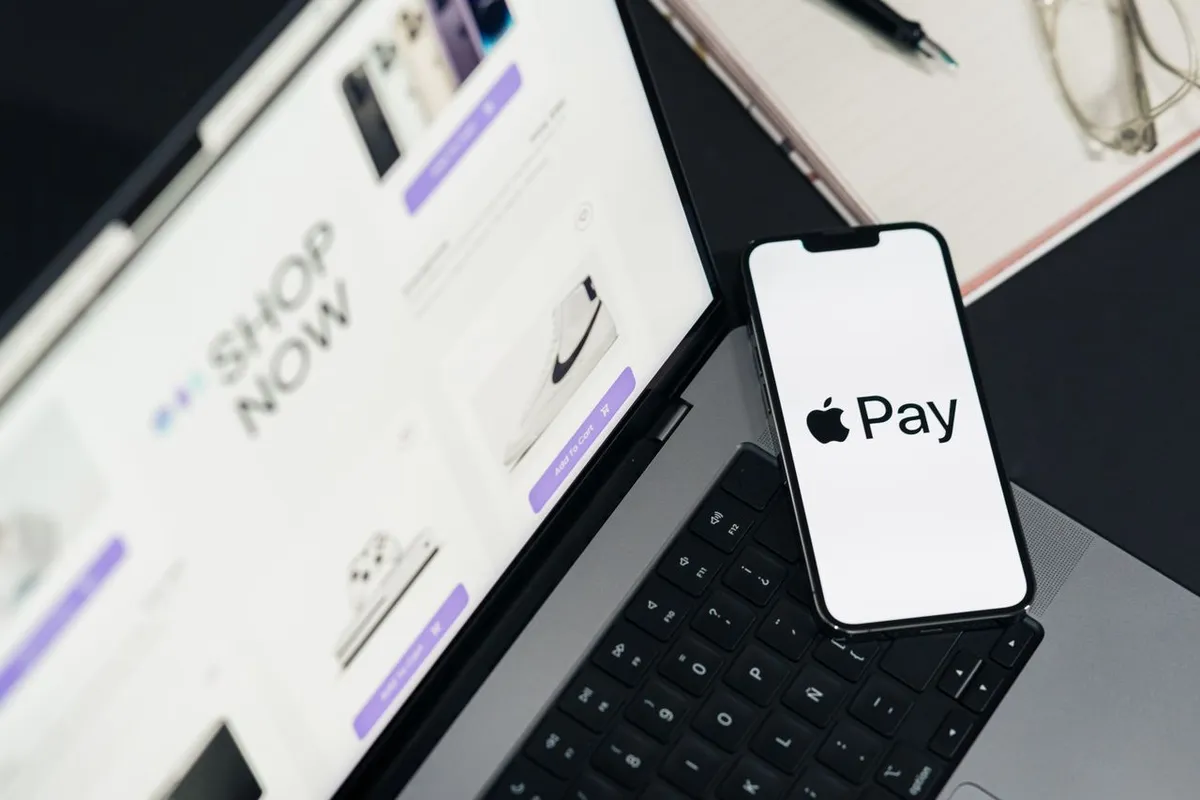
Paying with a phone can look simply. Hold an iPhone near a payment terminal, authenticate with Face ID or a passcode, and the transaction is complete.
Behind that quick tap, however, is a much larger payment system involving the customer, Apple, the card issuer, payment network, merchant, and payment processor.
Apple Pay is Apple’s digital payment platform that allows users to add eligible credit, debit, and prepaid cards to Apple Wallet and use them for purchases in stores, apps, and on websites. Apple Pay is built into devices including the iPhone, Apple Watch, iPad, Mac, and Apple Vision Pro. Apple Pay
The important point is that Apple Pay is not a bank and does not replace the underlying card network.
Instead, it provides a digital layer between the customer’s device and the existing payment infrastructure.
That makes Apple Pay an important part of the broader shift toward digital payments.
What Is Apple Pay?
Apple Pay is a digital payment service developed by Apple that lets consumers use supported payment cards through Apple devices.
A user can add an eligible card to Apple Wallet and then use that card through Apple Pay without physically presenting the card to the merchant.
It can be used for:
- In-store contactless purchases
- In-app purchases
- Online purchases
- Certain transit payments
- Other supported payment services
Apple says Apple Pay is accepted on millions of websites and apps, while availability and supported features vary by country, card issuer, and merchant. (Apple)
Apple Pay is therefore best understood as a digital payment platform and interface, rather than a traditional financial institution.
The underlying money can still come from the customer’s existing credit or debit card.
That makes Apple Pay different from a bank account or a standalone source of credit.
Apple Pay Is Not a Bank
Apple Pay does not replace the financial relationship between a customer and their bank or card issuer.
Suppose a customer adds a Visa credit card issued by a bank to Apple Wallet.
The customer still has the same credit card account, the same issuer, and the same underlying credit relationship.
Apple Pay changes how that card is presented and authenticated during a transaction.
A simplified payment relationship looks like this:
Customer → Apple Pay → Payment network → Card issuer / merchant ecosystem
The exact processing path depends on the transaction and payment arrangement, but Apple Pay operates alongside the existing card infrastructure rather than replacing it.
This is also why understanding Apple Pay is easier if you first understand the basic role of a payment card. Economic Reader’s What Is a Credit Card? and What Is a Debit Card? explain how those underlying payment instruments work.
Where Apple Pay Fits into the Payment System
A conventional card transaction can involve several participants:
- Customer – makes the purchase
- Merchant – sells the product or service
- Card issuer – provides the customer’s card
- Payment network – carries payment information between participants
- Payment processor/acquirer – helps the merchant process payments
- Apple Pay – provides the digital payment interface and security technology
Apple Pay therefore changes the customer’s interaction with the payment system without eliminating the system underneath it.
With a physical card, the customer presents the card.
With Apple Pay, the customer presents a digital payment credential stored on an Apple device.
That distinction is central to understanding Apple’s role in digital payments.
It also connects Apple Pay to the broader transformation taking place across the payments industry. Economic Reader’s The Future of Digital Payments looks at how digital wallets, instant payments, tokenization, and other technologies are changing the movement of money.
What Happens When You Add a Card to Apple Pay?
Adding a card to Apple Wallet involves more than simply taking a photograph of the card.
Apple and the relevant financial institutions need to determine whether the card is eligible and provision the payment credentials needed for Apple Pay.
Apple says card-related information and certain device information can be used during setup, while the card issuer, payment network, or authorized provider can participate in determining eligibility and setting up the card. (Apple)
After approval, the issuer or its authorized provider creates a device-specific Device Account Number.
That number is stored in the device’s Secure Element rather than simply placing the original card number inside the phone.
This is one of the most important technical features of Apple Pay.
What Is Tokenization in Apple Pay?
Tokenization is a major part of Apple Pay’s security architecture.
Instead of using the customer’s actual card number during an in-store Apple Pay transaction, the system uses a device-specific payment credential called a Device Account Number, along with transaction-specific security information.
Apple says the original card number is not stored on the device or on Apple servers. The Device Account Number is encrypted and stored in the Secure Element, a dedicated security component on the device. (Apple)
A simplified representation is:
Physical card number → device-specific credential → transaction authorization
The merchant does not receive the customer’s actual card number from an Apple Pay transaction.
Apple’s security documentation also explains that a dynamic security code is generated for payment transactions. This helps the payment network and issuer verify the transaction rather than relying on a static card credential. (Apple Support)
This architecture is one reason Apple Pay is more than simply storing a picture of a credit card on an iPhone.
How Does an Apple Pay Transaction Work?
Consider a customer buying a $100 item at a contactless terminal.
Step 1: The customer selects a card
The customer activates Apple Pay and chooses the eligible card they want to use.
Step 2: The customer authenticates
Depending on the device, the customer confirms the payment with Face ID, Touch ID, a passcode, or another supported authentication method. Apple states that payment information is not sent without user authentication. (Apple Support)
Step 3: The device provides the payment credentials
The device uses the Device Account Number and transaction-specific security information rather than simply transmitting the original card number.
Step 4: The transaction enters the payment system
The payment continues through the relevant merchant, processor, payment network, and issuer infrastructure.
Step 5: The card issuer authorizes the transaction
The issuer evaluates the transaction and determines whether it should be approved.
Step 6: The merchant receives confirmation
If the transaction is approved, the merchant receives confirmation and the purchase can be completed.
From the customer’s perspective, this can take only a few seconds.
The underlying payment system, however, remains much more complex.
Why Apple Pay Does Not Replace Visa or Mastercard
Apple Pay and payment networks such as Visa and Mastercard perform different functions.
A payment network provides infrastructure that connects participating financial institutions and merchants.
Apple Pay provides the consumer-facing digital payment layer through which an eligible card can be used on an Apple device.
So a simplified transaction could look like:
iPhone → Apple Pay → underlying card → payment network → issuer/merchant ecosystem
This means Apple Pay can work with cards issued by different banks and supported by different payment networks.
The distinction is important because a consumer can use Apple Pay without changing the underlying card account.
The customer may continue to receive the card’s existing rewards and benefits while using it through Apple Pay.
Where Can You Use Apple Pay?
Apple Pay supports several payment environments.
Physical Stores
Customers can use Apple Pay at compatible contactless terminals.
On supported iPhones, the customer can authenticate and hold the device near the contactless reader. Apple also supports Apple Pay on Apple Watch and other compatible devices. (Apple Support)
Apps
Apple Pay can be integrated into supported apps so customers can select Apple Pay rather than manually entering payment details.
Websites
Apple Pay can also be used on supported websites and browsers.
For businesses, Apple provides developer tools and APIs that allow Apple Pay to be integrated into apps and websites. (Apple Developer)
This matters because reducing the number of steps between choosing a product and completing payment can reduce friction in digital commerce.
Apple Pay Security and Privacy
Security is one of the most important parts of Apple’s Apple Pay strategy.
When a customer uses Apple Pay for an in-store card payment, the transaction uses the Device Account Number and a transaction-specific security code.
Apple says neither Apple nor the device shares the full card number with the merchant. (Apple)
Authentication provides another layer of protection because the user generally needs to verify the payment through the device’s supported authentication method.
But this does not mean Apple Pay is completely immune to fraud.
Fraud can still involve stolen devices, compromised accounts, phishing, social engineering, fraudulent merchants, or weaknesses elsewhere in the payment ecosystem.
Privacy also needs a nuanced explanation.
Apple says it does not know what customers buy, where they bought it, or how much they paid when they use a credit or debit card through Apple Pay. At the same time, Apple’s privacy documentation explains that certain card, device, account, and location information may be shared during card setup, eligibility checks, fraud prevention, and payment-related functions. (Apple)
So the more accurate takeaway is:
Apple Pay is designed to limit exposure of the customer’s actual card number and protect payment information, but using Apple Pay does not mean that no payment-related information is ever processed or shared.
Apple Pay Works with Existing Cards
Apple Pay’s business model is partly built around existing financial relationships.
Apple does not need to issue every card itself.
Instead, it can support eligible cards from participating banks and payment networks and provide the digital interface through which customers use them.
Apple maintains country-specific availability because supported banks, cards, and features vary between markets.
This makes Apple Pay an ecosystem layer.
The customer keeps the existing financial account.
The bank continues to issue the card.
The payment network continues to support the underlying transaction.
Apple controls an important part of the digital experience through the device, Wallet, authentication, and payment interface.
That is one of the most economically interesting aspects of Apple Pay.
Apple Pay vs. Apple Cash
Apple Pay and Apple Cash are related but different services.
Apple Pay allows customers to make purchases using supported payment cards and other eligible payment methods.
Apple Cash is a separate service available in the United States that allows users to send and receive money and use their Apple Cash balance for eligible purchases through Apple Pay.
The distinction can be simplified as:
Apple Pay = digital payment platform
Apple Cash = separate money-transfer and stored-value service
They can work together, but they are not the same product.
How Apple Pay Creates Value for Apple
Apple Pay becomes more strategically interesting when viewed as part of Apple’s broader ecosystem.
The value is not limited to helping someone pay for a coffee.
Apple controls the hardware and operating system on which Apple Pay operates.
That gives the company control over important parts of the customer experience:
Device → Wallet → Authentication → Payment → Other Apple services
The more consumers use Wallet and Apple Pay, the more integrated their financial activity can become with Apple’s devices.
Apple said in October 2024 that Apple Pay was being used by hundreds of millions of consumers across 78 markets, with millions of websites and apps and tens of millions of stores accepting it, supported by more than 11,000 bank and network partners at that time. (Apple)
Those figures illustrate how Apple Pay had developed from a mobile-payment feature into a large global payment platform.
The economic significance is therefore partly about control of the payment interface.
Apple does not have to replace banks to become influential in payments.
It can instead become an important layer through which customers interact with existing financial services.
Why Apple Pay Matters to Merchants
Apple Pay also changes the checkout experience for businesses.
A merchant that already accepts contactless card payments may be able to support Apple Pay through its payment provider. Apple also provides tools for businesses that want to integrate Apple Pay into apps and websites. (Apple Developer)
For merchants, the potential benefit is not simply adding another payment option.
It is reducing friction.
A customer does not need to manually type a full card number into a supported checkout. On compatible devices and websites, payment details can be confirmed through the Apple Pay interface.
That can be particularly useful in e-commerce, where every additional checkout step can create another opportunity for a customer to abandon a purchase.
Apple Pay and the Shift Toward Digital Payments
Apple Pay is part of a much broader change in how money moves through the economy.
The progression can be simplified as:
Cash → physical cards → contactless cards → mobile wallets → increasingly embedded digital payments
The important change is that payment is becoming less visible.
A customer may simply tap a phone and move on.
But underneath that interaction, banks, payment networks, merchants, processors, security systems, and technology platforms continue to work together.
This is why digital wallets should not be viewed simply as replacements for physical wallets.
They are becoming interfaces connecting consumers to a much larger financial infrastructure.
Economic Reader’s The Future of Digital Payments explores this broader transformation and how digital payments are changing money, banking, and commerce.
Apple Pay’s Limitations
Apple Pay is not universally available in exactly the same form.
Availability depends on the country or region, participating financial institutions, supported cards, merchants, and the specific feature being used. (Apple Developer)
Differences can include:
- Supported cards
- Participating banks
- Merchant acceptance
- Transaction requirements
- Transit support
- Online payment availability
- Region-specific financial services
Apple Cash, for example, has U.S.-specific availability, while Apple Pay itself operates across many international markets.
This means the Apple Pay experience can differ significantly from one country to another.
The technology may be global, but the financial infrastructure around it remains partly local.
Apple Pay vs. Other Digital Wallets
Apple Pay operates within a competitive digital-wallet market that includes services such as Google Pay and bank- or platform-based payment solutions.
The competition is not only about which service can process a payment.
It is also about the ecosystem surrounding that payment.
Apple has an unusual position because it controls both the hardware and operating system used by its customers.
That gives it significant control over authentication, security, software integration, and the payment experience.
Other wallets may have different strengths, device coverage, banking relationships, or market positions.
The broader competition is therefore about a much larger question:
Which platforms can make digital payments a natural part of everyday economic activity?
The Economic Importance of Apple Pay
Apple Pay illustrates a broader trend in financial technology: technology companies can become important participants in financial services without becoming traditional banks.
Apple does not need to issue every payment card or operate a conventional deposit account to influence how consumers pay.
Instead, it controls an important part of the customer interface.
That can affect:
- Consumer payment habits
- Merchant checkout systems
- Card usage
- E-commerce
- Payment security
- Banking relationships
- Competition between technology companies and financial institutions
The significance of Apple Pay therefore goes beyond convenience.
It shows how financial activity is increasingly being embedded inside the technology platforms people already use.
Apple Pay Is a Payment Layer, not a Bank
Apple Pay works because it connects Apple’s devices and software with the existing payment ecosystem.
The customer sees a simple tap or authentication screen.
Behind it are card issuers, payment networks, merchants, processors, tokenization systems, and security controls.
The most important distinction is that Apple Pay does not replace the underlying card system.
It changes how consumers access that system.
Its strength comes from combining payment technology with Apple’s broader ecosystem of devices, Wallet, authentication, and services.
As payments become increasingly digital, the companies controlling the customer interface can play a larger role in financial transactions.
Apple Pay is a clear example of that shift: the physical card can disappear from the customer’s hand while the financial infrastructure behind the payment continues to operate.