

What Is Mastercard? Understanding the Global Payment Network Behind Everyday Transactions
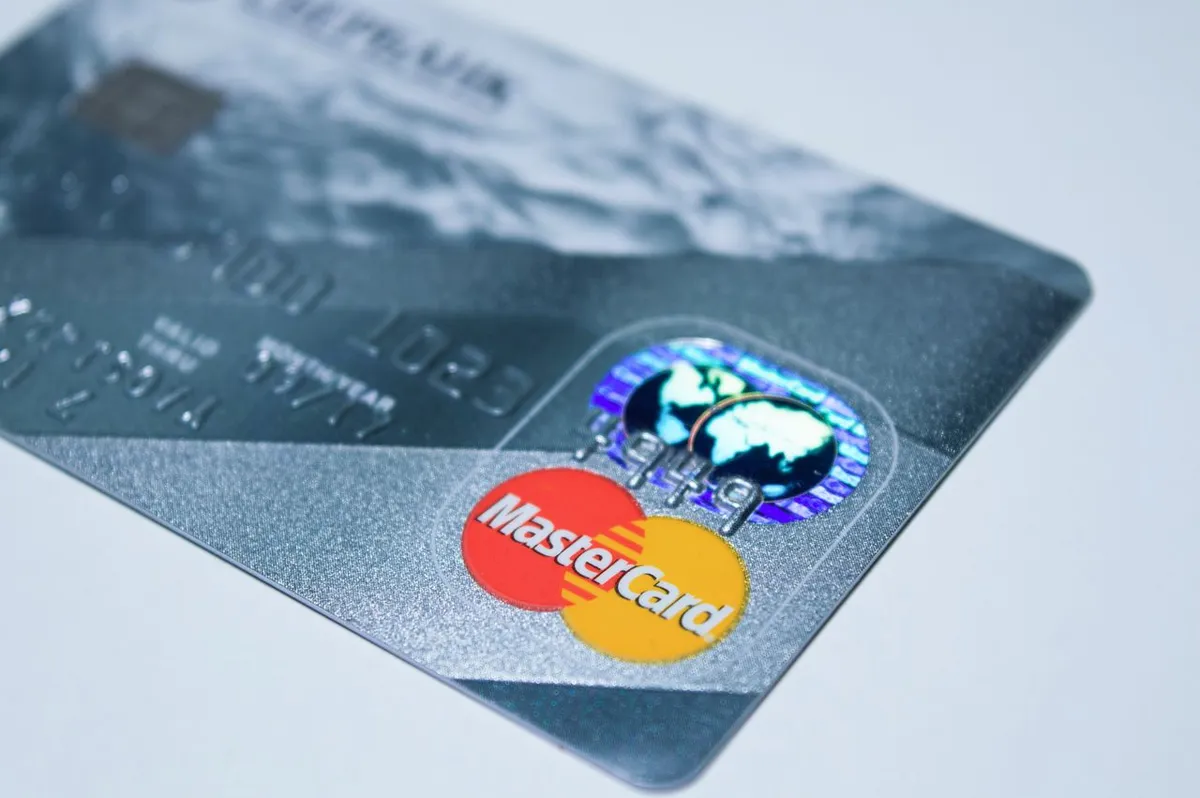
What Is Mastercard?
When people think about Mastercard, they usually think about a credit or debit card. But Mastercard itself is not a bank, and it generally does not issue the cards consumers carry or lend them money.
Its core business is the technology and network infrastructure that allows payments to move between consumers, merchants, banks, and other financial institutions.
That distinction matters because the modern Mastercard business is much broader than card transactions. The company operates a global payments network while also building businesses around cybersecurity, authentication, data, open banking, account-to-account payments, and other financial technologies.
So, what exactly does Mastercard do, how does it make money, and why does its network remain important as the payments industry changes?
Mastercard’s Core Business Is the Network
Mastercard operates a payment network that connects financial institutions and merchants when a transaction is made using a Mastercard-branded payment credential.
The company says its network connects people and organizations in more than 210 countries and territories. (Mastercard)
The easiest way to understand Mastercard is to separate the card from the network.
A bank may issue a Mastercard debit or credit card to a customer. A merchant may use a bank or payment processor to accept that card. Mastercard provides the network that helps route and process the transaction between the relevant parties.
That means Mastercard can participate in millions of transactions without being the institution that holds the customer’s deposit or extends the customer’s credit.
This network-based model is one of the most important parts of Mastercard’s economics.
Who Actually Provides the Mastercard Card?
A common misconception is that Mastercard directly provides every Mastercard card.
In reality, banks and other financial institutions issue Mastercard-branded cards to their customers. The issuer determines many of the consumer-facing terms, including credit limits, interest rates, rewards, and account conditions.
The merchant, meanwhile, normally works with an acquiring bank or payment processor to accept card payments.
This creates a four-party structure:
- Cardholder – the person making the payment
- Merchant – the business receiving the payment
- Issuer – the financial institution that provides the card
- Acquirer – the institution or processor that handles the merchant’s side
Mastercard sits at the center of the network connecting these participants.
This structure is important because Mastercard does not need to own every part of the financial relationship to benefit when transaction activity increases.
What Happens When You Tap or Enter Your Card?
Consider a simple $100 purchase at a store.
You tap your Mastercard card or phone against the terminal. The merchant’s payment system sends the transaction through its acquiring side. The Mastercard network helps route the authorization request to the card issuer.
The issuer then determines whether the transaction should be approved based on factors such as available credit, account status, and fraud controls.
The response travels back through the network, and the merchant receives an approval or decline.
Behind that few-second interaction are authorization, routing, authentication, fraud detection, clearing, and settlement processes.
For consumers, the process feels simple. For the financial system, it requires infrastructure capable of handling enormous volumes reliably.
That scale is central to Mastercard’s business.
Why Scale Matters So Much
A payment network becomes more useful when more banks, merchants, consumers, and payment providers can connect to it.
A merchant wants to accept cards that customers already carry. Banks want their cards to work at as many locations as possible. Consumers want payment credentials that are widely accepted.
This creates a powerful network effect.
Mastercard reported $32.8 billion in net revenue for 2025, up 16% from the previous year. Its 2025 filing also shows the enormous scale of the payment activity moving through its network. (SEC)
The company does not need to finance the entire purchase value itself to participate economically in that activity. Instead, its revenue model is linked to payment processing, cross-border activity, and a growing range of services built around its network.
How Mastercard Makes Money
Mastercard generates revenue from several related businesses rather than simply charging consumers when they use a card.
Its traditional payment network generates revenue connected to payment transactions and related activity. Cross-border payments are particularly important because international transactions generally involve additional processing and currency-related complexity.
Mastercard also earns revenue from value-added services and solutions.
In 2025, the company reported 23% growth in value-added services and solutions, or 21% on a currency-neutral basis. (SEC)
That growth helps explain how Mastercard is evolving.
The company increasingly sells technology and services around the payment itself rather than relying exclusively on the underlying card transaction.
Mastercard Is Expanding Beyond Cards
The payments industry is changing.
Consumers can now pay through physical cards, mobile wallets, online checkout systems, bank-account transfers, QR codes, and real-time payment systems. As a result, Mastercard has an incentive to remain involved even when a physical card is not visible.
This is one reason the company has expanded into areas such as open banking, identity, fraud prevention, authentication, cybersecurity, and data services.
Mastercard’s developer platform, for example, provides APIs designed to connect bank-account data and build financial products. (Mastercard Developers)
The strategy is straightforward: if payments become more diverse, Mastercard wants its infrastructure and services to remain relevant across those different payment methods.
Account to Account Payments Change the Competitive Landscape
One of the biggest changes in payments is the growth of account-to-account (A2A) transactions.
Instead of using a traditional card network, a customer can sometimes move money directly from a bank account to another account.
Real-time payment systems can make these transactions faster and potentially cheaper for some use cases.
That creates competition for traditional card networks.
But it does not automatically make Mastercard’s existing network irrelevant. Mastercard has also invested in technologies and services that support account-based payments and other payment flows.
The competitive question is therefore becoming broader than Mastercard versus Visa.
It is increasingly about which companies can provide the infrastructure that businesses and consumers need across cards, bank transfers, digital wallets, real-time payments, and emerging forms of digital money.
Cross Border Payments Are an Important Advantage
International payments are more complicated than domestic transactions.
A cross-border purchase can involve different currencies, banks, regulations, fraud risks, settlement systems, and compliance requirements.
A global network can reduce some of that complexity by providing standardized infrastructure between participants in different markets.
Mastercard reported 14% growth in cross-border volume on a local-currency basis in the fourth quarter of 2025, illustrating the importance of international payment activity to the business. (Mastercard Investor Relations)
This also connects Mastercard to the wider growth of international commerce and travel. As more economic activity moves across borders, the infrastructure supporting those transactions becomes increasingly important.
For readers interested in the wider role of cross-border commerce, see our guide to how international trade works and our explanation of how businesses expand globally.
Security Is Part of Mastercard’s Product
Payment networks cannot function at scale without trust.
Every transaction creates opportunities for fraud, identity theft, account takeover, or unauthorized use. That makes fraud detection and authentication essential parts of payment infrastructure rather than optional extras.
Mastercard has invested in technologies such as tokenization, biometrics, authentication, and cybersecurity.
Tokenization is particularly important in digital payments. Instead of repeatedly exposing the underlying card credentials, a transaction can use a substitute digital token designed to reduce the value of stolen payment information.
Mastercard said it was tokenizing about 4 billion transactions per month in 2024, showing how large this security infrastructure has become. (Mastercard)
The business opportunity is significant: the more digital payments grow, the more businesses need systems that can distinguish legitimate transactions from fraudulent ones.
Why Mastercard’s Business Model Is Difficult to Replicate
Building a payment network is not simply a technology problem.
A new competitor would need banks willing to issue its payment credentials, merchants willing to accept them, processors able to support them, consumers willing to use them, and infrastructure capable of operating reliably across markets.
That creates a chicken-and-egg problem.
Consumers are unlikely to adopt a payment method that few merchants accept. Merchants are unlikely to invest heavily in a payment method that few customers use.
Mastercard’s existing network helps solve this problem because the major participants are already connected.
This is one reason payment networks can become economically valuable even when consumers rarely think about the company operating the infrastructure behind their transaction.
Mastercard, Visa and the Payments Industry Are Changing
Mastercard and Visa remain major global card networks, but their future competition is not limited to the traditional card market.
Banks, fintech companies, real-time payment networks, digital wallets, and account-to-account systems are all changing how money moves.
That means Mastercard’s long-term challenge is broader than defending its position against another card network.
It needs to remain useful as the definition of a payment changes.
Its expansion into cybersecurity, data, open banking, authentication, and account-based payments reflects that shift. Mastercard is increasingly positioning itself as a broader financial technology infrastructure company rather than simply a network for plastic cards.
Where Mastercard Fits as Payments Evolve
The most important thing to understand about Mastercard is that the card is only the visible part of the business.
The deeper business is the infrastructure connecting financial institutions, merchants, consumers, and increasingly digital payment systems.
That infrastructure has value because payments require reliability, security, global acceptance, and coordination between many participants. Mastercard’s scale gives it an existing network that would be difficult for a new competitor to reproduce quickly.
At the same time, the payments industry is not standing still. Account-to-account payments, real-time transfers, digital wallets, open banking, and other technologies are creating new ways to move money.
Mastercard’s future therefore depends partly on whether it can extend its network expertise into these new payment flows while continuing to make transactions secure and convenient.
For consumers, that evolution may be almost invisible. A payment may still take only a few seconds.
But behind that simple tap or click is a global financial infrastructure business and that is what Mastercard really is.