Debt Snowball Method: A Beginner’s Guide to Paying Off Debt Faster
Debt Snowball Method: Introduction
Debt is a common part of modern financial life.
Many people use debt for:
- Education
- Buying a home
- Purchasing a vehicle
- Managing unexpected expenses
- Building a business
However, when multiple debts accumulate, managing payments can become stressful.
A person may have:
- Credit card debt
- Student loans
- Personal loans
- Car loans
Even if someone is making payments every month, it can feel like progress is slow.
This is where the Debt Snowball Method can help.
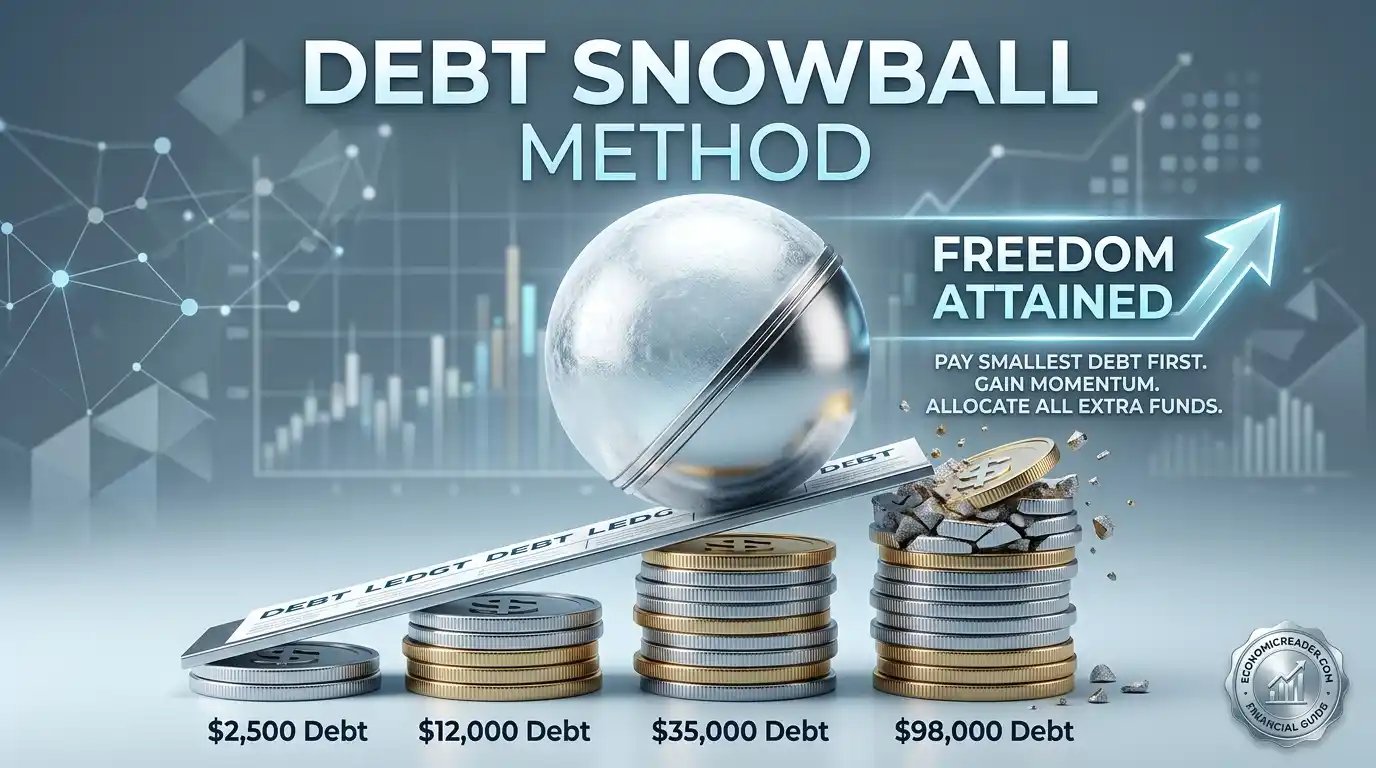
The Debt Snowball Method is a debt repayment strategy that focuses on paying off the smallest debt first while making minimum payments on larger debts.
The idea is simple:
Small victories create motivation, and that motivation helps people continue working toward becoming debt-free.
This method became popular because it combines financial planning with human psychology.
In this guide, we will explain what the Debt Snowball Method is, how it works, its advantages and disadvantages, and how beginners can use it to manage debt.
What Is the Debt Snowball Method?
The Debt Snowball Method is a debt repayment strategy where you pay off your smallest debt first, then use the money from that payment to attack the next smallest debt until all debts are eliminated.
In simple words:
You organize your debts from the smallest balance to the largest balance.
You focus extra payments on the smallest debt while paying the minimum amount on all other debts.
Once the smallest debt is paid off, you take that payment amount and add it to the next debt.
Over time, your payment power grows like a snowball rolling downhill.
How Does the Debt Snowball Method Work?
The Debt Snowball Method follows a simple step-by-step process.
Step 1: List All Your Debts
First, write down every debt you have.
Include:
- Debt amount
- Minimum monthly payment
- Interest rate
Example:
| Debt | Balance | Minimum Payment |
| Credit Card A | $500 | $25 |
| Personal Loan | $3,000 | $100 |
| Car Loan | $15,000 | $350 |
Step 2: Arrange Debts From Smallest to Largest
Unlike some other methods, the Debt Snowball Method ignores interest rates at the beginning.
The focus is only on the debt balance.
Example:
- Credit Card A – $500
- Personal Loan – $3,000
- Car Loan – $15,000
Step 3: Pay Minimum Payments on All Debts
Continue making the required minimum payment on every debt.
This protects your credit history and prevents missed payments.
Step 4: Attack the Smallest Debt
Put any extra money toward your smallest debt.
Example:
If your credit card payment is $25 and you have an additional $200 available:
Total payment:
$25 + $200 = $225
You focus this amount on the smallest debt.
Step 5: Roll Payments Into the Next Debt
After the first debt is completely paid:
You take the money you were using for that debt and add it to the next one.
Example:
Before:
- Credit card payment: $225
After paying off the credit card:
- Personal loan payment increases by $225
Now your payment power becomes stronger.
Why Is It Called the “Snowball” Method?
The name comes from the idea of a snowball rolling down a hill.
At first:
The payment amount may seem small.
But as each debt disappears:
Your available payment amount becomes larger.
Example:
Debt 1: $200 monthly payment
↓
Debt 2: $200 + $200 = $400 monthly payment
↓
Debt 3: $400 + $200 = $600 monthly payment
The repayment momentum grows over time.
Real-Life Example of the Debt Snowball Method
Imagine John has three debts:
$800 balance
Minimum payment: $40
Personal Loan:
$4,000 balance
Minimum payment: $150
Car Loan:
$18,000 balance
Minimum payment: $400
John has an extra $200 every month.
He starts with the credit card.
Payment:
$40 + $200 = $240 per month
After paying off the credit card, he uses that $240 toward the personal loan.
New personal loan payment:
$150 + $240 = $390 per month
As each debt disappears, his repayment power increases.
Why Does the Debt Snowball Method Work?
The Debt Snowball Method is not only about mathematics.
It also focuses on human behavior.
1. Creates Quick Wins
Paying off a small debt quickly creates a feeling of progress.
This motivates people to continue.
Example:
Someone who eliminates a $500 credit card balance may feel more confident about tackling larger debts.
2. Builds Financial Discipline
Debt repayment requires consistency.
The snowball method creates a clear system.
Instead of feeling overwhelmed, people have a simple target.
3. Reduces Financial Stress
Having fewer debts can make finances easier to manage.
Fewer payments mean:
- Less complexity
- More control
- Better financial confidence
4. Helps People Stay Motivated
Many debt repayment plans fail because people lose motivation.
Small victories can encourage long-term commitment.
Debt Snowball vs Debt Avalanche Method
Another popular strategy is the Debt Avalanche Method.
The main difference is how debts are prioritized.
| Debt Snowball | Debt Avalanche |
| Pays smallest balance first | Pays highest interest debt first |
| Focuses on motivation | Focuses on saving interest |
| Creates quick wins | Can reduce total interest costs |
| Easier psychologically | Requires more patience |
Example:
If you have:
- $500 credit card at 20% interest
- $5,000 loan at 8% interest
Snowball method attacks the $500 debt first.
The avalanche method attacks the 20% interest debt first.
Advantages of the Debt Snowball Method
1. Easy for Beginners
The method is simple to understand and follow.
2. Provides Motivation
Quick debt eliminations encourage continued progress.
3. Creates Better Money Habits
It teaches:
- Discipline
- Budget control
- Financial planning
4. Reduces Number of Monthly Payments
Over time, fewer debts make money management easier.
Disadvantages of the Debt Snowball Method
1. May Cost More Interest
Because interest rates are ignored, you may pay more interest compared with the avalanche method.
2. Larger Debts May Take Longer
A person may eliminate several small debts while a large, expensive debt remains.
3. Requires Extra Cash Flow
The method works best when you can make payments above the minimum.
Who Should Use the Debt Snowball Method?
This method may work well for people who:
- Have multiple debts
- Need motivation
- Prefer simple systems
- Feel overwhelmed by debt
- Want quick progress
It may be especially useful for beginners who struggle with maintaining financial discipline.
How Beginners Can Start a Debt Snowball Plan
Understand:
- Income
- Expenses
- Debt payments
Find areas where you can reduce spending.
2. Build a Small Emergency Fund
Before aggressively paying debt, having emergency savings can prevent new debt when unexpected expenses happen.
3. Stop Adding New Debt
Debt repayment becomes difficult if new debt continues to accumulate.
4. Increase Your Income
Additional income can speed up repayment.
Examples:
- Freelancing
- Side businesses
- Extra work
5. Track Your Progress
Seeing progress can increase motivation.
Use:
- Debt tracking apps
- Spreadsheets
- Simple lists
Common Debt Snowball Mistakes
1. Ignoring High-Interest Debt Completely
Although motivation is important, extremely high-interest debt should not be ignored.
2. Not Changing Spending Habits
Paying debt requires controlling the habits that created the problem.
3. Using Credit Cards Again
Adding new balances can slow progress.
4. Giving Up After a Slow Start
Debt repayment is a long-term process.
Consistency matters more than speed.
How Debt Snowball Supports Financial Freedom
Debt reduction creates more financial flexibility.
When debts disappear, money can be redirected toward:
- Emergency savings
- Investments
- Retirement accounts
- Business opportunities
Example:
A person paying $500 monthly toward debt can invest that same amount after becoming debt-free.
This can significantly improve long-term financial growth.
Real-Life Financial Lesson
Many people do not struggle with debt only because of numbers.
They struggle because debt feels overwhelming.
The Debt Snowball Method breaks a large financial challenge into smaller achievable steps.
Instead of thinking:
“I have $30,000 of debt.”
The focus becomes:
“I will eliminate this first small balance.”
That small achievement creates momentum.
Frequently Asked Questions (FAQ)
1. What is the Debt Snowball Method in simple words?
It is a strategy where you pay off your smallest debt first and then use that payment amount to attack larger debts.
2. Is the Debt Snowball Method better than Debt Avalanche?
It depends. Snowball focuses on motivation, while avalanche focuses on reducing interest costs.
3. Does Debt Snowball really work?
It can work because it creates motivation and encourages consistent debt repayment behavior.
4. Should I save money or pay debt first?
Many financial experts recommend having some emergency savings while also creating a debt repayment plan.
5. Can I use Debt Snowball for credit cards?
Yes. Many people use it to organize and pay off credit card debt.
Final Thoughts
The Debt Snowball Method is a simple but powerful approach to managing debt.
It recognizes an important truth:
Financial success is not only about knowing the best mathematical strategy.
It is also about building habits and staying motivated.
By focusing on small victories, people can create momentum and gradually eliminate debt.
The goal is not only becoming debt-free.
The bigger goal is creating financial freedom and using money to build a better future.
A strong financial life starts with simple steps taken consistently.
If you want to learn What Is a Credit Score, read our full guide; click here.
If you want to learn What Is Market Capitalization, read our full guide; click here.
Author Note: This article is crafted by “The Economic Reader editorial team”, dedicated to analyzing the latest market trends, financial updates, and global economic shifts to keep you informed with accurate and comprehensive insights.
Disclaimer: The information provided on this website is for educational and informational purposes only and should not be construed as professional financial, investment, or legal advice. Always consult with a certified financial advisor or professional before making any financial decisions based on this content.