What Is OKX? Understanding the Cryptocurrency Exchange and Its Services
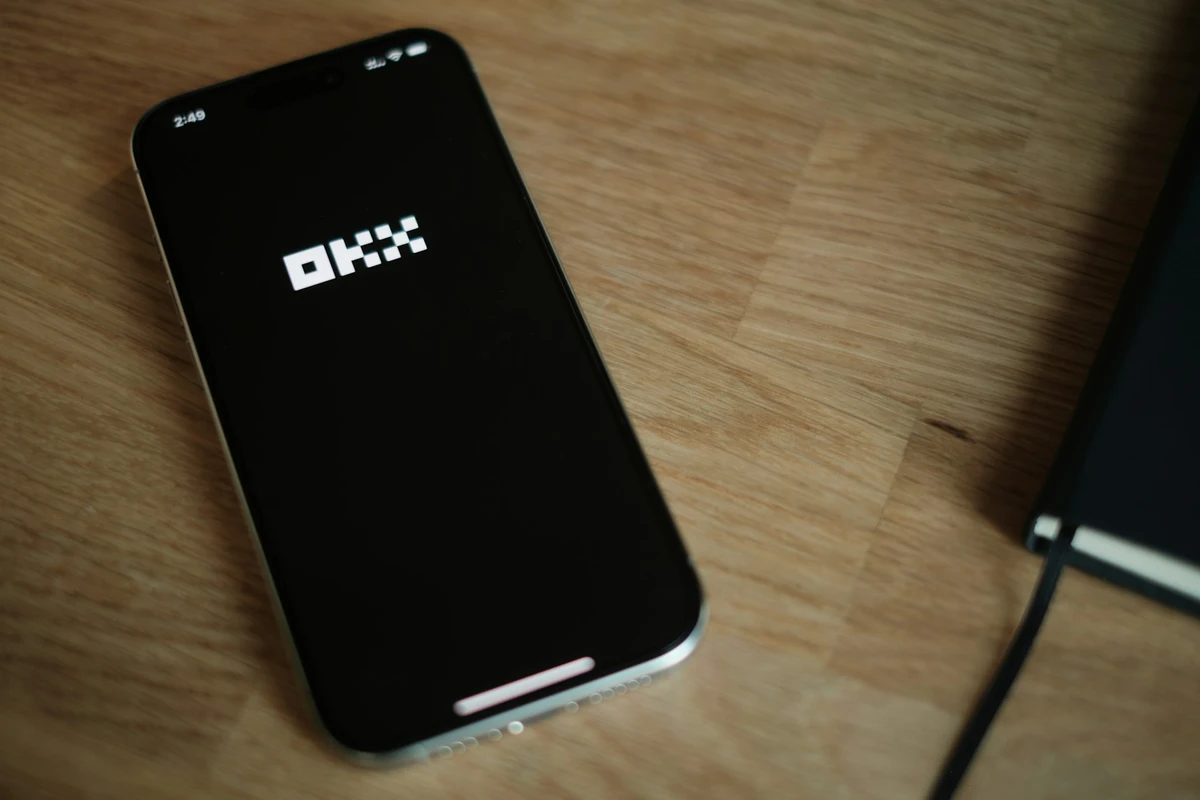
OKX is a global cryptocurrency platform that provides access to crypto trading, derivatives, earning products, and Web3 services. What began as a cryptocurrency exchange has expanded into a broader digital-asset ecosystem that includes centralized trading services and a self-custodial Web3 wallet.
That broader structure is important when looking at what OKX actually offers.
The exchange side allows users to buy, sell, and trade cryptocurrencies through accounts managed by the platform. The Web3 side gives users access to a self-custodial wallet for interacting directly with blockchain networks, decentralized applications, decentralized finance (DeFi), and other on-chain services.
OKX was previously known as OKEx. The company changed its name and brand identity to OKX in December 2022 as it expanded its focus beyond conventional exchange services. (OKX)
Today, OKX combines several parts of the digital-asset market within one ecosystem. Understanding how those parts differ is more useful than viewing OKX simply as another place to trade cryptocurrency.
What Is OKX?
OKX is a cryptocurrency exchange and digital-asset platform that provides trading, custody, Web3, and other crypto-related services.
At its core, the platform allows users to trade cryptocurrencies such as Bitcoin, Ethereum, and stablecoins. Depending on the user’s jurisdiction, available products can also include futures, perpetual contracts, options, staking or earning services, and other digital-asset products.
The platform also operates OKX Wallet, a self-custodial multi-chain wallet that allows users to control their own assets and interact with supported blockchain networks and decentralized applications.
That gives OKX two distinct sides:
- Centralized exchange: OKX provides the trading infrastructure and generally holds custody of assets kept in exchange accounts.
- Web3 ecosystem: Users can use OKX Wallet and related services to interact with blockchain networks and decentralized applications directly.
Those two environments can work together, but they involve different forms of custody and different responsibilities for the user.
How Did OKX Develop?
OKX began as a cryptocurrency exchange under the OKEx name.
As the crypto industry expanded beyond basic buying and selling, the company broadened its services into areas such as derivatives, staking, decentralized applications, NFTs, DeFi, and self-custody.
In December 2022, OKEx officially became OKX. The company described the rebrand as part of a wider move toward a broader crypto ecosystem rather than a platform focused only on exchange services. (OKX)
That evolution helps explain the platform users see today. Trading remains central to OKX, but the company has built additional services around the same digital-asset ecosystem.
How Does OKX Work?
A user can create an account on the centralized OKX platform and use it to deposit supported assets, trade cryptocurrencies, and access other available products.
The basic process is straightforward:
Create an account → complete required verification → deposit funds → trade or use available services → withdraw or transfer assets.
The exact products available depend on the user’s country, account status, and applicable regulations.
On the centralized exchange, OKX manages custody of assets held in the user’s exchange account. This allows the platform to operate order books, matching systems, margin products, derivatives markets, and account-level risk controls.
The OKX Web3 Wallet works differently. It is designed as a self-custodial wallet, meaning users control the wallet’s private keys or recovery credentials rather than leaving custody entirely with the exchange.
For a broader explanation of the underlying technology, What Is Blockchain? explains how blockchain networks record and transfer digital assets.
The practical difference is simple: an exchange account is built around a centralized platform, while a self-custodial wallet gives the user direct control over on-chain assets.
What Can You Trade on OKX?
OKX supports several types of crypto markets, although the available products and trading pairs vary by jurisdiction.
Spot Trading
Spot trading involves buying or selling the underlying cryptocurrency.
For example, a user might buy Bitcoin using USDT or another supported asset. Once the trade is completed, the purchased cryptocurrency appears in the user’s exchange balance.
Spot markets are generally the most direct way to gain exposure to a cryptocurrency because the transaction involves the underlying asset rather than a leveraged derivatives position.
OKX provides spot markets across a broad selection of digital assets and trading pairs, alongside features such as Convert for users who want a simpler way to exchange supported assets.
Futures and Perpetual Contracts
OKX also provides derivatives markets, including futures and perpetual contracts where permitted.
Unlike spot trading, derivatives allow users to take positions based on the price of an asset without buying and holding the underlying cryptocurrency in the same way as a spot trader.
Leverage can increase the size of a position relative to the trader’s capital. It also magnifies losses and can lead to liquidation when available collateral falls below required levels.
That makes derivatives fundamentally different from simply purchasing cryptocurrency.
Options
Crypto options are another form of derivative available in eligible markets.
An option provides contractual rights related to an underlying asset under specified terms. Traders can use options for speculation, hedging, or more advanced strategies.
Options involve concepts such as premiums, strike prices, expiration dates, and volatility, making them considerably more complex than basic spot trading.
What Is OKX Wallet?
OKX Wallet is one of the clearest examples of how the platform extends beyond centralized exchange services.
It is a self-custodial, multi-chain Web3 wallet designed to let users manage digital assets and interact with decentralized applications and blockchain networks.
Users can use the wallet for activities such as:
- Holding crypto assets directly
- Connecting to decentralized applications
- Accessing DeFi services
- Trading through decentralized exchanges
- Managing NFTs and other on-chain assets
- Moving assets across supported blockchain networks
The most important feature is self-custody.
With a centralized exchange account, the platform generally controls the private keys associated with assets held in that account.
With a self-custodial wallet, the user controls the wallet’s private keys or recovery credentials.
That gives users greater direct control, but it also transfers more responsibility to them. If a recovery phrase is lost or compromised, recovering access may not be possible.
For readers interested in how blockchain-based applications operate, How Does Blockchain Work? provides a broader explanation of transactions, networks, and smart contracts.
OKX and Web3
OKX’s Web3 services extend beyond simply storing cryptocurrency.
The company’s Web3 ecosystem includes tools for decentralized trading, DeFi, NFT-related activities, and interaction with decentralized applications.
This side of the platform operates differently from the centralized exchange.
When a user connects a self-custodial wallet to a decentralized application, transactions can be executed through blockchain smart contracts rather than through an exchange’s internal trading system.
In practical terms:
Exchange account → centralized platform infrastructure
Web3 wallet → direct interaction with blockchain networks and applications
The difference affects who controls the assets, how transactions are authorized, and where certain risks arise.
A centralized exchange can provide convenience and managed infrastructure. Self-custody provides more direct control but places greater responsibility on the user.
Does OKX Offer Staking and Earning Products?
OKX also provides earning-related products, although availability depends on the asset, jurisdiction, and specific service.
These can include staking and other earning products that allow eligible assets to generate potential returns.
Staking generally involves committing eligible crypto assets to support a proof-of-stake blockchain network in exchange for potential rewards.
Other earning products can work differently, including arrangements involving lending, liquidity, or on-chain protocols. The source of the return therefore matters.
A quoted yield does not represent a guaranteed return. The underlying asset can fall in price, while some products introduce additional counterparty, liquidity, smart-contract, or market risks.
OKX’s platform currently lists products including Simple Earn and On-chain Earn, subject to availability. The specific terms and risks should be checked for the relevant product and jurisdiction.
What Are OKX’s Trading Fees?
OKX uses a fee structure that varies by product, trading volume, account level, and jurisdiction.
Spot, futures, and options transactions can have different fee arrangements. Maker and taker orders can also be charged at different rates.
A maker generally adds liquidity to the order book by placing an order that does not execute immediately.
A taker generally removes liquidity by executing against an existing order.
OKX’s current fee documentation explains that applicable rates depend on the product, fee tier, trading volume, and account characteristics. Its September 2026 fee guidance also notes that the rate shown to a user can vary by trading pair and instrument. (OKX)
For users comparing exchange costs, the headline trading fee is only part of the calculation.
Other potential costs can include:
- Withdrawal fees
- Network fees
- Funding fees on perpetual contracts
- Conversion spreads
- Options-related charges
- Costs associated with particular earning or financial products
Fee schedules can change, so the applicable rate should be checked before placing a trade.
How Does OKX Approach Security?
Security is a major consideration for any centralized cryptocurrency exchange because users rely on a third party to hold assets in exchange accounts.
One of OKX’s main transparency measures is its Proof of Reserves (PoR) program.
Proof of Reserves is designed to provide evidence that an exchange holds sufficient on-chain assets to cover customer assets recorded on its platform at a particular point in time.
OKX’s latest published PoR page reports its 47th Proof of Reserves with approximately $27.4 billion in primary assets. The September 2026 report lists reserve ratios of 100% or more for the major assets displayed on the report. (OKX)
OKX says its PoR process uses cryptographic verification, including zk-STARK technology, and publishes reserve and liability files that users can independently inspect. The latest available files include a September 8, 2026 snapshot. (OKX)
Proof of Reserves can improve transparency, but it should not be confused with government-backed deposit insurance or a complete financial audit.
It is also a snapshot of assets and liabilities under a specific verification methodology. Users still need to consider custody arrangements, operational risks, legal protections, and the risks associated with individual products.
Is OKX Regulated?
OKX operates through different legal entities and regulatory frameworks depending on the market.
As a result, there is no single global regulatory status that applies identically to every OKX customer.
In the United States, OKX INC. operates the digital-asset trading platform for U.S. customers and is registered as a Money Services Business with FinCEN and licensed in applicable U.S. jurisdictions. OKX’s current disclosures also state that some U.S. states and territories are not served. (OKX)
In Dubai, OKX Middle East Fintech FZE is licensed and regulated by Dubai’s Virtual Assets Regulatory Authority (VARA) as a Virtual Asset Service Provider. (OKX)
OKX also operates through regulated entities in other jurisdictions. For example, its European operations include an entity authorized under the EU’s MiCA framework through the Malta Financial Services Authority. (OKX)
The important point for users is that product availability, legal protections, and applicable rules can differ by location.
A service available to a customer in one country may not be offered to someone in another jurisdiction.
What Are the Risks of Using OKX?
Using OKX involves the broader risks of cryptocurrency markets as well as risks associated with centralized platforms.
Market Risk
Cryptocurrency prices can be highly volatile.
A trader can lose money even if the exchange itself operates normally.
Leverage Risk
Futures, perpetual contracts, margin trading, and other leveraged products can magnify gains and losses.
Positions can be liquidated when losses reduce available collateral below the required level.
Custody Risk
Assets held on a centralized exchange remain subject to third-party custody risk.
Proof of Reserves provides a form of transparency, but it does not remove every operational, legal, or counterparty risk.
Regulatory Risk
Cryptocurrency rules differ across jurisdictions and can change over time.
Products may be restricted, modified, or withdrawn as regulatory requirements develop.
Self-Custody Risk
OKX Wallet gives users direct control over their assets, but that control comes with additional responsibility.
Losing a private key or recovery phrase can result in permanent loss of access.
Smart-Contract and Web3 Risk
Connecting a wallet to decentralized applications can introduce smart-contract, phishing, protocol, and other on-chain risks.
These risks can exist independently of the security of the wallet provider itself.
For a broader discussion of cryptocurrency portfolio construction and risk, see How to Invest in Cryptocurrency: A Practical Guide to Building a Crypto Portfolio.
OKX vs. a Traditional Crypto Exchange
OKX is still fundamentally a centralized cryptocurrency exchange, but its product range extends beyond conventional spot trading.
| Feature | OKX |
| Spot crypto trading | Yes |
| Futures and perpetuals | Available in eligible markets |
| Options | Available in eligible markets |
| Crypto earning products | Available, depending on product and jurisdiction |
| Self-custodial wallet | Yes |
| DeFi access | Through Web3 services |
| NFT/Web3 tools | Yes |
| Proof of Reserves | Published periodically |
| Geographic availability | Varies by jurisdiction |
The broader product mix is significant because OKX connects several parts of the digital-asset ecosystem within one platform.
It also means the risks are not identical across products. A spot trade, leveraged perpetual contract, staking product, and self-custodial wallet each operate differently.
OKX’s Role in the Crypto Market
OKX illustrates how cryptocurrency exchanges have evolved.
The early exchange model was relatively simple: provide a marketplace where users could buy and sell digital assets.
Modern platforms increasingly combine trading, custody, derivatives, earning products, wallets, decentralized applications, and blockchain services.
OKX’s transition from OKEx to OKX reflected that wider shift. The company described the 2022 rebrand as part of a move beyond a conventional exchange toward a broader crypto ecosystem. (OKX)
For users, that creates a single environment connecting centralized and decentralized parts of the crypto market.
For the wider industry, it shows how exchanges are becoming more than trading venues. They are increasingly building infrastructure around custody, payments, wallets, on-chain applications, and other digital-finance services.
Understanding OKX Beyond the Exchange
OKX is more than a place to buy and sell Bitcoin.
Its centralized exchange provides spot markets and, where available, derivatives and other trading products. Its earning services give users additional ways to use eligible assets. Its Web3 Wallet provides a separate self-custodial route into decentralized applications and blockchain networks.
That combination is what gives OKX its broader identity in the crypto market.
At the same time, the wider range of services makes it important to understand exactly what is being used. A spot trade, leveraged perpetual contract, earning product, and self-custodial wallet involve very different mechanisms and risks.
The most useful way to understand OKX is therefore to look beyond its feature list and examine how each service works, who controls the assets, what creates the potential return, and which regulatory framework applies.
For anyone researching cryptocurrency exchanges, those distinctions provide a much clearer picture of what OKX actually is and how its different services fit into the broader digital-asset ecosystem.