What Is Deflation? A Beginner’s Guide to Causes, Effects, and Economic Impact
Introduction
What Is Deflation? Most people worry about rising prices, and for good reason.
When the cost of food, housing, fuel, and services increases, people feel the pressure on their daily budgets.
This situation is called inflation.
However, the opposite economic condition can also create serious challenges.
This is known as deflation.
At first glance, falling prices may sound like a good thing.
After all, who would not want cheaper products?
But a sustained decline in prices can create problems for consumers, businesses, and the overall economy.
When prices continuously fall:
- Consumers may delay purchases
- Businesses may reduce production
- Companies may cut jobs
- Economic growth may slow
The important point is:
Deflation is not simply about cheaper products. It is a broad decline in the overall price level of goods and services, often connected with weaker economic activity.
In this guide, we will explain what deflation is, why it happens, its effects, historical examples, and how it influences financial decisions.
What Is Deflation?
Deflation is a sustained decrease in the overall price level of goods and services in an economy, which increases the purchasing power of money.
In simple words:
During deflation, the same amount of money can buy more goods and services than before.
Example:
Today:
$100 buys:
- 10 products
After deflation:
$100 may buy:
- 12 products
The value of money increases because prices are falling.
How Does Deflation Work?
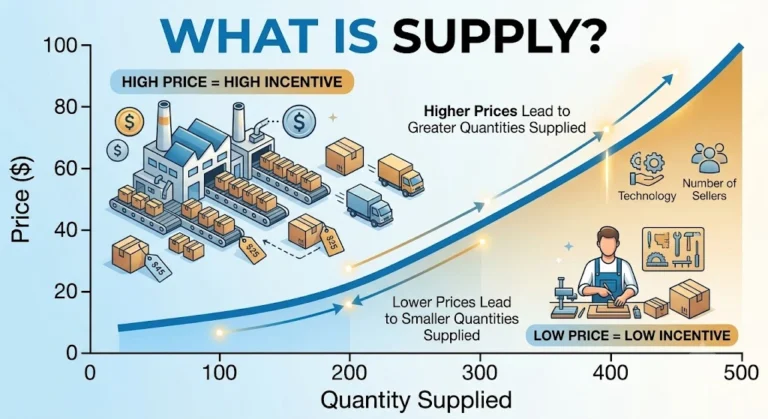
Deflation usually occurs when demand decreases or when the supply of goods increases significantly.
A simple example:
Imagine businesses produce many products, but consumers reduce spending.
Companies may lower prices to attract buyers.
If this continues across the economy:
- Prices fall
- Business revenue declines
- Companies reduce investment
- Economic growth slows
This creates a deflationary cycle.
Inflation vs Deflation: What Is the Difference?
Inflation and deflation are opposite economic conditions.
| Inflation | Deflation |
| Prices increase | Prices decrease |
| Money loses purchasing power | Money gains purchasing power |
| Consumers may spend faster | Consumers may delay spending |
| Often occurs during strong demand | Often linked with weak economic activity. |
| Central banks may raise interest rates. | Central banks may lower rates. |
Why Does Deflation Happen?
Deflation can occur because of several economic factors.
1. Decreased Consumer Demand
One of the most common causes of deflation is falling demand.
When consumers become uncertain about the future, they may:
- Spend less
- Save more
- Delay large purchases
Example:
People may postpone buying:
- Cars
- Homes
- Electronics
Businesses respond by lowering prices.
2. Economic Recession
Deflation often appears during periods of economic weakness.
During a recession:
- Companies earn less
- Consumers reduce spending
- Unemployment may increase
Lower demand can push prices downward.
3. Increased Productivity
Deflation is not always negative.
Sometimes prices fall because businesses become more efficient.
Examples:
- Better technology
- Improved production methods
- Lower manufacturing costs
This type of price reduction can benefit consumers.
4. Reduced Money Supply
If less money is available in an economy, spending may decrease.
Lower spending can reduce demand and create downward pressure on prices.
5. Debt Problems
High levels of debt can contribute to deflation.
When individuals and businesses focus on paying down debt:
- Spending decreases
- Demand falls
- Economic activity slows
Types of Deflation
Deflation can appear in different forms.
1. Good Deflation
Good deflation occurs when prices fall because of increased efficiency.
Example:
Technology products often become cheaper because companies improve production methods.
Benefits:
- Consumers get better prices
- Living standards may improve
2. Bad Deflation
Bad deflation happens when falling prices are caused by weak economic conditions.
Example:
During an economic crisis:
- People stop spending
- Businesses reduce prices
- Companies lose profits
This type of deflation can damage economic growth.
3. Debt Deflation
Debt deflation occurs when falling prices increase the real burden of debt.
Example:
A person has a fixed loan payment.
If prices and incomes decline, that payment becomes harder to manage.
Effects of Deflation on Consumers
Deflation creates both benefits and risks for individuals.
1. Lower Prices
The immediate benefit is cheaper goods and services.
Consumers may pay less for:
- Food
- Electronics
- Transportation
2. Increased Purchasing Power
Money becomes more valuable.
A person’s income can buy more products.
3. Delayed Spending
However, consumers may wait for prices to fall further.
Example:
Someone may think:
“Why buy a new car today if it may become cheaper next year?”
When many people delay purchases, businesses suffer.
Effects of Deflation on Businesses
Businesses often face major challenges during deflation.
1. Lower Revenue
When companies reduce prices, their income may decrease.
2. Lower Profits
Businesses may struggle to maintain profitability.
3. Reduced Investment
Companies may delay:
- Expansion
- Hiring
- New projects
4. Job Cuts
If profits decline, businesses may reduce costs by:
- Cutting employees
- Reducing wages
Effects of Deflation on Investors
Deflation influences different investments in different ways.
1. Stocks
Deflation can create challenges for stocks because:
- Company profits may decline
- Consumer spending may decrease
- Economic growth may slow
However, some companies with strong balance sheets may perform better.
2. Bonds
Deflation can sometimes benefit certain bonds.
When prices fall, fixed payments may become more valuable.
Also, central banks may reduce interest rates during deflation periods.
3. Real Estate
Deflation can negatively affect real estate.
Possible effects:
- Lower property prices
- Reduced demand
- Difficult borrowing conditions
4. Cash
During deflation, cash becomes more valuable because it can buy more goods over time.
Deflation and the Federal Reserve
Central banks play an important role in managing deflation risks.
In the United States, the Federal Reserve monitors economic conditions and adjusts monetary policy.
During deflation concerns, the Federal Reserve may:
- Lower interest rates
- Encourage borrowing
- Support economic activity
The goal is to increase spending and prevent a prolonged decline in prices.
Historical Example: The Great Depression
One of the most famous examples of severe deflation occurred during the Great Depression.
During the 1930s:
- Businesses failed
- Unemployment increased
- Consumer spending collapsed
- Prices declined significantly
The combination of economic weakness and falling prices created major challenges.
Historical Example: Japan’s Deflation Period
Japan experienced a long period of low inflation and deflation after its asset bubble collapsed in the early 1990s.
Challenges included:
- Slow economic growth
- Weak consumer spending
- Low price increases
This period showed that prolonged deflation can be difficult for an economy to overcome.
Why Is Deflation Sometimes Dangerous?
A small amount of price decline is not always harmful.
The danger comes from a continuous deflation cycle.
The cycle can look like this:
Lower prices
↓
Consumers delay purchases
↓
Businesses earn less
↓
Companies cut jobs
↓
People spend less
↓
Prices fall further
This creates a negative economic cycle.
How Can Individuals Prepare for Deflation?
Financial preparation is important during any economic environment.
1. Maintain Emergency Savings
Emergency funds provide protection during uncertain periods.
2. Manage Debt Carefully
Deflation can make debt more difficult because incomes and prices may decline while debt payments remain fixed.
3. Maintain Diversified Investments
Different assets may perform differently during economic changes.
4. Develop Financial Knowledge
Understanding economic cycles helps people make better decisions.
Common Misunderstandings About Deflation
1. Deflation Means Everything Becomes Cheap
Not necessarily.
Deflation refers to an overall decline in prices, not every individual product.
2. Deflation Is Always Good
Lower prices sound positive, but prolonged deflation can damage businesses and employment.
3. Inflation Is Always Worse Than Deflation
Both extremes can create problems.
A stable economy usually aims for controlled price growth.
Real-Life Deflation Example
Imagine Michael owns a small electronics store.
During normal economic conditions:
- Customers buy products regularly
- Revenue remains stable
During deflation:
- Customers delay purchases
- Michael lowers prices
- Profit margins shrink
Eventually, Michael may reduce inventory and hiring.
This shows that falling prices can create challenges beyond cheaper products.
Frequently Asked Questions (FAQ)
1. What is deflation in simple words?
Deflation is when the overall prices of goods and services decrease over time.
2. Is deflation good or bad?
Small price reductions can benefit consumers, but prolonged deflation can harm economic growth.
3. What causes deflation?
Deflation can be caused by lower demand, recession, increased productivity, reduced money supply, and debt problems.
4. How does deflation affect investments?
Deflation can reduce company profits and create challenges for stocks, while some bonds and cash may become more valuable.
5. How does the Federal Reserve fight deflation?
The Federal Reserve may lower interest rates and use monetary policies to encourage economic activity.
Final Thoughts
Deflation is the opposite of inflation, but it is not simply a situation where everything becomes cheaper.
A healthy economy requires balance.
While falling prices can help consumers in some situations, prolonged deflation can create serious economic challenges by reducing business activity, investment, and employment.
Understanding deflation helps people better understand economic cycles and make smarter financial decisions.
Whether prices are rising or falling, financial knowledge remains one of the most valuable tools for protecting your future.
What Is Demand? Read our full Article; click here.
What Is Supply? Read our full Article; click here.
Author Note: This article is crafted by “The Economic Reader editorial team”, dedicated to analyzing the latest market trends, financial updates, and global economic shifts to keep you informed with accurate and comprehensive insights.
Disclaimer: The information provided on this website is for educational and informational purposes only and should not be construed as professional financial, investment, or legal advice. Always consult with a certified financial advisor or professional before making any financial decisions based on this content.