Debt Avalanche Method: A Beginner’s Guide to Paying Off Debt Efficiently
Debt Avalanche Method: Introduction
Debt can be one of the biggest obstacles to achieving financial freedom.
Many people carry multiple types of debt, such as:
- Credit card balances
- Student loans
- Personal loans
- Car loans
- Medical bills
While making minimum payments may keep accounts active, it can take many years to eliminate debt.
The biggest challenge with debt is often interest.
High-interest debt can continue growing and reduce the amount of money available for saving and investing.
This is where the Debt Avalanche Method becomes useful.
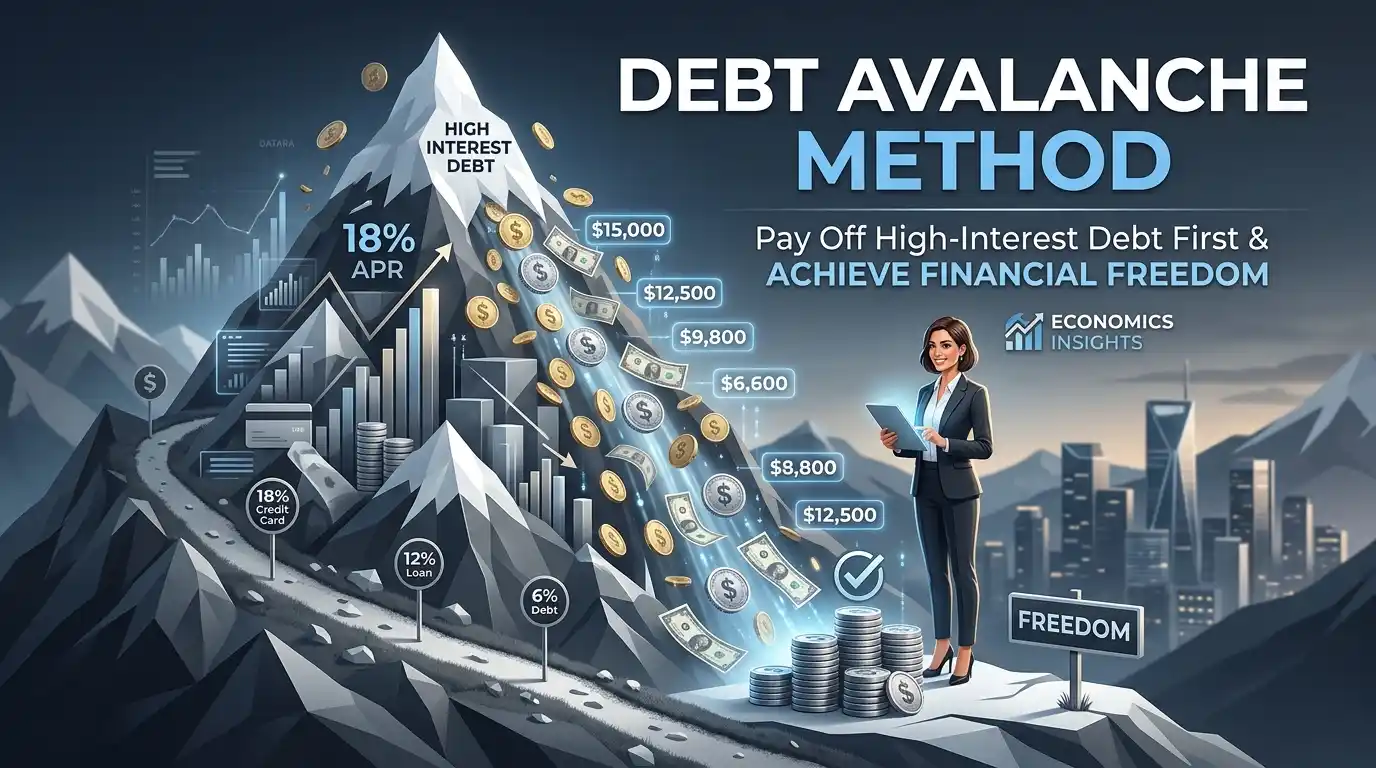
The Debt Avalanche Method is a repayment strategy that focuses on paying off the debt with the highest interest rate first while making minimum payments on other debts.
The goal is simple:
Reduce the amount of interest you pay and eliminate debt as efficiently as possible.
In this guide, we will explain what the Debt Avalanche Method is, how it works, its benefits and disadvantages, and how beginners can use it to create a debt-free plan.
What Is the Debt Avalanche Method?
The Debt Avalanche Method is a debt repayment strategy where you focus extra payments on the debt with the highest interest rate first while paying minimum payments on all other debts.
In simple words:
You organize your debts based on interest rates.
The debt costing you the most money receives priority.
Once that debt is completely paid, you move to the next highest-interest debt.
This process continues until all debts are eliminated.
How Does the Debt Avalanche Method Work?
The Debt Avalanche Method follows a clear process.
Step 1: List All Your Debts
Start by creating a complete list of your debts.
Include:
- Total balance
- Interest rate
- Minimum payment
Example:
| Debt | Balance | Interest Rate |
| Credit Card | $5,000 | 22% |
| Personal Loan | $8,000 | 10% |
| Car Loan | $20,000 | 6% |
Step 2: Arrange Debts by Interest Rate
Unlike the Debt Snowball Method, the Avalanche Method does not focus on the smallest balance.
Instead, it focuses on the highest interest rate.
Example:
- Credit Card – 22%
- Personal Loan – 10%
- Car Loan – 6%
Step 3: Pay Minimum Payments on All Debts
Continue paying the required minimum payment on every debt.
This prevents:
- Late fees
- Credit score damage
- Additional financial problems
Step 4: Attack the Highest-Interest Debt
Put all extra available money toward the debt with the highest interest rate.
Example:
Credit card payment:
Minimum payment: $100
Extra payment: $300
Total payment:
$400 per month
The goal is to eliminate the expensive debt as quickly as possible.
Step 5: Move to the Next Debt
After the highest-interest debt is paid:
Take the money used for that payment and apply it to the next highest-interest debt.
Your repayment power increases over time.
Real-Life Example of the Debt Avalanche Method
Imagine David has three debts:
Balance: $4,000
Interest rate: 25%
Personal Loan
Balance: $7,000
Interest rate: 12%
Car Loan
Balance: $18,000
Interest rate: 6%
David has an extra $300 every month.
Using the Debt Avalanche Method:
First target:
Credit card (25% interest)
After paying it off:
The $300 extra payment moves to the personal loan.
Later:
The personal loan payment moves to the car loan.
Over time, David saves money because he eliminates the most expensive debt first.
Why Does the Debt Avalanche Method Work?
The main advantage of the Debt Avalanche Method is mathematical efficiency.
1. Saves Money on Interest
High-interest debt grows faster.
By eliminating expensive debt first, you reduce the total amount of interest paid.
Example:
A credit card charging 25% interest costs much more than a loan charging 5%.
2. Reduces Debt Faster Over Time
Although the first payoff may feel slower, the overall repayment process can become faster because less money is lost to interest.
3. Improves Financial Efficiency
Every dollar used to eliminate high-interest debt creates a guaranteed financial benefit.
For example:
Paying off a credit card with 20% interest is similar to achieving a 20% guaranteed return because you avoid that interest cost.
4. Creates Better Money Management Habits
The Avalanche Method encourages:
- Planning
- Discipline
- Understanding interest costs
Debt Avalanche vs Debt Snowball Method
Both methods help people become debt-free, but they use different approaches.
| Debt Avalanche | Debt Snowball |
| Pays highest interest debt first | Pays smallest balance first |
| Saves more money on interest | Creates faster psychological wins |
| Focuses on mathematics | Focuses on motivation |
| May take longer to see first result | Quick early progress |
Which Method Is Better?
The answer depends on personal behavior.
Debt Avalanche May Be Better If:
- You are financially disciplined
- You want to minimize interest costs
- You can stay motivated without quick wins
Debt Snowball May Be Better If:
- You feel overwhelmed by debt
- You need motivation
- You prefer seeing fast progress
The best method is the one you can follow consistently.
Advantages of the Debt Avalanche Method
1. Lower Total Interest Costs
This is the biggest advantage.
Paying expensive debt first reduces unnecessary interest payments.
2. More Financially Efficient
From a mathematical perspective, it is usually the most cost-effective repayment strategy.
3. Helps Build Wealth Faster
Money saved from interest can later be used for:
- Investing
- Saving
- Retirement planning
4. Encourages Financial Awareness
You become more aware of how interest affects your money.
Disadvantages of the Debt Avalanche Method
1. Requires More Patience
Your largest interest debt may also be your largest balance.
It may take longer to see your first debt eliminated.
2. Can Feel Less Motivating
Some people struggle because they do not experience quick victories.
3. Requires Strong Discipline
You must continue following the plan even when progress feels slow.
Who Should Use the Debt Avalanche Method?
The Debt Avalanche Method may be suitable for people who:
- Have high-interest debt
- Want to save the most money
- Prefer logical financial strategies
- Can stay committed long term
It is especially useful for people with:
- Credit card debt
- High-interest personal loans
- Multiple expensive debts
How Beginners Can Start a Debt Avalanche Plan
1. Understand Your Debt Situation
Create a complete picture of:
- Total debt
- Interest rates
- Monthly payments
2. Create a Realistic Budget
Find extra money by reviewing:
- Unnecessary expenses
- Subscriptions
- Lifestyle spending
3. Build Emergency Savings
A small emergency fund can prevent new debt when unexpected expenses occur.
4. Increase Your Income
Additional income can accelerate debt repayment.
Examples:
- Freelancing
- Side businesses
- Selling unused items
5. Automate Payments
Automatic payments reduce the chance of missed payments.
Common Debt Avalanche Mistakes
1. Ignoring Small Debts Completely
While interest rates are important, small debts may still need attention.
2. Adding New Debt
Continuing to borrow can slow progress.
3. Giving Up Too Early
Debt repayment requires patience.
4. Not Tracking Progress
Tracking progress helps maintain motivation.
How Debt Avalanche Supports Financial Freedom
Eliminating high-interest debt creates more financial opportunities.
Once expensive debt is removed, money can be redirected toward:
- Emergency funds
- Investments
- Retirement accounts
- Business opportunities
Example:
A person paying $600 monthly toward high-interest debt can invest that money after becoming debt-free.
Over many years, this can create significant wealth.
Real-Life Financial Example
Imagine two people.
Person A:
Pays only minimum payments on credit cards.
Interest continues reducing progress.
Person B:
Uses the Debt Avalanche Method.
They focus on the highest-interest debt first and reduce interest costs.
Over time, Person B may have more money available for saving and investing.
The difference is not only income.
It is having a clear financial strategy.
Frequently Asked Questions (FAQ)
1. What is the Debt Avalanche Method in simple words?
It is a strategy where you pay off the debt with the highest interest rate first.
2. Is Debt Avalanche better than Debt Snowball?
It usually saves more money on interest, but Debt Snowball may be easier for people who need motivation.
3. Does Debt Avalanche work for credit card debt?
Yes. It is especially useful for high-interest credit card balances.
4. How long does it take to pay off debt using the Avalanche Method?
The timeline depends on the amount of debt, interest rates, and monthly payments.
5. Should I invest while paying off debt?
It depends on your situation. High-interest debt is often a priority because it can significantly reduce financial progress.
Final Thoughts
The Debt Avalanche Method is a powerful strategy for people who want to eliminate debt while minimizing interest costs.
Unlike methods focused mainly on motivation, the Avalanche Method focuses on financial efficiency.
By targeting the most expensive debt first, you can:
- Save money
- Reduce financial stress
- Improve your financial future
However, the best debt repayment method is not only about mathematics.
It is about choosing a system you can follow consistently.
Whether you choose Debt Avalanche or Debt Snowball, the most important step is taking action and creating a clear plan toward financial freedom.
If you want to learn What Is a Credit Score, read our full guide; click here.
If you want to learn What Is Market Capitalization, read our full guide; click here.
Author Note: This article is crafted by “The Economic Reader editorial team”, dedicated to analyzing the latest market trends, financial updates, and global economic shifts to keep you informed with accurate and comprehensive insights.
Disclaimer: The information provided on this website is for educational and informational purposes only and should not be construed as professional financial, investment, or legal advice. Always consult with a certified financial advisor or professional before making any financial decisions based on this content.