How Does the Global Economy Work? Understanding the World Economy and Its Global Connections
How Does the Global Economy Work?
A country can set its own interest rates, issue its own currency, regulate its businesses, and make decisions about taxes and spending. Yet no modern economy operates completely on its own.
A change in one country can affect businesses and consumers thousands of miles away. Higher oil prices can raise transportation costs across several continents. A change in interest rates can alter international borrowing conditions. A slowdown in a major economy can reduce demand for exporters elsewhere.
These effects are not accidental. They are the result of the connections that hold the world economy together.
The global economy is not a single government or a single market. It is the combined activity of national economies, businesses, households, investors, financial institutions, and international organizations connected through trade, investment, finance, currencies, technology, and production networks.
Understanding those connections is the key to understanding how the global economy actually works.
A World of National Economies That Depend on One Another
Every country has its own domestic economy, but those economies constantly interact.
A company may sell products abroad, purchase components from foreign suppliers, borrow from international investors, or operate factories in several countries. A government may depend on imported energy, participate in international financial markets, or hold foreign-currency reserves.
Consumers are part of this system too.
The phone someone uses, the fuel in a vehicle, the clothes they buy, and the digital services they access can involve companies, workers, resources, and financial transactions from multiple countries.
This makes the world economy less like a collection of isolated national economies and more like a network in which each country occupies different positions.
Some countries are major manufacturers. Others are important commodity producers, financial centers, technology hubs, or service exporters. Many play several roles at once.
The global economy emerges from the interaction among all of them.
Demand Can Cross Borders
One of the simplest ways economic conditions spread internationally is through demand.
Imagine households and businesses in a major economy begin spending less. Domestic companies may reduce their purchases of imported goods, machinery, energy, or services. Exporters in other countries then receive fewer orders.
Those businesses may respond by reducing production, delaying investment, or slowing hiring.
The original weakness began with demand in one economy, but its effects traveled through international business relationships.
The reverse can happen during a strong expansion. Rising consumer and business spending can increase demand for imported products, industrial equipment, energy, technology, and services.
That creates additional activity in economies supplying those products.
This is one reason the performance of large economies matters far beyond their borders.
International trade is one of the main channels through which these changes travel. Economic Reader’s guide to How Does International Trade Work? explains the mechanics of imports, exports, payments, tariffs, and cross-border commerce in more detail.
Capital Moves in a Different Direction
Goods and services are not the only things crossing borders. Money does too.
International investors can purchase foreign stocks and bonds. Banks can lend to companies and governments in other countries. Businesses can build factories overseas. Investment funds can move capital between markets as they reassess returns and risks.
Foreign direct investment is especially important because it creates a longer-term connection between economies.
A company might establish a manufacturing facility in another country to reach customers, access workers, secure supplies, or become part of an existing production network.
That investment can bring capital, technology, management expertise, and new production capacity into the host economy. The World Bank notes that FDI can help developing economies participate in global value chains and expand exports. (World Bank)
Capital flows can also reverse.
If investors become more concerned about a country’s growth prospects, currency, debt, or financial stability, they may reduce their exposure. Large changes in capital flows can affect asset prices, exchange rates, and financing conditions.
This creates a second major international transmission channel: capital can move even when no physical product crosses a border.
Exchange Rates Translate One Economy Into Another
Cross-border economic activity requires currencies to be converted.
A U.S. company buying equipment from Japan may need yen. A European investor purchasing U.S. assets needs dollars. A business earning revenue abroad may eventually convert those foreign earnings into its domestic currency.
The exchange rate determines the relative price between two currencies.
That price has consequences throughout the economy.
If a country’s currency weakens, imported goods and inputs generally become more expensive in domestic-currency terms, while its exports may become more competitive for foreign buyers. A stronger currency can produce the opposite pressures.
The effects are not always simple because companies may hedge currency exposure, use dominant currencies for invoicing, or rely on imported inputs in their exports.
The IMF notes that the growing use of global value chains and dominant currencies such as the U.S. dollar can change how exchange-rate movements affect trade. (eLibrary IMF)
Economic Reader’s How Currency Exchange Rates Work goes deeper into how currencies are priced and why exchange-rate movements matter for trade, investment, inflation, and businesses.
Interest Rates Can Travel Through Global Finance
Interest rates create another international connection.
When a major central bank changes monetary policy, the effects can extend beyond its domestic economy. Investors compare returns across countries, while companies and governments that borrow internationally may face changing financing costs.
Suppose interest rates rise sharply in a major financial center.
Some investors may find its assets more attractive. Capital may shift toward those markets, while borrowers elsewhere can face more difficult financial conditions. A country with substantial foreign-currency debt may be particularly exposed if its currency also weakens.
The opposite pressures can emerge when global financial conditions become easier.
The effect is never automatic. Investors consider inflation, growth prospects, exchange rates, political risks, and expected returns. But global financial markets create channels through which monetary-policy changes can influence economic conditions far outside the country where the policy decision was made.
This is one reason a central-bank announcement in one major economy can become an important event for markets around the world.
Why the U.S. Dollar Matters Globally
The international monetary system is not evenly divided among currencies.
The U.S. dollar has an especially important role in international trade and finance. It is widely used for cross-border transactions, financial contracts, reserves, and borrowing.
That creates additional connections between U.S. financial conditions and the rest of the world.
For example, a company outside the United States with substantial dollar-denominated debt may face higher debt-servicing costs when dollar interest rates rise. A stronger dollar can also increase the local-currency cost of commodities and other goods priced in dollars.
The effect varies from country to country.
Some exporters may benefit from stronger foreign-currency earnings. Others may face higher import costs or financial pressure. The structure of each economy matters.
The broader point is that the currency used for international transactions can influence how financial conditions are transmitted across borders.
Production Is Spread Across Multiple Economies
Modern production often crosses several borders before a product reaches its final customer.
A company might source raw materials from one country, manufacture components in another, assemble the final product somewhere else, and sell it across multiple markets.
These global value chains allow companies to specialize and organize production around cost, skills, infrastructure, technology, and access to markets.
The World Bank has estimated that global value chains account for a large share of international trade and have played an important role in the development of many economies. (World Bank)
But the same structure can create vulnerabilities.
If a major supplier shuts down, a shipping route is disrupted, or a critical input becomes scarce, companies in other countries can face production delays and higher costs.
Economic Reader’s recent article, How Global Supply Chains Work, examines these production networks in more detail.
The important distinction is that supply chains are only one part of globalization. The wider global economy also depends on finance, services, currencies, investment, technology, and demand.
Services Are Becoming More International
The global economy is not built only around physical goods.
Services can cross borders too.
Software, consulting, financial services, cloud computing, digital entertainment, education, professional services, and other activities can reach international customers without a physical product being shipped from one country to another.
Technology has accelerated this process.
A software company can serve customers in dozens of countries. A financial institution can process international transactions digitally. A business can hire specialized workers in another country while keeping its core operations at home.
That changes the nature of global economic integration.
Infrastructure still matters, but so do digital networks, skills, data, intellectual property, financial systems, and regulatory frameworks.
The global economy is therefore increasingly shaped by both physical flows and digital flows.
A Shock in One Economy Can Become a Global Problem
The same connections that spread growth can also transmit economic stress.
Consider an energy shock.
If global oil supplies are disrupted, energy prices can rise. Higher fuel costs affect transportation, manufacturing, aviation, shipping, and other industries. Businesses may face higher operating costs, while households may pay more for fuel and other energy-intensive products.
The effects can then feed into inflation and monetary-policy decisions.
Financial shocks can travel through a different route.
A loss of confidence in a major financial market can cause asset prices to fall. Banks and investors may become more cautious. Credit conditions can tighten. Companies may delay investment, while investors in other countries reduce exposure to risky assets.
The 2008 financial crisis demonstrated how financial connections can transmit stress internationally. The pandemic showed another pathway, with simultaneous disruptions to production, transportation, employment, consumption, and supply networks.
Globalization therefore does not only spread opportunities. It can also spread vulnerabilities.
International Institutions Provide Part of the Framework
A global economy needs rules and institutions because countries continue to operate under different laws, currencies, regulations, and policy systems.
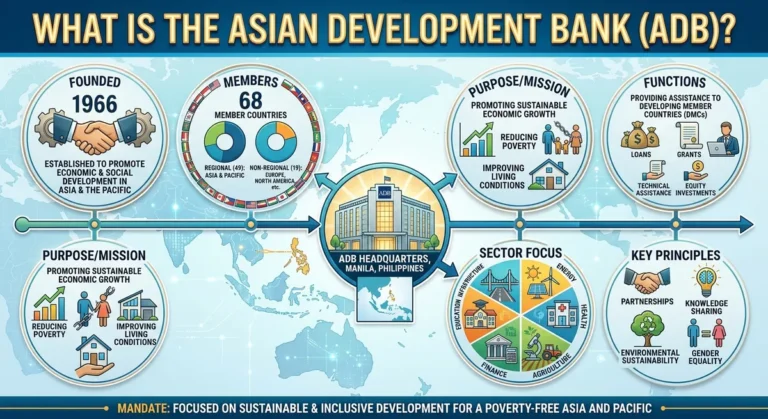
Organizations such as the International Monetary Fund, World Bank, and World Trade Organization perform different roles.
The WTO provides a framework for international trade rules and negotiations. The IMF focuses on international monetary cooperation, financial stability, economic surveillance, and assistance to countries facing external financing problems. The World Bank provides development financing and policy support.
These institutions do not control the global economy.
National governments still make most domestic economic decisions.
Their role is to help countries coordinate, establish rules, address disputes, share information, and respond to problems that cross national borders.
The changing role of the WTO is particularly relevant because trade rules are now being tested by technological change, geopolitical tensions, and shifting patterns of global commerce. (The Economic Reader)
Global Growth Does Not Move at One Speed
There is no single economic experience shared equally by every country.
Some economies may be expanding rapidly while others are experiencing stagnation or recession. Commodity exporters can benefit when resource prices rise, while commodity importers may face higher costs.
Demographics also matter. A country with a growing working-age population has different opportunities from one facing an aging workforce.
Productivity, infrastructure, education, financial development, institutions, and access to international markets also affect how economies respond to global conditions.
This is why a statement such as “the global economy is strong” can hide major differences underneath the headline.
The IMF’s work on global imbalances, for example, emphasizes that differences in saving, investment, current-account positions, and domestic economic policies can shape how countries interact within the wider system. (IMF)
Global growth is therefore an aggregate outcome. The economies underneath that number can be moving in very different directions.
Technology Is Changing the Connections
Technology is reshaping how countries participate in the global economy.
Digital platforms allow businesses to reach international customers more easily. Cloud infrastructure allows companies to operate across borders without building physical systems everywhere. Artificial intelligence can change productivity, business processes, and the demand for particular skills.
Technology is also affecting financial connections.
Digital payments can reduce some barriers to international transactions. Financial technology can make cross-border services easier to deliver. At the same time, cybersecurity, data regulation, and technological dependence create new vulnerabilities.
This means globalization is no longer driven only by ships, factories, ports, and physical infrastructure.
Data, software, digital services, and technological capabilities are becoming increasingly important parts of international economic activity.
The Global Economy Keeps Rebalancing
The structure of the world economy is never fixed.
Countries gain or lose competitiveness. New industries emerge. Companies reorganize production. Consumers change what they buy. Investors move capital toward new opportunities. Technology changes what can be produced and where it can be produced.
The result is a gradual rebalancing of economic activity.
This does not necessarily mean that one country simply replaces another. Different economies can become more important in different industries.
A country may gain a larger role in electronics while another becomes more important in energy, financial services, agriculture, or digital services.
The global economy is therefore better understood as a shifting network of specialization rather than a permanent hierarchy.
How to Read a Global Economic Event
When a major international economic story appears in the news, it helps to follow the transmission mechanism rather than looking only at the headline.
What changed?
Was it demand, supply, interest rates, currency values, commodity prices, trade policy, investment, or financial conditions?
Who is directly exposed?
An oil price increase affects an oil exporter differently from an oil importer.
How does the effect travel?
The shock may move through trade, supply chains, financial markets, currencies, or investor expectations.
Who gains and who faces higher costs?
The same event can create winners and losers across different industries and countries.
Is the change temporary or structural?
A short-term shipping disruption is different from a long-term change in demographics, technology, energy systems, or trade relationships.
This approach makes global economic news easier to interpret because it focuses on how the change moves through the system.
The Global Economy Is More Than Global Trade
It is easy to describe the world economy simply as countries buying and selling goods.
That is only one layer.
The modern global economy operates through several overlapping channels:
Trade moves goods and services.
Investment moves capital.
Currencies translate prices and financial values between economies.
Interest rates influence international financing conditions.
Production networks connect companies and suppliers.
Technology moves information, services, and capabilities.
Financial markets transmit expectations and risk.
International institutions provide frameworks for cooperation.
These channels interact.
A rise in energy prices can increase inflation. Higher inflation can influence monetary policy. Higher interest rates can affect currencies and capital flows. Changes in financing conditions can then influence businesses and households in other countries.
The result is a system in which economic developments rarely stay completely inside national borders.
Understanding the World Economy Means Following the Connections
The global economy has no single headquarters and no single decision-maker.
It emerges from millions of decisions made by households, businesses, investors, banks, governments, and institutions across different countries.
Those decisions are linked through trade, capital, currencies, production, technology, and finance.
A change in one major economy can create new demand for exporters elsewhere. A financial shock can tighten credit internationally. A technology breakthrough can create new markets. A supply disruption can raise production costs far from its original location.
That is why understanding the global economy requires looking beyond individual countries and individual headlines.
The most useful question is often not simply “What happened?”
It is:
“How will that change travel through the rest of the world economy?”
Once that question becomes familiar, global economic news starts to make more sense. Trade figures, interest-rate decisions, currency movements, commodity prices, capital flows, and financial-market volatility become parts of the same larger system.