
What Happened to the U.S. Economy in September 2026? Full Research Review
What Happened to the U.S. Economy in September 2026?
September 2026 gave a mixed picture of the U.S. economy.
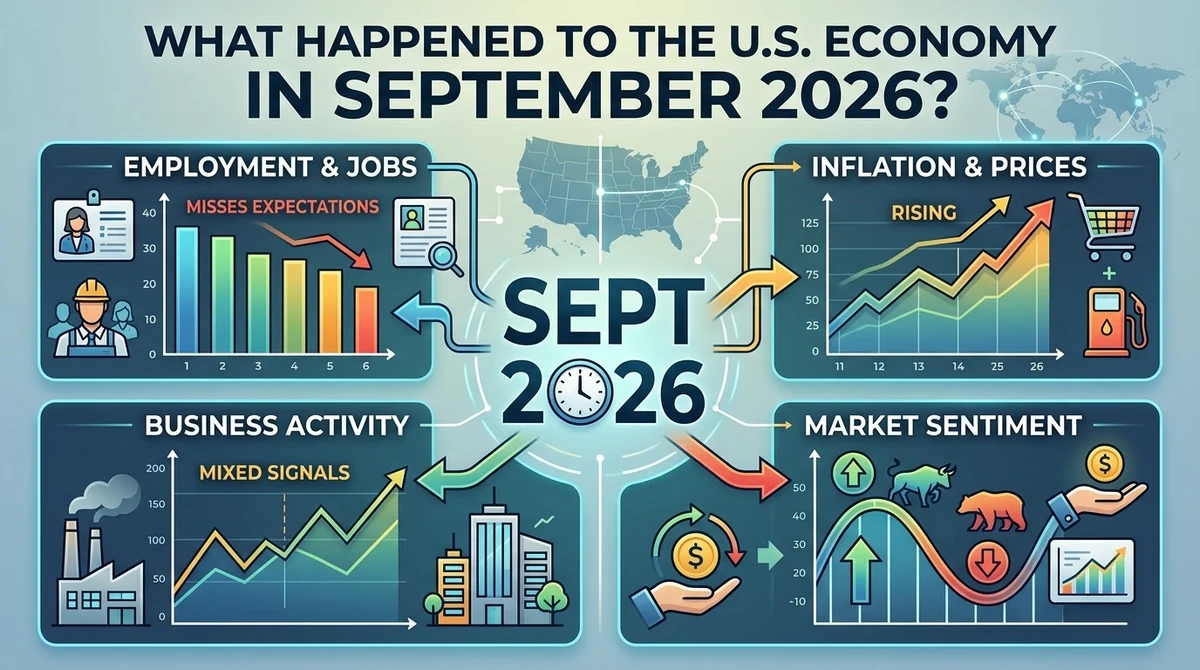
Economic growth and business activity remained relatively resilient, consumer spending continued to rise, and manufacturing stayed in expansion territory. At the same time, the labor market lost momentum, inflation remained elevated, consumer confidence weakened, housing remained sensitive to financing costs, and long-term Treasury yields rose sharply.
The result was not a simple story of either economic strength or weakness. September showed an economy still expanding, but with more visible pressure points.
The month also created a difficult environment for policymakers. The Federal Reserve was dealing with persistent inflation while labor-market momentum was becoming less convincing. For businesses and households, higher energy costs and borrowing costs added another layer of uncertainty heading into the final quarter of 2026.
This review examines the major economic developments in September and what they could mean for the U.S. economy during the rest of 2026.
September 2026 Economic Snapshot
Several indicators captured the direction of the economy during the month:
- Real GDP increased at a 2.2% annualized rate in the second quarter, according to the third estimate.
- September nonfarm payrolls increased by 29,000.
- The unemployment rate was 4.2%.
- August PCE inflation was 3.4% year over year, while core PCE inflation was 3.0%.
- August consumer spending increased 0.9%.
- September manufacturing PMI reached 54.5, indicating continued expansion.
- Consumer confidence fell to 81.9 in September.
- August new-home sales increased 6.4% from July but remained 2.0% below a year earlier.
- The Federal Reserve raised its target federal funds rate to 3.75%–4.00% in September.
- The 10-year Treasury yield moved above 5.2% late in the month.
Taken together, these figures point to an economy that continued to grow but was becoming increasingly uneven.
Growth Still Had Momentum
The U.S. economy entered September with a stronger growth foundation than some earlier estimates had suggested.
The Bureau of Economic Analysis revised second-quarter real GDP growth upward to a 2.2% annualized rate in its third estimate. The previous estimate had placed growth at 1.5%.
Consumer spending, investment, and exports contributed to the quarter’s expansion, although imports also increased.
BEA: Gross Domestic Product, Second Quarter 2026 (Third Estimate)
The GDP revision does not mean the economy was accelerating rapidly in September. GDP data are backward-looking, and the second quarter ended several months before the September economic releases.
Still, the revision provided important context. The economy entered the second half of the year with underlying demand and investment activity that remained more durable than a weak labor market alone might suggest.
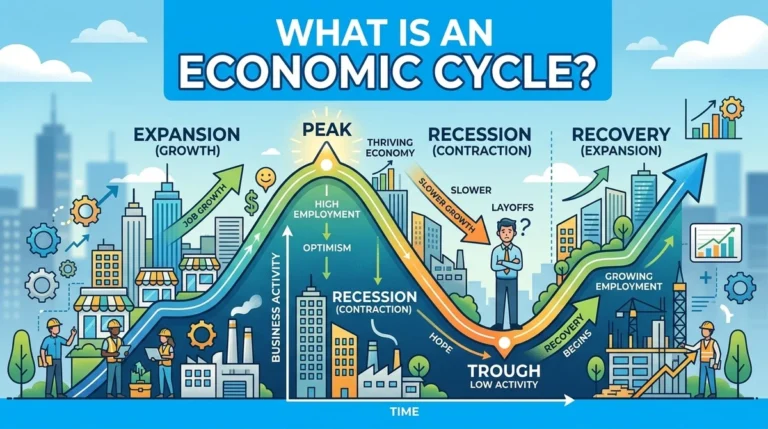
For readers looking at the longer economic cycle, Economic Reader’s What Is an Economic Cycle? provides useful context for understanding why growth, employment, inflation, and investment do not always move together.
The Labor Market Lost Momentum
The clearest sign of cooling came from employment.
The U.S. economy added only 29,000 nonfarm jobs in September, while the unemployment rate remained at 4.2%. The labor-force participation rate was 61.8%.
The revisions to previous months were also significant. July payroll growth was revised from a gain of 21,000 to a decline of 10,000. August was revised from 162,000 to 133,000. Together, the revisions reduced previously reported employment growth by 60,000 jobs.
Health care added 17,000 jobs and construction added 11,000. Manufacturing employment increased by 9,000, while financial activities lost 7,000 jobs.
BLS: The Employment Situation September 2026
The important point is not one month’s payroll figure by itself. The broader pattern suggests that hiring momentum was becoming less reliable.
Average hourly earnings increased 0.1% during September and were up 3.0% from a year earlier. Wage growth therefore remained positive, but it was not strong enough to offset the broader evidence of slower hiring.
Hiring Was Already Becoming More Cautious
The September employment report was not the only evidence of a softer labor market.
The August Job Openings and Labor Turnover Survey showed approximately 7.1 million job openings. The openings rate was 4.3%, while the quits rate was 1.9%.
Job openings remained substantial, but the labor market was no longer displaying the same degree of excess demand seen during the earlier post-pandemic period.
That distinction is important for inflation.
A labor market can cool without producing an immediate rise in unemployment. Businesses may reduce vacancies, delay hiring, or become more selective before they begin making significant layoffs.
September’s employment data therefore fit a broader picture of gradual labor-market normalization rather than an abrupt collapse.
Inflation Remained the Main Constraint
Inflation continued to complicate the economic outlook.
The August Consumer Price Index showed headline inflation rising 0.4% from July and 3.4% from a year earlier. Core CPI increased 0.3% during the month and 2.4% year over year.
Energy prices were particularly important. Gasoline prices increased 3.9% during August and were 27.4% higher than a year earlier.
Shelter prices also continued to rise, increasing 0.3% during the month and 3.0% year over year.
The CPI figures showed why inflation remained a problem even as employment momentum weakened.
BLS: Consumer Price Index August 2026
The economy was therefore facing two different signals: weaker labor-market momentum suggested less demand pressure, while energy and other prices continued to create inflation risks.
Producer Prices Added Another Layer of Pressure
Producer prices provided another warning.
The August Producer Price Index showed final demand prices rising 0.4% from July and 5.4% from a year earlier.
Final-demand goods prices increased 1.1%, while final-demand services rose 0.1%.
Energy was particularly influential. Producer prices for energy increased 4.2% during the month, while diesel prices were up 24.1% from a year earlier.
BLS: Producer Price Index August 2026
Producer-price inflation does not automatically translate into equivalent consumer-price inflation. Businesses can absorb some cost increases through lower margins, productivity gains, or changes in pricing.
But persistent input-cost pressure can eventually affect consumer prices, investment decisions, and business hiring.
PCE Inflation Was Still Elevated
The Federal Reserve’s preferred inflation measure also remained above its long-term target.
The August Personal Consumption Expenditures price index increased 3.4% from a year earlier. Core PCE inflation was 3.0%.
On a monthly basis, headline PCE inflation increased 0.3%, while core PCE rose 0.2%.
BEA: Personal Income and Outlays August 2026
The combination of elevated inflation and slower employment growth created a difficult policy environment.
If inflation had been falling quickly, weaker hiring would have provided a clearer argument for easier monetary policy. Instead, inflation remained high enough to limit how quickly the Federal Reserve could respond to labor-market weakness.
Consumers Were Still Spending
One of September’s more important developments was the resilience of consumer spending.
August personal consumption expenditures increased 0.9%, while real PCE increased 0.6%.
Personal income rose 0.2%, and disposable personal income increased 0.3%.
The composition of spending was also important. Spending increased across both goods and services, suggesting that households were still supporting economic activity despite higher prices and borrowing costs.
Consumer spending remains critical because household consumption represents a large share of U.S. economic activity.
The strength of consumption therefore helped offset some of the weakness appearing in employment and consumer sentiment.
Consumer Confidence Fell Sharply
Spending data and sentiment data were moving in different directions.
The Conference Board’s consumer confidence index fell to 81.9 in September, down 6.7 points from August.
The Present Situation Index declined to 109.3, while the Expectations Index fell to 63.6. The Expectations Index recorded its third consecutive monthly decline.
The survey was conducted from September 1 through September 23, meaning it captured consumer perceptions during a period of increasing concern about prices, employment, and the broader economy.
The Conference Board: Consumer Confidence September 2026
Weak confidence does not necessarily produce an immediate decline in spending.
Households make spending decisions based on income, savings, credit availability, existing commitments, and expectations. Consumers can therefore remain active even while becoming less optimistic about the future.
The Savings Rate Added Context
The personal saving rate was 4.1% in August.
That figure helps explain why consumer spending remained relatively strong despite weaker confidence.
Households do not respond to economic uncertainty in only one way. Some reduce spending, while others continue spending but save less. Others may shift spending toward necessities or delay larger purchases.
A lower saving rate can support near-term consumption, but it can also leave households with less financial room if employment conditions deteriorate or borrowing costs remain high.
This makes the consumer an important variable to watch during the final quarter.
Business Activity Was Strong
Business activity provided a more positive signal.
The September S&P Global Composite PMI rose to 58.4 from 56.0 in August, according to data reported during the month. It was the strongest reading since July 2021.
New orders also remained strong, suggesting that businesses were still receiving meaningful demand.
At the same time, input-price pressures increased.
This combination matters because strong demand can support output and employment while higher input costs can pressure profit margins and consumer prices.
The economy was therefore showing an unusual combination: weaker labor-market momentum alongside relatively strong business activity.
Manufacturing Continued to Expand
Manufacturing also remained in expansion territory.
The Institute for Supply Management’s September Manufacturing PMI rose to 54.5. New orders reached 55.3 and production increased to 56.7.
The employment index also moved above 50, reaching 52.7.
But prices remained a concern. The Prices index increased to 77.9, up significantly from August.
Manufacturing therefore provided evidence of continued economic activity while also highlighting the cost pressures businesses were facing.
AI Investment Became an Economy Wide Issue
Artificial intelligence continued to influence the investment side of the economy.
AI-related spending is no longer limited to software companies. Data centers, semiconductors, electricity generation, networking equipment, construction, cloud infrastructure, and business software are all connected to the expansion of AI investment.
That creates two different economic effects.
First, capital investment can increase productivity and support demand for equipment, construction, technology, and related services.
Second, rapid investment can increase demand for electricity, specialized equipment, land, and infrastructure.
This makes AI investment relevant not only to technology-sector earnings but also to broader productivity, capital expenditure, energy demand, and regional economic activity.
The economic question entering the final quarter is increasingly whether AI-related investment will continue expanding rapidly enough to offset weakness in other areas.
Housing Remained Sensitive to Financing Costs
Housing continued to reflect the impact of elevated borrowing costs.
August new-home sales increased 6.4% from July to a seasonally adjusted annual rate of 684,000. However, sales were still 2.0% below the same month a year earlier.
The inventory of new homes for sale reached 483,000, equivalent to approximately 8.5 months of supply.
The median new-home price was $393,700, down 5.8% from a year earlier.
Housing starts also weakened. August starts fell 2.6% from July and 1.2% from a year earlier.
Housing therefore remained highly sensitive to financing conditions even while some parts of the market showed signs of adjustment.
For a broader explanation of the connection between monetary policy and economic activity, see Economic Reader’s How Interest Rates Affect the Economy.
Trade Added Another Complication
The August advance goods-trade data showed the U.S. goods trade deficit increasing to $132.6 billion.
Exports increased by $3.7 billion to $203.4 billion, while imports increased by $17.4 billion to $336.1 billion.
The increase in imports was therefore much larger than the increase in exports.
Trade data can be volatile from month to month, and the advance goods figures do not represent the complete monthly trade picture. The full August international trade report was scheduled for release in October.
Still, the data showed that trade flows remained an important part of the economic picture.
Financial Conditions Became Another Constraint
Financial markets added another layer of pressure during September.
The 10-year Treasury yield moved above 5.2% late in the month, reaching its highest level since 2007. The 30-year yield also climbed to levels not seen in many years.
Higher Treasury yields affect the economy through several channels.
They can increase borrowing costs for mortgages, corporate debt, and other forms of financing. They can also change the relative attractiveness of stocks and bonds and raise the discount rate applied to future corporate earnings.
Higher yields therefore influence economic activity even when the Federal Reserve does not change its policy rate.
The Federal Reserve Faced Competing Signals
The Federal Reserve raised the federal funds target range by 25 basis points in September, taking it to 3.75%–4.00%.
The Fed’s September statement described economic activity as expanding at a solid pace. It also noted resilient domestic spending, strong productivity, and robust capital investment.
At the same time, inflation remained elevated.
Federal Reserve: September 16, 2026 FOMC Statement
This created a difficult policy balance.
The labor market was showing signs of cooling, which could eventually justify less restrictive policy. But inflation remained above the Federal Reserve’s 2% objective, while energy and producer prices were adding further uncertainty.
Monetary policy therefore remained dependent on the interaction between inflation, employment, spending, and financial conditions rather than any single monthly report.
Economic Reader’s How the Federal Reserve Controls Inflation explains the broader mechanism through which monetary policy influences prices and economic activity.
September Was Not a Broad Based Economic Contraction
The available September data did not show a broad-based collapse in U.S. economic activity.
Consumer spending increased. Manufacturing expanded. Business activity remained strong. Housing was mixed rather than uniformly declining. GDP estimates showed that the economy had entered the second half of 2026 with meaningful momentum.
The labor market, however, was clearly weaker than earlier in the expansion.
That combination is important.
A slowdown does not have to begin with falling GDP. Economic momentum can weaken first through hiring, confidence, investment intentions, or household finances before broader output data show a significant decline.
September therefore looked more like an uneven transition than a synchronized downturn.
The Consumer Could Become More Important in Q4
The consumer may become one of the most important variables during the final quarter.
So far, spending has remained strong enough to support growth. But confidence has weakened, the saving rate is relatively low, and prices remain elevated.
If employment remains weak while inflation stays high, households could become more cautious.
The reverse is also possible. If employment stabilizes and wage growth remains positive, consumer spending could continue providing support even with subdued confidence.
The key question is whether household spending can remain resilient without creating additional inflation pressure.
Businesses Faced Strong Demand and Higher Costs
Businesses entered the final quarter with an equally complicated set of conditions.
Demand remained relatively strong. Manufacturing expanded. New orders were positive. Capital investment, particularly around technology and AI infrastructure, remained important.
But costs were rising.
Energy prices were significantly higher, producer prices were elevated, and financing costs were becoming more restrictive as Treasury yields increased.
For businesses, the challenge is therefore not simply whether customers are buying.
It is whether revenue growth is strong enough to compensate for higher labor, energy, financing, and input costs.
What September Changed About the Inflation Story
September did not eliminate the possibility of disinflation, but it made the path more complicated.
Services inflation, energy prices, producer costs, and consumer demand were moving in different directions.
Oil prices were particularly important because energy costs can influence transportation, manufacturing, household budgets, and business operating costs.
A sustained energy-price increase can therefore affect both inflation and growth.
This creates a difficult environment for monetary policy because the same shock can increase prices while reducing real household purchasing power.
What September Changed About the Growth Story
September also complicated the growth narrative.
A weaker labor market might normally be interpreted as evidence that economic momentum is fading. But business activity, consumer spending, manufacturing, and investment remained relatively strong.
This divergence suggests that the U.S. economy was not moving uniformly in one direction.
Some sectors were still expanding rapidly, while others were becoming more cautious.
That is why headline GDP alone is not enough to understand the economic environment entering the final quarter.
Five Questions Entering Q4
The U.S. economy entered October with five major questions.
1. Will employment stabilize?
The September payroll gain of only 29,000 raised concerns about whether hiring momentum was fading more substantially.
2. Will inflation continue to ease?
PCE inflation remained at 3.4%, while core PCE was 3.0%. Energy prices added another risk.
3. Can consumer spending remain strong?
Spending was still growing, but confidence was falling and the saving rate remained relatively low.
4. Will higher Treasury yields slow investment and housing?
Mortgage rates, corporate borrowing costs, and financial valuations are all sensitive to long-term yields.
5. Can AI and capital investment continue supporting growth?
Strong investment could support productivity and demand, but it also increases infrastructure and energy requirements.
What September Means for the Rest of 2026
The September data suggest that the U.S. economy still had meaningful sources of resilience.
Consumer spending remained positive. Business activity was strong. Manufacturing expanded. Investment, particularly around technology, remained an important source of demand.
But the economy also faced increasingly visible constraints.
The labor market was cooling. Inflation remained well above the Federal Reserve’s target. Energy prices were elevated. Consumer confidence weakened. Long-term Treasury yields rose sharply.
These factors do not point to a single predetermined economic outcome.
Instead, they create a more fragile balance between growth and inflation.
If employment stabilizes while inflation gradually declines, the economy could maintain moderate expansion. If hiring weakens further while inflation remains elevated, policymakers could face a much more difficult trade-off.
Where the U.S. Economy Stood at the End of September
September 2026 was a month of divergence.
The U.S. economy was still growing, but not all parts of the economy were moving at the same speed.
Growth and consumer spending remained resilient. Business activity and manufacturing provided positive signals. AI-related investment continued to influence capital spending and productivity expectations.
At the same time, the labor market lost momentum, consumer confidence weakened, inflation remained elevated, and higher Treasury yields tightened financial conditions.
That combination is more informative than any single monthly number.
The central economic question entering the final quarter is whether the U.S. economy can maintain demand and investment while inflation gradually moves lower and the labor market avoids a sharper deterioration.
September did not provide a definitive answer. It showed that the balance between those forces was becoming more important.
Data and Methodology
This review uses economic data available through the end of September and major releases published around the end of the month and immediately afterward.
GDP figures refer to the latest available second-quarter 2026 estimate rather than September GDP. September employment data were released on October 2, while several August indicators were released during September.
Key data sources include the U.S. Bureau of Economic Analysis, Bureau of Labor Statistics, Federal Reserve, U.S. Census Bureau, Institute for Supply Management, and Conference Board.
Monthly economic data are subject to revisions. Individual indicators also measure different parts of the economy and should not be treated as interchangeable measures of economic health.
The objective of this review is therefore not to reduce September to a single positive or negative label, but to examine how growth, employment, inflation, consumers, businesses, housing, investment, and monetary policy interacted during the month.