How Currency Exchange Rates Work: Understanding How Currency Values Are Determined
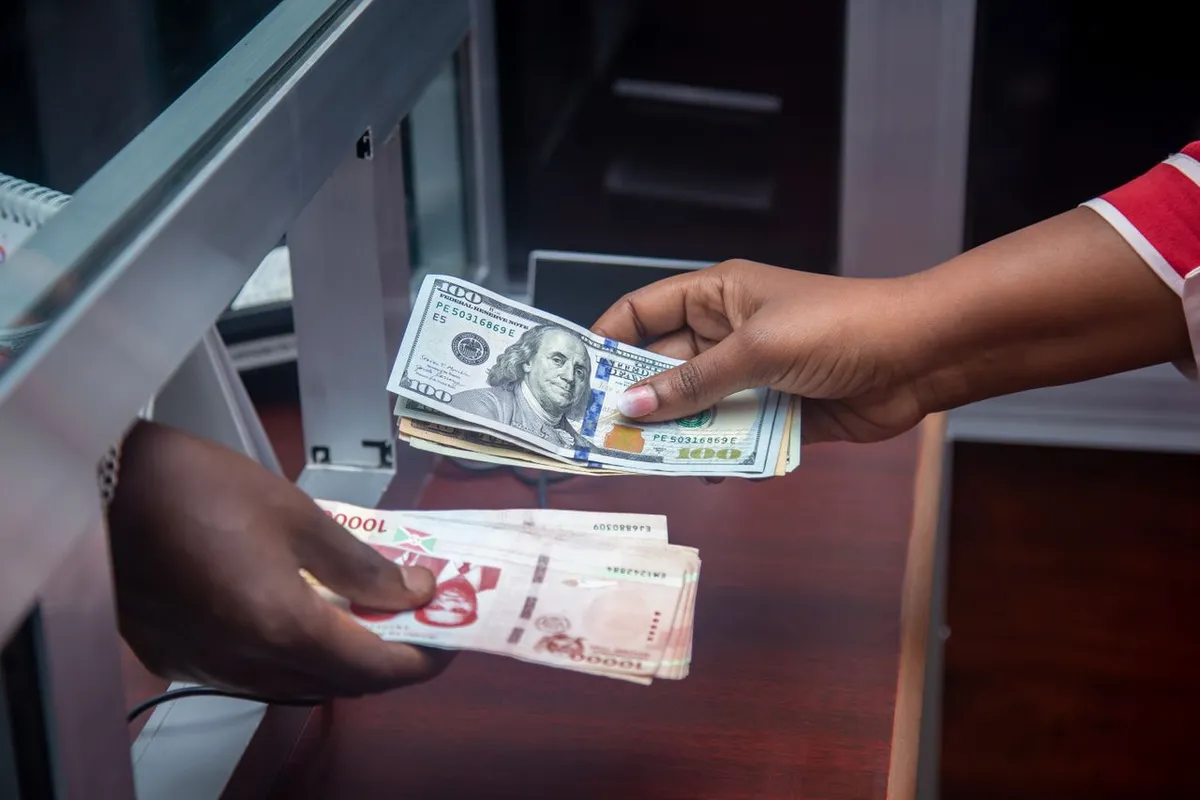
How Currency Exchange Rates Work
When you see that one U.S. dollar is worth a certain number of euros, pounds, rupees, or yen, it is easy to think of the exchange rate as just another price.
In reality, it is a price that connects two economies.
A currency exchange rate tells us how much of one currency is needed to buy another. That number influences the cost of imports, the competitiveness of exporters, international travel, overseas investments, corporate profits, and even the inflation rate people experience at home.
Exchange rates also move constantly. A currency that is stronger today can be weaker a few months later as interest rates, economic expectations, trade flows, political developments, and investor sentiment change.
So, how do currency exchange rates actually work?
What Is a Currency Exchange Rate?
A currency exchange rate is the price of one currency expressed in another currency.
For example, imagine the exchange rate is:
1 USD = 0.74 GBP
This means one U.S. dollar can be exchanged for 0.74 British Pounds at that particular rate.
Exchange rates are normally quoted as currency pairs, such as:
- USD/EUR
- GBP/USD
- USD/JPY
- USD/INR
The first currency is the base currency, while the second is the quote currency.
If USD/GBP rises from 0.72 to 0.74, one U.S. dollar buys more British pounds than before. From the perspective of the pound, the pound has depreciated against the dollar.
If USD/GBP falls from 0.74 to 0.72, one U.S. dollar buys fewer British pounds, meaning the pound has appreciated against the dollar.
This relationship is important because a currency can become stronger against one currency while weakening against another.
Where Are Exchange Rates Determined?
Most major currencies have exchange rates that are determined largely by supply and demand in foreign exchange markets, commonly known as the forex or FX market.
Banks, financial institutions, corporations, investment funds, governments, central banks, and other market participants buy and sell currencies for different reasons.
The market is enormous. According to the Bank for International Settlements, global foreign-exchange trading reached about $9.6 trillion per day in April 2025, up 28% from 2022. The U.S. dollar was on one side of 89% of all FX trades during that survey period. (Bank for International Settlements)
That scale helps explain why exchange rates can react quickly to new economic information.
A company may need dollars to pay a foreign supplier. An investor may buy Japanese yen to purchase Japanese assets. A bank may exchange currencies on behalf of customers. A fund may hedge against currency risk.
All of these transactions contribute to currency demand and supply.
Why Do Currency Values Rise and Fall?
There is no single factor that determines an exchange rate.
Instead, currencies respond to a combination of economic conditions, financial-market expectations, trade flows, and political developments.
Interest Rates
Interest rates are one of the most closely watched influences on currencies.
Suppose investors expect interest rates in Country A to remain significantly higher than those in Country B. Assets denominated in Country A’s currency may become more attractive because investors can potentially earn higher returns.
That can increase demand for the currency.
This does not mean higher interest rates automatically produce a stronger currency. Investors also consider inflation, economic growth, risk, and what they expect central banks to do next.
The Federal Reserve notes that the value of the U.S. dollar is determined in foreign exchange markets and that movements in the dollar affect economic activity and prices, making exchange-rate developments relevant to monetary policy. (Federal Reserve)
Inflation
Inflation can influence a currency’s value, particularly over longer periods.
If prices in one country rise substantially faster than prices in another, the purchasing power of its currency can deteriorate relative to the other currency.
This is one reason economists sometimes use purchasing power parity (PPP) when examining exchange rates over longer horizons.
But PPP does not explain every short-term currency movement. Financial markets can react much faster than prices in the real economy, meaning exchange rates can move sharply even when underlying inflation differences change only gradually. (IMF eLibrary)
This is also why exchange rates and inflation are closely connected. A weaker domestic currency can make imported goods and raw materials more expensive, potentially adding pressure to domestic prices.
For a broader explanation, see Economic Reader’s (What Is Inflation?)
Economic Growth and Expectations
Investors care about the future, not just today’s economic data.
If markets expect an economy to grow strongly, attract investment, and generate profitable opportunities, demand for assets denominated in that country’s currency may increase.
The opposite can happen when investors expect recession, political instability, weak productivity, or deteriorating public finances.
This is why a currency can sometimes move before economic conditions visibly change. Markets are constantly trying to price what they believe will happen next.
Trade and the Current Account
International trade also matters.
A country that exports large amounts of goods and services may generate demand for its currency because foreign buyers need to make payments connected with those transactions.
Imports can create demand for foreign currencies because domestic buyers need those currencies to pay overseas suppliers.
The relationship is more complicated than simply saying “more exports make a currency stronger.” Capital flows, investment decisions, financing conditions, and expectations can outweigh trade flows over shorter periods.
The IMF has noted that exchange rates and current-account developments are jointly influenced by broader economic and policy conditions rather than being determined by a single variable. (IMF eLibrary)
You can learn more about the broader role of trade in Economic Reader’s (What Is International Trade?)
Political and Geopolitical Risk
Currencies also respond to uncertainty.
Elections, wars, trade disputes, sanctions, changes in government policy, financial instability, or geopolitical tensions can alter investor expectations.
When uncertainty rises, investors may move money toward currencies and assets they consider relatively safer or more liquid.
That can create significant exchange-rate movements even without a major change in interest rates or trade data.
Floating vs. Fixed Exchange Rates
Not every country manages its currency in exactly the same way.
Floating Exchange Rates
Under a floating exchange-rate system, the currency’s value is allowed to move according to market conditions.
The U.S. dollar, euro, Japanese yen, British pound, and many other major currencies operate under broadly floating systems.
Central banks can still influence financial conditions through monetary policy or, in some cases, intervene in foreign-exchange markets, but the exchange rate is not necessarily fixed at a predetermined level.
Fixed or Pegged Exchange Rates
Under a fixed or pegged system, a country attempts to maintain its currency at a specific value or within a defined range against another currency or a basket of currencies.
Maintaining such a system can require substantial foreign-exchange reserves and policy intervention.
The choice between floating and fixed arrangements involves trade-offs involving monetary-policy flexibility, external stability, and economic conditions.
What Happens When a Currency Depreciates?
Consider a simplified example.
Suppose:
1 USD = 0.72 GBP
Later, the rate becomes:
1 USD = 0.74 GBP
The GBP has depreciated against the dollar.
This can have several effects.
For consumers, imported products priced in dollars may become more expensive in GBP terms.
For businesses importing fuel, machinery, electronics, raw materials, or other foreign products, costs can increase.
For exporters, however, a weaker domestic currency can sometimes improve price competitiveness in foreign markets because their products become cheaper when measured in foreign currency.
There are important qualifications. Companies may have contracts in different currencies, hedge their exposure, or depend heavily on imported inputs. So the impact of depreciation is rarely uniform across an economy.
What Happens When a Currency Appreciates?
Now imagine the exchange rate moves from:
1 USD = 0.74 GBP
to:
1 USD = 0.70 GBP
The GBP has appreciated against the dollar.
Imported products may become cheaper in local-currency terms, assuming other costs remain unchanged.
Businesses purchasing foreign machinery or raw materials may benefit.
But exporters can face a more difficult environment because their products may become relatively more expensive for foreign customers.
This is one reason policymakers and businesses pay close attention to exchange-rate movements rather than simply treating a stronger currency as automatically good or a weaker currency as automatically bad.
Exchange Rates and Central Banks
Central banks play an important role in currency markets, even when they do not directly set the exchange rate.
Interest-rate decisions can affect the attractiveness of assets denominated in a currency. Changes in monetary policy can therefore influence capital flows and currency demand.
Central banks may also hold foreign-exchange reserves and, depending on their policy framework, may intervene in currency markets.
The relationship between monetary policy and exchange rates is especially important because exchange-rate movements can feed back into inflation and economic activity.
For example, a weaker currency can increase the domestic price of imported goods. A stronger currency can reduce import costs but may create challenges for exporters.
That makes the exchange rate one part of the broader monetary-policy transmission process.
Why Exchange Rates Matter to Ordinary People
You do not have to trade currencies to be affected by exchange rates.
A weaker domestic currency can influence:
- imported food and consumer goods
- fuel and energy costs
- smartphones and electronics
- overseas education
- international travel
- foreign subscriptions and online services
- imported medicines and medical equipment
Exchange rates can also affect people receiving money from overseas.
If someone sends $1,000 to a country where the local currency has depreciated, the recipient may receive more units of the local currency than before, even though the dollar amount has not changed.
For consumers, therefore, exchange rates are not just a financial-market concept. They can eventually show up in household budgets.
Why Exchange Rates Matter to Businesses
Companies with international operations face currency exposure whenever revenues and costs occur in different currencies.
Imagine a U.S. company that earns revenue in euros but reports its financial results in dollars.
If the euro weakens significantly against the dollar, those foreign revenues may translate into fewer dollars when the company prepares its financial statements.
A manufacturer importing components from another country faces a different form of exposure. If the foreign currency strengthens, the cost of those components may increase in the company’s domestic currency.
Large companies often use financial instruments such as forwards, swaps, and options to manage these risks. The BIS reported that FX swaps remained the largest segment of global FX trading in April 2025, while spot and outright forward trading also represented substantial portions of market activity. (Bank for International Settlements)
Exchange Rates and Investors
Currency movements can significantly affect investment returns.
Suppose an investor buys a foreign stock that rises 10% in the company’s local currency. If that foreign currency then falls sharply against the investor’s home currency, part of the investment gain can disappear when the position is converted back.
The reverse can also happen.
This is known as currency risk or foreign-exchange risk.
Investors therefore need to distinguish between:
Asset performance – how the investment itself performs.
Currency performance – how the foreign currency moves relative to the investor’s home currency.
For international portfolios, the two can interact in important ways.
Why Exchange Rates Can Be Difficult to Predict
One of the biggest mistakes people make is assuming that exchange rates have simple cause-and-effect relationships.
For example:
“Higher interest rates always strengthen a currency.”
That is too simplistic.
Markets care about relative interest rates, expected future policy, inflation, economic growth, political risk, capital flows, and what investors already expect.
Sometimes a central bank raises interest rates and its currency barely moves because markets had already anticipated the decision.
At other times, an unexpected policy announcement can trigger a major currency move within minutes.
The IMF’s research highlights this broader point: short- and medium-term exchange-rate movements can be strongly influenced by financial-market conditions and expectations, while longer-term currency valuation can also be related to economic fundamentals. (IMF eLibrary)
The Bigger Picture
A currency exchange rate is ultimately a market price – but it is a market price with unusually wide economic consequences.
It connects domestic prices with international markets. It affects trade competitiveness, investment returns, imported inflation, corporate costs, tourism, remittances, and monetary policy.
And because currencies are traded continuously across a global financial system, exchange rates can react to information long before the effects become visible in everyday economic data.
The scale of the market illustrates its importance. The BIS’s 2025 survey found global FX turnover averaging roughly $9.6 trillion per day in April 2025, making foreign exchange one of the world’s largest financial markets. (Bank for International Settlements)
Understanding exchange rates therefore means looking beyond a number on a currency-converter screen. The rate is a reflection of how markets assess two currencies – and the economies, policies, risks, and opportunities behind them.
Frequently Asked Questions
1. What determines currency exchange rates?
Exchange rates are primarily determined by supply and demand in foreign-exchange markets. Interest rates, inflation, economic growth, trade flows, capital movements, political developments, and investor expectations can all influence that demand and supply.
2. What does it mean when a currency appreciates?
Currency appreciation means a currency becomes more valuable relative to another currency. For example, if the exchange rate moves from 1 USD = 0.74 GBP to 1 USD = 0.72 GBP, the British Pound has appreciated against the dollar.
3. Is a weaker currency always bad for an economy?
No. A weaker currency can make imports more expensive, but it can also make a country’s exports more competitive in foreign markets. The overall effect depends on the structure of the economy and how heavily businesses and consumers rely on imports.
4. How do interest rates affect exchange rates?
Higher relative interest rates can make assets denominated in a currency more attractive and may increase demand for that currency. However, exchange rates depend on many factors, so higher rates do not automatically guarantee appreciation.
5. Why do exchange rates change every day?
Foreign-exchange markets continuously respond to new information. Economic data, central-bank decisions, political developments, trade news, changes in investor sentiment, and expectations about future conditions can all cause currencies to move.
Final Thoughts
Currency exchange rates may look like simple numbers, but behind every movement is a changing balance between economic conditions, financial markets, and expectations.
For consumers, exchange rates can influence the price of imported goods and overseas expenses. For businesses, they can change costs, revenues, and competitiveness. For investors, they can add another layer of risk and opportunity.
The most useful way to understand exchange rates is not to ask whether a currency is simply “strong” or “weak.” The better question is why it is moving, what it is moving against, and what that movement means for the wider economy.
That perspective makes exchange rates much easier to understand – and far more useful when interpreting global economic news.
Continue Learning…
If you’d like to explore this topic further, check out these related guides from Economic Reader:
- How Successful Entrepreneurs Think? – Habits and Mindsets That Build Wealth.
- What Is a Mortgage? – How Home Loans Work and What Borrowers Should Know.
- How Renewable Energy Changes Business? – The Future of Sustainable Business Growth.
Author Note: This article is crafted by “The Economic Reader editorial team”, dedicated to analyzing the latest market trends, financial updates, and global economic shifts to keep you informed with accurate and comprehensive insights.
Disclaimer: The information provided on this website is for educational and informational purposes only and should not be construed as professional financial, investment, or legal advice. Always consult with a certified financial advisor or professional before making any financial decisions based on this content.